
Why is there mould in my bedroom?
Bedrooms are one of the most common places for mould because they combine a high overnight moisture load, cold surfaces and often poor ventilation — the exact conditions condensation and mould need.
 Reviewed by George Sora, Certified Passive House DesignerUpdated June 2026
Quick answer & key takeaways
5 min read- Bedroom mould comes from overnight moisture meeting cold surfaces with too little ventilation.
- Sleeping occupants add moisture for hours while surfaces are coldest.
- It typically appears in corners, around windows and behind furniture on external walls.
- It's a condensation problem — the same cause as the morning window wetness.
- Biggest misconception: it's poor hygiene. It's overnight moisture plus cold surfaces.
- Retrofit IQ's approach: log overnight RH and surface temperature, then warm surfaces and ventilate.
What this usually means
Overnight, a bedroom becomes a near-closed room with two people adding moisture through respiration while the heating is off and surfaces are at their coldest. Relative humidity rises, the coldest surfaces — corners, window reveals and external walls behind furniture — cross the dew point, and condensation feeds mould. It's the same mechanism that wets the windows by morning.
So bedroom mould is a condensation problem driven by overnight moisture, cold surfaces and inadequate ventilation. Cleaning it off without addressing those conditions guarantees its return; warming the surfaces and ventilating the room stops it.
Common causes
Overnight moisture load
Sleeping occupants release moisture for hours, raising humidity in a closed room.
Cold surfaces overnight
With heating off, corners, reveals and external walls reach their coldest and cross the dew point.
Inadequate ventilation
Closed windows and no continuous extract mean the moisture has nowhere to go.
Furniture on external walls
Wardrobes and beds against cold external walls trap still, humid air, growing mould behind them.
Thermal bridges
Cold junctions and corners condense first and become the focus of mould growth.
Signs and symptoms
Mould in upper corners and around windows
The coldest surfaces in the room cross the dew point first and grow mould there.
Mould behind the wardrobe or bed
External walls behind furniture stay cold and still, ideal conditions for growth.
Wet windows in the morning
The same overnight condensation that wets the glass feeds the mould.
Cold room that cools fast overnight
Low overnight surface temperatures combine with sleeping moisture to drive condensation.
What most people check first
- Where the mould is — corners, windows, behind furniture on external walls.
- Morning condensation on the bedroom windows.
- Ventilation: trickle vents, extract, whether windows are opened.
- Indoor drying or other moisture sources.
What most people miss
- That the mould and the morning window condensation share a cause.
- That bedrooms specifically need ventilation for the overnight moisture load.
- That warming surfaces (insulation, treating bridges) is essential, not just cleaning.
- That heating the room more without ventilation can worsen it.
The building physics
A sleeping adult adds roughly 40 g of moisture per hour to the air; two people over eight hours add a significant load to a closed room. With the heating off, surface temperatures fall, and the relative humidity at the coldest surfaces climbs. Once those surfaces sit above about 80% surface humidity for long enough, mould germinates — typically in the upper corners, around the window and on external walls behind furniture.
Because the cold surfaces are the trigger, thermal bridges and uninsulated external walls are where the mould concentrates. And because the moisture is added overnight when ventilation is lowest, the load isn't cleared and the conditions persist night after night.
The durable fix addresses both: provide controlled ventilation (continuous extract or balanced MVHR) to remove the overnight moisture, and raise surface temperatures with insulation and bridge treatment so the cold spots stay above the dew point. Together these remove the conditions mould needs.
How to fix it — the right way
Bedroom mould is fixed by removing the overnight moisture and warming the cold surfaces together — cleaning alone guarantees its return.
- 01
Log the overnight conditions
Record humidity and surface temperatures through the night to see when and where the dew point is crossed.
- 02
Ventilate for the overnight moisture
Continuous extract or balanced ventilation removes the moisture sleeping occupants add.
- 03
Warm the cold surfaces
Loft and wall insulation and treating thermal bridges keep corners and reveals above the dew point.
- 04
Remove moisture sources
Do not dry laundry in the bedroom, and keep furniture off cold external walls.
- 05
Remove the growth, then keep conditions changed
Clean the mould once ventilation and surface temperatures are being addressed so it cannot re-establish.
How to prevent it coming back
- Ventilate overnight via trickle vents or background extract.
- Do not dry laundry in the bedroom.
- Keep a gap behind furniture on external walls.
- Maintain insulation and a steadier overnight temperature.
How Retrofit IQ investigates this
We log the bedroom overnight and map its cold surfaces, because that's when and where the mould-forming conditions actually occur.
Do not spend money fixing symptoms before you understand the cause — investigate first, then build with confidence.
Do I need a professional investigation?
If mould keeps appearing in the bedroom, overnight humidity and temperature logging with thermal imaging will diagnose the overnight moisture and cold surfaces together — so ventilation and fabric work are specified correctly.
It is worth investigating if the windows wet up each morning too, as the mould and the condensation share a cause.
Where to go next
Relevant services
Related comparisons
From the Academy
Related case studies
Evidence from Real Projects (21)
Real project and investigation images from our own fieldwork, matched to this page — not stock photography.
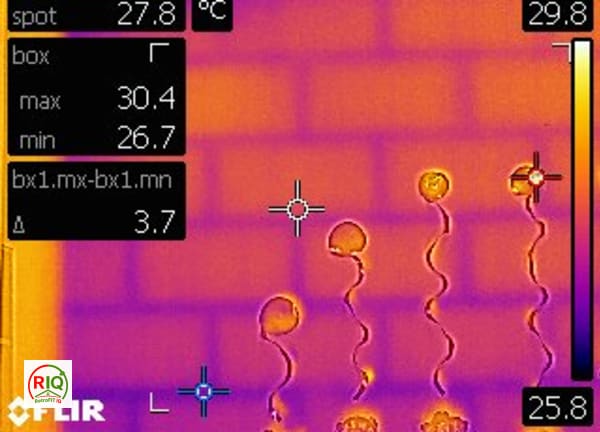
Thermal Bridging Visible Through Masonry Blockwork Wall

Thermal Bridge at Wall-Ceiling Junction Near Window

Thermal Bridge at Internal Corner Wall Junction

Sample Building Performance Investigation Report — Thermal Imaging

Bathroom external wall

Airtightness Testing in a Stratford Victorian Terrace
No related investigations yet.
Browse all investigationsFrequently asked questions
Why is there mould in my bedroom?+
Overnight moisture from sleeping, plus cold surfaces and poor ventilation, causes condensation that feeds mould in corners and around windows.
Is bedroom mould caused by poor hygiene?+
No — it's a condensation problem from overnight moisture meeting cold surfaces, not dirt.
Why is the mould in the corners?+
Corners are thermal bridges that run colder, so they condense first and grow mould before the rest of the wall.
Will opening the window stop bedroom mould?+
Some ventilation helps clear overnight moisture, but controlled ventilation plus warmer surfaces is the reliable fix.
Should I stop drying clothes in the bedroom?+
Yes — drying laundry adds a large moisture load overnight and strongly worsens bedroom mould.
Does my cold bedroom cause the mould?+
Yes — cold surfaces are half the cause. Warming them, alongside ventilation, removes the conditions mould needs.
How do you diagnose bedroom mould?+
We log humidity and surface temperatures overnight and map cold surfaces with thermal imaging, then plan ventilation and fabric work.
Stop guessing — find the real cause
Do not spend money fixing symptoms before you understand the cause. Every home behaves differently, and the only reliable way to know what is happening in yours is professional building performance diagnostics. At RetrofitIQ we verify buildings using the right combination of investigations:
- Thermal imaging
- Blower door testing
- Moisture & dew point readings
- Ventilation review
- Building physics assessment
- Passive House methodology