
Do damp-proof injections actually work?
Chemical damp-proof injection is one of the most-sold damp treatments in the UK, and one of the most disappointing — not because the chemistry never works, but because the damp it is sold to treat is usually not rising damp at all. When low-level wall damp is actually condensation, penetrating damp or a bridged damp course, an injected chemical course does nothing about the real source, and the damp returns. Whether injections work depends almost entirely on getting the diagnosis right first.
 Reviewed by George Sora, Certified Passive House DesignerUpdated June 2026
Quick answer & key takeaways
7 min read- Injections only address rising damp — genuine rising damp is far rarer than it is diagnosed.
- Most low-level wall damp is condensation, penetrating damp or a bridged damp course.
- Treat the wrong cause and the damp returns regardless of the injection.
- A moisture meter reading alone does not prove rising damp.
- Biggest misconception: damp at the skirting must be rising damp needing a chemical course.
- Retrofit IQ's approach: diagnose the moisture source properly before any treatment.
What this usually means
Damp-proof injection works by introducing a water-repellent chemical into the base of a wall to form a new barrier against moisture rising from the ground by capillary action. For that to be the right treatment, the damp must genuinely be rising damp — ground moisture being drawn up through the masonry. The trouble is that low-level damp on a wall has several possible causes that look similar, and rising damp is the least common of them, yet injection is frequently sold as the default answer.
Far more often, damp at the bottom of a wall is condensation forming on a cold surface, penetrating damp from a defect outside (high ground levels, failed pointing, a leaking gutter, a bridged cavity), or an existing damp course bridged by render, debris or a raised path. In each of these cases the moisture is arriving by a completely different route, so injecting a chemical course into the masonry treats a mechanism that is not actually happening — and the damp, fed by its real source, comes back.
This is why injection so often disappoints, and why people end up paying repeatedly for treatments that do not last. The failure is one of diagnosis, not of the product: without identifying where the moisture is really coming from, any treatment is a guess. A proper investigation distinguishes rising, penetrating and condensation damp and finds the actual source, so the money goes on the fix that matches the cause — which is frequently external repair, ventilation or insulation rather than injection at all.
Common causes
Misdiagnosed condensation
Low-level damp is often surface condensation on cold walls, which an injected course cannot affect.
Penetrating damp from outside
High ground levels, failed pointing, leaks or bridged cavities drive moisture in regardless of any chemical course.
A bridged existing damp course
Render, debris or raised paths can bridge the existing DPC, letting moisture past it — a physical, not chemical, fault.
Salts retaining moisture
Hygroscopic salts in old plaster hold moisture and keep walls reading damp even after treatment.
Diagnosis by moisture meter alone
Surface meters respond to salts and surface moisture, so a high reading is taken as rising damp when it is not.
Signs and symptoms
Damp that returns after injection
Damp coming back after a chemical course strongly suggests the real cause was never rising damp.
Damp linked to weather or rooms used
Damp that tracks rainfall (penetrating) or humidity and cold (condensation) points away from rising damp.
High external ground or bridged DPC
Paths, render or soil above the damp course let moisture bypass it physically.
Tide marks and salting on plaster
Salt bands can persist from old moisture and keep walls reading damp regardless of treatment.
Damp above the treated level
Moisture appearing higher than an injected course indicates a different source entirely.
What most people check first
- Whether the damp tracks rainfall (penetrating), or cold and humidity (condensation), rather than constant ground moisture.
- Whether external ground levels, render or paths bridge the existing damp course.
- Whether the diagnosis rests on a surface moisture meter alone.
- Whether previous injections have already failed to stop it.
What most people miss
- That genuine rising damp is far rarer than it is diagnosed.
- That condensation and penetrating damp look similar at low level but need different fixes.
- That a moisture-meter reading does not prove rising damp.
- That diagnosis, not injection, is what actually resolves the damp.
The building physics
Rising damp is real but specific: water moves up through a porous wall by capillary action against gravity, reaching a height where evaporation balances the upward draw, and carrying ground salts that leave characteristic tide marks. Diagnosing it requires confirming that ground moisture is genuinely being drawn up — typically through deep readings, salt analysis and ruling out other sources — not simply observing a damp, salty band, which several mechanisms can produce. Because the conditions for true rising damp are relatively uncommon in practice, treating every low-level damp band as rising damp guarantees frequent misdiagnosis.
The alternatives follow different physics. Penetrating damp is driven by liquid water finding a path from outside under rain and gravity, so it tracks weather and external defects. Condensation is vapour reaching its dew point on a cold surface, so it tracks indoor humidity and surface temperature. Hygroscopic salts complicate matters by absorbing moisture from humid air, keeping a wall damp and giving high meter readings long after any original source is gone. Each of these is invisible to a chemical course aimed only at capillary rise.
Reliable diagnosis therefore combines methods: deep moisture and salt measurement rather than surface meter readings alone, dew-point and humidity assessment to test for condensation, and external inspection for penetrating routes and bridged damp courses. Only when rising damp is positively confirmed — and other sources excluded — does an injected course become a rational treatment. In the majority of cases the investigation points instead to external repair, lowering ground levels, ventilation or insulation, which is why diagnosis is the measure that actually works.
How to deal with low-level wall damp properly
Identify the real source before any treatment. Injection is only the answer when rising damp is genuinely confirmed and other causes ruled out.
- 01
Diagnose the moisture source
Use deep moisture and salt measurement, dew-point readings and external inspection to distinguish rising, penetrating and condensation damp.
- 02
Rule out condensation
Check surface temperatures and humidity, as cold-surface condensation is a frequent cause of low-level damp.
- 03
Check for penetrating routes
Inspect ground levels, render, pointing, gutters and the existing damp course for bridging and defects.
- 04
Treat the confirmed cause
Repair external defects, lower ground levels, improve ventilation or insulation as the diagnosis dictates.
- 05
Inject only if rising damp is proven
Where true rising damp is confirmed, an appropriate damp-proof course can be installed as part of the correct remedy.
- 06
Address salts and verify
Deal with salt-laden plaster where needed and re-check that the wall dries and stays dry.
How to prevent it coming back
- Diagnose before agreeing to any damp treatment.
- Keep external ground levels below the damp course and clear bridging.
- Maintain gutters, pointing and render to prevent penetrating damp.
- Control indoor humidity to prevent low-level condensation.
How Retrofit IQ investigates this
We identify the true moisture source so any treatment matches the cause rather than the assumption.
Do not spend money fixing symptoms before you understand the cause — investigate first, then build with confidence.
Do I need a professional investigation?
If a wall is damp at low level, or an injection has already failed to cure it, it is worth a proper damp diagnosis before paying for treatment — so the real source is identified and the money goes on the fix that matches it rather than on a chemical course for a problem you may not have.
Stop guessing — find the real cause
Every home behaves differently. A building performance assessment measures what is actually happening in yours, so you fix the cause, not the symptom.
- Thermal imaging & airtightness testing
- Moisture & ventilation assessment
- Independent, least-cost remedy plan
Where to go next
Relevant services
Related comparisons
From the Academy
Related problems you may also have
Evidence from Real Projects (12)
Real project and investigation images from our own fieldwork, matched to this page — not stock photography.
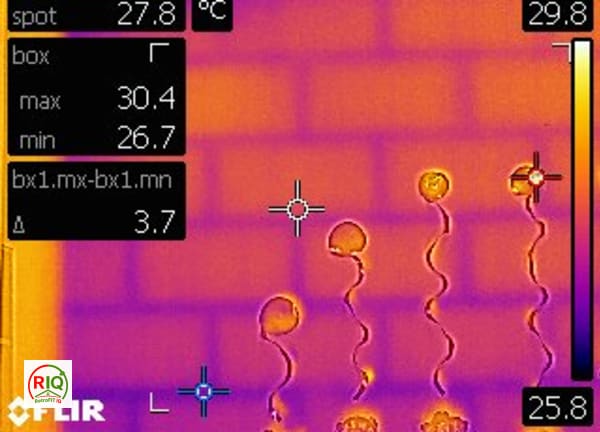
Thermal Bridging Visible Through Masonry Blockwork Wall

Sample Building Performance Investigation Report — Thermal Imaging

Thermal Bridge at Internal Corner Wall Junction

Thermal Bridge at Wall-Ceiling Junction Near Window
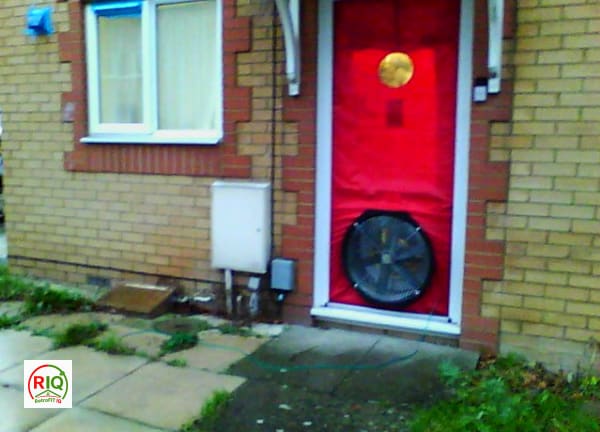
Blower Door Airtightness Test Setup

Airtightness Testing in a Stratford Victorian Terrace
No related investigations yet.
Browse all investigationsFrequently asked questions
Do damp-proof injections actually work?+
Only for genuine rising damp, which is far rarer than it is diagnosed. When the damp is really condensation, penetrating damp or a bridged damp course, an injected chemical course does nothing about the source and the damp returns.
Why did my damp come back after injection?+
Almost certainly because the cause was never rising damp. The moisture is arriving by another route — condensation or penetration — that the injection did not address, so it continues unchecked.
Is rising damp really that uncommon?+
True rising damp does occur, but it is diagnosed far more often than it actually exists. Many cases labelled rising damp are condensation or penetrating damp that look similar at low level.
Can a moisture meter prove rising damp?+
No. Surface moisture meters respond to surface moisture and salts and can read high for several reasons. Confirming rising damp needs deeper measurement, salt analysis and ruling out other sources.
What usually causes damp at the bottom of a wall?+
Most often cold-surface condensation, penetrating damp from external defects or high ground, or a bridged existing damp course — not capillary rise. Each needs a different fix.
What should I do instead of injecting?+
Get the moisture source diagnosed first. The correct remedy is frequently external repair, lowering ground levels, ventilation or insulation — and injection only where rising damp is genuinely confirmed.
How do you diagnose low-level damp?+
We use deep moisture and salt analysis, dew-point and humidity readings, thermal imaging and external inspection to identify the true source before any treatment is recommended.
Stop guessing — find the real cause
Do not spend money fixing symptoms before you understand the cause. Every home behaves differently, and the only reliable way to know what is happening in yours is professional building performance diagnostics. At RetrofitIQ we verify buildings using the right combination of investigations:
- Thermal imaging
- Blower door testing
- Moisture & dew point readings
- Ventilation review
- Building physics assessment
- Passive House methodology