
What is a blower door test and do I need one?
A blower door test measures how airtight your home is — how much air leaks in and out through gaps in the building — and, with smoke or thermal imaging, reveals exactly where. Since air leakage is often a leading cause of heat loss, cold draughts and high bills, the test turns an invisible, distributed problem into a measured figure and a map of leaks. You need one when you want to quantify and locate air leakage: before sealing, after a retrofit, when snagging a new build, or to diagnose a persistently draughty home.
 Reviewed by George Sora, Certified Passive House DesignerUpdated June 2026
Quick answer & key takeaways
7 min read- A blower door test measures the home's air leakage and locates where it leaks.
- Air leakage is often a major, hidden cause of heat loss and draughts.
- It gives a number (airtightness) and, with smoke/imaging, a map of leaks to seal.
- Most useful before sealing, after a retrofit, for snagging, or to diagnose draughts.
- Biggest misconception: airtightness is about feeling for draughts. It needs measuring under pressure.
- Retrofit IQ's approach: test, locate every leak, and balance sealing with ventilation.
What this usually means
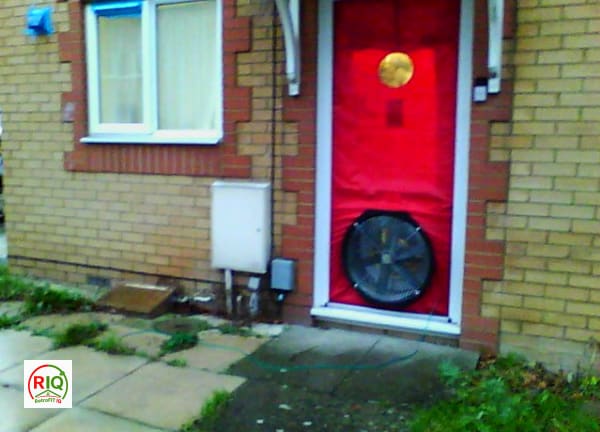
A blower door is a calibrated fan temporarily sealed into an external doorway. It pressurises and depressurises the house and measures the airflow needed to hold a set pressure difference, which gives a precise figure for how leaky the building is. Because everyday air leakage is driven by weather and is spread across countless small gaps, you cannot judge it reliably by hand; the test creates a steady, strong pressure so the leakage can be measured consistently and compared with standards or with the home's own design figure.
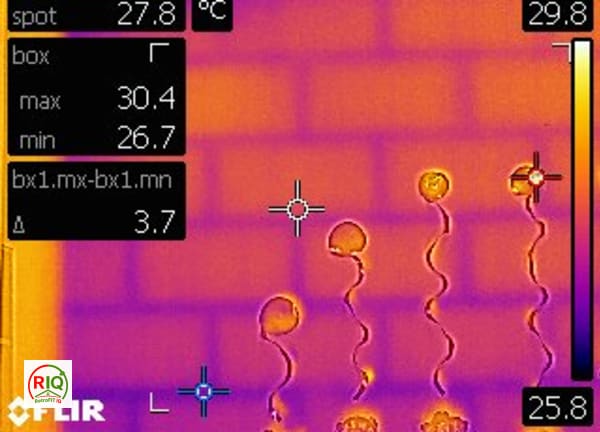
Just as importantly, while the fan runs, smoke and thermal imaging reveal where the air is leaking — around windows and doors, at floor and ceiling junctions, through service penetrations, the loft hatch and the like. Depressurising the home draws cold air in through every gap, so the leaks light up on a thermal camera and smoke traces the paths. The test therefore produces both a measured airtightness and a located map of the leaks, which is exactly what is needed to seal effectively rather than guess.
You need a blower door test whenever air leakage matters and you want facts rather than impressions: before draught-proofing or sealing, to find where the effort should go; after a retrofit, to verify the result; when snagging a new build, to check it against its design figure; or to diagnose a stubbornly draughty, hard-to-heat home. Crucially, the test also informs ventilation — knowing how tight the home is shows whether it needs added ventilation so that sealing does not trap moisture. It is a measurement that guides both sealing and healthy ventilation.
Common causes
Distributed air leakage
Many small gaps across the envelope add up to a large, invisible leakage you cannot judge by hand.
Leaks at junctions and penetrations
Floor and ceiling junctions, service penetrations and the loft hatch are common leakage points the test locates.
Gaps around windows and doors
Poor seals and fit around openings leak air and show up under pressure.
Verification needs
After a retrofit or for new-build snagging, the test confirms the airtightness achieved.
Ventilation balance
Knowing the airtightness shows whether sealing needs to be paired with added ventilation.
Signs and symptoms
A persistently draughty home
Draughts that defy patching are ideal for a test to measure and locate the leakage.
High bills and quick cooling
Heat lost to air leakage shows as high bills and rooms that cool fast — quantified by the test.
About to seal or retrofit
A pre-work test shows where to seal; a post-work test verifies the gain.
Snagging a new build
The test checks the as-built airtightness against the design figure.
Planning ventilation
The airtightness figure informs whether and how much ventilation to add.
What most people check first
- Whether air leakage (draughts, heat loss) is a concern you want measured.
- Whether it is before sealing, after a retrofit, for snagging, or to diagnose draughts.
- Whether you also need the leaks located (smoke/thermal imaging), not just a number.
- Whether sealing will be balanced with adequate ventilation.
What most people miss
- That air leakage must be measured under pressure, not judged by hand.
- That the test locates leaks as well as quantifying them.
- That sealing must be balanced with ventilation to avoid trapping moisture.
- That a number plus a leak map is what enables effective sealing.
The building physics
Air leakage is the uncontrolled flow of air through the building envelope under pressure differences from wind and temperature. Because it is distributed across many small, weather-driven gaps, it varies constantly and cannot be assessed reliably by feeling for draughts. A blower door imposes a known, steady pressure difference and measures the resulting airflow, yielding a repeatable airtightness metric (such as air changes per hour or air permeability) that can be compared with standards, design targets or before-and-after states.
The same induced pressure makes the leaks findable. Under depressurisation, outside air is drawn in through every gap, so a thermal camera sees cooling plumes at each leak and smoke visibly traces the paths. This converts the single airtightness number into a located inventory of leakage — junctions, penetrations, openings — which is what allows sealing to be effective: without the map, sealing is guesswork and air simply uses the gaps left behind.
Airtightness and ventilation are two halves of one decision, and the test informs both. A tighter envelope saves energy and removes draughts, but it also reduces accidental ventilation, so the measured airtightness indicates whether deliberate ventilation must be added to keep humidity and air quality healthy. This is why the test is the foundation of fabric-first work and of the 'build tight, ventilate right' principle: it quantifies the leakage to seal and the ventilation to provide, on evidence rather than assumption.
How a blower door test helps
Use it to measure your airtightness and map every leak, then seal effectively while providing the ventilation the tighter home needs.
- 01
Measure the airtightness
Run the blower door to obtain a precise airtightness figure for the home.
- 02
Locate every leak
Use smoke and thermal imaging under depressurisation to map the leakage paths.
- 03
Compare with target or design
Benchmark the result against standards, a retrofit target or the new-build design figure.
- 04
Seal the located leaks
Seal junctions, penetrations and openings precisely, guided by the leak map.
- 05
Balance with ventilation
Provide controlled ventilation matched to the tightened envelope so moisture is removed.
- 06
Re-test to verify
Re-run the test to confirm the airtightness has improved as intended.
How to prevent it coming back
- Test before sealing so the effort is targeted.
- Test after a retrofit or new build to verify airtightness.
- Always pair sealing with adequate ventilation.
- Use the located leak map rather than patching by guess.
How Retrofit IQ investigates this
We measure the airtightness and locate every leak, then advise on sealing and the ventilation to match.
Do not spend money fixing symptoms before you understand the cause — investigate first, then build with confidence.
Do I need a professional investigation?
A blower door test is worth it whenever you want to quantify and locate air leakage — before sealing, after a retrofit, when snagging a new build, or to diagnose a draughty, hard-to-heat home — so sealing is targeted and balanced with the ventilation the home needs.
Where to go next
Relevant services
Related comparisons
From the Academy
Evidence from Real Projects (19)
Real project and investigation images from our own fieldwork, matched to this page — not stock photography.



No related investigations yet.
Browse all investigationsFrequently asked questions
What is a blower door test?+
A calibrated fan sealed into a doorway pressurises and depressurises the home to measure how much air leaks through the envelope, giving a precise airtightness figure. With smoke and thermal imaging it also reveals exactly where the home leaks.
Do I need a blower door test?+
If you want to quantify and locate air leakage — before sealing, after a retrofit, when snagging a new build, or to diagnose a draughty, hard-to-heat home — then yes. It turns an invisible, distributed problem into a measured figure and a map of leaks.
What does the test tell me?+
How airtight your home is, how it compares with standards or its design target, and where the air is leaking, so sealing can be targeted. It also indicates whether ventilation needs adding so sealing does not trap moisture.
Can't I just feel for draughts?+
No — air leakage is distributed across many small, weather-driven gaps and varies constantly, so it cannot be judged reliably by hand. The test imposes a steady pressure to measure it consistently and reveal the paths.
Will sealing my home cause condensation?+
Not if sealing is balanced with ventilation. The test's airtightness figure shows whether deliberate ventilation needs adding so the tighter home removes moisture — the 'build tight, ventilate right' principle.
Is it useful for a new build?+
Very — it checks the as-built airtightness against the design figure and locates any leaks, providing evidence for a snagging or warranty claim if the home is leakier than designed.
Do you locate the leaks or just give a number?+
Both. We measure the airtightness and use smoke and thermal imaging to map every leakage path, then advise on sealing and the ventilation to match.
Stop guessing — find the real cause
Do not spend money fixing symptoms before you understand the cause. Every home behaves differently, and the only reliable way to know what is happening in yours is professional building performance diagnostics. At RetrofitIQ we verify buildings using the right combination of investigations:
- Thermal imaging
- Blower door testing
- Moisture & dew point readings
- Ventilation review
- Building physics assessment
- Passive House methodology