
Why is my house so draughty?
A draughty house feels cold even when the heating is on, because uncontrolled air is moving through the building, carrying warmth out and pulling cold air in. Draughts are not just an irritation at the doors and windows — they are the visible end of a whole-house air leakage problem, and most of the leakage is in places you cannot feel or see. Understanding how and why air moves through a home is the key to stopping it.
 Reviewed by George Sora, Certified Passive House DesignerUpdated June 2026
Quick answer & key takeaways
9 min read- Draughts are uncontrolled air leakage — warm air escaping and cold air being drawn in to replace it.
- Most air leakage is hidden: floor and skirting junctions, loft hatches, service penetrations and behind fitted units.
- The draughts you feel at windows and doors are usually a small part of the total leakage.
- Air leakage is driven by the stack effect and wind, so it changes with weather and is worse in winter.
- A blower door test measures the total leakage and locates it precisely, so sealing is targeted.
- Biggest misconception: draughtproofing the windows and doors will fix it. The big leaks are elsewhere.
- Retrofit IQ's approach: a blower door test with smoke and thermal imaging to find and quantify every leak.
What this usually means
When a house feels draughty, air is moving through it without being controlled. Warm indoor air leaks out through gaps high in the building, and as it leaves, cold outdoor air is pulled in through gaps lower down to replace it. You feel the incoming cold air as a draught, but the underlying problem is the whole circulation: every litre of warm air that escapes is replaced by a litre of cold air that has to be heated from scratch. That is why a leaky home is both uncomfortable and expensive to run.
Crucially, the draughts you can feel are only a fraction of the story. The obvious gaps around old windows and doors are real, but the largest leakage paths are usually hidden — the junction where the floor meets the external wall, gaps behind skirting boards, an uninsulated and unsealed loft hatch, holes where pipes and cables pass through the structure, the backs of kitchen and bathroom units, recessed downlights, and the route up through a suspended timber floor. Air finds every one of these, and together they dwarf the window gaps.
Air leakage is also dynamic, which is why a house feels draughtier on some days than others. The movement is driven by pressure differences across the building: warm air is buoyant and rises, creating the 'stack effect' that pushes air out at the top and draws it in at the bottom, while wind adds pressure on the windward side and suction on the leeward side. Both effects are stronger in cold, windy winter weather — exactly when you most notice the draughts and most want to keep the heat in.
Common causes
Floor-to-wall junctions and skirting gaps
The join between a suspended or solid floor and the external wall, and the gaps behind skirting boards, are among the biggest and least obvious leakage paths in many homes.
Suspended timber floors
Ventilated voids beneath timber ground floors allow cold air to rise between and around the boards, producing cold floors and draughts at low level.
Loft hatches and ceiling penetrations
An unsealed, uninsulated loft hatch is a large hole at the top of the warm space, and recessed downlights and pipe runs add more.
Service penetrations
Holes where pipes, cables, waste pipes and flues pass through walls, floors and ceilings are rarely sealed and leak continuously.
Windows, doors and letterboxes
Worn seals, gaps around frames and unsealed letterplates leak air — noticeable, but usually a smaller share of the total than people assume.
Behind fitted kitchens and bathrooms
Units and boxing often conceal unsealed penetrations and wall junctions, so significant leakage hides behind cupboards and panels.
Chimneys and unused flues
An open flue is effectively a permanent chimney for warm air, driving a strong stack-effect draught even when the fire is not in use.
Signs and symptoms
Cold air at floor level
Draughts felt around the feet, at skirtings and on stairs are classic signs of low-level leakage drawing cold air in as warm air escapes higher up.
Rooms that never feel warm despite heating
If the heating runs but rooms stay cool and the air feels moving, leakage is replacing heated air with cold air faster than the system can keep up.
Draughts that worsen on windy or very cold days
Leakage driven by wind and the stack effect intensifies in cold, windy weather, so the draughts come and go with conditions.
Cold spots near hatches, sockets and downlights
Cool air around loft hatches, electrical fittings and recessed lights reveals air tracking through ceiling and wall penetrations.
Curtains or flames that move with no obvious source
Net curtains stirring or pilot flames flickering away from a window point to air movement through hidden leakage paths.
What most people check first
- Where you feel the draughts — low level and around skirtings often signals whole-house leakage, not just windows.
- Whether the draughts get worse in windy or very cold weather.
- Obvious paths — loft hatch, letterbox, unused chimney, gaps at floor junctions.
- Whether the home has a suspended timber ground floor with a ventilated void below.
What most people miss
- That draughtproofing windows and doors alone leaves most of the leakage untouched.
- That the biggest leaks are hidden at floor junctions, penetrations and the loft hatch.
- That air leakage and ventilation are different things — you want to stop uncontrolled leakage while keeping controlled ventilation.
- That without a blower door test you are guessing where the air actually goes.
The building physics
Air moves through a building because of pressure differences across its envelope, and there are two main drivers. The first is the stack effect: warm indoor air is less dense than cold outdoor air, so it rises and exerts pressure at the top of the building, escaping through high-level gaps. As it leaves, it lowers the pressure lower down, drawing cold air in through low-level gaps. The taller the warm column and the bigger the temperature difference, the stronger the effect — which is why draughts are worst in cold weather and on stairs and upper floors.
The second driver is wind. As wind hits a building it creates positive pressure on the windward face and negative pressure (suction) on the leeward and side faces. Air is pushed in on one side and pulled out on the other, and the effect rises sharply with wind speed. Stack and wind effects combine and vary constantly, which is exactly why a draughty house feels different from day to day and why chasing individual draughts by feel is so unreliable — the pattern changes with the weather.
Because leakage depends on both the size of the gaps and the pressure across them, two things follow. First, many small, hidden gaps distributed around the envelope can add up to far more leakage than a few obvious ones at the windows. Second, you cannot reliably judge the total or its distribution by hand on a normal day, because the pressures are low and shifting. This is the problem the blower door test solves: it puts the whole house under a controlled, steady pressure so that every leakage path reveals itself at once, and the total can be measured.
A blower door fan pressurises or depressurises the house to a standard 50 pascals and measures the airflow needed to hold that pressure — giving the air permeability and air change rate (such as ach50). Under depressurisation, cold air is drawn in through every leak simultaneously, so smoke pens and thermal imaging can map each one precisely. This converts a vague, weather-dependent feeling of 'draughtiness' into a measured number and a located list of leaks, which is what makes targeted, effective sealing possible.
How to fix a draughty house properly
The aim is to stop uncontrolled leakage while keeping the controlled ventilation a home needs. That means finding the real leaks, sealing them in the right order, and not simply blocking up the windows.
- 01
Measure and locate the leakage first
A blower door test quantifies the total air leakage and, with smoke and thermal imaging, pinpoints every significant path — so effort goes where the air actually moves.
- 02
Seal the big, hidden paths first
Address floor-to-wall junctions, service penetrations, the loft hatch, suspended floor gaps and the backs of fitted units before fine-tuning windows and doors. These usually deliver the biggest gains.
- 03
Draughtproof windows, doors and letterplates
Renew worn seals and fit brush or compression seals to windows, doors and letterboxes — worthwhile, but as part of the whole picture rather than the whole job.
- 04
Deal with chimneys and unused flues
Cap or fit a draught excluder to unused flues to stop the permanent stack-effect draught they create, while keeping any required background ventilation.
- 05
Protect and provide controlled ventilation
As the home becomes more airtight, ensure deliberate ventilation — trickle vents, extract or MVHR — so moisture and stale air are removed without relying on leaks.
- 06
Re-test to verify
A follow-up blower door test confirms how much the leakage has fallen and whether any paths remain, proving the work succeeded.
How to prevent it coming back
- Seal new penetrations as soon as pipes, cables or extractors are installed, rather than leaving open holes.
- Maintain window and door seals and replace them before they perish.
- Keep the loft hatch insulated and sealed, and cap unused flues.
- Plan controlled ventilation alongside any airtightness work so the home stays healthy.
- Re-test airtightness after major works to catch new leakage paths early.
How Retrofit IQ investigates this
We measure the whole-house air leakage and locate every significant path, so sealing is targeted and verified rather than guessed.
Do not spend money fixing symptoms before you understand the cause — investigate first, then build with confidence.
Do I need a professional investigation?
A blower door test is worthwhile whenever a home feels persistently draughty or hard to heat, before spending on heating upgrades or a heat pump, and before or after retrofit works where airtightness matters. Because so much leakage is hidden, measuring is the only reliable way to know how much there is and where it goes.
It is especially valuable before insulating or installing a heat pump, since uncontrolled leakage undermines both. Knowing the air leakage figure lets you size and sequence improvements correctly rather than discovering the problem after the work is done.
Where to go next
Relevant services
Related comparisons
From the Academy
- Common air-leakage pathways in UK homes — where buildings actually leak.
- Smoke tracing and leak detection — finding exactly where a building leaks.
- What is airtightness? ACH₅₀, air permeability and 50 Pa explained.
- How a blower door test works — methodology, equipment and standards.
- Thermal imaging for air leakage — finding draughts under depressurisation.
Related case studies
Evidence from Real Projects (20)
Real project and investigation images from our own fieldwork, matched to this page — not stock photography.
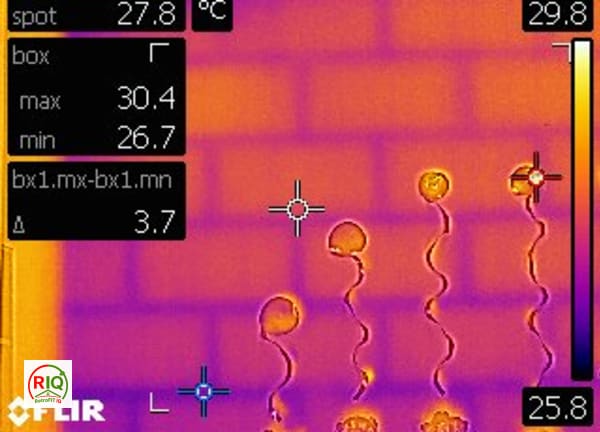
Thermal Bridging Visible Through Masonry Blockwork Wall
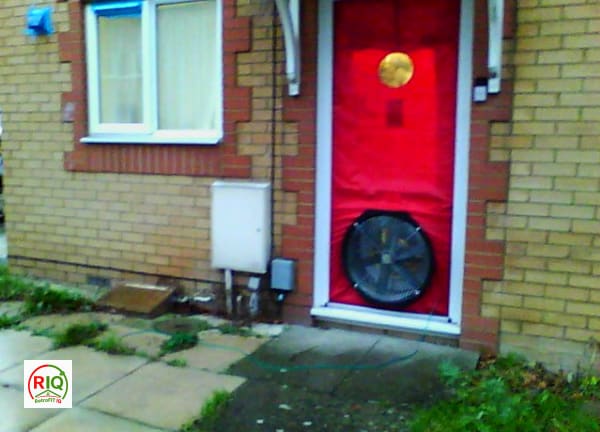
Blower Door Airtightness Test Setup

Sample Building Performance Investigation Report — Thermal Imaging

Thermal Bridge at Internal Corner Wall Junction

Smoke tracing during a blower door test

Thermal Bridge at Wall-Ceiling Junction Near Window
No related investigations yet.
Browse all investigationsFrequently asked questions
Why is my house so draughty even with new windows?+
Because most air leakage is not at the windows. Floor junctions, the loft hatch, service penetrations and the backs of fitted units usually leak far more than modern windows do, so the draughts continue.
Why are the draughts worse on windy days?+
Wind creates pressure on one side of the house and suction on the other, driving more air through the leaks. Combined with the stack effect, this is why draughtiness changes with the weather.
Will draughtproofing strips fix my draughty house?+
They help at the windows and doors, but they leave the larger hidden leaks untouched. A blower door test shows where the real leakage is so you can seal the paths that matter most.
Is a draughty house the same as a poorly ventilated one?+
No. Draughts are uncontrolled, weather-driven leakage; ventilation is deliberate, controlled airflow. The goal is to stop the leakage while keeping good controlled ventilation.
What is a blower door test?+
A fan temporarily seals into a doorway and pressurises the house to a standard level, measuring how much air leaks and, with smoke and thermal imaging, showing exactly where.
Can sealing draughts cause condensation?+
Only if you reduce leakage without providing controlled ventilation. Done properly, you stop uncontrolled leaks and add or maintain deliberate ventilation, which improves comfort without trapping moisture.
How do you find where my house is leaking air?+
We run a blower door test to measure the total leakage, then use smoke tracing and thermal imaging to locate each path precisely, so sealing is targeted and verified.
Stop guessing — find the real cause
Do not spend money fixing symptoms before you understand the cause. Every home behaves differently, and the only reliable way to know what is happening in yours is professional building performance diagnostics. At RetrofitIQ we verify buildings using the right combination of investigations:
- Thermal imaging
- Blower door testing
- Moisture & dew point readings
- Ventilation review
- Building physics assessment
- Passive House methodology