
Why is my house draughty after new windows?
If your home is still draughty after new windows, it is because the windows were only ever part of the air leakage — and often not the biggest part. Draughts come from many paths: gaps around floors and skirtings, the loft hatch, downlighters, service penetrations, chimneys, letterboxes, and crucially the junction where the new windows meet the wall, which is frequently left poorly sealed even when the windows themselves are airtight. Replacing the glazing addresses the glass but not these other leaks, so the house can feel barely less draughty. Finding where the air actually moves — with a blower door test — is what lets the real leaks be sealed.
 Reviewed by George Sora, Certified Passive House DesignerUpdated June 2026
Quick answer & key takeaways
6 min read- New windows fix only part of a home's air leakage.
- Floors, skirtings, lofts and penetrations often leak more.
- The window-to-wall junction is frequently poorly sealed.
- A blower door test locates where the air actually moves.
- Biggest misconception: new windows stop all draughts. Most leakage is elsewhere.
- RetrofitIQ's approach: measure and locate the leaks, then seal by priority.
What this usually means
Air leakage in a home is distributed across many paths, and windows are only one of them. Even before replacement, the old windows might have been a modest fraction of the total leakage; the rest comes from the floor perimeter and board gaps, the loft hatch and ceiling penetrations, recessed downlighters, holes where pipes and cables pass through, open chimneys, and gaps around doors and letterboxes. Replacing the windows closes one path while leaving all the others open, so the house can remain noticeably draughty — the leakage simply continues through the routes the windows never affected.
There is also a specific window-related catch: the air-sealing of a replacement window depends not on the unit but on how well the gap between the frame and the wall is sealed during installation. This junction is often inadequately sealed even with good windows, so air leaks around the frame rather than through it — and the homeowner blames the new windows for draughts that are actually an installation defect. The way to resolve continued draughtiness is to measure: a blower door test depressurises the house and reveals every leakage path, including any around the new window frames, so the real leaks — wherever they are — can be sealed in priority order, which is what finally makes the home feel tight.
Common causes
Leakage elsewhere
Floors, lofts, penetrations and chimneys leaking regardless of windows.
Poor window-to-wall sealing
Air leaking around the frame from a bad installation.
Windows a small share of leakage
The old windows were never the main leak.
Unsealed service penetrations
Pipes, cables and downlighters letting air through.
Signs and symptoms
Still draughty after new windows
Leakage continuing through other paths.
Draught around the new frames
Poor sealing of the window-to-wall junction.
Cold air at floors and skirtings
Floor-void leakage unaffected by the windows.
Draught at the loft hatch or downlighters
Ceiling leakage paths still open.
What most people check first
- Whether the window-to-wall junction was properly sealed.
- Whether floors, skirtings and the loft are leaking.
- Whether penetrations and the chimney are sealed.
- Where a blower door test shows the air actually moving.
What most people miss
- That windows are only one of many leakage paths.
- That the window fitting, not the unit, often leaks.
- That floor and ceiling leaks usually dominate.
- That measuring locates the real leaks.
The building physics
Total air leakage is the sum of all the leakage paths in the envelope, so reducing one — the windows — lowers the total only by that path's share, which is often small compared with the floor perimeter, the ceiling and loft penetrations, and the chimney. The draughts a homeowner feels are driven by the stack effect and wind pulling air through whichever paths remain open, so unless the dominant ones are sealed, the sensation of draughtiness persists after a window replacement. This is why air leakage must be treated as a whole-envelope problem rather than a window-by-window one.
The window-to-wall junction deserves particular attention because a replacement window's installed airtightness depends on sealing the perimeter gap between frame and structure, not on the unit's own performance; a poorly sealed installation leaks around the frame and mimics a draughty window. A blower door test depressurises the house so air is drawn in through every path, and smoke or thermal imaging then reveals each one — including any around the new frames — and its relative significance. Sealing the leaks in priority order, starting with the largest, brings the total leakage down efficiently and removes the draughts, while preserving the ventilation the home needs. Measuring first is what turns continued draughtiness after new windows from a mystery into a targeted fix.
How to fix a home that's still draughty after new windows
Measure the leakage with a blower door test, then seal the real paths — floors, ceilings, penetrations, chimneys and any poorly sealed window junctions — in priority order.
- 01
Measure the leakage
Run a blower door test to locate every path.
- 02
Check the window junctions
Confirm whether air leaks around the new frames.
- 03
Seal the floor and perimeter
Close the floor-void and skirting leakage.
- 04
Seal ceiling and penetrations
Air-seal the loft hatch, downlighters and service holes.
- 05
Address the chimney and doors
Control open flues and seal door and letterbox gaps.
- 06
Verify the improvement
Re-test to confirm the draughts are reduced.
How to prevent it coming back
- Treat air leakage as a whole-envelope problem.
- Insist on proper window-to-wall sealing at installation.
- Seal the largest leaks first.
- Keep the ventilation the home needs while sealing.
How Retrofit IQ investigates this
We measure and locate the leakage that new windows didn't address, so the real draughts can be sealed.
Do not spend money fixing symptoms before you understand the cause — investigate first, then build with confidence.
Do I need a professional investigation?
If your home is still draughty after new windows, it is worth a blower door test to find where the air actually moves. It reveals the dominant leaks — often floors, ceilings and penetrations, plus any poorly sealed window junctions — so sealing them in priority order finally makes the home feel tight.
Where to go next
Relevant services
Related comparisons
From the Academy
Related case studies
Evidence from Real Projects (17)
Real project and investigation images from our own fieldwork, matched to this page — not stock photography.
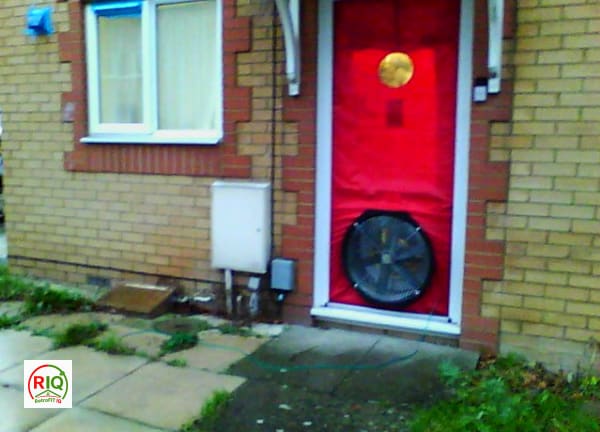
Blower Door Airtightness Test Setup

Sample Building Performance Investigation Report — Thermal Imaging
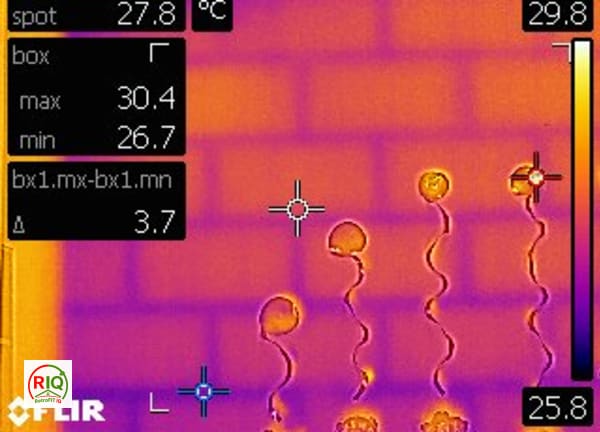
Thermal Bridging Visible Through Masonry Blockwork Wall

Thermal Bridge at Wall-Ceiling Junction Near Window

Thermal Bridge at Internal Corner Wall Junction

Ceiling / external-wall junction
No related investigations yet.
Browse all investigationsFrequently asked questions
Why is my house draughty after new windows?+
Because windows are only one of many air-leakage paths, and often not the biggest. Draughts also come from floors, skirtings, the loft hatch, downlighters, service penetrations, chimneys and doors — and crucially from a poorly sealed junction where the new windows meet the wall. Replacing the glass leaves those other leaks open.
Could the new windows themselves be leaking?+
It's usually the installation, not the unit. A replacement window's airtightness depends on sealing the gap between the frame and the wall, which is often done poorly, so air leaks around the frame and feels like a draughty window. A blower door test reveals whether the junctions leak.
Where are the draughts most likely coming from?+
Commonly the floor perimeter and floorboards, the loft hatch and ceiling penetrations, recessed downlighters, open chimneys and door gaps — paths the windows never affected. These often leak more than the windows did, which is why the house still feels draughty.
How do I find the real leaks?+
A blower door test depressurises the house so air is drawn in through every gap, and smoke or thermal imaging then reveals each path and its significance. That lets the leaks be sealed in priority order, starting with the largest.
Will sealing them make the house too airtight?+
Not if done properly — a good approach seals the uncontrolled leakage while keeping the ventilation the home needs. The aim is a tighter, warmer, less draughty home that's still healthily ventilated.
Stop guessing — find the real cause
Do not spend money fixing symptoms before you understand the cause. Every home behaves differently, and the only reliable way to know what is happening in yours is professional building performance diagnostics. At RetrofitIQ we verify buildings using the right combination of investigations:
- Thermal imaging
- Blower door testing
- Moisture & dew point readings
- Ventilation review
- Building physics assessment
- Passive House methodology