
How do I find and stop draughts?
You can find a few draughts by feeling for cold air, but the leaks that cost you the most are usually the ones you cannot feel. Stopping draughts effectively means locating every significant air leakage path, sealing them in the right order, and keeping the controlled ventilation your home needs. This guide explains how to do that properly, from what you can do yourself to what measurement reveals.
 Reviewed by George Sora, Certified Passive House DesignerUpdated June 2026
Quick answer & key takeaways
7 min read- Feeling for draughts finds the obvious leaks but misses most of the hidden ones.
- A blower door test locates and measures every leakage path, so sealing is targeted.
- Seal the biggest hidden paths first — floor junctions, loft hatch, penetrations — then windows and doors.
- Use the right materials for each gap: airtight tapes, sealants, grommets and brush seals.
- Keep controlled ventilation as you seal, so you do not trap moisture or stale air.
- Biggest misconception: stopping draughts is just about draughtproofing strips. The big wins are elsewhere.
- Retrofit IQ's approach: measure, locate with smoke and thermal imaging, seal in priority order, then re-test.
What this usually means
Stopping draughts is a two-part task: first find where the air actually moves, then close those paths without compromising ventilation. The finding is the part most people get wrong, because the human hand is a poor detector — you only feel a draught where incoming cold air happens to reach you, and only when the weather is driving enough pressure. The largest leaks are often hidden behind units, under floors and in the loft, where you never feel them, so judging leakage by feel leaves most of it untouched.
The reliable way to find leakage is to make the whole house leak at once under a controlled pressure, which is what a blower door test does. With the house held at a steady pressure, every gap draws air simultaneously, and smoke pens and thermal imaging show exactly where. This turns a vague hunt into a precise map and gives you a measured total, so you know both where to seal and how much difference it should make.
Sealing then has to be done in the right order and with the right materials. The biggest, hidden paths — floor-to-wall junctions, the loft hatch, service penetrations, the backs of fitted units — generally deliver the largest reductions, so they come first; windows, doors and letterplates are worthwhile but usually a smaller share. And because a tighter house relies less on accidental leakage for fresh air, controlled ventilation has to be kept or added, so you improve comfort and efficiency without trapping moisture.
Common causes
Relying on feel alone
Searching for draughts by hand finds only the leaks that reach you on a windy day and misses the hidden majority.
Sealing the wrong gaps first
Starting with windows and doors leaves the larger floor, loft and penetration leaks active, so the draughty feeling persists.
Unsealed service penetrations
Gaps around pipes and cables are continuous leaks that are easy to seal once located but rarely addressed.
Open and unsealed paths at high level
Loft hatches and downlights let warm air escape, driving the intake felt lower down.
Ignoring ventilation
Sealing without keeping controlled ventilation can raise humidity and cause condensation, so it must be planned alongside.
Signs and symptoms
Cold air you can feel but not trace
Draughts that seem to come from nowhere indicate hidden paths that hand-searching cannot locate.
Sealing efforts that make little difference
If draughtproofing the windows barely helps, the real leakage is elsewhere and needs locating with a test.
Cold spots at fittings and junctions
Cool areas around sockets, downlights, hatches and skirtings mark leakage paths worth sealing.
Draughts that change with the weather
Leakage that varies with wind and cold confirms uncontrolled air movement rather than a single fixed gap.
What most people check first
- Whether sealing the obvious gaps has actually reduced the draughts.
- Low-level perimeter and floor areas, where much leakage enters.
- High-level paths — loft hatch, downlights and ceiling penetrations.
- Existing ventilation provision, so it can be kept as the home is sealed.
What most people miss
- That you cannot find most leaks by hand, so measurement is needed to locate them.
- That sealing order matters — the biggest hidden paths should come first.
- That the right material differs by gap, and the wrong one fails or blocks ventilation.
- That controlled ventilation must be preserved as airtightness improves.
The building physics
Finding leaks reliably depends on creating a steady, known pressure across the envelope, because leakage is proportional to both the gap size and the pressure across it. On a normal day the pressures from stack and wind are low and constantly changing, so only the largest leaks reach you and only intermittently. A blower door fan holds the house at a standard pressure difference, magnifying and steadying the flow through every gap at once, which is why it reveals leaks that are invisible to the hand and quantifies the total as an air permeability or air change rate.
Sealing then works by removing area from the leakage paths that carry the most flow. Because flow concentrates where gaps are largest or most numerous, the priority is the big, distributed paths — floor and perimeter junctions, the loft hatch, lines of downlights and the many service penetrations — rather than the few obvious window gaps. Smoke tracing under the test shows where the flow is strongest, so effort is directed at the paths that actually move the air.
The final principle is the balance between airtightness and ventilation. A leaky house ventilates accidentally and inefficiently through its draughts, losing heat in the process; a well-sealed house must ventilate deliberately, through trickle vents, extract fans or MVHR. The goal is not to make a house hermetic but to replace random, wasteful leakage with controlled, efficient ventilation — 'build tight, ventilate right'. Re-testing after sealing confirms both that the leakage has fallen and that the home is still properly ventilated.
How to find and stop draughts, step by step
Work from measurement to sealing to verification, and keep ventilation in mind throughout. This sequence stops the most leakage for the least effort.
- 01
Locate and measure with a blower door test
Pressurise the house and use smoke and thermal imaging to map every leak and record the total air leakage as a baseline.
- 02
Seal the biggest hidden paths first
Close floor-to-wall and skirting junctions, suspended-floor gaps, the loft hatch and service penetrations, using airtight tapes, sealants and grommets suited to each.
- 03
Draughtproof windows, doors and letterplates
Renew worn seals and add brush or compression seals, and fit a letterplate brush — finishing the leakage picture.
- 04
Cap unused flues
Fit a draught excluder or cap to unused chimneys to stop the permanent stack draught, keeping any needed background ventilation.
- 05
Keep or add controlled ventilation
Ensure trickle vents, extract or MVHR provide the fresh air the tighter home needs, so moisture and pollutants are removed.
- 06
Re-test to confirm the result
A follow-up blower door test shows how far the leakage has fallen and whether any paths remain, proving the work was effective.
How to prevent it coming back
- Seal new penetrations immediately and choose airtight detailing during any building work.
- Maintain seals on windows, doors and hatches, replacing them before they fail.
- Re-test airtightness after major works to catch new leaks.
- Plan ventilation alongside sealing so the home stays healthy and condensation-free.
How Retrofit IQ investigates this
We locate and measure the leakage precisely, seal in priority order conceptually, and verify the result, so draughts are stopped efficiently and ventilation is preserved.
Do not spend money fixing symptoms before you understand the cause — investigate first, then build with confidence.
Do I need a professional investigation?
Bring in a blower door test when your own draughtproofing has not solved the problem, when you want to reduce leakage efficiently, or before insulation or a heat pump where hidden leakage would undermine the investment. Measuring first and re-testing afterwards is the only way to know you have actually stopped the draughts.
Where to go next
Relevant services
Related comparisons
From the Academy
- Smoke tracing and leak detection — finding exactly where a building leaks.
- Common air-leakage pathways in UK homes — where buildings actually leak.
- Airtightness strategy and detailing — the continuous air barrier.
- How a blower door test works — methodology, equipment and standards.
- What a blower door test actually tells you about your house.
Related case studies
Evidence from Real Projects (19)
Real project and investigation images from our own fieldwork, matched to this page — not stock photography.
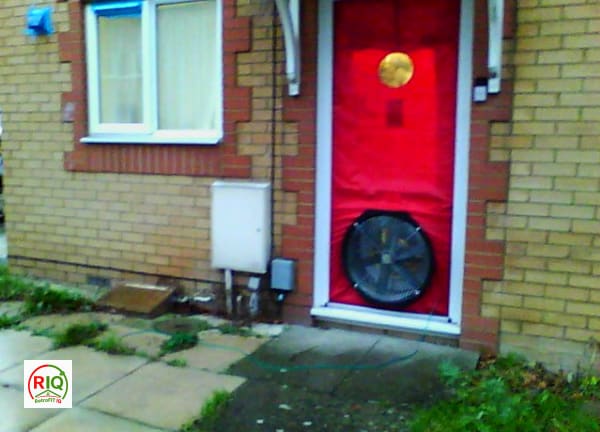
Blower Door Airtightness Test Setup
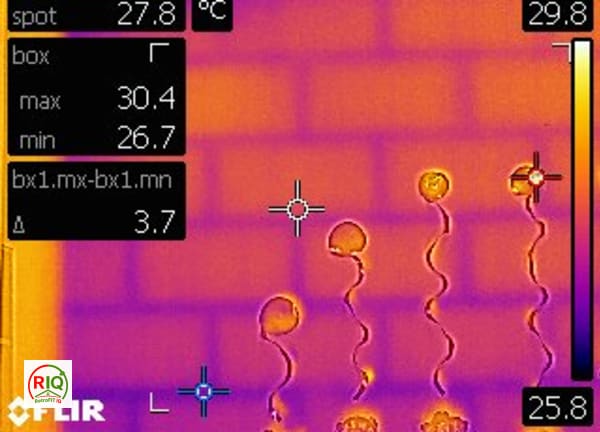
Thermal Bridging Visible Through Masonry Blockwork Wall

Sample Building Performance Investigation Report — Thermal Imaging

Thermal Bridge at Internal Corner Wall Junction

Smoke tracing during a blower door test

Thermal Bridge at Wall-Ceiling Junction Near Window
No related investigations yet.
Browse all investigationsFrequently asked questions
How do I find draughts in my house?+
You can feel for the obvious ones near windows and doors, but most leakage is hidden. A blower door test with smoke and thermal imaging locates every path precisely, including the ones you cannot feel.
What is the best way to stop draughts?+
Seal the biggest hidden paths first — floor junctions, the loft hatch and service penetrations — then draughtproof windows and doors, and keep controlled ventilation. Measuring first ensures you seal the gaps that matter.
What should I use to seal draughts?+
It depends on the gap: airtight tapes and sealants for junctions and penetrations, grommets around cables, and brush or compression seals for windows, doors and letterplates. The right material for each path lasts and works.
Will stopping draughts cause damp?+
Not if you keep controlled ventilation. The aim is to replace random leakage with deliberate ventilation, so moisture is still removed while heat is retained.
Why didn't draughtproofing my windows help much?+
Because the windows were a small part of the leakage. The larger hidden paths at floor level, the loft and penetrations were still open, so the draughts continued.
How do I know the sealing worked?+
A re-test with the blower door measures the new leakage figure and compares it with the baseline, proving how much the draughts have been reduced.
Can you find and stop the draughts for me?+
Yes. We measure and locate every leak, identify which paths to seal for the biggest gain, ensure ventilation is preserved, and re-test to confirm the result.
Stop guessing — find the real cause
Do not spend money fixing symptoms before you understand the cause. Every home behaves differently, and the only reliable way to know what is happening in yours is professional building performance diagnostics. At RetrofitIQ we verify buildings using the right combination of investigations:
- Thermal imaging
- Blower door testing
- Moisture & dew point readings
- Ventilation review
- Building physics assessment
- Passive House methodology