
Why can I feel a draught but can't find it?
A draught you can feel but cannot find is one of the commonest puzzles in an older home, and there are two usual explanations. Either cold air is leaking in somewhere out of sight and tracking across the room to where you feel it — air rarely enters where you sense it — or there is no incoming air at all and you are feeling cold air sliding down off a cold surface, which feels exactly like a draught but is not air leakage. Telling the two apart is the key to fixing it.
 Reviewed by George Sora, Certified Passive House DesignerUpdated June 2026
Quick answer & key takeaways
8 min read- A felt draught usually enters far from where you notice it, then tracks across the room.
- Cold air falling off a cold surface feels like a draught but is not air leakage.
- Air leaks in low (floors, skirtings) and is felt as a cold flow at ankle level.
- Smoke and a blower door test reveal the true entry point you cannot find by hand.
- Biggest misconception: the draught comes from where you feel it. It rarely does.
- Retrofit IQ's approach: pressurise the home and trace the air to find the real source.
What this usually means
Air does not announce where it enters; it follows pressure and tracks along surfaces, so the place you feel a draught is usually downstream of where it actually gets in. Cold air commonly leaks in low down — at floor-to-wall junctions, under skirtings, around floorboards, through service penetrations or the bottoms of doors — then flows across the floor and is felt as a chilly stream at your ankles several feet away, perhaps near a window that is itself perfectly sealed. Searching at the spot where you feel it finds nothing, because the leak is elsewhere.
The second explanation is not air movement at all. A cold surface — a large window, an uninsulated wall, a cold reveal — chills the air immediately against it; that cooled, denser air then slides downward and spills into the room, creating a gentle cold flow that feels just like a draught. This is a 'cold downdraught' or convection current, and no amount of hunting for a gap will find a source, because there is no incoming air. The fix here is to warm the surface (insulation, better glazing, a warmer reveal), not to seal a leak.
Distinguishing the two matters because the remedies differ. A genuine air leak needs locating and sealing; a cold downdraught needs the cold surface addressed. The reliable way to tell is to make the air movement visible and measurable: a blower door test pressurises or depressurises the home so that real leaks reveal themselves clearly, and smoke or a thermal camera shows whether you are seeing incoming air or surface convection. That turns an elusive, hand-chasing problem into a located, explained one.
Common causes
Leak entering far from where felt
Cold air enters low and out of sight, then tracks across the room to where you notice it.
Cold downdraught off a surface
Air chilled by a cold window or wall falls and flows into the room, mimicking a draught with no leak.
Floor and skirting leakage
Gaps at floor junctions, under skirtings and around boards admit air felt at ankle level.
Service penetrations
Pipes, cables and ducts passing through the envelope leak air that surfaces some distance away.
Stack effect drawing air in
Warm air rising and leaving upstairs pulls cold air in low down, creating draughts far from the leak.
Signs and symptoms
A draught with no visible gap
Feeling cold air where there is no obvious opening points to a leak elsewhere or a cold downdraught.
Cold flow at ankle level
A chill across the floor suggests air entering low and tracking along it from a hidden source.
Cold air beside a sealed window
A draught felt near a sound window is often air entering elsewhere or downdraught off the cold glass.
Worse on cold or windy days
Draughts that intensify with wind or cold reflect pressure-driven leakage rather than a fixed gap.
Cold spot that moves
A draught whose location shifts indicates tracking air rather than a single obvious opening.
What most people check first
- Whether the chill is moving air (a draught) or cold air falling off a cold surface.
- Whether cold air is felt low down, suggesting entry at floor level elsewhere.
- Whether nearby windows and doors are actually sealed, so the source is elsewhere.
- Whether the draught worsens with wind, pointing to pressure-driven leakage.
What most people miss
- That air rarely enters where the draught is felt — it tracks from a hidden source.
- That a cold downdraught off a cold surface feels like a draught but is not air leakage.
- That the two need different fixes — sealing versus warming the surface.
- That a blower door test and smoke reveal the true source you cannot find by hand.
The building physics
Air leakage is driven by pressure differences from wind and the stack effect, and air enters at the point of least resistance, then flows along surfaces to wherever the pressure leads. Because of this, the felt location of a draught is determined by the airflow path, not by the entry point: cold air entering at a hidden floor junction can travel across a room and be felt at ankle height by a window. Hand-searching at the felt location therefore routinely fails, whereas tracing the airflow back to its source succeeds.
Cold downdraught is a separate, purely thermal effect. Against a cold surface, room air loses heat, becomes denser and sinks; the descending sheet of cooled air spreads across the floor as a perceptible cold flow. The sensation is indistinguishable from a draught to the skin, but there is no exchange of air with outside — it is internal convection driven by the cold surface. The remedy is to raise the surface temperature with insulation or better glazing, since sealing has nothing to seal.
A blower door test resolves the ambiguity by imposing a controlled pressure difference. Under depressurisation, genuine leaks draw outside air inward strongly, so smoke is sucked toward them and a thermal camera sees cooling plumes at the actual entry points, even those far from where the draught was felt. If pressurising and depressurising changes nothing at a suspected spot, the chill is downdraught, not leakage. This measured, visualised approach is what turns a 'draught I can feel but can't find' into a precisely located leak or an explained cold-surface effect, each with its correct fix.
How to find a draught you can't locate
Make the air movement visible and measurable. Decide first whether it is incoming air or a cold downdraught, then either trace and seal the real leak or warm the cold surface.
- 01
Tell draught from downdraught
Check whether you are feeling incoming air or cold air falling off a cold window or wall.
- 02
Look low and upstream
Search floor junctions, skirtings and penetrations, since air enters low and tracks to where it is felt.
- 03
Use smoke to trace airflow
Release smoke near suspected points to see which way the air actually moves.
- 04
Run a blower door test
Depressurise the home so real leaks draw air in clearly and reveal the true entry points.
- 05
Seal the located leak
Seal the genuine entry point precisely, rather than the spot where the draught was felt.
- 06
Warm the cold surface
If it is downdraught, insulate or upgrade the cold surface instead of sealing a non-existent gap.
How to prevent it coming back
- Trace draughts to their source rather than treating where they are felt.
- Address cold surfaces to remove downdraughts, not just air leaks.
- Seal floor junctions and penetrations where air commonly enters low.
- Use a blower door test for elusive, recurring draughts.
How Retrofit IQ investigates this
We make the air movement visible and measurable to find the real source, or confirm it is a cold-surface downdraught.
Do not spend money fixing symptoms before you understand the cause — investigate first, then build with confidence.
Do I need a professional investigation?
A draught you can feel but cannot find is exactly the case for a blower door test with smoke and thermal imaging, because the source is almost never where you sense it. Tracing the airflow — or confirming it is a cold downdraught — ensures you fix the real cause rather than chasing the sensation around the room.
Where to go next
Relevant services
Related comparisons
From the Academy
Related case studies
Evidence from Real Projects (21)
Real project and investigation images from our own fieldwork, matched to this page — not stock photography.
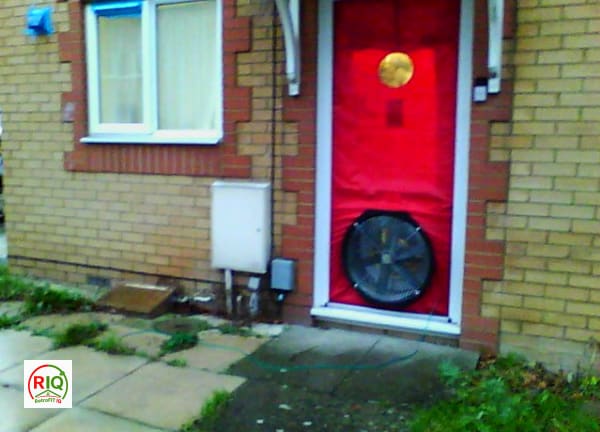
Blower Door Airtightness Test Setup
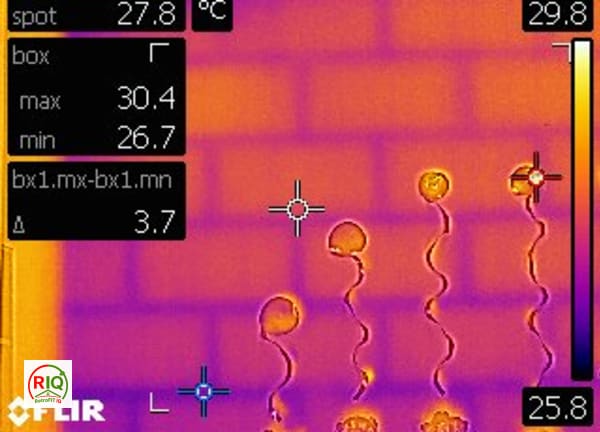
Thermal Bridging Visible Through Masonry Blockwork Wall

Sample Building Performance Investigation Report — Thermal Imaging

Thermal Bridge at Internal Corner Wall Junction

Thermal Bridge at Wall-Ceiling Junction Near Window
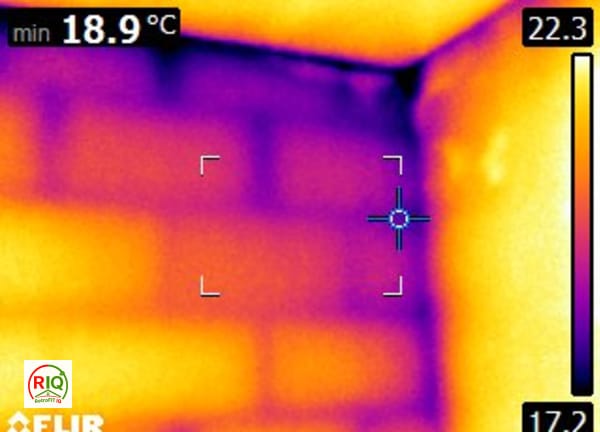
Cold wall surface vs warm ceiling
No related investigations yet.
Browse all investigationsFrequently asked questions
Why can I feel a draught but can't find it?+
Either cold air is leaking in somewhere out of sight and tracking across the room to where you feel it, or you are feeling cold air falling off a cold surface, which feels like a draught but is not air leakage. The two have different fixes.
Why isn't the draught coming from where I feel it?+
Air enters at the point of least resistance and then flows along surfaces, so it is usually felt downstream of where it gets in — often entering low at a floor junction and felt as a cold flow at ankle level some distance away.
What is a cold downdraught?+
Air chilled by a cold surface such as a large window or uninsulated wall becomes denser, sinks, and spills across the floor as a cold flow. It feels like a draught but involves no incoming air, so the fix is to warm the surface, not seal a gap.
How do I find a hidden draught?+
Make the airflow visible and measurable: use smoke to trace the movement and a blower door test to depressurise the home so real leaks draw air in clearly, revealing entry points you cannot find by hand.
Why do I feel a draught near a sealed window?+
Because the air is often entering elsewhere and tracking to the window, or you are feeling cold downdraught off the cold glass. The window itself may be perfectly sound.
Should I just seal where I feel it?+
No — that usually seals nothing useful, because the source is elsewhere. Trace the air to its real entry point, or address the cold surface if it is a downdraught, so the fix actually works.
How do you find draughts that can't be found?+
We depressurise the home with a blower door and use smoke and thermal imaging to trace the air to its true source, or confirm it is a cold-surface downdraught, then specify the right fix.
Stop guessing — find the real cause
Do not spend money fixing symptoms before you understand the cause. Every home behaves differently, and the only reliable way to know what is happening in yours is professional building performance diagnostics. At RetrofitIQ we verify buildings using the right combination of investigations:
- Thermal imaging
- Blower door testing
- Moisture & dew point readings
- Ventilation review
- Building physics assessment
- Passive House methodology