
Where do draughts come from in a house?
Most people assume draughts come from the windows and doors, because those are the gaps you can feel. In reality, air leaks through dozens of paths spread across the whole building — many of them hidden at floor level, in the loft, behind units and around every pipe and cable. Knowing where draughts genuinely come from is the difference between sealing the right gaps and chasing the obvious ones.
 Reviewed by George Sora, Certified Passive House DesignerUpdated June 2026
Quick answer & key takeaways
8 min read- Draughts come from leakage paths spread across the whole envelope, not just windows and doors.
- Floor-to-wall junctions, skirting gaps and suspended timber floors are major low-level sources.
- Loft hatches, recessed downlights and ceiling penetrations leak at high level.
- Service penetrations — pipes, cables, wastes and flues — leak continuously and are rarely sealed.
- The backs of fitted kitchens and bathrooms hide significant leakage behind units.
- Biggest misconception: the windows are the main culprit. They are usually a minor share.
- Retrofit IQ's approach: a blower door test with smoke and thermal imaging reveals every path at once.
What this usually means
A house leaks air wherever there is a gap in its envelope and a pressure difference across it. Those gaps exist at almost every junction and penetration in the building, because construction is full of joints — where the floor meets the wall, where the ceiling meets the wall, around every window and door, and around every service that passes through the structure. Air does not care whether a gap is obvious; it follows whichever paths are open, driven by the stack effect and the wind.
Because of this, the draughts you feel and the leaks that matter are often in different places. You feel cold air where it enters at a height and angle that reaches you — typically low down, around your feet and ankles. But the air entering there is being drawn in because warm air is escaping somewhere else, usually higher up, through the loft hatch, ceiling penetrations and gaps at the top of the walls. The two are linked: stop the high-level escape and you reduce the low-level intake.
Mapping where draughts come from therefore means thinking about the whole circulation, not just the spot where you feel cold. A typical home leaks at floor junctions and skirtings, through suspended timber floors, around loft hatches and downlights, through every pipe and cable penetration, behind fitted kitchens and bathrooms, around windows and doors, through letterplates, and up unused chimneys. Each is modest on its own; together they add up to the draughty feel — and only seeing them all at once lets you tackle the ones that count.
Common causes
Floor-to-wall junctions and skirtings
The join between floor and external wall, and the gap behind skirting, is a continuous low-level path that draws cold air in around the perimeter of every room.
Suspended timber ground floors
A ventilated void below the boards lets cold air rise between gaps in and around the floorboards, a major source of low-level draughts and cold floors.
Loft hatches and ceiling penetrations
An unsealed hatch and recessed downlights are holes at the top of the warm space, allowing warm air to escape and drive the stack effect.
Service penetrations
Every pipe, cable, waste and flue passing through the structure leaves a gap that is rarely sealed and leaks continuously.
Behind fitted kitchens and bathrooms
Units and boxing conceal wall junctions and penetrations, so leakage hides behind cupboards, baths and panels where you never feel it.
Windows, doors and letterplates
Worn seals and gaps around frames leak air, and letterboxes are an open hole unless fitted with a brush or flap.
Unused chimneys and flues
An open flue acts as a permanent chimney for warm air, creating a strong continuous draught.
Signs and symptoms
Cold draughts around the feet and skirtings
Low-level cold air is the signature of perimeter and floor leakage drawing air in as warm air escapes above.
Cold floors over a void
Persistently cold timber ground floors usually mean a ventilated void below is feeding cold air up through the boards.
Cool air falling from a loft hatch
A noticeable chill below the loft hatch shows warm air escaping there and cold air tracking around it.
Draughts behind kitchen units
Cold air felt at the kickboards or behind cupboards reveals unsealed penetrations and junctions hidden by the fittings.
Moving air with windows shut
Curtains or candle flames moving when everything is closed indicates hidden leakage paths, not window gaps.
What most people check first
- Floor level around the perimeter of rooms and at skirting boards.
- Whether there is a suspended timber floor with airbricks and a void below.
- The loft hatch, recessed downlights and any boxing concealing pipes.
- Behind and beneath fitted kitchen and bathroom units, and at unused fireplaces.
What most people miss
- That low-level draughts are often caused by high-level escape elsewhere in the house.
- That much of the leakage is concealed behind units, under floors and in the loft.
- That service penetrations leak continuously and are almost never sealed in older homes.
- That feeling for draughts by hand misses the paths you cannot reach or sense.
The building physics
The reason draughts come from so many places is that air leakage is governed by pressure, not by where gaps are visible. The stack effect pressurises the top of the warm space and depressurises the bottom, so warm air escapes high and cold air enters low through whatever paths exist. Wind adds its own pattern of pressure and suction across the faces of the building. Every gap in the envelope sits within this shifting pressure field and leaks accordingly, whether or not anyone can feel it.
This explains why the felt draughts and the important leaks are often in different locations. You feel cold intake low down because that is where the depressurised zone draws air in; but the leak driving that intake may be the loft hatch or a line of downlights at high level, where warm air is escaping. Sealing only the place you feel cold can therefore disappoint, because the circulation continues through the unsealed high-level paths.
It also explains why hidden, distributed leakage matters so much. A single floor-to-wall junction is a small gap, but it runs around the perimeter of every room; a single downlight leaks little, but a ceiling may have a dozen; a single penetration is minor, but a house has scores of them. Spread across the envelope, these add up to more than the obvious window gaps. The only practical way to see the whole pattern is to put the house under a steady, controlled pressure with a blower door, so that every path leaks at once and can be traced with smoke and thermal imaging — turning a guessing game into a map.
How to tackle the real sources of draughts
Because the leaks are spread across the building, the effective approach is to find them all, then prioritise the largest — not to start at the windows by default.
- 01
Map every path with a blower door test
Pressurise the house and use smoke and thermal imaging to reveal each leak, so you know where the air really moves before sealing anything.
- 02
Seal floor and perimeter junctions
Close the floor-to-wall junction, skirting gaps and suspended-floor paths, which together often account for the largest share of low-level draughts.
- 03
Close high-level escapes
Seal and insulate the loft hatch, address recessed downlights and seal ceiling penetrations to stop the stack-effect escape that drives intake below.
- 04
Seal service penetrations
Close gaps around pipes, cables, wastes and flues throughout the building, including those hidden behind units.
- 05
Finish with windows, doors and flues
Renew seals, fit letterplate brushes and cap unused flues, completing the picture rather than starting with it.
- 06
Keep controlled ventilation
Ensure deliberate ventilation remains so the tighter home stays healthy, and re-test to confirm the leakage has fallen.
How to prevent it coming back
- Seal penetrations at the moment services are installed, before they become hidden leaks.
- Insulate and seal the loft hatch and avoid unsealed recessed downlights in insulated ceilings.
- Address floor and perimeter junctions during any flooring or skirting work.
- Cap unused flues and maintain window and door seals over time.
- Re-test airtightness after building work to find new leakage paths early.
How Retrofit IQ investigates this
We reveal every significant leakage path in the home at once, rather than relying on which draughts happen to be felt on the day.
Do not spend money fixing symptoms before you understand the cause — investigate first, then build with confidence.
Do I need a professional investigation?
If draughts persist after sealing the obvious gaps, or you want to reduce them efficiently rather than by trial and error, a blower door test maps every path so you can prioritise. It is also the right step before insulation or a heat pump, where hidden leakage would otherwise undermine the investment.
Where to go next
Relevant services
Related comparisons
From the Academy
Related case studies
Evidence from Real Projects (26)
Real project and investigation images from our own fieldwork, matched to this page — not stock photography.
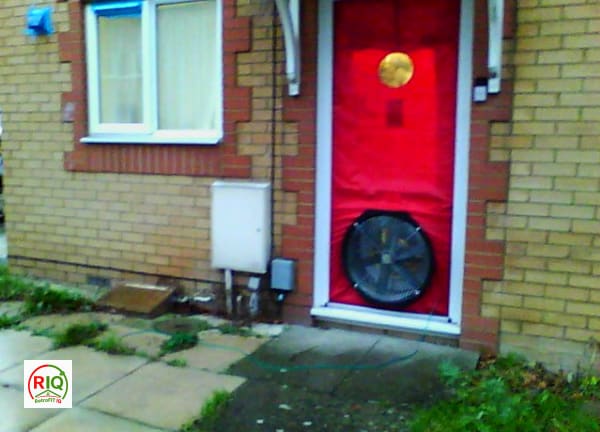
Blower Door Airtightness Test Setup
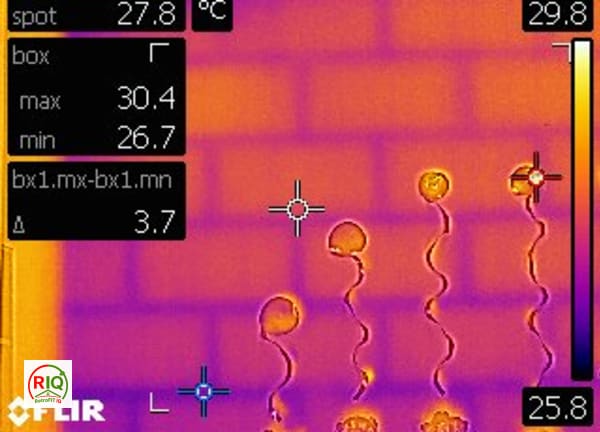
Thermal Bridging Visible Through Masonry Blockwork Wall

Sample Building Performance Investigation Report — Thermal Imaging

Thermal Bridge at Internal Corner Wall Junction

Smoke tracing during a blower door test

Thermal Bridge at Wall-Ceiling Junction Near Window
No related investigations yet.
Browse all investigationsFrequently asked questions
Where do most draughts in a house actually come from?+
From floor-to-wall junctions and skirtings, suspended timber floors, loft hatches and ceiling penetrations, service holes around pipes and cables, the backs of fitted units, and unused chimneys — far more than from the windows alone.
Why do I feel draughts at floor level but not higher up?+
Because warm air escapes high in the house, drawing cold air in low down to replace it. You feel the cold intake at floor level even though the escape driving it is higher up.
Are my windows really the main source of draughts?+
Usually not. In most homes, hidden leakage at floor junctions, the loft and service penetrations exceeds the leakage at modern windows, so sealing only the windows leaves most of the problem.
Why is there a draught behind my kitchen units?+
Units and boxing often conceal unsealed wall junctions and pipe penetrations. Air leaks through these gaps and is felt at the kickboards even though the path is hidden.
Why are my floors so cold and draughty?+
A suspended timber floor usually has a ventilated void beneath it, and cold air rises through gaps in and around the boards. Sealing the floor and its junctions reduces this.
How can I find leaks I cannot feel?+
A blower door test puts the whole house under steady pressure so every leak reveals itself, and smoke pens and thermal imaging then show exactly where the air moves.
Should I seal every gap I find?+
Seal the uncontrolled leaks, but keep deliberate, controlled ventilation. The goal is to stop random leakage while ensuring the home is still properly ventilated.
Stop guessing — find the real cause
Do not spend money fixing symptoms before you understand the cause. Every home behaves differently, and the only reliable way to know what is happening in yours is professional building performance diagnostics. At RetrofitIQ we verify buildings using the right combination of investigations:
- Thermal imaging
- Blower door testing
- Moisture & dew point readings
- Ventilation review
- Building physics assessment
- Passive House methodology