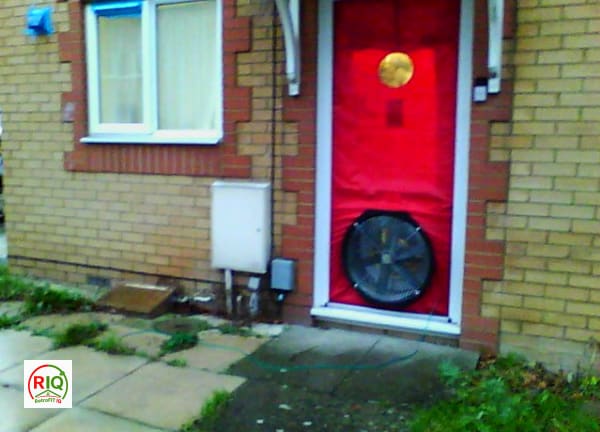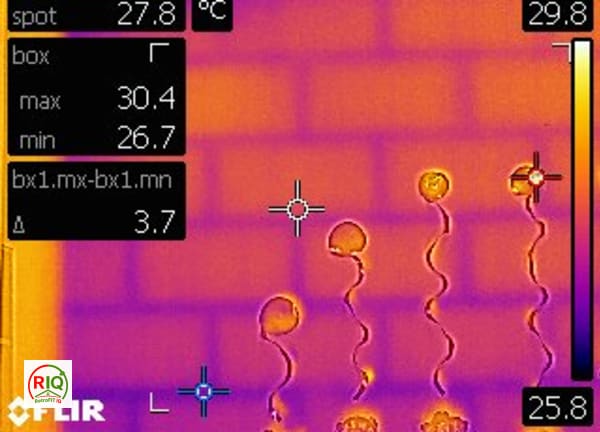

The single biggest mistake in airtightness is treating it as a snagging exercise — chasing leaks with mastic after the building is finished. That approach plateaus quickly and never reaches good numbers. Genuine airtightness comes from designing a continuous air barrier on paper, choosing materials that can deliver it, detailing every junction, and appointing someone to protect it on site. Sealing then becomes verification, not the strategy.
The continuous air barrier — and the 'red pen' rule
The air barrier is the continuous layer that stops air passing through the envelope. The defining test is the 'red pen' (or 'pencil') rule: on every section and plan drawing, you must be able to trace the air barrier around the entire building — through walls, roof, floor, around every window and door and through every junction — without lifting your pen off the page. Wherever you have to lift the pen, you have a designed-in air leak. Do this exercise on the drawings, before anyone builds anything.
Choosing the airtight layer
Different constructions use different primary airtight layers. The key is to choose one continuous element per assembly and detail everything else to connect to it:
| Approach | Airtight layer | Notes |
|---|---|---|
| Masonry, wet finish | Continuous wet (parge/plaster) coat | The plaster is the air barrier — but only if it's continuous behind dry-lining and down to floor/ceiling |
| Timber frame / I-joist | Internal membrane (AVCL) or racking board (OSB/sheathing) with taped joints | Membrane or board taped at every lap, junction and penetration |
| Service zone build-up | Air barrier behind a battened service void | Keeps cables/pipes out of the air barrier — fewer penetrations to seal |
| Roof / ceiling | Continuous membrane or sealed board | Must connect to the wall air barrier and around every downlight, pipe and hatch |
Whichever layer you choose, the products that connect it — airtight tapes, grommets, flexible junction membranes, pre-formed corners, airtight back boxes — must be compatible and designed for durability. Cheap mastic that cracks in a year is not an air-barrier strategy.
Detailing the hard bits — junctions and penetrations
Leakage concentrates at junctions and penetrations, so that's where the detailing effort goes:
- Window and door openings — the frame's airtight seal must bond continuously to the wall air barrier (airtight inside, weather-tight outside).
- Wall-to-floor and wall-to-roof junctions — the wall air barrier must physically connect to the floor and ceiling air barriers, not just stop near them.
- Service penetrations — minimise them, group them, and pass each through a purpose-made airtight grommet or collar rather than a hopeful blob of sealant.
- Intermediate floor / wall junctions — design the air barrier to run continuously past the floor zone, not be interrupted by it.
- Electrical boxes on external walls — use airtight back boxes, or keep electrics in a service void inboard of the air barrier so they never penetrate it.
The service void — design out the penetrations
One of the most effective strategies is to position the air barrier and then build a battened service void (typically ~25–50 mm) on the warm side of it, for running cables, sockets, pipes and switches. Because all those services sit inboard of the air barrier, they never penetrate it — eliminating dozens of small leaks at source and making the airtight layer far easier to keep continuous. It also protects the air barrier from being punctured by later occupant DIY.
Sequencing and the airtightness champion
A good design fails if the build doesn't protect it. Two organisational measures make the difference:
- Sequencing — the air barrier must be installed, inspected and (ideally) test-verified while it's still accessible, before it's covered by insulation, plasterboard, screeds and finishes. An early-stage blower door test catches problems when they cost minutes to fix, not days.
- An 'airtightness champion' — one named person on site responsible for understanding the air-barrier strategy, briefing trades, protecting the layer from the inevitable follow-on punctures (the plumber's new pipe, the electrician's extra cable), and signing off the detailing. Airtightness is a team sport; without an owner, every trade assumes someone else is handling it, and the layer dies by a thousand cuts.
Durability — airtightness that lasts decades
An air barrier has to perform not just on test day but for the building's life, through thermal movement, settlement and the inevitable interventions of future occupants. This is why material choice and detailing matter so much more than a one-off bead of sealant. Airtight tapes and membranes should be chosen for proven long-term adhesion to the actual substrates (and substrates primed where needed), laps should be generous and supported rather than relying on adhesion alone, and flexible junctions should accommodate the movement they will see. The most durable air barrier is one that is robust by design — a continuous wet parge coat or a taped racking board protected behind a service void — rather than one held together by dozens of vulnerable sealant joints that will crack within a few years. Specifying a cheap tape that lets go in a decade is not saving money; it is designing in a future failure.
Airtightness within the wider building physics
The air barrier never works alone, and good detailing keeps four layers coordinated: the air barrier (stops air), the vapour control layer (manages diffusion), the insulation (slows heat) and the weather barrier (sheds rain). They are distinct functions and sometimes distinct materials, but they must be designed as a set. A classic error is to make the building airtight while ignoring the vapour profile, trapping moisture; another is to position the air barrier without regard to where the dew point falls. On a well-designed assembly the air barrier sits on the warm side to keep moist air out of the cold construction, the insulation keeps the air barrier and structure warm, the vapour strategy allows controlled drying, and the weather barrier keeps rain out — and the whole is verified with a blower door test and, where insulation is added, a condensation-risk assessment. Airtightness is one instrument in the orchestra, not a solo.