
Why is my new build cold or draughty?
A new build that feels cold or draughty is almost always a sign that the airtightness or insulation was not built as it was designed. On paper the home should perform well; in reality, gaps in the air barrier, missing or compressed insulation and thermal bridges at junctions are common defects that let heat out and cold air in. Because these are buildability and quality issues, they can usually be proven by testing — and that evidence is what supports a snagging claim.
 Reviewed by George Sora, Certified Passive House DesignerUpdated June 2026
Quick answer & key takeaways
7 min read- A cold or draughty new build usually means it was not built as designed.
- Air-barrier gaps and missing or compressed insulation are common defects.
- Thermal bridges at junctions create cold spots and draughts.
- These are quality and buildability issues that testing can prove.
- Biggest misconception: a new build must perform well because it is new. Workmanship varies.
- Retrofit IQ's approach: test airtightness and image the fabric to evidence the defects.
What this usually means
A modern home is designed to be reasonably airtight and well insulated, and its predicted comfort and running costs assume it is built that way. But the design only delivers if the construction matches it: the air barrier must be continuous, the insulation installed without gaps or compression, and the junctions detailed to avoid thermal bridges. On site, under time pressure and across many trades, these are exactly the things that get compromised — a service penetration left unsealed, insulation slumped in a cavity, a junction missed.
The occupant feels the result as cold rooms and draughts that should not be there in a new home. Air leakage through unsealed gaps brings in cold air and carries heat out; missing or poorly fitted insulation leaves cold patches; and thermal bridges at floor, wall and roof junctions create local cold spots that can also attract condensation. None of this is visible behind the finishes, which is why it persists unchallenged — the home looks finished and sound while underperforming.
Because these are defects against the design, they are usually demonstrable. An airtightness (blower door) test measures how leaky the home actually is and, with smoke, shows where; thermal imaging reveals missing insulation and thermal bridges. This turns a vague 'it feels cold' into specific, located evidence — which is what a developer or warranty provider needs to act on under snagging. Diagnosing first also ensures any remedial work targets the real defect rather than guessing.
Common causes
Gaps in the air barrier
Unsealed service penetrations, junctions and joints let cold air leak in and warm air out.
Missing or compressed insulation
Insulation left out, gapped or slumped during construction leaves cold patches in the fabric.
Thermal bridges at junctions
Poorly detailed floor, wall and roof junctions create cold spots and draughts.
Poorly fitted windows and doors
Gaps and weak seals around openings are common leakage and draught points.
Build quality not matching the design
The as-built airtightness and insulation fall short of the designed performance.
Signs and symptoms
Cold rooms in a brand-new home
A new build that struggles to stay warm suggests the fabric or airtightness underperforms the design.
Felt draughts indoors
Draughts in a new home point to gaps in the air barrier that should not be there.
Cold spots at junctions and sockets
Localised cold at junctions and penetrations indicates thermal bridges and air leakage.
Higher heating use than expected
Running costs above the design prediction suggest excess heat loss or leakage.
Condensation or mould at cold junctions
Moisture at cold spots can accompany thermal bridges in an underperforming build.
What most people check first
- Whether the cold or draughts are localised (junctions, sockets, openings) or general.
- Whether heating use is higher than the home's predicted performance.
- Whether an airtightness test result is available and how it compares to the design.
- Whether the issues are within a warranty or snagging period.
What most people miss
- That a new build can underperform if not built as designed.
- That air-barrier gaps and insulation defects are hidden behind finishes.
- That testing can prove the defects for a snagging claim.
- That diagnosis ensures remedial work targets the real fault.
The building physics
Designed performance assumes the as-built fabric matches the specification — a continuous air barrier and insulation at the stated thermal resistance. Air leakage and conduction both scale with how well that is achieved. A single unsealed penetration or junction adds leakage that, summed across a dwelling, can move the airtightness well away from the design figure; insulation that is gapped, compressed or omitted creates local low-resistance paths and cold spots far worse than the average U-value implies. The home therefore loses more heat and admits more cold air than predicted.
Thermal bridges are a geometric and workmanship issue at junctions, where the easiest heat path runs through poorly insulated structure. They lower local surface temperatures, producing felt cold spots and a higher whole-house heat loss, and where the surface drops below the dew point they collect condensation and mould. Because junctions are precisely where continuity of insulation and the air barrier is hardest to achieve on site, they are the most common location for new-build defects, and the most informative to inspect.
Crucially, these defects are measurable after completion. A blower door test quantifies the actual air leakage and, depressurising the home with smoke, reveals each leakage path; thermal imaging under a temperature difference shows missing insulation and thermal bridges as cold patterns. Comparing the measured airtightness with the design figure, and mapping the fabric, produces objective evidence of where and how the build departs from the design — the basis for a remedial claim and for targeted, effective repairs rather than speculative ones.
How to deal with a cold or draughty new build
Prove the defects by testing, then require targeted remediation of the air barrier, insulation and junctions against the design.
- 01
Test the airtightness
Use a blower door test to measure the actual leakage and compare it with the design figure.
- 02
Locate the leaks and cold spots
Use smoke and thermal imaging to pinpoint air-barrier gaps, missing insulation and thermal bridges.
- 03
Document the evidence
Record the measured performance and located defects to support a snagging or warranty claim.
- 04
Seal the air-barrier gaps
Have the unsealed penetrations, junctions and openings sealed to restore the designed airtightness.
- 05
Correct insulation and bridges
Have missing or compressed insulation and thermal bridges remedied where access allows.
- 06
Re-test to confirm
Re-measure airtightness and re-image the fabric to verify the home now performs as designed.
How to prevent it coming back
- Insist on airtightness testing and thermal imaging at handover.
- Raise cold and draught issues within the warranty and snagging period.
- Require defects to be evidenced and remedied against the design.
- Confirm performance with a re-test after any remedial work.
How Retrofit IQ investigates this
We measure and locate the airtightness and insulation defects so a new-build claim is evidenced and repairs are targeted.
Do not spend money fixing symptoms before you understand the cause — investigate first, then build with confidence.
Do I need a professional investigation?
If a new build feels cold or draughty, it is worth testing the airtightness and imaging the fabric within the warranty period — so the defects are proven and located, the developer or warranty provider can be required to remedy them, and any repairs target the real fault.
Where to go next
Relevant services
Related comparisons
From the Academy
Related problems you may also have
Evidence from Real Projects (24)
Real project and investigation images from our own fieldwork, matched to this page — not stock photography.

Sample Building Performance Investigation Report — Thermal Imaging
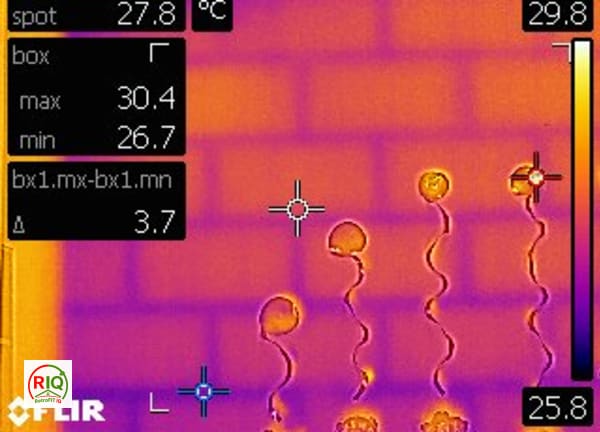
Thermal Bridging Visible Through Masonry Blockwork Wall
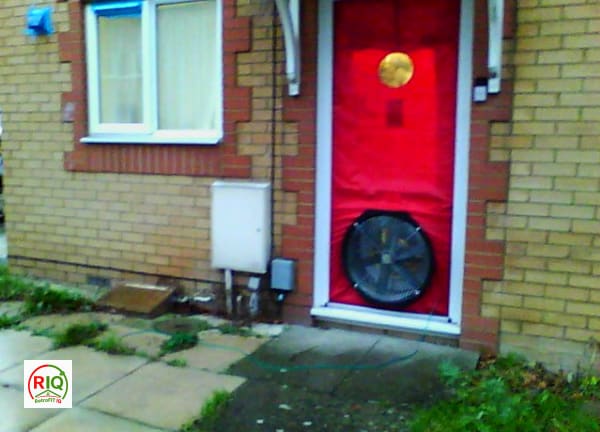
Blower Door Airtightness Test Setup

Thermal Bridge at Internal Corner Wall Junction

Thermal Bridge at Wall-Ceiling Junction Near Window
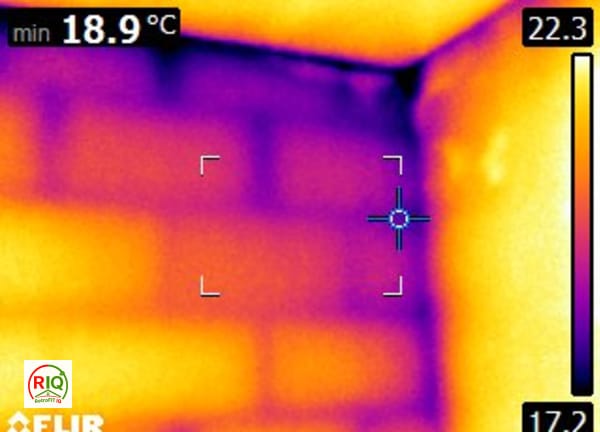
Cold wall surface vs warm ceiling
No related investigations yet.
Browse all investigationsFrequently asked questions
Why is my new build cold or draughty?+
Usually because the airtightness or insulation was not built as designed — gaps in the air barrier, missing or compressed insulation, and thermal bridges at junctions. These hidden defects let heat out and cold air in, and can be proven by testing.
Shouldn't a new build be warm and airtight?+
By design, yes — but the design only delivers if the construction matches it. Workmanship varies, and unsealed gaps and insulation defects are common, so a new home can underperform its predicted comfort and running costs.
Can I prove the problem to the developer?+
Yes. A blower door test measures the actual airtightness against the design figure, and thermal imaging locates missing insulation and thermal bridges, giving objective, located evidence for a snagging or warranty claim.
What causes cold spots in a new build?+
Thermal bridges at poorly detailed junctions and patches of missing or compressed insulation. They lower local surface temperatures and can also attract condensation, and thermal imaging reveals them.
Is it too late to claim if I've moved in?+
Often not — new builds carry warranty and snagging periods. Testing and evidencing the defects within that period supports a claim for the developer or warranty provider to remedy them.
Will sealing the gaps fix it?+
Sealing the air-barrier gaps restores the designed airtightness, and correcting insulation and thermal bridges addresses the cold spots. Re-testing afterwards confirms the home now performs as it should.
How do you diagnose a cold new build?+
We measure the airtightness with a blower door test, locate leaks with smoke and image the fabric for missing insulation and bridges, then document the evidence and the targeted remediation.
Stop guessing — find the real cause
Do not spend money fixing symptoms before you understand the cause. Every home behaves differently, and the only reliable way to know what is happening in yours is professional building performance diagnostics. At RetrofitIQ we verify buildings using the right combination of investigations:
- Thermal imaging
- Blower door testing
- Moisture & dew point readings
- Ventilation review
- Building physics assessment
- Passive House methodology