
Why is my new build too hot in summer?
New builds frequently overheat in summer for reasons built into modern design: large areas of glazing that admit a lot of solar gain, often with little or no external shading; high airtightness and insulation that, while excellent for winter, also keep heat in; limited openable windows or restricted night ventilation, especially in flats; and compact, well-sealed layouts that trap internal gains. The combination means heat gets in and cannot easily get out — but it is a design-and-ventilation problem that can be managed with shading and better purge ventilation.
 Reviewed by George Sora, Certified Passive House DesignerUpdated June 2026
Quick answer & key takeaways
7 min read- New builds often have large, lightly shaded glazing that admits strong solar gain.
- High airtightness and insulation also retain heat in summer.
- Openable windows and night ventilation are often limited, especially in flats.
- Heat gets in easily and cannot be purged, so the home overheats.
- Biggest misconception: a well-insulated new home should stay cool. Insulation cuts loss, not gain.
- Retrofit IQ's approach: reduce solar gain and enable night-purge ventilation.
What this usually means
Modern new builds are designed primarily for winter energy efficiency — high insulation and airtightness — and often for a contemporary look with large glazed areas. These same features can cause summer overheating. Big windows, especially facing south, east or west and frequently without external shading, admit a great deal of solar heat; and once that heat is inside, the high insulation and airtightness that keep warmth in during winter also slow its escape in summer. The home is very good at retaining heat, which is a problem when the heat is unwanted.
Ventilation then often cannot compensate. Many new builds, particularly flats, have limited openable window area for security, acoustic or design reasons, single-aspect layouts that prevent cross-ventilation, and rely on mechanical ventilation sized for air quality rather than cooling. So when the home overheats, there is no easy way to flush the accumulated heat out, especially at night when purging would be most effective. Internal gains from appliances and occupants, trapped in a compact, well-sealed space, add to the build-up.
Importantly, this is not a sign that the insulation is 'wrong' — insulation reduces heat flow in both directions and is essential for winter. The issue is that summer solar gain and the lack of purge ventilation were not adequately controlled in the design. The remedy is therefore to reduce the gain and improve the removal: external shading or solar-control glazing on the sunniest windows, and enabling effective night-purge ventilation — secure openable windows, cross-ventilation where possible, or using and boosting the mechanical ventilation for night cooling. Where overheating is severe and designed-in, it can also form the basis of a complaint to the developer.
Common causes
Large unshaded glazing
Big windows with little external shading admit strong solar gain, especially south, east and west facing.
High airtightness and insulation
Excellent for winter, these also retain summer heat once it is inside.
Limited openable windows
Restricted opening area, especially in flats, prevents effective purge ventilation.
Single-aspect layouts
Windows on only one side prevent the cross-ventilation needed to flush heat out.
Mechanical ventilation sized for air quality
MVHR sized for fresh air, not cooling, cannot purge accumulated heat on its own.
Signs and symptoms
Rooms overheating despite being new
A modern, well-insulated home overheating shows solar gain and poor purge, not poor insulation.
Hot bedrooms at night
Bedrooms staying hot after dark reflect heat that cannot be purged when the air cools.
South/west rooms worst
The most sun-facing rooms overheating points to solar gain through large glazing.
No way to get a through-breeze
Single-aspect or limited-opening layouts preventing cross-ventilation trap the heat.
Stuffy even with MVHR running
Warmth persisting with mechanical ventilation shows it is sized for air quality, not cooling.
What most people check first
- Which windows gain the most sun and whether they are shaded.
- Whether the home can be ventilated for a through-breeze at night.
- Whether the openable window area is restricted.
- Whether the mechanical ventilation can assist night cooling.
What most people miss
- That insulation reduces heat loss but does not stop solar gain.
- That large unshaded glazing is the main overheating driver in new builds.
- That limited opening and single-aspect layouts prevent purge ventilation.
- That severe designed-in overheating can be raised with the developer.
The building physics
Overheating results from gains exceeding removal, and modern new builds tend to maximise the gain side while constraining the removal side. Large glazing ratios admit high solar gains, particularly on east and west elevations where low sun strikes glass head-on; with minimal external shading, much of this energy enters and, by the greenhouse effect, is trapped. The high insulation and airtightness that minimise winter heat loss equally slow the conduction and infiltration that would otherwise let summer heat escape, so the building retains gains efficiently — beneficial in winter, detrimental in a heatwave.
Removal depends on ventilation, which new builds often constrain. Effective passive cooling needs night-purge ventilation: a large openable area, ideally on more than one aspect to drive cross- and stack-ventilation, opened when outdoor air falls below indoor temperature. Single-aspect flats, restricted window openings, and reliance on mechanical ventilation systems sized for indoor-air-quality airflow rather than the much higher rates needed for cooling all limit this. The result is that accumulated heat cannot be flushed overnight, so temperatures ratchet up across a hot spell.
The remedies follow the physics and do not involve undoing the insulation. Reducing solar gain — external shading matched to orientation, or solar-control glazing — cuts the dominant input. Enabling night purge — secure openable windows, cross-ventilation where the layout allows, or operating the mechanical ventilation in a boosted night-cooling mode where the unit supports it — increases removal. Reducing internal gains helps at the margin. Where a new build overheats severely because these were not addressed in design, that is increasingly recognised as a performance shortfall, so an assessment quantifying the gains and purge potential both directs the practical fixes and can support a claim that the home overheats by design.
How to stop a new build overheating
Reduce the solar gain and enable night-purge ventilation — without undoing the insulation — using external shading or solar-control glazing and securable, cross-ventilating openings.
- 01
Shade the sunniest glazing
Fit external shading or solar-control glazing on the large south, east and west windows.
- 02
Enable night-purge ventilation
Provide secure openable windows and, where possible, cross-ventilation to flush heat out at night.
- 03
Use the mechanical ventilation for cooling
Operate MVHR in any night-cooling or boost mode it supports to assist heat removal.
- 04
Reduce internal gains
Limit appliance and cooking heat during the hottest hours in the well-sealed space.
- 05
Manage daytime gains
Close blinds and shading during peak sun to keep heat out while the home is hottest outside.
- 06
Raise severe overheating with the developer
Where overheating is designed-in and severe, document it as a potential performance shortfall.
How to prevent it coming back
- Shade large glazing externally or specify solar-control glass.
- Ensure secure, cross-ventilating openings for night purge.
- Use mechanical ventilation's night-cooling mode where available.
- Keep the home closed up and shaded during peak daytime heat.
How Retrofit IQ investigates this
We quantify the new build's summer gains and night-ventilation potential, then specify shading and purge measures.
Do not spend money fixing symptoms before you understand the cause — investigate first, then build with confidence.
Do I need a professional investigation?
A new build that overheats in summer is worth assessing to identify the dominant gains and the purge potential, because the cause is usually large unshaded glazing and limited ventilation rather than poor insulation. The findings direct shading and ventilation fixes and, where overheating is designed-in and severe, can support raising it with the developer.
Where to go next
Relevant services
Related comparisons
From the Academy
Related case studies
Related problems you may also have
Evidence from Real Projects (16)
Real project and investigation images from our own fieldwork, matched to this page — not stock photography.
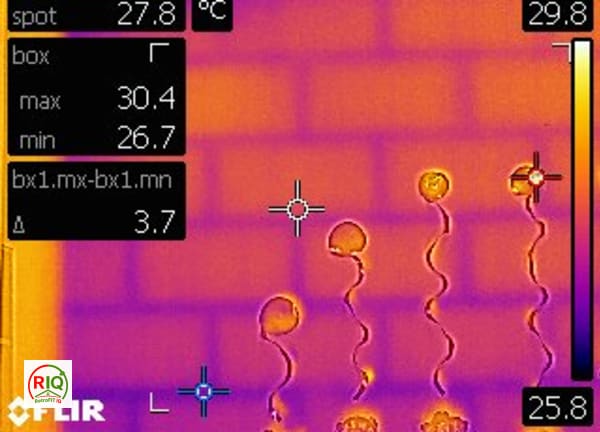
Thermal Bridging Visible Through Masonry Blockwork Wall

Sample Building Performance Investigation Report — Thermal Imaging
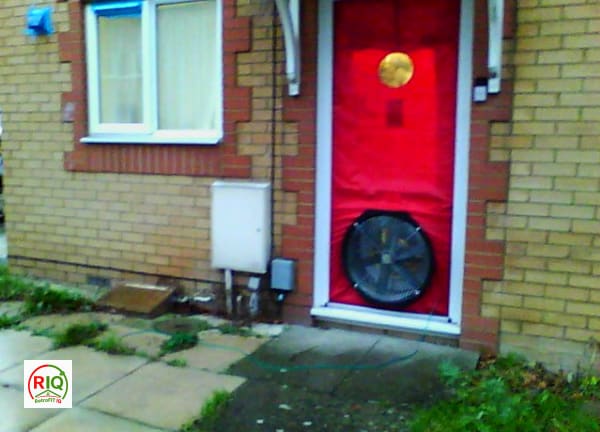
Blower Door Airtightness Test Setup

Thermal Bridge at Internal Corner Wall Junction

Thermal Bridge at Wall-Ceiling Junction Near Window

Airtightness Testing in a Stratford Victorian Terrace
No related investigations yet.
Browse all investigationsFrequently asked questions
Why is my new build too hot in summer?+
Usually because of large, lightly shaded glazing that admits strong solar gain, combined with high airtightness and insulation that retain heat and limited openable windows or night ventilation. Heat gets in easily and cannot be purged — a design-and-ventilation issue, not poor insulation.
Isn't a well-insulated home supposed to stay cool?+
Insulation reduces heat flow in both directions, so it keeps winter warmth in and slows summer heat escaping — but it does not stop solar gain entering through glazing. So a well-insulated new build can still overheat if the gain and purge ventilation are not controlled.
Why can't I cool it down by opening windows?+
Many new builds, especially flats, have restricted openable area or single-aspect layouts that prevent cross-ventilation, so there is no effective through-breeze to flush out the heat — particularly at night when purging would help most.
Does my MVHR not stop overheating?+
Usually not on its own. Mechanical ventilation with heat recovery is sized for fresh air, not the much higher airflow needed for cooling. Some units have a summer bypass or boost mode that helps, but external shading and purge ventilation are the main fixes.
What can I do about it?+
Reduce the solar gain with external shading or solar-control glazing on the sunniest windows, and enable night-purge ventilation with secure, cross-ventilating openings or your MVHR's night-cooling mode, while keeping internal gains down during peak heat.
Can I complain to the developer about overheating?+
Where overheating is severe and effectively designed-in, it is increasingly recognised as a performance shortfall. A survey quantifying the gains and ventilation provides evidence to raise it with the developer alongside specifying practical fixes.
How do you tackle new-build overheating?+
We log the temperatures, identify the glazing and orientations driving solar gain, assess the night-purge potential and the MVHR's role, then specify shading, glazing and ventilation measures — and evidence designed-in overheating where relevant.
Stop guessing — find the real cause
Do not spend money fixing symptoms before you understand the cause. Every home behaves differently, and the only reliable way to know what is happening in yours is professional building performance diagnostics. At RetrofitIQ we verify buildings using the right combination of investigations:
- Thermal imaging
- Blower door testing
- Moisture & dew point readings
- Ventilation review
- Building physics assessment
- Passive House methodology