
Should I get an air test or survey on my new build?
If your new build is cold, draughty, or prone to condensation, an independent air test and performance survey is well worth it, because it provides objective evidence of whether the home was actually built to the airtightness, insulation and ventilation it was designed and sold with. New builds are tested at handover, but that single result does not always reflect how the finished home performs, and an independent survey can measure it, locate the defects, and give you the documented proof needed for a snagging or warranty claim.
 Reviewed by George Sora, Certified Passive House DesignerUpdated June 2026
Quick answer & key takeaways
7 min read- An independent air test and survey measures how the finished home actually performs.
- It reveals whether airtightness, insulation and ventilation match the design and sales claims.
- It locates the specific defects — leaks, missing insulation, ventilation faults — to fix.
- It provides documented evidence for a snagging or warranty (e.g. NHBC) claim.
- Biggest misconception: a new build must be fine because it passed a test at handover.
- Retrofit IQ's approach: measure, locate the defects, and evidence them clearly.
What this usually means
A new home is designed and sold on the basis of certain performance — a target airtightness, specified insulation, and a designed ventilation system — which underpins its energy rating and its comfort. New builds do undergo an air-pressure test as part of building control, but that is often a single sample result at a point in time, and it does not guarantee that your particular home, as finished and handed over, performs as intended. When a new build is unexpectedly cold, draughty or damp, the likely explanation is that something was not built as designed, and the way to know is to measure it independently.
An independent air test and performance survey does exactly that. A blower door test measures the home's actual airtightness and, with smoke and thermal imaging, locates precisely where it leaks; thermal imaging reveals missing, slipped or discontinuous insulation and thermal bridges; and a ventilation check establishes whether the designed system (extract or MVHR) was installed and commissioned correctly and is actually working. Together these show whether the finished home meets the airtightness, insulation and ventilation it was supposed to, and pinpoint any shortfalls room by room.
The value is twofold. First, it tells you the real cause of the discomfort, so the right defects are fixed rather than symptoms chased. Second, and crucially for a new build, it gives you documented, objective evidence — measured figures, thermal images, leak locations — to take to the developer or warranty provider (such as NHBC) as part of a snagging or warranty claim. Builders and warranty bodies respond far better to measured proof than to a complaint that a room 'feels cold', so an independent survey both diagnoses the problem and strengthens your hand in getting it put right at the developer's cost rather than your own.
Common causes
Airtightness below design
The finished home may leak more than its design target, causing draughts and heat loss.
Missing or discontinuous insulation
Insulation may be absent, slipped or gapped despite the specification, leaving cold spots.
Ventilation not commissioned
An MVHR or extract system may be installed but not balanced, commissioned or even connected correctly.
Thermal bridges at junctions
Poorly executed junctions bridge heat and cause cold spots and condensation risk.
Handover test not representative
A single sample air test at handover may not reflect your specific home's performance.
Signs and symptoms
Unexpectedly cold or draughty new home
A new build that is cold or draughty suggests it was not built to its designed performance.
Condensation or damp in a new home
Condensation in a new build often points to ventilation that was not commissioned or is faulty.
Higher bills than expected
Energy use above the rating suggests airtightness or insulation shortfalls worth measuring.
Developer disputing a 'feels cold' complaint
A builder dismissing subjective complaints is exactly when measured evidence is needed.
Within the warranty period
Being inside the snagging or warranty window makes an evidenced claim timely and worthwhile.
What most people check first
- Whether the home is cold, draughty or damp beyond what is reasonable.
- Whether you are within the snagging or warranty period.
- Whether the designed ventilation system is installed and working.
- Whether you have any measured evidence, or only subjective complaints.
What most people miss
- That a handover air test does not guarantee your home performs as designed.
- That independent measurement locates the actual defects, not just symptoms.
- That documented evidence is what moves a developer or warranty claim.
- That ventilation systems are often installed but not properly commissioned.
The building physics
A new dwelling's predicted performance rests on assumptions — a design air-permeability, specified U-values, and a ventilation strategy — that only hold if the construction matches the design. Airtightness depends on a continuous air barrier executed correctly across every junction and penetration; insulation depends on being installed continuously without gaps, slumping or compression; ventilation depends on the system being correctly installed, ducted, balanced and commissioned. Each is vulnerable to ordinary site error, and a shortfall in any one degrades comfort, energy use and moisture safety regardless of the design intent.
Measurement is the only way to verify the as-built reality. A blower door test gives the actual air-permeability and, under depressurisation with smoke and thermal imaging, reveals the specific leakage paths; thermal imaging under a temperature difference maps where insulation is missing or bridged; and ventilation testing confirms airflow rates against the design. Because the statutory handover test is frequently a sample taken on representative plots rather than every home, and is a single figure rather than a located diagnosis, an independent survey adds both confirmation for your specific home and the spatial detail needed to identify and fix defects.
For a new build specifically, this measured evidence has contractual weight. Developers and warranty providers operate to defined standards, and a documented demonstration that the home falls short of its designed airtightness, insulation continuity or ventilation provision converts a subjective 'it feels cold' into an objective non-conformity that they are obliged to address. The survey thus serves two purposes at once: it diagnoses the building-physics cause of the discomfort so the correct remedy is applied, and it produces the figures, images and leak locations that substantiate a snagging or warranty claim — which is why an independent test and survey is usually worthwhile when a new build underperforms.
How an air test and survey help with a new build
Use independent measurement to establish whether the home was built as designed, locate any defects, and document them as evidence for a snagging or warranty claim.
- 01
Commission an independent air test
Measure the home's actual airtightness against its design target with a blower door test.
- 02
Locate the leaks and cold spots
Use smoke and thermal imaging to pinpoint air leakage, missing insulation and thermal bridges.
- 03
Check the ventilation
Confirm the designed extract or MVHR system is installed, commissioned and working to its rates.
- 04
Document the evidence
Record the measured figures, thermal images and defect locations clearly for a claim.
- 05
Submit a snagging or warranty claim
Present the evidence to the developer or warranty provider to have the defects rectified.
- 06
Verify after rectification
Re-test once defects are fixed to confirm the home now performs as designed.
How to prevent it coming back
- Have an independent air test and survey within the warranty period.
- Insist on evidence-based diagnosis rather than subjective complaints.
- Confirm the ventilation system was commissioned, not just installed.
- Re-test after any rectification to confirm performance.
How Retrofit IQ investigates this
We measure the new build's as-built performance, locate any defects, and document them as evidence for a claim.
Do not spend money fixing symptoms before you understand the cause — investigate first, then build with confidence.
Do I need a professional investigation?
If a new build is cold, draughty or damp, it is well worth an independent air test and survey, especially within the snagging or warranty period. Measuring the as-built performance and locating any defects both explains the discomfort and provides the documented evidence needed to have the developer or warranty provider put it right.
Prove your new build underperforms
We measure the home against its design and certification, building the evidence pack that reframes 'lifestyle' as a covered defect.
- Blower door test vs the design figure
- Thermal imaging & ventilation measurement
- Independent evidence pack for your claim
Where to go next
Relevant services
Related comparisons
From the Academy
Related problems you may also have
Evidence from Real Projects (20)
Real project and investigation images from our own fieldwork, matched to this page — not stock photography.

Sample Building Performance Investigation Report — Thermal Imaging
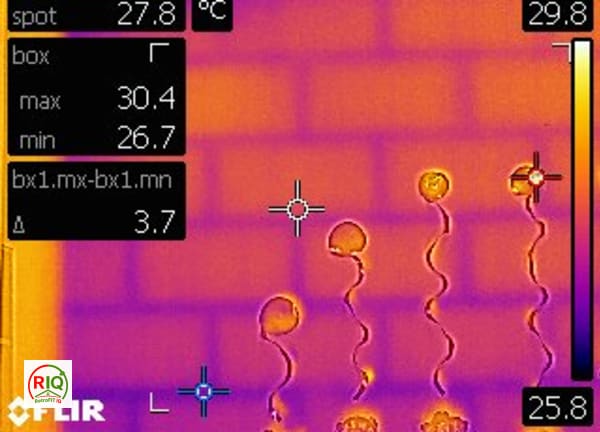
Thermal Bridging Visible Through Masonry Blockwork Wall
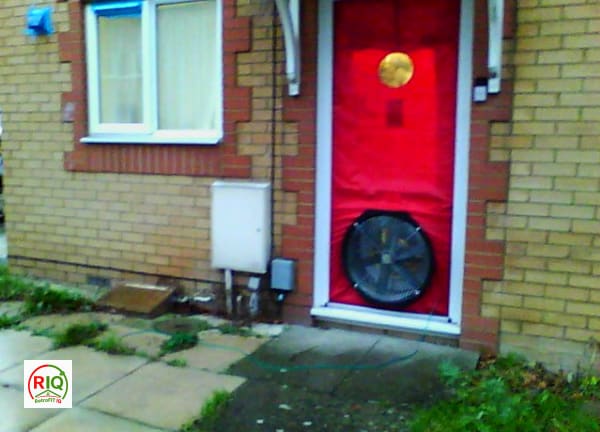
Blower Door Airtightness Test Setup

Thermal Bridge at Internal Corner Wall Junction

Thermal Bridge at Wall-Ceiling Junction Near Window

Airtightness Testing in a Stratford Victorian Terrace
No related investigations yet.
Browse all investigationsFrequently asked questions
Should I get an air test or survey on my new build?+
If it is cold, draughty or damp, yes — an independent air test and survey measures whether the home was actually built to the airtightness, insulation and ventilation it was designed and sold with, locates any defects, and gives you documented evidence for a snagging or warranty claim.
Didn't my new build already pass an air test?+
New builds are tested at handover, but that is often a single sample result and does not guarantee your specific home performs as designed. An independent test measures your home and, unlike the statutory figure, locates exactly where it leaks.
What can an independent survey find?+
It measures the actual airtightness and locates the leaks, reveals missing or discontinuous insulation and thermal bridges with thermal imaging, and checks whether the designed ventilation system was installed, commissioned and is working — room by room.
Will it help with a warranty or snagging claim?+
Yes — that is one of its main benefits. Developers and warranty providers such as NHBC respond to measured evidence far more than to a 'feels cold' complaint, so documented figures, images and leak locations substantiate a claim and help get defects fixed at the developer's cost.
When should I have it done?+
Ideally while you are still within the snagging or warranty period, so any defects found can be claimed and rectified by the developer. The sooner an underperforming new build is measured, the stronger and more timely the claim.
What if the ventilation is the problem?+
That is common in new builds — an MVHR or extract system installed but not balanced, commissioned or correctly connected. The survey confirms whether it is working to its design rates, which is often the cause of condensation in an otherwise airtight new home.
How do you test a new build?+
We carry out a blower door test against the design target, use smoke and thermal imaging to locate leaks and insulation defects, check the ventilation commissioning, and document the findings as clear evidence for a claim, re-testing after any rectification.
Stop guessing — find the real cause
Do not spend money fixing symptoms before you understand the cause. Every home behaves differently, and the only reliable way to know what is happening in yours is professional building performance diagnostics. At RetrofitIQ we verify buildings using the right combination of investigations:
- Thermal imaging
- Blower door testing
- Moisture & dew point readings
- Ventilation review
- Building physics assessment
- Passive House methodology