
Why does my new build have condensation or damp?
New builds often suffer condensation and damp in their first year or two for reasons specific to new construction: the building materials are still drying out, the home is built airtight, and the ventilation that should remove the moisture is frequently missing, undersized or simply switched off. Combine a lot of moisture with a tight envelope and inadequate ventilation and humidity rises, condensing on cold surfaces. It is a ventilation and build-moisture problem, not necessarily a fault in the structure.
 Reviewed by George Sora, Certified Passive House DesignerUpdated June 2026
Quick answer & key takeaways
7 min read- New builds carry a lot of construction moisture that takes time to dry out.
- Modern airtight construction traps that moisture without good ventilation.
- Ventilation is often missing, undersized or switched off by occupants.
- The result is high humidity condensing on cold surfaces — a ventilation problem.
- Biggest misconception: condensation means the new build is defective. Usually it is ventilation.
- Retrofit IQ's approach: check the ventilation provision and use, and the build-moisture context.
What this usually means
A newly built home contains a surprising amount of water — in concrete, screeds, plaster, render and timber — that was added during construction and must dry out over the first year or two. This 'build moisture' is released into the indoor air as the materials cure, adding substantially to the everyday moisture from cooking, washing and breathing. In the home's early life, therefore, there is more moisture to manage than there will be once it has dried.
At the same time, modern new builds are constructed to be relatively airtight to meet energy standards. Airtightness is good for efficiency, but it removes the accidental ventilation older, leakier homes relied on, so the home depends on its designed ventilation system to remove moisture. If that ventilation is missing, undersized, badly commissioned — or, very commonly, switched off by occupants who find it noisy or do not understand it — the build moisture and daily moisture have nowhere to go. Humidity climbs and condenses on the coldest surfaces.
So new-build condensation is usually a ventilation problem meeting a build-moisture peak, not a structural defect. The remedy is to ensure the ventilation is present, correctly sized and commissioned, and actually used — trickle vents open, extract running, MVHR commissioned and left on — so the moisture is removed while the building dries. Where it persists, checking the ventilation against the home's needs, and ruling out leakage or thermal bridges, identifies whether it is simply ventilation and drying, or a defect to pursue under snagging.
Common causes
Construction moisture drying out
Water in concrete, screed, plaster and render releases into the air over the first year or two.
Airtight construction with poor ventilation
A tight envelope traps moisture unless the designed ventilation removes it.
Ventilation switched off or misunderstood
Occupants often turn off extract or MVHR, or close trickle vents, so moisture is not removed.
Undersized or poorly commissioned ventilation
Ventilation that is too small or badly set up cannot keep up with the moisture load.
Cold surfaces at thermal bridges
Where junctions are cold, the raised humidity condenses there and can grow mould.
Signs and symptoms
Condensation on windows in the first winters
Heavy window condensation in a new home's early years reflects build moisture and weak ventilation.
Damp, humid feel indoors
A persistently humid feel indicates the ventilation is not removing the moisture load.
Mould at cold corners and junctions
Mould at cold spots shows high humidity meeting thermal bridges.
Ventilation off or vents closed
Extract or MVHR switched off, or trickle vents shut, leaves moisture trapped.
Improves as the building dries
Condensation easing over the first couple of years points to drying build moisture.
What most people check first
- Whether the ventilation (extract, MVHR, trickle vents) is present, on and used.
- Whether the home is in its first year or two (build moisture still drying).
- Whether the ventilation was correctly sized and commissioned.
- Whether condensation concentrates at cold junctions (possible thermal bridges).
What most people miss
- That new builds carry a large, temporary build-moisture load.
- That airtight construction needs its designed ventilation to work.
- That ventilation switched off by occupants is a very common cause.
- That it is usually ventilation and drying, not a structural fault.
The building physics
Indoor humidity is the balance of moisture added against moisture removed by ventilation. A new build temporarily tips this balance toward excess: curing concrete, screeds and wet plaster release large quantities of water vapour for months, on top of normal occupant moisture. Whether that causes condensation depends on the ventilation rate and the surface temperatures — the same dew-point physics as any condensation, but with an elevated moisture source while the building dries.
Airtightness changes the role of ventilation. In a leaky older home, uncontrolled infiltration removes much of the moisture by accident; in an airtight new build, that path is deliberately closed, so the designed ventilation must do the work. If it is absent, undersized, poorly commissioned or switched off, the moisture-removal rate collapses while the moisture input is high, and humidity and dew point rise until condensation forms on the coolest surfaces — windows first, then cold junctions where mould can follow.
Diagnosis therefore centres on the ventilation and the moisture context. Checking that extract and MVHR are present, correctly sized, commissioned and running, that trickle vents are open, and monitoring the humidity, establishes whether the system can meet the load. Thermal imaging identifies any cold junctions concentrating condensation, and the home's age indicates how much build moisture remains. This separates the common, resolvable case — drying plus under-used ventilation — from a genuine defect such as missing ventilation or thermal bridging to pursue under warranty.
How to deal with new-build condensation and damp
Ensure the ventilation is present, sized, commissioned and used, and manage the build-moisture period — then pursue any genuine defect with evidence.
- 01
Check the ventilation provision
Confirm extract and MVHR are present, correctly sized and properly commissioned for the home.
- 02
Use the ventilation as intended
Run extract and MVHR continuously as designed and keep trickle vents open so moisture is removed.
- 03
Manage the drying period
Ventilate well and avoid adding extra moisture (e.g. indoor drying) while the building dries out.
- 04
Monitor humidity
Log indoor humidity to confirm the ventilation is keeping it in a healthy band.
- 05
Address cold junctions
Where condensation concentrates at cold spots, investigate thermal bridges and pursue any defect under snagging.
- 06
Verify it resolves
Confirm condensation falls as ventilation is used and the building dries; escalate genuine defects with evidence.
How to prevent it coming back
- Run the designed ventilation continuously rather than switching it off.
- Keep trickle vents open and extract used in wet rooms.
- Ventilate well during the build-moisture drying period.
- Have ventilation commissioning and airtightness checked at handover.
How Retrofit IQ investigates this
We check the ventilation and moisture context to separate the common drying case from a genuine defect.
Do not spend money fixing symptoms before you understand the cause — investigate first, then build with confidence.
Do I need a professional investigation?
If a new build suffers persistent condensation or damp, it is worth checking the ventilation provision and use and monitoring humidity — so it is confirmed whether it is the common drying-plus-ventilation case or a genuine defect (missing ventilation, thermal bridges) to pursue under warranty.
Where to go next
Relevant services
Related comparisons
From the Academy
Evidence from Real Projects (15)
Real project and investigation images from our own fieldwork, matched to this page — not stock photography.

Sample Building Performance Investigation Report — Thermal Imaging
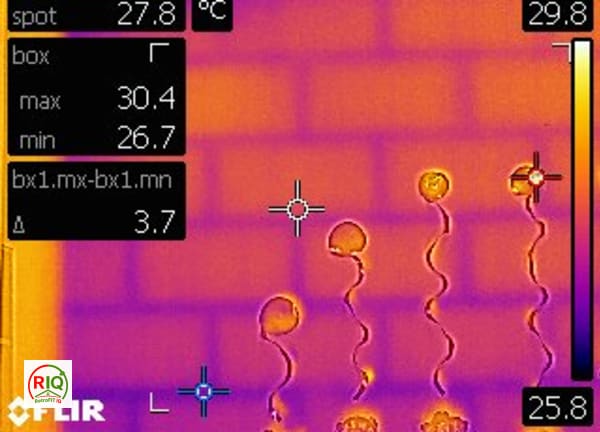
Thermal Bridging Visible Through Masonry Blockwork Wall
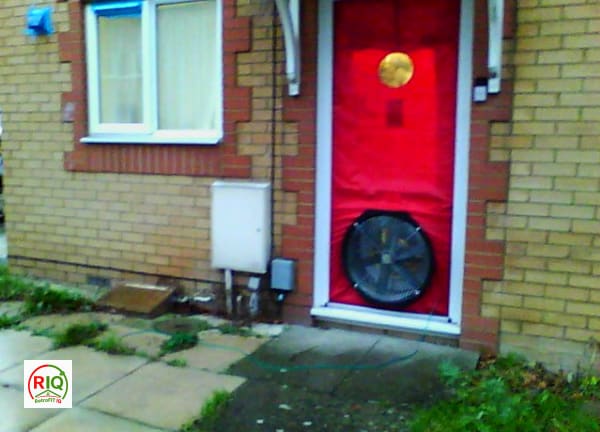
Blower Door Airtightness Test Setup

Thermal Bridge at Internal Corner Wall Junction

Airtightness Testing in a Stratford Victorian Terrace

Thermal Bridge at Wall-Ceiling Junction Near Window
No related investigations yet.
Browse all investigationsFrequently asked questions
Why does my new build have condensation or damp?+
Because new builds carry a lot of construction moisture that dries out over the first year or two, the airtight construction traps it, and the ventilation is often missing, undersized or switched off. Humidity then rises and condenses on cold surfaces — usually a ventilation problem, not a structural fault.
Is condensation normal in a new build?+
Some is common in the early years because of drying build moisture, but it should be managed by the designed ventilation. Persistent condensation means the ventilation is not coping and should be checked.
Should I turn off my MVHR or extract fan?+
No. In an airtight new build the ventilation is doing the job that leakage used to do in older homes. Turning it off traps moisture and causes condensation and mould — it should run as designed.
How long does build moisture take to dry?+
Typically the first year or two, as concrete, screed and plaster cure. Good ventilation during this period removes the released moisture and limits condensation while it dries.
Could it be a defect rather than ventilation?+
It can be — missing or undersized ventilation, poor commissioning, or thermal bridges are genuine defects. Checking the ventilation and imaging the fabric distinguishes those from the normal drying case, with evidence for a claim.
Will a dehumidifier solve it?+
It can reduce humidity temporarily, but the real answer is to run the designed ventilation and let the building dry. A dehumidifier masks the cause rather than fixing the ventilation.
How do you diagnose new-build damp?+
We assess the ventilation provision and use, log humidity, image the fabric for cold junctions and relate airtightness to the ventilation need, distinguishing drying-and-ventilation from a defect to pursue.
Stop guessing — find the real cause
Do not spend money fixing symptoms before you understand the cause. Every home behaves differently, and the only reliable way to know what is happening in yours is professional building performance diagnostics. At RetrofitIQ we verify buildings using the right combination of investigations:
- Thermal imaging
- Blower door testing
- Moisture & dew point readings
- Ventilation review
- Building physics assessment
- Passive House methodology