
How do I stop condensation in my home?
Stopping condensation for good means tackling the two things that cause it together: too much moisture in the air and surfaces cold enough for that moisture to condense on. Wiping windows, running a dehumidifier or opening a window now and then treats the symptom briefly. The lasting fix is to lower indoor humidity with controlled ventilation and to warm the cold surfaces, so the air no longer reaches its dew point indoors.
 Reviewed by George Sora, Certified Passive House DesignerUpdated June 2026
Quick answer & key takeaways
6 min read- Condensation is high indoor humidity meeting surfaces below the dew point.
- The lasting fix lowers humidity AND warms cold surfaces — both, not one.
- Ventilation removes the moisture; insulation and air-sealing warm the surfaces.
- Wiping windows and dehumidifiers manage the symptom, not the cause.
- Biggest misconception: condensation is just bad luck with old windows. It is a controllable balance.
- Retrofit IQ's approach: measure humidity and surface temperatures, then fix the balance.
What this usually means
Condensation appears when humid indoor air touches a surface colder than its dew point — the temperature at which the air can no longer hold its moisture as vapour. So there are always two ingredients: the amount of water vapour in the air, set by how much moisture you generate and how much ventilation removes, and the temperature of the surfaces, set by insulation, heat and air leakage. Change either and you change whether condensation forms.
This is why single-measure attempts disappoint. A dehumidifier lowers humidity only while it runs and only locally; wiping windows removes today's water but not tomorrow's; opening a window helps for a moment but loses heat and is soon shut. None of them changes the underlying balance, so the condensation returns with the next cold, humid evening. The home keeps producing moisture, and the cold surfaces keep waiting for it.
The durable solution works on both ingredients at once. Controlled ventilation — trickle vents, continuous extract or mechanical ventilation with heat recovery — removes the moisture steadily so indoor humidity stays low. Warming the cold surfaces — insulating cold walls and reveals, improving glazing, sealing air leakage — raises their temperature above the dew point. With the humidity down and the surfaces warmer, the air no longer condenses indoors, and the problem stops rather than recurs.
Common causes
High moisture generation
Cooking, bathing, drying clothes indoors and even breathing add water vapour that must be removed.
Inadequate ventilation
Without enough air change, moisture builds up indoors and the dew point rises toward surface temperatures.
Cold surfaces below the dew point
Uninsulated walls, cold reveals, single glazing and thermal bridges give moisture somewhere to condense.
Reliance on symptom treatments
Wiping windows and running dehumidifiers manage the result without changing the cause.
Reduced ventilation after sealing
Draught-proofing or new windows without added ventilation can raise humidity and worsen condensation.
Signs and symptoms
Misted windows most mornings
Regular window condensation is the clearest sign humidity is high and surfaces are cold.
Damp patches and mould on cold walls
Condensation on cold walls and corners points to cold surfaces meeting humid air.
Streaming windows after cooking or bathing
Heavy condensation after moisture-producing activities shows ventilation is not keeping up.
Worse in winter and in unheated rooms
Colder surfaces in winter and in cool rooms make condensation more likely.
Condensation that returns after wiping
Moisture coming straight back confirms the cause has not been addressed.
What most people check first
- How much moisture the home generates (drying, cooking, bathing) and whether extract is used.
- Whether the home has adequate background ventilation (trickle vents, extract, MVHR).
- Which surfaces the condensation forms on, and whether they are cold (uninsulated or single glazed).
- Whether condensation worsened after sealing the home or fitting new windows.
What most people miss
- That condensation is a balance of humidity AND surface temperature.
- That dehumidifiers and wiping treat the symptom, not the cause.
- That ventilation and warmer surfaces must be addressed together.
- That measuring shows whether moisture, surfaces or both are driving it.
The building physics
Whether condensation forms is decided by the relationship between the air's dew point and the temperature of each surface. The dew point rises with indoor humidity, which is governed by moisture generation against ventilation; surface temperatures are governed by insulation, heat input and air leakage. Condensation occurs wherever a surface is colder than the current dew point — so the same room can be condensation-free at low humidity and stream with water once humidity climbs, even though nothing about the surfaces changed.
Ventilation is the lever that controls the moisture side. Removing humid air and replacing it with drier air lowers the indoor vapour content and the dew point, widening the margin between the air and the surfaces. Crucially, ventilation must be continuous or responsive enough to handle the peaks — after cooking, bathing or drying — because it is those moisture pulses that push the dew point up to meet cold surfaces and cause the visible condensation.
Surface temperature is the other lever. Insulating cold walls and reveals, improving glazing and sealing air leakage all raise surface temperatures, keeping them above the dew point for more of the time. Because the two levers multiply — low humidity and warm surfaces together — addressing both is far more effective and durable than pushing either alone. Measuring the humidity behaviour and the surface temperatures reveals which lever is limiting and lets the fix be targeted, so condensation stops rather than merely being mopped up.
How to stop condensation for good
Lower the humidity and warm the cold surfaces together. Measure first so you act on whichever is actually driving it in your home.
- 01
Measure humidity and surfaces
Log indoor humidity and map surface temperatures to see whether moisture, cold surfaces or both are the cause.
- 02
Reduce moisture at source
Use extract while cooking and bathing, avoid drying clothes indoors, and contain moisture to wet rooms.
- 03
Provide controlled ventilation
Add trickle vents, continuous extract or MVHR so humidity is removed steadily, including the peaks.
- 04
Warm the cold surfaces
Insulate cold walls and reveals, improve glazing and seal air leakage so surfaces stay above the dew point.
- 05
Pair sealing with ventilation
If the home has been sealed or had new windows, ensure ventilation was added so humidity does not build up.
- 06
Verify the balance holds
Re-measure humidity and check the surfaces stay dry through cold, humid conditions.
How to prevent it coming back
- Run extract ventilation during and after cooking and bathing.
- Avoid drying laundry indoors without ventilation.
- Keep background ventilation working through trickle vents or a system.
- Warm cold surfaces with insulation where condensation forms.
How Retrofit IQ investigates this
We measure both sides of the balance — humidity and surface temperatures — so the fix is targeted and lasting.
Do not spend money fixing symptoms before you understand the cause — investigate first, then build with confidence.
Do I need a professional investigation?
If condensation keeps returning despite wiping windows and running a dehumidifier, it is worth measuring the humidity and surface temperatures — so the moisture is removed and the surfaces warmed, and the condensation stops at the cause rather than being managed indefinitely.
Where to go next
Relevant services
Related comparisons
From the Academy
Related case studies
Evidence from Real Projects (14)
Real project and investigation images from our own fieldwork, matched to this page — not stock photography.
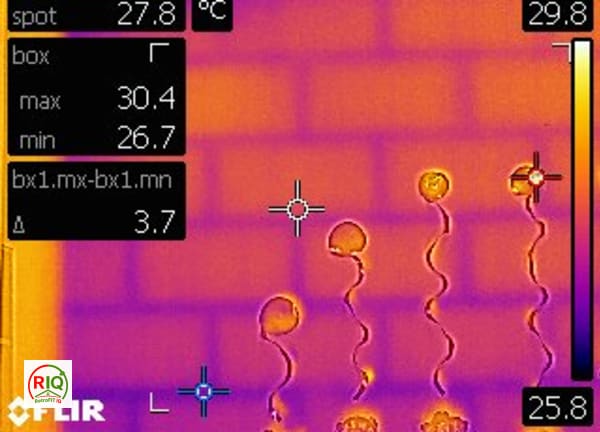
Thermal Bridging Visible Through Masonry Blockwork Wall

Sample Building Performance Investigation Report — Thermal Imaging

Thermal Bridge at Wall-Ceiling Junction Near Window

Thermal Bridge at Internal Corner Wall Junction

Airtightness Testing in a Stratford Victorian Terrace

Bathroom external wall
No related investigations yet.
Browse all investigationsFrequently asked questions
How do I stop condensation in my home?+
Lower the indoor humidity with controlled ventilation and warm the cold surfaces with insulation and better glazing — together. That keeps the air below its dew point indoors, so condensation stops rather than returning.
Will a dehumidifier stop condensation?+
It lowers humidity only while running and locally, treating the symptom. It can help, but the lasting fix is to remove the moisture with ventilation and warm the cold surfaces it condenses on.
Is opening windows enough?+
Brief airing helps for a moment but loses heat and is soon shut, so humidity rebuilds. Controlled background ventilation removes moisture steadily without the heat penalty.
Why does condensation keep coming back after I wipe it?+
Because wiping removes the water but not the cause. The home keeps producing moisture and the surfaces stay cold, so the next humid, cold evening it returns.
Should I reduce moisture or warm the surfaces?+
Usually both. Condensation is a balance of humidity and surface temperature, so reducing moisture with ventilation and warming the surfaces together is far more effective than either alone.
Can new windows stop condensation?+
Warmer glazing reduces condensation on the glass, but without ventilation the moisture moves to the next-coldest surface. Glazing and ventilation should be planned together.
How do you find the cause of my condensation?+
We log humidity, map the cold surfaces with thermal imaging, confirm dew-point conditions and assess ventilation, then recommend the ventilation and surface-warming that stops it.
Stop guessing — find the real cause
Do not spend money fixing symptoms before you understand the cause. Every home behaves differently, and the only reliable way to know what is happening in yours is professional building performance diagnostics. At RetrofitIQ we verify buildings using the right combination of investigations:
- Thermal imaging
- Blower door testing
- Moisture & dew point readings
- Ventilation review
- Building physics assessment
- Passive House methodology