
Why do I get condensation in my bedroom?
Bedrooms are one of the most condensation-prone rooms because, overnight, three things combine: we add a surprising amount of moisture to the air just by breathing and perspiring, the room cools as the heating goes off, and the door and windows are usually shut so the moist air cannot escape. Humid air then meets the cold windows and walls and condenses, which is why you so often wake to wet windows and damp patches. It is a balance of moisture, temperature and ventilation, and each can be adjusted.
 Reviewed by George Sora, Certified Passive House DesignerUpdated June 2026
Quick answer & key takeaways
7 min read- We add significant moisture overnight through breathing and perspiration.
- The room cools as heating goes off, lowering surface temperatures.
- Closed doors and windows trap the moist air so it cannot disperse.
- Humid air meets cold windows and walls and condenses by morning.
- Biggest misconception: it means the room is damp. It is overnight condensation you can manage.
- Retrofit IQ's approach: balance overnight ventilation, reduce moisture and warm the surfaces.
What this usually means
Sleeping people are continuous moisture sources. Through breathing and perspiration, the occupants of a bedroom release a litre or more of water vapour into the air over a night, and that moisture has to go somewhere. During the day, ventilation and warmth disperse such moisture, but at night the conditions change: the heating typically goes off so the room and its surfaces cool, and the door and windows are usually closed for privacy and warmth, so the humid air is sealed in with nowhere to escape. Humidity therefore rises steadily through the night.
As the surfaces cool and the humidity climbs, condensation becomes almost inevitable on the coldest surfaces — usually the windows, but also poorly insulated external walls, reveals and corners. By morning the glass is running with water and there may be damp patches or the beginnings of mould in cold corners and behind furniture against external walls. This is the classic pattern of bedroom condensation, and it reflects the overnight combination of high moisture generation, low surface temperatures and shut-off ventilation rather than a damp problem rising from the structure.
Because it is a balance, it responds to adjusting any of the three factors. Providing some overnight ventilation — a trickle vent left open, a window slightly ajar, or ideally continuous mechanical ventilation — lets the moist air escape so humidity cannot build; reducing the moisture added (for example by not drying washing in the bedroom and ventilating well earlier in the day) lowers the starting humidity; and warming the cold surfaces with insulation and better glazing keeps them above the dew point so condensation does not form. Used together, these manage bedroom condensation without having to choose between a warm room and a dry one.
Common causes
Overnight moisture from occupants
Breathing and perspiration add a litre or more of water vapour to the bedroom air each night.
Cooling surfaces
With the heating off, windows and walls cool below the dew point of the humid air.
Closed doors and windows
Shut rooms trap the moist air so humidity rises through the night with no escape.
Cold windows and external walls
The coldest surfaces collect the condensation, often the glass, reveals and corners.
Extra moisture sources
Drying washing or an en-suite without extract adds further moisture to the bedroom.
Signs and symptoms
Wet windows in the morning
Glass running with water on waking is the hallmark of overnight bedroom condensation.
Damp patches in cold corners
Moisture in corners and on external walls shows humid air condensing on cold surfaces.
Mould behind the wardrobe
Mould on an external wall behind furniture reflects trapped, cold, humid air.
Stuffy, humid feel by morning
A close, humid atmosphere on waking indicates the moist air had nowhere to go.
Worse with the door shut
Condensation that is worse when the room is sealed confirms a ventilation shortfall.
What most people check first
- Whether the room is ventilated at all overnight (trickle vent or window).
- Whether the heating going off lets surfaces cool below the dew point.
- Whether extra moisture (washing, en-suite) is added to the room.
- Whether the windows and external walls are cold and uninsulated.
What most people miss
- That occupants add a litre or more of moisture to the air overnight.
- That closing the room traps that moisture and raises humidity.
- That it is overnight condensation, not damp rising from the structure.
- That balancing ventilation, moisture and surface temperature manages it.
The building physics
The amount of water vapour air can hold falls as it cools, so a fixed quantity of moisture pushes the relative humidity up as the room cools overnight, and condensation forms once a surface drops below the dew point of the air. In a bedroom, the moisture added by occupants raises the absolute humidity while the heating going off lowers surface temperatures, so both the numerator and denominator move toward condensation — and the windows, being the coldest surfaces, reach the dew point first, followed by uninsulated walls, reveals and corners.
Ventilation is the variable that removes the accumulating moisture. With the door and windows shut, the bedroom becomes a near-sealed volume into which vapour is continuously added, so absolute humidity climbs through the night until condensation sheds the excess onto cold surfaces. A small, continuous air exchange — through a trickle vent, a slightly open window, or mechanical ventilation — caps the humidity by carrying the moist air away as fast as it is generated, which is why even modest overnight ventilation dramatically reduces morning condensation.
Surface temperature is the other lever. Raising the temperature of the coldest surfaces — better-insulated walls, warmer glazing, treated thermal bridges at reveals and corners — keeps them above the dew point of the night-time air, so condensation cannot form there even at elevated humidity. The most robust solution combines all three principles: provide continuous low-level ventilation (ideally heat-recovery ventilation, which ventilates without the cold draught), limit added moisture, and warm the surfaces. A diagnosis that logs the overnight humidity and maps the cold surfaces shows the right balance for a given bedroom, turning a recurring morning nuisance into a controlled, dry room.
How to stop condensation in your bedroom
Balance the three factors: provide some overnight ventilation, reduce the moisture added, and warm the cold surfaces so they stay above the dew point.
- 01
Provide overnight ventilation
Leave a trickle vent open or a window ajar, or use mechanical ventilation, so moist air can escape.
- 02
Reduce added moisture
Avoid drying washing in the bedroom and ventilate any en-suite so less moisture enters the air.
- 03
Keep some background warmth
Avoid letting the room and its surfaces drop too far overnight, so they stay above the dew point.
- 04
Warm the cold surfaces
Insulate cold external walls and improve glazing so the coldest surfaces no longer condense.
- 05
Allow air around furniture
Leave a gap behind wardrobes on external walls so air can circulate and surfaces stay warmer.
- 06
Consider heat-recovery ventilation
For a lasting fix, continuous heat-recovery ventilation removes moisture without a cold draught.
How to prevent it coming back
- Keep some overnight ventilation so humidity cannot build.
- Avoid drying washing or trapping en-suite moisture in the bedroom.
- Warm cold external walls and improve glazing.
- Leave air gaps behind furniture on external walls.
How Retrofit IQ investigates this
We log the overnight humidity and map the cold surfaces to balance ventilation, moisture and surface temperature.
Do not spend money fixing symptoms before you understand the cause — investigate first, then build with confidence.
Do I need a professional investigation?
Recurring bedroom condensation is worth investigating when it persists despite some ventilation, or where mould is appearing in cold corners and behind furniture. Logging the overnight humidity and mapping the cold surfaces shows whether to prioritise ventilation, moisture control or warming the surfaces for a lasting fix.
Where to go next
Relevant services
Related comparisons
From the Academy
Related case studies
Evidence from Real Projects (14)
Real project and investigation images from our own fieldwork, matched to this page — not stock photography.
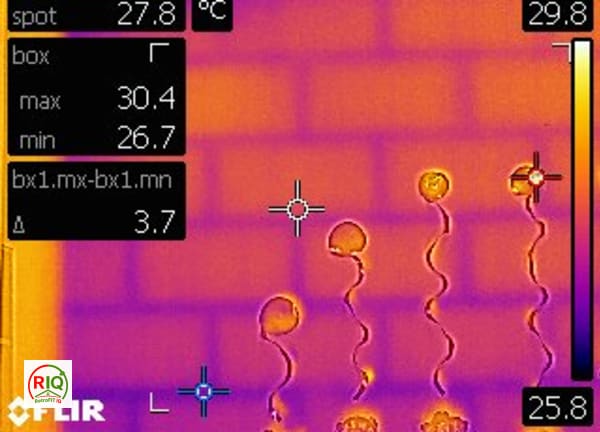
Thermal Bridging Visible Through Masonry Blockwork Wall

Sample Building Performance Investigation Report — Thermal Imaging

Thermal Bridge at Wall-Ceiling Junction Near Window

Thermal Bridge at Internal Corner Wall Junction

Airtightness Testing in a Stratford Victorian Terrace
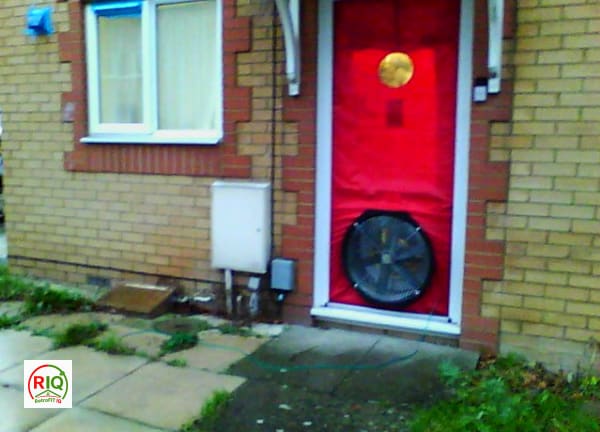
Blower Door Airtightness Test Setup
No related investigations yet.
Browse all investigationsFrequently asked questions
Why do I get condensation in my bedroom?+
Because overnight you add a litre or more of moisture by breathing and perspiring, the room cools as the heating goes off, and the closed door and windows trap the humid air. It then condenses on the cold windows and walls by morning. It is a balance of moisture, temperature and ventilation.
Why is it worst in the morning?+
Through the night moisture accumulates in the sealed room while surfaces cool, so humidity and condensation peak by morning — which is why the windows are running with water when you wake.
Does sleeping really add that much moisture?+
Yes — the occupants of a bedroom typically release over a litre of water vapour overnight through breathing and perspiration, which is enough to raise humidity significantly in a closed room and cause condensation on cold surfaces.
Should I sleep with a window open?+
Some overnight ventilation — a trickle vent open or a window ajar — greatly reduces condensation by letting moist air escape. If that is too cold, continuous mechanical ventilation, ideally with heat recovery, ventilates without the chill.
Why is there mould behind my wardrobe?+
An external wall behind a wardrobe stays cold and the trapped air humid, so condensation and mould form there. Leaving a gap for air to circulate and warming the wall helps prevent it.
Is bedroom condensation a sign of damp?+
Usually it is overnight surface condensation you can manage, not damp rising from the structure. But persistent condensation can lead to mould, so it is worth addressing the ventilation, moisture and cold surfaces.
How do you stop bedroom condensation for good?+
We log the overnight humidity, map the cold surfaces, and specify the right balance of ventilation (often heat-recovery), moisture control and surface warming so the room stays dry without being cold.
Stop guessing — find the real cause
Do not spend money fixing symptoms before you understand the cause. Every home behaves differently, and the only reliable way to know what is happening in yours is professional building performance diagnostics. At RetrofitIQ we verify buildings using the right combination of investigations:
- Thermal imaging
- Blower door testing
- Moisture & dew point readings
- Ventilation review
- Building physics assessment
- Passive House methodology