
Why has condensation suddenly got worse in my house?
When condensation suddenly gets worse, something in the balance that controls it has changed. Condensation forms when humid indoor air meets surfaces below the dew point, so a sudden increase means either there is more moisture in the air, the surfaces have got colder, or the ventilation that used to remove the moisture has reduced — and often a specific, identifiable change is behind it. Colder weather, a new household routine, a broken extractor, draught-proofing or new windows, or a recent retrofit can each tip the balance. Rather than treating the symptom on the glass, the useful question is what changed, because finding the trigger points straight to the fix.
 Reviewed by George Sora, Certified Passive House DesignerUpdated June 2026
Quick answer & key takeaways
8 min read- A sudden increase means the moisture, surface temperature or ventilation balance has changed.
- Colder weather lowers surface temperatures so condensation forms more readily.
- More moisture — drying washing, more occupants, a new appliance — raises the humidity.
- Reduced ventilation, a broken fan, or sealing the house up cuts moisture removal.
- Biggest misconception: it appeared from nowhere. A specific change has almost always tipped the balance.
- Retrofit IQ's approach: identify what changed, then restore the balance of moisture, warmth and ventilation.
What this usually means
Condensation is the visible result of a balance between three things: how much moisture is in the indoor air, how cold the surfaces are, and how effectively ventilation removes the moist air. When that balance is stable, the condensation you get is roughly constant; when it suddenly worsens, one of the three has shifted. The instinct is to focus on the wet windows or walls, but those are just where the imbalance shows. The productive approach is to ask what is different now compared with before it worsened, because a sudden change almost always has a specific, traceable trigger rather than appearing spontaneously.
The most common triggers fall into the three categories. Surfaces get colder when the weather turns — a cold snap drops surface temperatures below the dew point that were previously just above it — or when heating is reduced to save money, so rooms and their surfaces run cooler. Moisture rises when the household generates more of it: more people at home, drying washing indoors, a new tumble dryer vented incorrectly, more cooking, or even a new fish tank or houseplants. Ventilation falls when an extractor fan fails or is disconnected, trickle vents are closed, a chimney is capped, or the house is draught-proofed, has new windows fitted, or is otherwise sealed up — all of which reduce the background air change that used to carry moisture away. Frequently a sudden worsening combines two of these, such as colder weather plus less heating, or new windows plus unchanged moisture.
Recent improvements are a particularly common and counter-intuitive trigger. Draught-proofing, new windows or insulation make a home more airtight, which is good for warmth and bills but reduces the accidental ventilation that previously removed moisture — so unless ventilation is deliberately provided, the same daily moisture now has nowhere to go and condenses. This is the 'seal tight, ventilate right' principle: tightening the envelope without addressing ventilation predictably increases condensation. Identifying which change tipped the balance — colder surfaces, more moisture, or less ventilation, or a recent retrofit — is what allows the right response, whether that is restoring ventilation, removing a moisture source, or warming cold surfaces, rather than wiping the windows each morning.
Common causes
Colder weather
A cold spell lowers surface temperatures below the dew point, so condensation forms more readily.
Reduced heating
Heating less to save money leaves surfaces cooler and more prone to condensation.
More indoor moisture
More occupants, drying washing, cooking or a new appliance raises the indoor humidity.
Lost ventilation
A failed extractor, closed vents or a capped chimney cut the moisture removal.
A recent retrofit
Draught-proofing, new windows or insulation reduce accidental ventilation if none is added.
Signs and symptoms
Windows wet when they weren't before
A sudden onset of streaming windows shows the balance has shifted recently.
Worse since the weather turned
Condensation tracking a cold snap points to colder surfaces as the trigger.
Worse since a change at home
More people, washing or a new appliance indicates a moisture increase.
Worse since new windows or sealing
Onset after a retrofit signals reduced ventilation needing to be restored.
A fan that has stopped working
A failed or disconnected extractor reveals lost moisture removal.
What most people check first
- What changed around the time the condensation worsened.
- Whether the weather or reduced heating has cooled the surfaces.
- Whether more moisture is being generated than before.
- Whether ventilation has been lost or the house recently sealed up.
What most people miss
- That a sudden increase has a specific trigger, not a spontaneous cause.
- That recent draught-proofing or new windows commonly reduce ventilation.
- That colder weather and less heating together tip the balance.
- That the trigger points straight to the right fix.
The building physics
Condensation onset is governed by the relationship between the indoor air's dew point and the temperatures of the surfaces it contacts. The dew point rises with the air's moisture content, so increasing the indoor vapour load — through additional occupancy, unflued moisture sources or drying washing — raises the dew point towards the prevailing surface temperatures. Independently, surface temperatures fall with colder external conditions and with reduced heating, lowering them towards the dew point. Condensation appears or intensifies whenever a surface temperature crosses below the dew point, so any change that raises the dew point or lowers the surface temperature can trigger a sudden worsening; commonly two changes act together, such as a cold snap coinciding with economised heating.
Ventilation sets the steady-state moisture content by exchanging humid indoor air for drier outdoor air, so a reduction in ventilation raises the indoor vapour load for the same generation rate and lifts the dew point. Mechanical extract failure, closed trickle vents and capped flues each reduce this exchange directly. Less obviously, fabric airtightness improvements reduce the infiltration that previously provided unintended background ventilation: draught-proofing, replacement windows and air-sealing all lower the air-change rate, so a home that was incidentally ventilated through its leakage becomes under-ventilated unless purpose-provided ventilation compensates. The result is a higher indoor humidity and more condensation immediately after the works, despite the warmer, less draughty interior — the well-known consequence of tightening an envelope without addressing ventilation.
Diagnosing a sudden worsening is therefore a matter of identifying which term in the balance changed and when. Logging the indoor temperature and relative humidity reveals whether the vapour load has risen and whether surfaces are reaching the dew point; correlating the onset with weather, heating patterns, household changes and any recent works isolates the trigger. The remedy follows directly: restore or provide ventilation where air change has fallen, remove or correctly vent a new moisture source, or raise surface temperatures through heating and, where surfaces are persistently cold, insulation. Treating the condensing surface — wiping windows, repainting — addresses none of these and the condensation persists, which is why locating the change that tipped the balance is the efficient route to resolving it.
How to tackle condensation that has suddenly worsened
Work out what changed — colder surfaces, more moisture or less ventilation, including any recent retrofit — then restore the balance rather than wiping the symptom.
- 01
Identify what changed
Pin down what altered around the time the condensation worsened — weather, routine, a fan, or works.
- 02
Check the surface temperatures
Establish whether colder weather or reduced heating has dropped surfaces below the dew point.
- 03
Find any new moisture source
Look for added occupants, drying washing, cooking or a wrongly vented appliance raising humidity.
- 04
Restore lost ventilation
Repair extractors, open trickle vents, and provide ventilation if the house has been sealed up.
- 05
Warm persistently cold surfaces
Where surfaces stay cold, heating and insulation lift them above the dew point.
- 06
Rebalance moisture and ventilation
Adjust the balance of warmth, moisture and ventilation so condensation no longer forms.
How to prevent it coming back
- Provide ventilation whenever you draught-proof, reseal or replace windows.
- Keep extractors working and trickle vents open.
- Vent tumble dryers correctly and avoid drying washing in unventilated rooms.
- Keep surfaces warm enough in cold weather to stay above the dew point.
How Retrofit IQ investigates this
We identify which change tipped the balance and restore the relationship between moisture, surface temperature and ventilation.
Do not spend money fixing symptoms before you understand the cause — investigate first, then build with confidence.
Do I need a professional investigation?
If condensation has suddenly got much worse and the trigger is not obvious, or it followed recent draught-proofing, new windows or insulation, it is worth investigating the balance of moisture, surface temperature and ventilation. Logging the conditions and correlating the onset with what changed identifies the trigger, so ventilation, a moisture source or cold surfaces can be addressed rather than the symptom wiped away each day.
Where to go next
Relevant services
Related comparisons
From the Academy
Related case studies
Evidence from Real Projects (17)
Real project and investigation images from our own fieldwork, matched to this page — not stock photography.
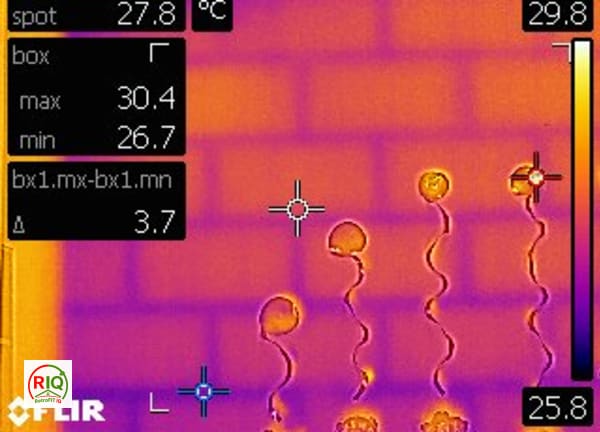
Thermal Bridging Visible Through Masonry Blockwork Wall

Sample Building Performance Investigation Report — Thermal Imaging

Thermal Bridge at Internal Corner Wall Junction

Thermal Bridge at Wall-Ceiling Junction Near Window

Airtightness Testing in a Stratford Victorian Terrace

Completed brick cladding system on a contemporary new-build
No related investigations yet.
Browse all investigationsFrequently asked questions
Why has condensation suddenly got worse in my house?+
Because something in the balance that controls it has changed — there is more moisture in the air, the surfaces have got colder, or the ventilation that removed the moisture has reduced. Colder weather, less heating, more occupants or washing, a broken extractor, or recent draught-proofing or new windows are the usual triggers, often two together.
Can new windows or insulation make condensation worse?+
Yes — and it is common. Draught-proofing, new windows and insulation make a home more airtight, which reduces the accidental ventilation that used to carry moisture away. Unless ventilation is deliberately provided, the same daily moisture now condenses, which is the 'seal tight, ventilate right' principle.
Why is it worse in cold weather?+
Because colder weather lowers surface temperatures below the dew point that were previously just above it, so the same indoor moisture now condenses. A cold snap combined with heating less to save money is a very common trigger for a sudden increase.
What new moisture sources should I look for?+
More people at home, drying washing indoors, a tumble dryer vented incorrectly, more cooking, or even a new fish tank or lots of houseplants all add moisture to the air. Any recent addition that raises humidity can tip a previously stable balance into condensation.
Should I just wipe the windows or get a dehumidifier?+
Those manage the symptom but not the cause. Once you identify what changed — colder surfaces, more moisture or less ventilation — restoring the balance through ventilation, removing a moisture source or warming surfaces stops the condensation forming, which is more effective than wiping it up each day.
How do you find what triggered it?+
We log the indoor temperature and humidity to see whether moisture or cold surfaces drive it, and correlate the onset with the weather, heating, household changes and any recent works — which isolates the trigger so the right measure can restore the balance.
Stop guessing — find the real cause
Do not spend money fixing symptoms before you understand the cause. Every home behaves differently, and the only reliable way to know what is happening in yours is professional building performance diagnostics. At RetrofitIQ we verify buildings using the right combination of investigations:
- Thermal imaging
- Blower door testing
- Moisture & dew point readings
- Ventilation review
- Building physics assessment
- Passive House methodology