
Why do I have condensation on my windows?
Condensation on windows is the visible result of two things meeting: humid indoor air and a cold glass surface below its dew point. It is a building-physics problem with a clear cause — and a clear, lasting fix.
 Reviewed by George Sora, Certified Passive House DesignerUpdated June 2026
Quick answer & key takeaways
5 min read- Window condensation forms when humid air meets glass that is below the dew point.
- It signals either too much indoor moisture, too little ventilation, cold glass, or all three.
- It's usually worst in winter and overnight, when surfaces are coldest and moisture builds.
- Wiping it away treats the symptom; the cause is the moisture balance and surface temperature.
- Biggest misconception: it's the windows' fault. New windows often move condensation elsewhere if moisture isn't addressed.
- Retrofit IQ's approach: log humidity, temperature and dew point, then balance ventilation and surface temperature.
What this usually means
Air can only hold a certain amount of water vapour at a given temperature. When warm, humid indoor air touches a surface cold enough to drop it below its dew point, the vapour condenses into liquid — and glass is usually the coldest surface in the room. So window condensation tells you the indoor air is humid and the glass is cold.
That makes it a balance of three factors: how much moisture is being produced, how well it's being ventilated away, and how cold the glass is. Persistent condensation means that balance has tipped — and, importantly, it often warns that the same is happening, unseen, on cold walls and in corners where mould then grows.
Common causes
High indoor humidity
Cooking, washing, drying laundry indoors and occupancy add moisture that, without removal, raises the dew point.
Inadequate ventilation
Without continuous extract or trickle ventilation, moisture accumulates — especially overnight and in winter.
Cold glass surfaces
Single glazing or cold-edged units sit well below room temperature, giving moisture a cold surface to condense on.
Reduced air movement
Trapped air behind blinds and curtains keeps the glass colder and humid, concentrating condensation there.
Increased airtightness without ventilation
Sealing a home for energy without upgrading ventilation raises humidity and triggers condensation.
Signs and symptoms
Misting or water on the room side of the glass
Worst in the morning and through winter, when the glass is coldest and humidity highest.
Damp window reveals and sills
Pooled water on the sill and damp, sometimes mouldy, reveals around the frame.
Condensation behind curtains and blinds
Trapped air keeps the glass colder and humid, concentrating the wetting there.
Worse in kitchens, bathrooms and bedrooms
Rooms with higher moisture production condense first and most.
Mould forming at the reveals and corners
Persistent surface dampness lets mould take hold around the coldest part of the window.
What most people check first
- Whether it's worse in winter, overnight or in specific rooms.
- Ventilation — trickle vents, extract fans and whether they're used.
- Moisture sources: drying laundry indoors, unvented cooking, no extractor.
- Glazing type and whether condensation is on the room side or between panes.
What most people miss
- That visible window condensation warns of hidden condensation on cold walls and in corners.
- That new windows alone can shift condensation to the next-coldest surface if moisture isn't controlled.
- The overnight moisture and surface-temperature picture, which a single daytime visit misses.
- That ventilation and surface temperature must be addressed together.
The building physics
The dew point is the temperature at which air becomes saturated and water condenses out. Raise the indoor humidity and the dew point rises; cool a surface below that dew point and condensation forms on it. Glass, being thin and (if single-glazed) poorly insulating, is typically the coldest surface in a room, so it condenses first — acting as a useful warning sign for the whole room's moisture balance.
Winter and overnight make it worse on both counts: outdoor temperatures drive glass surfaces colder, while closed-up homes and sleeping occupants raise indoor humidity. The result is the familiar morning streaming of water down the panes.
The durable solution works on the balance: remove moisture at source and through controlled ventilation, and raise cold surface temperatures (better glazing, warmer reveals). Wiping condensation away changes nothing; addressing humidity and surface temperature stops it forming.
How to fix it — the right way
Window condensation is fixed by working on the moisture balance — reduce and remove humidity, and warm the cold glass — not by wiping it away.
- 01
Reduce moisture at source
Use pan lids, run the cooker extract, vent the tumble dryer and avoid drying laundry on radiators.
- 02
Ventilate continuously
Keep trickle vents open and use extract fans, or fit continuous mechanical ventilation, so humidity cannot build up.
- 03
Warm the glass and reveals
Better-insulated glazing and warmer reveals raise the surface above the dew point so moisture cannot condense.
- 04
Improve air movement at the glass
Avoid trapping the window behind heavy blinds or curtains, which keeps it cold and humid.
- 05
Check the rest of the room
Look for the hidden condensation on cold walls and corners the windows are warning about.
How to prevent it coming back
- Run extract fans during and after cooking and showering.
- Keep trickle vents open and ventilate the home daily.
- Avoid drying clothes indoors without ventilation.
- Keep curtains and blinds slightly open so air reaches the glass.
How Retrofit IQ investigates this
We treat window condensation as a moisture-balance problem and measure it over time, rather than blaming the glass.
Do not spend money fixing symptoms before you understand the cause — investigate first, then build with confidence.
Do I need a professional investigation?
If condensation persists despite ventilating, logging humidity and surface temperatures over several days will show when and where the air crosses the dew point — so ventilation and glazing can be specified precisely.
It is worth investigating if mould is appearing too, because the windows are warning of the same condensation on cold walls and in corners.
Where to go next
Relevant services
Related comparisons
From the Academy
Related case studies
Evidence from Real Projects (9)
Real project and investigation images from our own fieldwork, matched to this page — not stock photography.
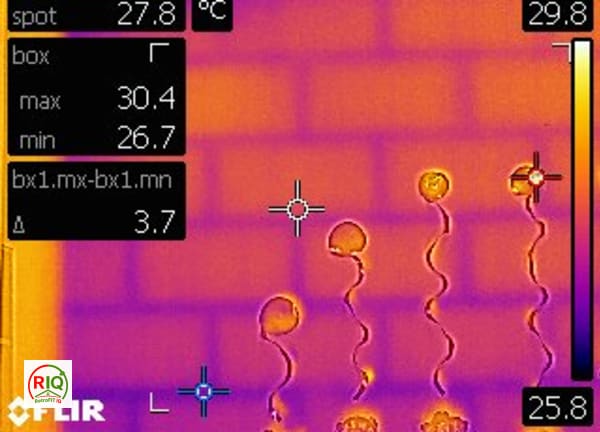
Thermal Bridging Visible Through Masonry Blockwork Wall

Sample Building Performance Investigation Report — Thermal Imaging

Thermal Bridge at Wall-Ceiling Junction Near Window

Thermal Bridge at Internal Corner Wall Junction

Airtightness Testing in a Stratford Victorian Terrace

Bathroom
No related investigations yet.
Browse all investigationsFrequently asked questions
Why do my windows have condensation in the morning?+
Overnight the glass is coldest and indoor humidity is highest, so the air at the glass drops below its dew point and condenses.
Are my windows faulty?+
Usually not. Condensation on the room side means the air is humid and the glass is cold. Condensation between panes, though, means a failed sealed unit.
Will new windows stop condensation?+
Warmer glazing helps, but if the moisture isn't controlled, condensation can simply move to the next-coldest surface, like a wall or corner.
Is window condensation harmful?+
The water itself is manageable, but it warns that humidity is high — and the same conditions cause hidden condensation and mould elsewhere.
How do I stop condensation on windows?+
Reduce moisture at source, ventilate continuously, and raise cold surface temperatures. Wiping it away doesn't address the cause.
Why is it worse in some rooms?+
Rooms with higher moisture (kitchens, bathrooms, bedrooms) or colder glass condense more. Logging humidity and temperature shows where and why.
Should I use a dehumidifier?+
It can give short-term relief, but the lasting fix is controlled ventilation plus warmer surfaces, which address the cause.
Stop guessing — find the real cause
Do not spend money fixing symptoms before you understand the cause. Every home behaves differently, and the only reliable way to know what is happening in yours is professional building performance diagnostics. At RetrofitIQ we verify buildings using the right combination of investigations:
- Thermal imaging
- Blower door testing
- Moisture & dew point readings
- Ventilation review
- Building physics assessment
- Passive House methodology