
Why is my house so stuffy?
A stuffy home is one where the air is not being changed often enough. Carbon dioxide from breathing builds up, moisture and smells linger, and the air feels heavy and stale — all signs that fresh air is not arriving and used air is not leaving at the rate the household needs. Stuffiness is rarely about temperature; it is about ventilation, and it is very fixable once you understand why the air is not moving.
 Reviewed by George Sora, Certified Passive House DesignerUpdated June 2026
Quick answer & key takeaways
8 min read- Stuffiness means the air is not being changed often enough — a ventilation problem, not a heating one.
- Carbon dioxide from occupants is the clearest marker: it climbs in unventilated rooms, especially bedrooms overnight.
- Modern, tighter homes and sealed-up older ones can become stuffy when ventilation was not provided to match.
- Opening windows helps briefly, but controlled ventilation delivers fresh air continuously and efficiently.
- Stuffiness and condensation often share a cause — too little air change to carry moisture and CO₂ away.
- Biggest misconception: a stuffy room just needs to be cooler. It needs more fresh air.
- Retrofit IQ's approach: measure CO₂, humidity and air change to size the right ventilation for the home.
What this usually means
When a room feels stuffy, what you are sensing is air that has been breathed several times over. Each occupant exhales carbon dioxide and water vapour continuously, and adds odours and other compounds. If fresh outdoor air is not arriving to dilute and replace this, the concentration of carbon dioxide rises, humidity climbs, and the air develops the heavy, close quality we call stuffiness. It is the most direct, everyday signal that a room is under-ventilated.
Carbon dioxide is the most useful indicator because it is produced steadily by people and is easy to measure. Outdoor air sits at around 400–420 parts per million; a well-ventilated room stays comfortably below about 1,000 ppm, while a stuffy, closed bedroom with two sleepers can climb past 2,000–3,000 ppm by morning. That rise does not just feel unpleasant — elevated carbon dioxide is associated with poorer sleep and reduced concentration, which is why a stuffy bedroom or home office is more than a comfort issue.
Stuffiness has become more common precisely because homes have become less leaky. Older houses ventilated themselves accidentally through draughts; as windows are replaced, gaps are sealed and homes are draughtproofed, that accidental ventilation disappears — and if deliberate ventilation is not provided to replace it, the air stops changing. So a stuffy home is often a sign of improved airtightness without a matching ventilation strategy, which is exactly the balance a proper investigation restores.
Common causes
Too little air change
The fundamental cause: fresh air is not arriving fast enough to dilute the carbon dioxide, moisture and odours the household produces.
Sealed-up or naturally tight home
Replacement windows, draughtproofing and modern construction reduce the accidental leakage that used to ventilate the home, with nothing provided to replace it.
Closed or absent trickle vents
Background ventilation is missing, blocked or deliberately closed, so rooms have no continuous source of fresh air.
Extract fans not used or undersized
Kitchen and bathroom extract that is switched off, weak or missing lets moisture and stale air accumulate.
Occupancy outpacing ventilation
More people in a room than the ventilation was designed for — bedrooms overnight, busy living rooms — pushes carbon dioxide up quickly.
Rooms kept shut
Closed internal doors and unused windows trap air in individual rooms, concentrating stuffiness where people spend time.
Signs and symptoms
Heavy, close air, worse over time
Air that feels fine on entering but heavy after an hour or two indicates carbon dioxide and humidity building up faster than they are removed.
Waking unrefreshed in a closed bedroom
Poor sleep and a stuffy bedroom in the morning are classic signs of overnight carbon dioxide build-up from inadequate ventilation.
Lingering cooking and bathroom smells
Odours that hang around long after the source point to too little air change to clear them.
Condensation on windows
Misting windows alongside stuffiness show the same ventilation shortfall is failing to remove moisture as well as carbon dioxide.
Relief only when a window is open
Air that feels fresh only while a window is open confirms there is no continuous background ventilation doing the job.
What most people check first
- Whether the home has working trickle vents and extract fans, and whether they are used.
- How airtight the home is — recently replaced windows, draughtproofing or modern construction.
- Which rooms feel worst and how many people use them (bedrooms overnight are a common hotspot).
- Whether condensation appears alongside the stuffiness, pointing to a shared ventilation shortfall.
What most people miss
- That stuffiness is a ventilation problem, not a temperature one — cooling the room does not fix the air.
- That improving airtightness without ventilation is the most common modern cause.
- That carbon dioxide is a measurable, reliable marker of how well a room is ventilated.
- That continuous controlled ventilation outperforms occasional window-opening.
The building physics
Ventilation is measured as air change rate — how many times per hour the air in a room is replaced with fresh outdoor air. A household continuously adds carbon dioxide, water vapour and pollutants, and the concentration of each settles at a level set by the balance between how fast it is produced and how fast ventilation removes it. When the air change rate is too low for the occupancy, carbon dioxide and humidity accumulate, and the air feels stuffy. Raise the air change rate and the concentrations fall back to fresh-air levels.
This is why stuffiness tracks occupancy and room size so closely. A small, closed bedroom with two sleepers produces a lot of carbon dioxide in a confined volume with little ventilation, so levels climb steeply through the night. A large, frequently opened living space dilutes the same output more easily. The physics is simply mass balance: production versus removal, in a given volume of air.
Airtightness changes the equation by removing the accidental removal route. In a leaky house, draughts provided an uncontrolled, weather-dependent air change that happened to keep stuffiness at bay — at the cost of wasted heat. Sealing those leaks saves energy but eliminates that accidental ventilation, so unless deliberate ventilation is provided, the air change rate drops and stuffiness appears. This is the meaning of 'build tight, ventilate right': reduce uncontrolled leakage and replace it with controlled, efficient ventilation.
Controlled ventilation solves stuffiness far better than opening windows because it is continuous and predictable. Background trickle vents provide a steady baseline; continuous extract removes moisture and stale air at source; and balanced mechanical ventilation with heat recovery (MVHR) supplies filtered fresh air to living spaces and bedrooms while recovering most of the heat from the air it removes. The result is consistently fresh air at a known rate, rather than the brief, heat-losing relief of an open window — which is why measuring air change and sizing ventilation to the home is the durable fix.
How to fix a stuffy home properly
The goal is to raise the air change rate to match how the home is used, with controlled ventilation rather than reliance on open windows. Measuring first ensures the solution is sized correctly.
- 01
Measure how the air is really behaving
Log carbon dioxide and humidity in the stuffiest rooms over a few days to see how far and how fast they climb — this quantifies the ventilation shortfall.
- 02
Provide and use background ventilation
Open or fit trickle vents and ensure a continuous, low-level source of fresh air to every habitable room, especially bedrooms.
- 03
Strengthen extract at the moisture sources
Ensure kitchen and bathroom extract is adequate and actually used, so moisture and stale air are removed where they are produced.
- 04
Consider continuous or balanced ventilation
Where stuffiness persists or the home is airtight, continuous extract (dMEV) or balanced MVHR delivers fresh air constantly and, with heat recovery, efficiently.
- 05
Balance ventilation with airtightness
Pair the ventilation strategy with the home's airtightness so fresh air is delivered without simply leaking heat — measured, not guessed.
- 06
Verify the result
Re-measure carbon dioxide and humidity to confirm they now stay in a healthy range through normal use, proving the ventilation is adequate.
How to prevent it coming back
- Keep trickle vents open and extract fans working, especially in bedrooms, kitchens and bathrooms.
- Provide controlled ventilation whenever you improve airtightness or replace windows.
- Match ventilation to how rooms are actually used — occupancy, not just floor area.
- Monitor carbon dioxide and humidity so a developing shortfall is caught early.
- Avoid sealing a home tight without a deliberate ventilation plan.
How Retrofit IQ investigates this
We measure how the air actually behaves and size the right ventilation for the home, rather than assuming open windows will do.
Do not spend money fixing symptoms before you understand the cause — investigate first, then build with confidence.
Do I need a professional investigation?
Measuring is worthwhile when a home feels persistently stuffy, when bedrooms are stuffy by morning, when stuffiness appeared after window replacement or draughtproofing, or when condensation accompanies it. Logging carbon dioxide and humidity turns a vague complaint into clear evidence of how much ventilation is needed and where.
It is especially valuable before or after airtightness improvements, where ventilation must be designed as the partner to sealing, so the home is both efficient and genuinely fresh.
Where to go next
Relevant services
Related comparisons
From the Academy
- CO₂ monitoring — the simplest measure of whether you're ventilating enough.
- Trickle vents and background ventilation — what they do, and don't.
- MVHR explained — mechanical ventilation with heat recovery.
- Ventilation strategy for retrofit — matching ventilation to airtightness.
- Indoor air quality — the four numbers that actually matter.
Related case studies
Evidence from Real Projects (9)
Real project and investigation images from our own fieldwork, matched to this page — not stock photography.
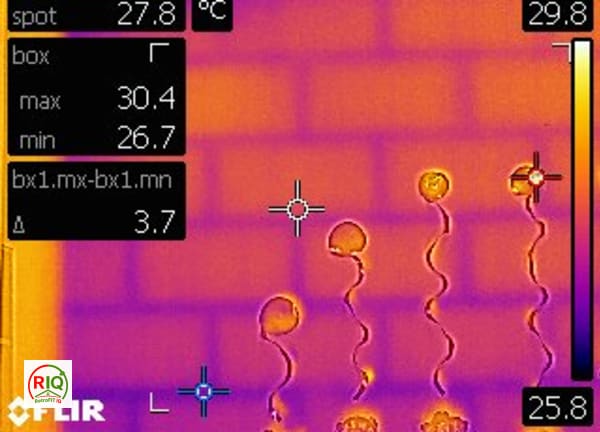
Thermal Bridging Visible Through Masonry Blockwork Wall

Sample Building Performance Investigation Report — Thermal Imaging
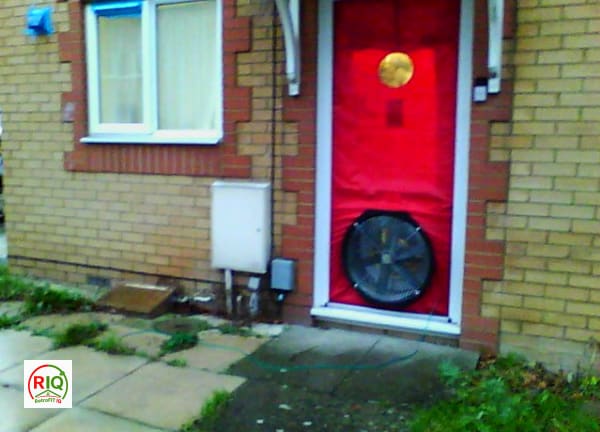
Blower Door Airtightness Test Setup

Airtightness Testing in a Stratford Victorian Terrace

Brick-slip panels being installed onto the metal rail system over the mineral wool insulat

Thermal Bridge at Wall-Ceiling Junction Near Window
No related investigations yet.
Browse all investigationsFrequently asked questions
Why is my house so stuffy?+
Because the air is not being changed often enough. Carbon dioxide, moisture and odours from everyday living build up faster than ventilation removes them, making the air feel heavy and stale. It is a ventilation problem, not a temperature one.
Why is my bedroom stuffy in the morning?+
Overnight, two sleepers add a lot of carbon dioxide and moisture to a small, closed room with little ventilation, so levels climb steeply by morning. Background ventilation or a trickle vent keeps the air fresher.
Does a stuffy house mean poor air quality?+
Usually yes — stuffiness reflects high carbon dioxide and humidity, which are markers of inadequate ventilation. Measuring them confirms how much fresh air the home is actually getting.
Will opening windows fix a stuffy house?+
It helps while they are open, but it is intermittent and loses heat. Controlled ventilation — trickle vents, continuous extract or MVHR — delivers fresh air steadily and efficiently.
Why did my house get stuffy after new windows?+
New windows and draughtproofing remove the accidental leakage that used to ventilate the home. Without deliberate ventilation to replace it, the air stops changing and the home feels stuffy.
Is stuffiness linked to condensation?+
Yes. The same lack of air change that lets carbon dioxide build up also lets moisture accumulate, so stuffiness and window condensation often appear together.
How do you diagnose a stuffy home?+
We log carbon dioxide and humidity in the worst rooms, assess the existing ventilation against the home's needs, relate it to airtightness, and recommend ventilation sized to fix it.
Stop guessing — find the real cause
Do not spend money fixing symptoms before you understand the cause. Every home behaves differently, and the only reliable way to know what is happening in yours is professional building performance diagnostics. At RetrofitIQ we verify buildings using the right combination of investigations:
- Thermal imaging
- Blower door testing
- Moisture & dew point readings
- Ventilation review
- Building physics assessment
- Passive House methodology