
What are the signs of poor ventilation?
Poor ventilation rarely announces itself directly — instead it shows up as a cluster of everyday symptoms: misting windows, stuffy rooms, lingering smells, recurring mould and air that only feels fresh when a window is open. Recognising these signs early matters, because they point to a home that is not changing its air often enough to stay healthy and dry.
 Reviewed by George Sora, Certified Passive House DesignerUpdated June 2026
Quick answer & key takeaways
7 min read- Poor ventilation shows up as condensation, stuffiness, lingering smells and recurring mould.
- These symptoms share one root: too little fresh air to carry moisture, carbon dioxide and pollutants away.
- Window condensation is one of the most reliable early warnings of inadequate ventilation.
- Stuffiness and poor sleep in closed bedrooms point to carbon dioxide build-up overnight.
- Mould that returns after cleaning is often a ventilation signal as much as a cold-surface one.
- Biggest misconception: these are separate problems. They are usually one ventilation shortfall.
- Retrofit IQ's approach: measure CO₂, humidity and airflow to confirm whether the home is genuinely ventilated.
What this usually means
Ventilation is what carries away the by-products of living in a home — water vapour, carbon dioxide, cooking smells, and a range of indoor pollutants. When it is inadequate, those by-products accumulate, and each produces its own visible or sensory symptom. So the signs of poor ventilation are really the signs of moisture, carbon dioxide and pollutants building up faster than the home can remove them. Seen together, they form a recognisable pattern.
The most common sign is condensation: misting windows, damp on cold surfaces, and the mould that follows. This is moisture that should have been ventilated away instead settling on the coldest surfaces. Alongside it come stuffiness and poor sleep — the sensory signs of carbon dioxide build-up — and lingering odours, the sign that the air simply is not being refreshed. Recurring mould, despite cleaning, is often the longer-term consequence of the same shortfall.
What ties these symptoms together is that no single one proves poor ventilation on its own — but as a cluster they are highly diagnostic. A home with misting windows, stuffy bedrooms, smells that hang around and mould that keeps returning is almost certainly under-ventilated. Recognising the pattern is the first step; measuring carbon dioxide, humidity and airflow then confirms it and shows how large the shortfall is.
Common causes
Insufficient air change
The underlying cause behind every sign: the home is not replacing its air fast enough to remove moisture, carbon dioxide and pollutants.
Missing or closed background ventilation
Absent, blocked or shut trickle vents leave rooms with no continuous fresh-air supply.
Inadequate extract
Weak, missing or unused kitchen and bathroom extract lets moisture and odours accumulate at source.
Increased airtightness
Sealed-up or modern homes lose the accidental leakage that used to ventilate them, exposing the lack of a deliberate strategy.
High moisture or occupancy
Drying laundry indoors, long showers and crowded rooms produce more than the existing ventilation can clear.
Signs and symptoms
Condensation on windows and cold surfaces
Regular misting, especially in the morning, is one of the clearest early signs that moisture is not being ventilated away.
Stuffy, heavy air
Rooms that feel close and airless, particularly bedrooms by morning, indicate carbon dioxide building up from inadequate ventilation.
Lingering smells
Cooking, bathroom or general odours that hang around show the air is not being refreshed quickly enough.
Recurring mould
Mould that returns after cleaning, especially in corners and on cold surfaces, often reflects a ventilation shortfall as well as cold surfaces.
Air fresh only with windows open
If the home only feels fresh while windows are open, there is no effective background ventilation doing the job continuously.
What most people check first
- Whether windows mist up regularly, especially in the morning.
- Whether bedrooms feel stuffy overnight and sleep is poor.
- Whether smells and moisture linger after cooking and showering.
- Whether trickle vents and extract fans exist, work and are used.
What most people miss
- That condensation, stuffiness, smells and mould are usually one ventilation problem, not several.
- That increased airtightness can unmask a ventilation shortfall that was previously hidden by draughts.
- That measuring carbon dioxide and humidity confirms the shortfall objectively.
- That extract fans must actually be used and adequate, not just present.
The building physics
Each sign of poor ventilation is the visible result of a concentration building up because removal cannot keep pace with production. Moisture production (cooking, washing, drying, breathing) raises indoor humidity; when ventilation is too low to remove it, the humidity climbs and condenses on the coldest surfaces, giving misting windows and damp. Carbon dioxide production by occupants raises CO₂ levels; when air change is too low, it accumulates and the air feels stuffy. Odours and pollutants follow the same logic.
Because all these by-products are removed by the same mechanism — fresh-air exchange — a single ventilation shortfall produces several symptoms at once. This is why the signs cluster: a home that cannot clear its moisture usually cannot clear its carbon dioxide or odours either. Treating each symptom separately (a dehumidifier here, an air freshener there, cleaning the mould) addresses none of them durably, because the shared cause — inadequate air change — remains.
Airtightness explains why these signs have become more common. Older homes leaked enough air to keep concentrations down by accident; as homes are sealed, that accidental ventilation disappears and the symptoms emerge unless deliberate ventilation is provided. The remedy is to measure the actual air change — via carbon dioxide as a tracer, humidity logging and airflow assessment — and then provide controlled ventilation sized to remove the home's real moisture and CO₂ load, so all the symptoms resolve together.
How to address the signs of poor ventilation
Because the signs share one cause, the fix is to raise effective air change with controlled ventilation — and to confirm it by measurement rather than treating each symptom in isolation.
- 01
Confirm the shortfall by measuring
Log carbon dioxide and humidity across the home to verify that air change is genuinely inadequate and to see which rooms are worst.
- 02
Restore background ventilation
Open or fit trickle vents so every habitable room has a continuous fresh-air supply.
- 03
Fix extract at source
Ensure kitchen and bathroom extract is adequate, working and used, removing moisture and odours where they are produced.
- 04
Add continuous or balanced ventilation if needed
Where symptoms persist or the home is airtight, continuous extract or MVHR provides reliable, efficient air change.
- 05
Address cold surfaces too
Where condensation and mould are present, warm the cold surfaces alongside improving ventilation, since both drive the moisture balance.
- 06
Verify all the signs have resolved
Re-measure carbon dioxide and humidity and check that condensation, stuffiness and smells have gone — proof the shared cause is fixed.
How to prevent it coming back
- Keep trickle vents open and extract fans used in the wettest, busiest rooms.
- Provide controlled ventilation whenever airtightness is improved.
- Avoid drying laundry indoors without extract or dehumidification.
- Monitor carbon dioxide and humidity to catch a developing shortfall early.
- Treat the cluster of symptoms as one ventilation issue rather than separate nuisances.
How Retrofit IQ investigates this
We confirm whether the home is genuinely ventilated by measuring the by-products that accumulate when it is not.
Do not spend money fixing symptoms before you understand the cause — investigate first, then build with confidence.
Do I need a professional investigation?
If you recognise several of these signs together — misting windows, stuffiness, lingering smells and recurring mould — it is worth measuring rather than treating each one separately. A short logging exercise confirms the ventilation shortfall and shows how much air change the home actually needs.
Where to go next
Relevant services
Related comparisons
From the Academy
- Ventilation and mould prevention — the humidity connection.
- CO₂ monitoring — the simplest measure of whether you're ventilating enough.
- Relative humidity explained — and why 80% at a surface means mould.
- Trickle vents and background ventilation — what they do, and don't.
- Indoor air quality — the four numbers that actually matter.
Related case studies
Evidence from Real Projects (6)
Real project and investigation images from our own fieldwork, matched to this page — not stock photography.
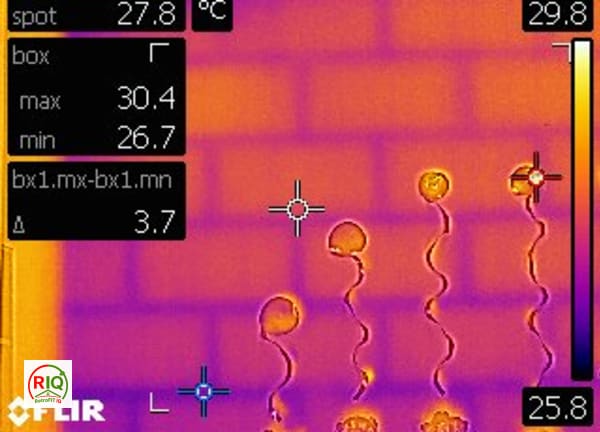
Thermal Bridging Visible Through Masonry Blockwork Wall

Sample Building Performance Investigation Report — Thermal Imaging

Thermal Bridge at Internal Corner Wall Junction

Thermal Bridge at Wall-Ceiling Junction Near Window
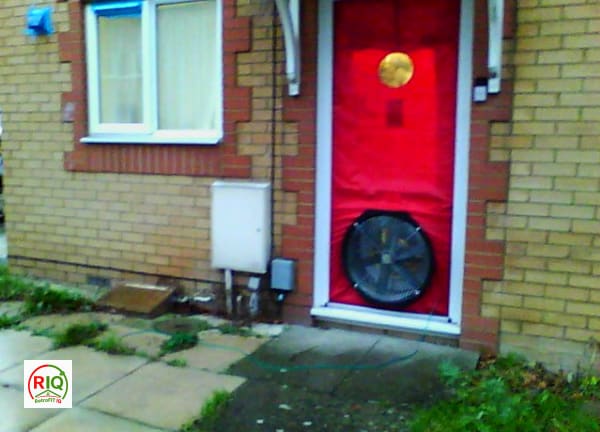
Blower Door Airtightness Test Setup

Airtightness Testing in a Stratford Victorian Terrace
No related investigations yet.
Browse all investigationsFrequently asked questions
What are the signs of poor ventilation?+
Condensation on windows and cold surfaces, stuffy and heavy air, lingering cooking and bathroom smells, recurring mould, and air that only feels fresh when a window is open. Together they indicate the home is not changing its air often enough.
Is window condensation a sign of poor ventilation?+
Yes — it is one of the clearest early signs. Moisture that should be ventilated away instead settles on cold glass, so regular misting points to inadequate air change.
Can poor ventilation cause mould?+
Yes. When moisture is not removed, humidity stays high and condenses on cold surfaces, feeding mould. Mould that returns after cleaning often reflects a ventilation shortfall as well as cold surfaces.
Why does my home only feel fresh with the windows open?+
Because there is no effective background ventilation. When the windows close, air change drops and the by-products of living build up again, so the freshness disappears.
How can I tell if my ventilation is adequate?+
Measure it. Logging carbon dioxide and humidity shows whether the air is being changed often enough; persistently high readings confirm a shortfall.
Are these signs separate problems?+
Usually not. Condensation, stuffiness, smells and mould commonly share one cause — too little air change — so addressing the ventilation resolves them together.
How do you confirm poor ventilation?+
We log carbon dioxide and humidity, assess the existing ventilation against the home's needs, and use thermal imaging to find the cold surfaces where condensation forms, then recommend ventilation sized to fix it.
Stop guessing — find the real cause
Do not spend money fixing symptoms before you understand the cause. Every home behaves differently, and the only reliable way to know what is happening in yours is professional building performance diagnostics. At RetrofitIQ we verify buildings using the right combination of investigations:
- Thermal imaging
- Blower door testing
- Moisture & dew point readings
- Ventilation review
- Building physics assessment
- Passive House methodology