How do I improve indoor air quality at home?
Improving indoor air quality is not about masking smells or running an air purifier — it is about controlling the things that pollute indoor air at source and ventilating the home properly so they are removed. Moisture, carbon dioxide, fine particles and chemical pollutants each have a source and a remedy, and the most reliable way to improve the air is to measure what is actually in it and ventilate accordingly.
 Reviewed by George Sora, Certified Passive House DesignerUpdated June 2026
Quick answer & key takeaways
7 min read- Good indoor air quality comes from controlling pollutants at source and ventilating properly.
- The key indicators are carbon dioxide, relative humidity, fine particles (PM2.5) and chemical pollutants (VOCs).
- Ventilation that supplies fresh air and removes stale air is the foundation; purifiers are a supplement, not a substitute.
- Moisture control prevents the humidity and mould that harm both air quality and the building.
- Measuring air quality shows what is actually wrong, so effort goes where it matters.
- Biggest misconception: an air freshener or purifier fixes air quality. Ventilation and source control do.
- Retrofit IQ's approach: measure CO₂, humidity, PM2.5 and VOCs, then design ventilation and source control to match.
What this usually means
Indoor air quality describes how clean, fresh and healthy the air in your home is, and it is determined by a balance between the pollutants being added and the rate at which ventilation removes them. The main things to manage are carbon dioxide from occupants, water vapour from daily activities, fine particles from cooking and outdoor air, and volatile organic compounds from furnishings, cleaning products and combustion. Improving air quality means reducing these at source where possible and ventilating to clear the rest.
This is why ventilation is the foundation of good air quality rather than an optional extra. No matter how clean you keep the home, occupants will always produce carbon dioxide and moisture, cooking will always release particles and vapour, and materials will always off-gas some compounds. Only a steady supply of fresh air and removal of stale air keeps these at healthy levels. Air purifiers can help with particles, but they do not remove carbon dioxide or moisture and cannot replace ventilation.
The reason to measure rather than guess is that each pollutant has a different source and remedy, and you cannot smell or see most of them. Carbon dioxide signals ventilation adequacy; humidity signals moisture balance and mould risk; PM2.5 signals particle sources and filtration needs; VOCs signal off-gassing and combustion. Measuring them shows which are actually elevated in your home, so the improvements — more ventilation, better extract, source control, filtration — are targeted at the real problem.
Common causes
Inadequate ventilation
The foundational issue: without enough fresh-air exchange, carbon dioxide, moisture and pollutants all accumulate.
Moisture from daily living
Cooking, washing and drying laundry raise humidity, which harms air quality and feeds mould if not ventilated away.
Cooking and combustion particles
Frying, gas hobs and open flames release fine particles (PM2.5) that need extract at source and good ventilation.
VOCs from materials and products
New furnishings, paints, cleaning products and air fresheners off-gas volatile compounds that ventilation dilutes.
Outdoor pollution drawn in
In some locations, outdoor particles and pollutants enter; filtered mechanical ventilation can reduce what gets through.
Relying on purifiers or fresheners
Masking smells or filtering particles without ventilating leaves carbon dioxide and moisture unaddressed.
Signs and symptoms
Stuffiness and poor concentration
High carbon dioxide makes air feel heavy and is linked to reduced concentration and poorer sleep.
Persistent humidity and condensation
High relative humidity and misting windows indicate a moisture and ventilation problem affecting air quality.
Lingering cooking haze and smells
Visible or smellable cooking by-products that hang around show particles and odours are not being extracted.
Headaches or irritation in new or sealed rooms
Symptoms in freshly furnished or tightly sealed spaces can point to elevated VOCs needing ventilation.
Dust and particle build-up
Noticeable fine dust can reflect particle sources and inadequate filtration or ventilation.
What most people check first
- How the home is ventilated — background, extract and any mechanical system.
- Moisture sources such as indoor laundry drying and unvented cooking.
- Whether cooking is extracted at source and how the hob is fuelled.
- Recent new furnishings, paints or products that may be off-gassing.
What most people miss
- That ventilation, not purifiers, is the foundation of good air quality.
- That carbon dioxide and moisture cannot be filtered out — they must be ventilated away.
- That each pollutant has a different source and remedy, so measuring matters.
- That source control (extract at the hob, fewer VOC-heavy products) is as important as ventilation.
The building physics
Indoor air quality is governed by the same mass-balance principle as stuffiness: the concentration of any pollutant settles where its production rate equals its removal rate. Removal happens through ventilation (for gases and vapour) and, for particles, additionally through filtration and settling. So for carbon dioxide and water vapour, ventilation is the only practical control — there is no filter that removes them — while for particles, both ventilation and filtration play a part. Understanding which mechanism removes which pollutant is what makes an air-quality strategy effective rather than hopeful.
Humidity deserves particular attention because it links air quality to the building itself. High relative humidity not only feels unpleasant and supports dust mites; it also raises the surface humidity on cold surfaces, driving condensation and mould that further degrade the air and damage the fabric. Controlling moisture — through source extract and ventilation — therefore improves both the air and the durability of the home, which is why it sits at the centre of a building-physics approach.
Source control is the most efficient lever because it reduces the production side of the balance. Extracting cooking particles and moisture at the hob, choosing low-emission materials and products, and avoiding indoor laundry drying all lower the load that ventilation has to remove. Combined with ventilation that is sized and balanced — ideally filtered MVHR in tighter homes, which supplies fresh outdoor air while filtering incoming particles and recovering heat — this delivers consistently good air quality. Measuring carbon dioxide, humidity, PM2.5 and VOCs first ensures the effort is directed at whichever of these is genuinely elevated.
How to improve indoor air quality, step by step
Work from measurement to source control to ventilation, targeting whichever pollutants are actually elevated. This delivers real improvement rather than masking symptoms.
- 01
Measure what's actually in the air
Log carbon dioxide, humidity, PM2.5 and (where relevant) VOCs to see which pollutants are elevated and where.
- 02
Control pollutants at source
Extract cooking particles and moisture at the hob, avoid indoor laundry drying, and reduce VOC-heavy products and fresheners.
- 03
Provide adequate ventilation
Ensure background and extract ventilation, and consider balanced filtered MVHR in tighter homes for continuous, efficient fresh air.
- 04
Manage humidity
Keep relative humidity in a healthy range through ventilation and source control, preventing condensation and mould.
- 05
Add filtration where particles are the issue
Use filtered mechanical ventilation or a purifier to address fine particles — as a supplement to ventilation, not a replacement.
- 06
Re-measure to confirm
Check that carbon dioxide, humidity and particles now sit in healthy ranges through normal use, proving the improvements worked.
How to prevent it coming back
- Extract cooking and bathroom moisture and particles at source, every time.
- Keep relative humidity moderate through ventilation rather than letting it build up.
- Choose low-emission materials and limit VOC-heavy products indoors.
- Provide controlled, ideally filtered, ventilation — especially in airtight homes.
- Monitor air quality so problems are caught and corrected early.
How Retrofit IQ investigates this
We measure the air objectively and design ventilation and source control to match, so improvements target the real problem rather than masking it.
Do not spend money fixing symptoms before you understand the cause — investigate first, then build with confidence.
Do I need a professional investigation?
Measuring is worthwhile when anyone in the home is sensitive to air quality, when there is persistent stuffiness, humidity or dust, or when you want to improve the air systematically rather than by trial and error. Knowing which pollutants are elevated means you invest in the ventilation and source control that will actually help.
It is particularly valuable in airtight or newly renovated homes, where ventilation and material choices have the biggest influence on the air people breathe every day.
Where to go next
Relevant services
Related comparisons
From the Academy
- Indoor air quality — the four numbers that actually matter.
- PM2.5 and particulates indoors — sources, health and filtration.
- VOCs and indoor pollutants — formaldehyde, off-gassing and source control.
- CO₂ monitoring — the simplest measure of whether you're ventilating enough.
- MVHR explained — mechanical ventilation with heat recovery.
Related case studies
Evidence from Real Projects (7)
Real project and investigation images from our own fieldwork, matched to this page — not stock photography.
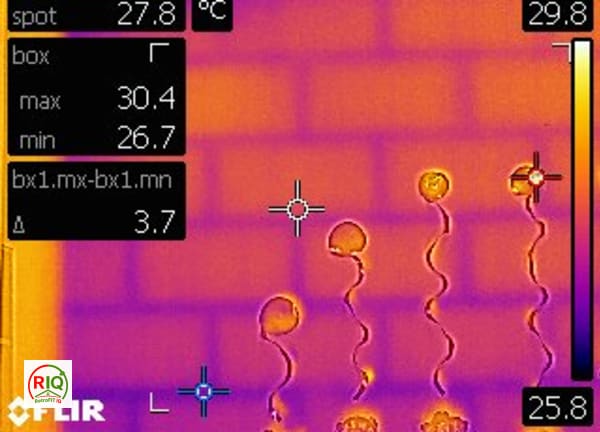
Thermal Bridging Visible Through Masonry Blockwork Wall

Sample Building Performance Investigation Report — Thermal Imaging

Thermal Bridge at Internal Corner Wall Junction

Thermal Bridge at Wall-Ceiling Junction Near Window
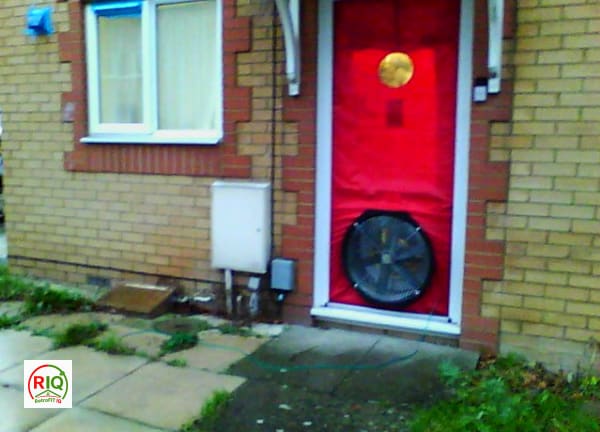
Blower Door Airtightness Test Setup

Airtightness Testing in a Stratford Victorian Terrace
No related investigations yet.
Browse all investigationsFrequently asked questions
How do I improve indoor air quality at home?+
Control pollutants at source — extract cooking moisture and particles, limit VOC-heavy products, avoid indoor laundry drying — and ventilate properly so carbon dioxide, moisture and pollutants are removed. Measuring the air first ensures the effort targets the real problem.
Do air purifiers improve indoor air quality?+
They help with fine particles, but they do not remove carbon dioxide or moisture, so they are a supplement to ventilation, not a substitute. Good air quality still depends on adequate fresh-air exchange.
What should I measure for indoor air quality?+
Carbon dioxide (ventilation adequacy), relative humidity (moisture and mould risk), PM2.5 (fine particles) and VOCs (chemical pollutants). Together they show what is actually wrong with the air.
Is humidity part of air quality?+
Yes. High humidity feels unpleasant, supports dust mites, and drives condensation and mould that further harm the air and the building. Controlling moisture is central to good air quality.
Does cooking affect indoor air quality?+
Significantly — frying and gas hobs release fine particles and moisture. Extracting at the hob and ventilating well keeps these from building up.
Is MVHR good for air quality?+
Yes. Balanced mechanical ventilation with heat recovery supplies filtered fresh air continuously while recovering heat, which is especially effective in airtight homes.
How do you assess indoor air quality?+
We log carbon dioxide, humidity, PM2.5 and VOCs, assess the ventilation against that measured load, and recommend ventilation, extract, filtration and source control sized to the findings.
Stop guessing — find the real cause
Do not spend money fixing symptoms before you understand the cause. Every home behaves differently, and the only reliable way to know what is happening in yours is professional building performance diagnostics. At RetrofitIQ we verify buildings using the right combination of investigations:
- Thermal imaging
- Blower door testing
- Moisture & dew point readings
- Ventilation review
- Building physics assessment
- Passive House methodology