
Do I need a PIV unit to stop condensation and mould?
A positive input ventilation (PIV) unit can help reduce condensation and mould in the right home, but it is not a universal cure, and fitting one before understanding the cause often disappoints. A PIV works by gently introducing filtered air, usually from the loft, into the home to slightly pressurise it and dilute and displace the humid internal air. That can lower whole-house humidity effectively where the problem is generally damp, stale air across the dwelling. But where the mould is driven by a specific cold surface, a localised moisture source, a leak or inadequate extraction at source, a PIV may make little difference. Whether you need one depends on diagnosing why the home is humid and whether the building suits positive input ventilation.
 Reviewed by George Sora, Certified Passive House DesignerUpdated June 2026
Quick answer & key takeaways
9 min read- PIV dilutes and displaces humid air to lower whole-house humidity.
- It works best where the problem is generally damp, stale air across the home.
- It helps less where a specific cold surface, leak or local source drives the mould.
- The home must suit PIV — a reasonably airtight envelope and a suitable air source.
- Biggest misconception: a PIV cures all condensation and mould. The cause must fit the cure.
- Retrofit IQ's approach: diagnose why the home is humid, then choose the right ventilation strategy.
What this usually means
Positive input ventilation works on a simple principle: a unit, usually mounted in the loft, draws in air, filters it, and supplies it gently into the home — typically through a central hallway diffuser — at a slight positive pressure. That continuous trickle of drier air dilutes the moisture-laden internal air and encourages it to leave through the building's natural leakage points, lowering the average humidity throughout the dwelling. Because the whole house is gently flushed with fresh air, a PIV can be genuinely effective against condensation and mould where the underlying problem is simply that the home is too humid overall — moisture from cooking, washing, drying and breathing building up faster than the existing ventilation can remove it.
But condensation and mould are not always a whole-house humidity problem, and this is where PIV can disappoint. If the mould is concentrated on a particular cold surface — a thermal bridge in a reveal, a cold corner behind furniture, an uninsulated wall — the issue is that surface falling below the dew point, and gently lowering the average humidity may not raise that surface above it. If the moisture has a specific source, such as a leak, penetrating damp or rising damp, no amount of ventilation will fix it. And if a bathroom or kitchen produces large bursts of moisture, that is best removed at source by effective extraction, not diluted across the house after it has already spread. In these cases a PIV treats a symptom partially while the real cause continues.
There is also the question of whether the home suits a PIV. The unit relies on slightly pressurising the dwelling, which works best in a reasonably airtight home where the introduced air actually displaces the stale air rather than escaping immediately; in a very leaky house the effect is diluted. The air source matters too — drawing from a cold loft can introduce cool air that occupants find uncomfortable, and the loft air must itself be suitable. For many homes, the more appropriate answer is good extraction at source, or a heat-recovery system that ventilates while retaining warmth, rather than PIV. Deciding whether you need a PIV therefore means first establishing why the home is humid, where the mould actually forms, and which ventilation strategy fits the building — which is exactly what an assessment determines.
Common causes
Whole-house humidity build-up
Moisture from daily living accumulating faster than ventilation removes it — where PIV helps most.
Cold-surface condensation
Mould on a specific cold surface needs that surface warmed, which PIV alone may not achieve.
A specific moisture source
A leak, penetrating or rising damp will not be solved by ventilation of any kind.
Inadequate extraction at source
Bursts of moisture in kitchens and bathrooms are best removed at source, not diluted later.
A leaky or unsuitable home
PIV relies on a reasonably airtight envelope and a suitable air source to be effective.
Signs and symptoms
Generally damp, stale air throughout
Whole-house humidity and stuffiness is the scenario PIV addresses best.
Mould concentrated in one cold spot
Localised mould points to a cold surface that PIV may not warm enough.
Condensation worst after cooking or showering
Moisture bursts suggest extraction at source is the priority.
Damp with a clear source
Staining from a leak or rising damp will not respond to ventilation.
Very draughty, leaky home
A leaky envelope dilutes the pressurising effect a PIV depends on.
What most people check first
- Whether the humidity is general across the home or localised to a cold spot.
- Whether there is a specific moisture source such as a leak or rising damp.
- Whether kitchen and bathroom extraction is adequate at source.
- Whether the home is airtight enough and has a suitable air source for PIV.
What most people miss
- That PIV addresses whole-house humidity, not a specific cold surface.
- That a leak or rising damp will not respond to any ventilation.
- That moisture bursts are best removed at source by extraction.
- That a leaky home or cold loft source limits how well PIV works.
The building physics
Condensation and mould occur where the relative humidity at a surface stays high enough for long enough — which happens when the air's moisture content is high, the surface is cold, or both. Ventilation strategies act on the moisture content of the air; they do not, in themselves, warm surfaces. PIV reduces the average vapour content of the indoor air by continuously introducing drier air and displacing humid air through the leakage paths, which lowers the room-air dew point. Where the surfaces are only marginally cold and the problem is generally elevated humidity, lifting the surface relative humidity off the threshold can be enough to stop mould. Where a surface is well below the dew point because it is a genuine thermal bridge, modestly lowering the air's moisture may not raise the surface humidity sufficiently, so the mould persists despite the ventilation.
The distinction between distributed and localised moisture is therefore central. A whole-house dilution approach like PIV is well matched to distributed moisture generation — the cumulative output of occupancy spread through the dwelling — because it lowers the background humidity everywhere. It is poorly matched to point sources: a plumbing leak, penetrating or rising damp introduce liquid water that ventilation cannot remove, and concentrated vapour bursts from cooking and bathing are most efficiently captured at source by extract ventilation before they disperse and condense elsewhere. Diluting that moisture across the house after it has spread is far less effective than removing it where it is produced, which is why source extraction frequently outperforms whole-house dilution for these cases.
Finally, PIV's mechanism assumes the dwelling can be held at a slight positive pressure, which depends on the envelope being reasonably airtight; in a leaky building the introduced air escapes too readily for effective displacement, and the supply air's temperature and quality — often drawn from the loft — affect comfort and acceptability. A heat-recovery ventilation system, by contrast, supplies and extracts in balance while recovering warmth, suiting airtight homes that need controlled fresh air without heat loss. Choosing between source extraction, PIV and heat-recovery ventilation is thus a building-physics decision driven by where the moisture arises, how cold the affected surfaces are, and how airtight the home is — which an assessment of humidity, surface temperatures and the moisture sources resolves, rather than assuming a PIV is the answer.
How to decide whether a PIV unit is right for you
Diagnose why the home is humid and where the mould forms first, then choose between source extraction, PIV or heat-recovery ventilation to match the cause and the building.
- 01
Identify the moisture pattern
Establish whether the humidity is general across the home or localised to a cold surface or source.
- 02
Rule out a moisture source
Check for a leak, penetrating or rising damp that no ventilation can fix.
- 03
Check source extraction
Ensure kitchen and bathroom extraction removes moisture bursts at source before they spread.
- 04
Assess suitability for PIV
Confirm the home is airtight enough and has a suitable air source for positive input ventilation.
- 05
Warm cold surfaces where needed
Where mould is on a thermal bridge, address the cold surface as well as the humidity.
- 06
Choose the right strategy
Select source extraction, PIV or heat-recovery ventilation to suit the cause and the building.
How to prevent it coming back
- Match the ventilation strategy to where the moisture arises.
- Remove moisture bursts at source rather than diluting them later.
- Address cold surfaces as well as humidity where mould is localised.
- Fix any leak or rising damp before relying on ventilation.
How Retrofit IQ investigates this
We diagnose why the home is humid and where the mould forms, then recommend the ventilation strategy that fits the cause and the building.
Do not spend money fixing symptoms before you understand the cause — investigate first, then build with confidence.
Do I need a professional investigation?
If you are considering a PIV to tackle condensation and mould, it is worth assessing the cause first. Establishing whether the humidity is general or localised, whether there is a moisture source, and whether the home suits positive input ventilation ensures you fit the strategy that actually solves the problem — source extraction, PIV or heat-recovery ventilation — rather than treating a symptom while the cause continues.
Get the right ventilation, measured not guessed
We measure humidity, CO₂ and airtightness so you fit the least intervention that delivers healthy air — better fans, PIV or MVHR.
- Humidity & CO₂ logging
- Airtightness test
- Ventilation specified to your home
Where to go next
Relevant services
Related comparisons
From the Academy
Related case studies
Evidence from Real Projects (10)
Real project and investigation images from our own fieldwork, matched to this page — not stock photography.
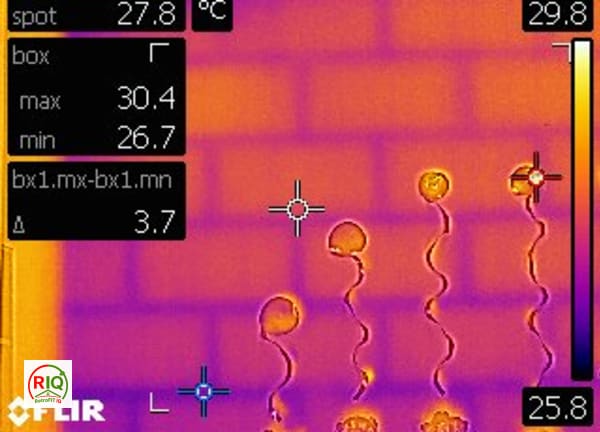
Thermal Bridging Visible Through Masonry Blockwork Wall

Sample Building Performance Investigation Report — Thermal Imaging

Thermal Bridge at Internal Corner Wall Junction

Thermal Bridge at Wall-Ceiling Junction Near Window

Airtightness Testing in a Stratford Victorian Terrace

Bathroom
No related investigations yet.
Browse all investigationsFrequently asked questions
Do I need a PIV unit to stop condensation and mould?+
Sometimes, but not always. A PIV lowers whole-house humidity by introducing drier air and displacing the humid air, which works well where the problem is generally damp, stale air. But where the mould is on a specific cold surface, or there is a leak or local moisture source, a PIV may make little difference — so the cause needs diagnosing first.
How does a PIV unit work?+
It draws in air, usually from the loft, filters it, and supplies it gently into the home at a slight positive pressure, diluting the moisture-laden internal air and pushing it out through the building's leakage points — lowering the average humidity across the dwelling.
When does a PIV not help?+
When the mould is driven by a cold surface or thermal bridge that the PIV cannot warm, when there is a leak or rising damp that ventilation cannot fix, or when concentrated moisture from cooking and bathing is better removed at source by extraction. In those cases it treats the symptom only partially.
Is a PIV better than an extractor fan?+
They do different jobs. Extraction removes moisture bursts at source in kitchens and bathrooms before they spread, which is often the priority; a PIV reduces background whole-house humidity. The right choice depends on whether the moisture is localised at source or generally distributed.
Does my house need to be airtight for a PIV?+
It works best in a reasonably airtight home, because it relies on slightly pressurising the dwelling to displace stale air. In a very leaky house the introduced air escapes too quickly and the effect is diluted, so the envelope and the air source both matter.
Should I consider heat-recovery ventilation instead?+
In an airtight home that needs controlled fresh air, a heat-recovery system ventilates while retaining warmth, which can suit better than PIV. The right strategy — source extraction, PIV or heat recovery — depends on where the moisture arises, how cold the surfaces are, and how airtight the home is, which an assessment determines.
Stop guessing — find the real cause
Do not spend money fixing symptoms before you understand the cause. Every home behaves differently, and the only reliable way to know what is happening in yours is professional building performance diagnostics. At RetrofitIQ we verify buildings using the right combination of investigations:
- Thermal imaging
- Blower door testing
- Moisture & dew point readings
- Ventilation review
- Building physics assessment
- Passive House methodology