
Why is there condensation on my walls and ceiling?
Condensation on walls and ceilings — not just windows — is a sign that those surfaces are cold enough to fall below the dew point of the indoor air, and that the air is humid enough to deposit moisture on them. It is more serious than window condensation because walls and ceilings are absorbent and harder to wipe, so the moisture soaks in and feeds mould. It points to two things together: surfaces that are too cold (from missing insulation, thermal bridges or unheated rooms) and humidity that is too high (from too little ventilation). The fix is to warm the surfaces and lower the humidity, not to treat the wall as 'damp'.
 Reviewed by George Sora, Certified Passive House DesignerUpdated June 2026
Quick answer & key takeaways
6 min read- Wall and ceiling condensation means cold surfaces and humid air.
- It's more serious than window condensation — surfaces absorb the moisture.
- Missing insulation and thermal bridges make surfaces cold.
- Too little ventilation keeps humidity high.
- Biggest misconception: it's rising or penetrating damp. It's usually condensation.
- RetrofitIQ's approach: warm the surfaces and control humidity together.
What this usually means
When condensation appears on walls and ceilings, it is because those surfaces have dropped below the dew point of the room air. Surfaces run cold where insulation is missing or thin, at thermal bridges (corners, lintels, junctions, where the structure conducts heat out), behind furniture against external walls, and in unheated or little-used rooms. If the indoor humidity is also high — because moisture from cooking, washing, drying clothes and breathing is not being ventilated away — that humid air condenses on the cold surfaces, leaving them wet and, before long, mouldy.
It is more damaging than condensation on glass because walls and ceilings absorb the moisture rather than beading it off, so it soaks into the plaster and decoration and provides an ideal surface for mould. People often mistake it for rising or penetrating damp and reach for chemical treatments or coatings, but those do nothing about cold surfaces or humid air, so the problem returns. The real fix addresses both halves: warm the cold surfaces by improving insulation and treating thermal bridges, and lower the indoor humidity with better ventilation and moisture control. Thermal imaging finds the cold surfaces and bridges, and a humidity check confirms the ventilation deficit, so the two are tackled together.
Common causes
Cold surfaces from missing insulation
Under-insulated walls and ceilings fall below the dew point.
Thermal bridges
Corners, lintels and junctions run colder and condense first.
High indoor humidity
Moisture not ventilated away raises the dew point.
Cold, unheated or unused rooms
Low surface temperatures encourage condensation.
Signs and symptoms
Wet patches on walls or ceiling
Surfaces below the dew point condensing moisture.
Mould in corners and at junctions
Thermal bridges marking the coldest spots.
Worse behind furniture
Cold, unventilated surfaces against external walls.
Worse in cold, humid weather
Condensation conditions at their peak.
What most people check first
- Which surfaces are coldest and where insulation is missing.
- Whether thermal bridges at corners and junctions are condensing.
- Whether indoor humidity is high and ventilation inadequate.
- Whether furniture or unheated rooms create cold surfaces.
What most people miss
- That wall condensation is usually cold-surface condensation, not rising damp.
- That thermal bridges condense before flat surfaces.
- That absorbent surfaces make it worse than on glass.
- That warming surfaces and ventilating must go together.
The building physics
Condensation occurs wherever a surface temperature falls below the dew point of the adjacent air, and walls and ceilings reach that point where their thermal resistance is low — thin or missing insulation — or where thermal bridges concentrate heat loss, such as at corners (more external surface than internal), around lintels and at structural junctions. These cold spots are predictably where condensation and mould appear first. Raising the surface temperature above the dew point, by improving insulation and treating the bridges, removes the condition; this is why insulation cures condensation that chemical damp treatments cannot.
The other variable is the dew point itself, set by the indoor humidity. High moisture generation with low ventilation raises the humidity and dew point, so more surfaces fall below it and condensation spreads from windows to walls and ceilings. Lowering the humidity with adequate ventilation reduces the dew point so fewer surfaces condense. Diagnosis therefore measures both: thermal imaging maps the cold surfaces and bridges, and humidity logging quantifies the ventilation deficit. The remedy follows directly — warm the surfaces and ventilate to lower the humidity — addressing the cause of the condensation rather than masking the absorbent, mouldy symptom on the wall.
How to stop condensation on walls and ceilings
Warm the cold surfaces by improving insulation and treating thermal bridges, and lower the indoor humidity with ventilation and moisture control — together.
- 01
Map the cold surfaces
Use thermal imaging to find cold walls, ceilings and bridges.
- 02
Improve insulation
Warm the under-insulated surfaces above the dew point.
- 03
Treat thermal bridges
Address corners, lintels and junctions that condense first.
- 04
Lower the humidity
Improve ventilation and reduce moisture at source.
- 05
Free up cold surfaces
Move furniture off cold external walls and heat unused rooms gently.
- 06
Verify it clears
Confirm the surfaces are warm and condensation-free.
How to prevent it coming back
- Keep surfaces warm with insulation and bridge treatment.
- Ventilate to keep humidity in a healthy range.
- Don't push furniture hard against cold external walls.
- Don't mistake condensation for rising damp.
How Retrofit IQ investigates this
We map the cold surfaces and measure the humidity behind wall and ceiling condensation to fix the cause.
Do not spend money fixing symptoms before you understand the cause — investigate first, then build with confidence.
Do I need a professional investigation?
If condensation or mould appears on walls and ceilings — especially in corners and behind furniture — it is worth thermal imaging and a humidity check before any 'damp' treatment. That confirms cold surfaces and a ventilation deficit, so warming the surfaces and ventilating fixes the cause rather than masking it.
Where to go next
Relevant services
Related comparisons
Related case studies
Evidence from Real Projects (22)
Real project and investigation images from our own fieldwork, matched to this page — not stock photography.
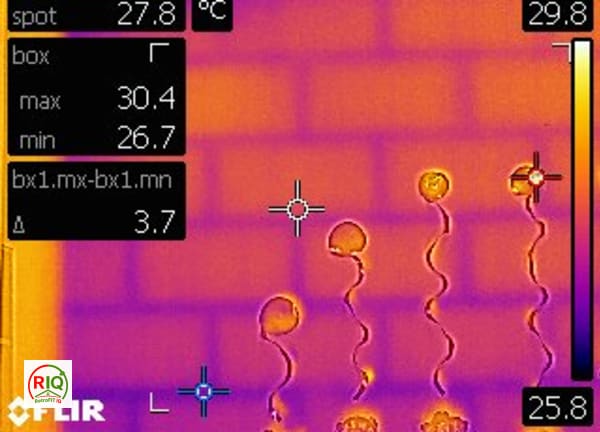
Thermal Bridging Visible Through Masonry Blockwork Wall

Sample Building Performance Investigation Report — Thermal Imaging

Thermal Bridge at Wall-Ceiling Junction Near Window

Thermal Bridge at Internal Corner Wall Junction

Airtightness Testing in a Stratford Victorian Terrace
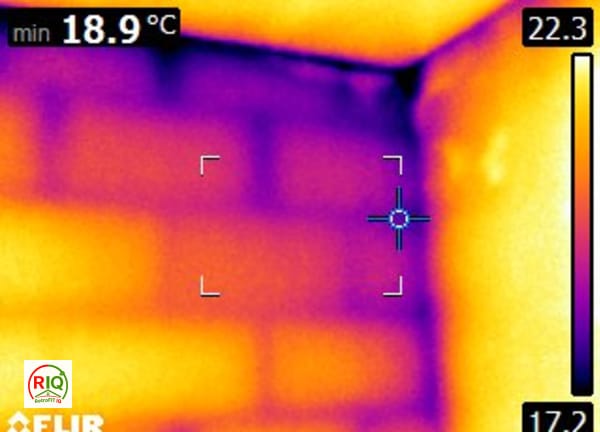
Cold wall surface vs warm ceiling
No related investigations yet.
Browse all investigationsFrequently asked questions
Why is there condensation on my walls and ceiling?+
Because those surfaces are cold enough to fall below the dew point of the room air, and the air is humid enough to deposit moisture on them. Cold surfaces come from missing insulation, thermal bridges and unheated rooms; high humidity comes from too little ventilation. Both together cause the condensation.
Is it rising or penetrating damp?+
Usually not — condensation on walls and ceilings is almost always cold-surface condensation, not rising or penetrating damp. That's why chemical damp courses and coatings don't help: they do nothing about cold surfaces or humid air. Warming the surfaces and ventilating is what works.
Why is it worse in corners and behind furniture?+
Corners are thermal bridges with more external than internal surface, so they run colder and condense first; behind furniture against an external wall the surface is cold and poorly ventilated, so moisture collects and mould grows. These cold spots are where condensation concentrates.
Why is condensation on walls worse than on windows?+
Because walls and ceilings absorb the moisture rather than beading it off like glass, so it soaks into the plaster and decoration and provides an ideal surface for mould. It's harder to wipe away and more damaging, which is why it needs addressing at the cause.
How do I fix it?+
Tackle both halves together: warm the cold surfaces by improving insulation and treating thermal bridges, and lower the indoor humidity with better ventilation and moisture control. Thermal imaging finds the cold surfaces and a humidity check confirms the ventilation deficit, so the fix is targeted.
Stop guessing — find the real cause
Do not spend money fixing symptoms before you understand the cause. Every home behaves differently, and the only reliable way to know what is happening in yours is professional building performance diagnostics. At RetrofitIQ we verify buildings using the right combination of investigations:
- Thermal imaging
- Blower door testing
- Moisture & dew point readings
- Ventilation review
- Building physics assessment
- Passive House methodology