
Why is there mould on my ceiling?
Mould on a ceiling is usually condensation: the ceiling runs cold — often because the loft or roof above is poorly insulated or air leakage chills it — and humid room air condenses on it, especially in the corners and along the cold perimeter. It can also follow moisture from a room or roof above. Either way, it is a building-physics problem about cold surfaces and moisture, not just a stain to paint over.
 Reviewed by George Sora, Certified Passive House DesignerUpdated June 2026
Quick answer & key takeaways
6 min read- Ceiling mould is usually condensation on a cold ceiling meeting humid room air.
- A poorly insulated loft or roof above keeps the ceiling cold enough to condense.
- Corners and the cold perimeter are the most common ceiling-mould sites.
- Air leakage and thermal bridges at the ceiling line make it worse.
- Biggest misconception: it must be a roof leak. It is more often condensation.
- Retrofit IQ's approach: confirm condensation, then warm the ceiling and improve ventilation.
What this usually means
A ceiling becomes a mould site when its surface is cold enough for the room's humid air to condense on it. The most common reason is that the loft or roof above is poorly insulated, so the ceiling runs cold; air leakage at the ceiling line and thermal bridges where the ceiling meets the walls add cold spots. Humid air rising in the room then condenses on these cold surfaces, and the corners — coldest and least ventilated — are usually affected first.
It is frequently mistaken for a roof leak because water appears high in the room. But condensation tracks cold weather and indoor humidity rather than rainfall, and it tends to spread across the cold ceiling and corners rather than from a single point. A genuine leak, by contrast, follows rain and traces to an external defect. Telling them apart is the first step, because the fixes are completely different.
Moisture from above can also play a part: a bathroom or kitchen on the floor above, or a damp loft, can add moisture to the ceiling zone. In all these cases the durable cure is to warm the ceiling — usually by improving loft or roof insulation and sealing air leakage — and to reduce the room's humidity through ventilation, so the surface no longer crosses the dew point.
Common causes
Cold ceiling below poor loft insulation
An under-insulated loft or roof keeps the ceiling cold, so room moisture condenses on it.
Air leakage at the ceiling line
Warm, moist air leaking into the loft, and cold air leaking in, chill the ceiling and feed condensation.
Thermal bridges at ceiling-wall junctions
Cold perimeters and corners where the ceiling meets the walls condense first.
High room humidity
Humid room air provides the moisture that condenses on the cold ceiling.
Moisture from above (less common)
A wet room or damp loft above can add moisture to the ceiling zone.
Signs and symptoms
Mould in the ceiling corners
Spotting in the corners reflects the coldest, least-ventilated part of the ceiling condensing first.
Mould along the cold perimeter
A band of mould where ceiling meets wall points to a thermal bridge and cold perimeter.
Worse in winter, not after rain
Mould that tracks cold weather rather than rainfall indicates condensation, not a leak.
Cold ceiling to the touch
A ceiling that feels cold confirms poor insulation above and condensation risk.
Mould in top-floor rooms below the loft
Ceiling mould concentrated under the loft points to roof heat loss and air leakage.
What most people check first
- Whether the mould tracks cold weather (condensation) or rainfall (a leak).
- Whether it concentrates in corners and along the ceiling-wall perimeter.
- Whether the loft or roof above is well insulated and air-sealed.
- Whether the room runs humid and is poorly ventilated.
What most people miss
- That ceiling mould is usually condensation, not a roof leak.
- That poor loft insulation and air leakage keep the ceiling cold.
- That corners and the perimeter are thermal bridges that condense first.
- That warming the ceiling and ventilating, not painting, is the cure.
The building physics
A ceiling's surface temperature is set by the insulation and air-tightness above it. Below a poorly insulated loft, the ceiling sits well below room temperature; air leakage through the ceiling line, and the geometry of the ceiling-wall junction (a three-dimensional thermal bridge), make the corners and perimeter colder still. When the room's humid air meets these cold surfaces and they are below its dew point, condensation forms — first and longest in the coldest corners, which is the classic ceiling-mould pattern.
Distinguishing condensation from ingress is essential because the physics and the fix differ. Condensation depends on indoor humidity and surface temperature, so it tracks cold weather and the moisture in the room, and spreads across cold areas. Penetrating water from a roof defect depends on rain and a specific path, so it tracks rainfall and traces to a point. Confirming which is happening — by checking what the damp tracks and where it concentrates — directs the effort correctly.
The remedy raises the ceiling surface temperature and lowers the room's dew point. Improving loft or roof insulation and sealing the air leakage warm the ceiling and remove the cold spots; controlled ventilation reduces the humidity so the dew point falls. Measuring the ceiling temperatures with thermal imaging, the air leakage with a blower door test, and the humidity, shows exactly why the ceiling condenses and what will stop it — so the mould does not simply return through fresh paint.
How to stop ceiling mould
Confirm it is condensation, then warm the ceiling and reduce the room's humidity. Treat the mould only once the conditions are corrected.
- 01
Confirm condensation versus a leak
Check whether the damp tracks cold weather and humidity (condensation) or rainfall and a roof defect (a leak).
- 02
Warm the ceiling
Improve loft or roof insulation above the ceiling to raise its surface temperature above the dew point.
- 03
Seal the ceiling air leakage
Seal the loft hatch, downlights and penetrations so warm moist air does not chill the ceiling or enter the loft.
- 04
Address the cold perimeter
Treat the thermal bridge at the ceiling-wall junction where corners condense first.
- 05
Reduce room humidity
Provide ventilation so the room's dew point falls and the ceiling stays dry.
- 06
Treat the mould last
Remove the ceiling mould once the surface is warmer and the humidity lower, so it does not return.
How to prevent it coming back
- Keep the loft or roof above well insulated and air-sealed.
- Ventilate the room to keep humidity down.
- Address thermal bridges at ceiling corners and perimeters.
- Confirm condensation rather than assuming a roof leak.
How Retrofit IQ investigates this
We confirm condensation and find why the ceiling stays cold before recommending work.
Do not spend money fixing symptoms before you understand the cause — investigate first, then build with confidence.
Do I need a professional investigation?
If ceiling mould keeps returning, or you cannot tell condensation from a leak, it is worth measuring the ceiling temperature, air leakage and humidity — so the ceiling is warmed and the room ventilated, rather than the mould painted over or a non-existent leak chased.
Where to go next
Relevant services
Related comparisons
From the Academy
Evidence from Real Projects (25)
Real project and investigation images from our own fieldwork, matched to this page — not stock photography.
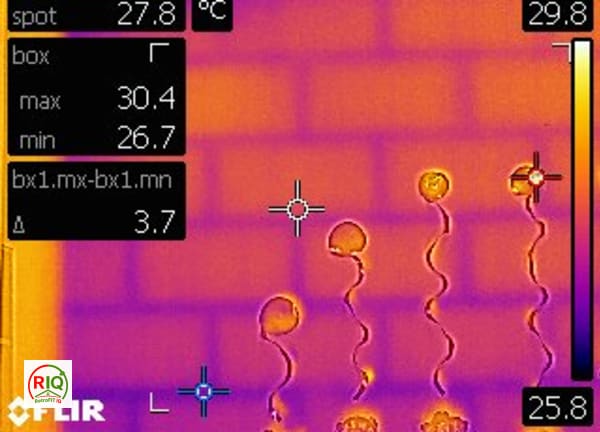
Thermal Bridging Visible Through Masonry Blockwork Wall

Thermal Bridge at Wall-Ceiling Junction Near Window

Sample Building Performance Investigation Report — Thermal Imaging

Thermal Bridge at Internal Corner Wall Junction
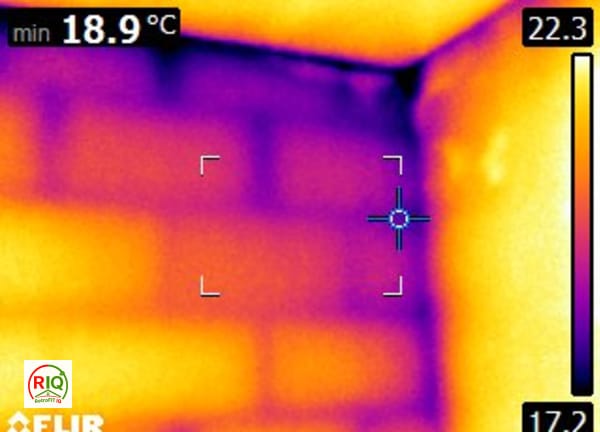
Cold wall surface vs warm ceiling

Wall / ceiling corner showing the characteristic geometric cold spot
No related investigations yet.
Browse all investigationsFrequently asked questions
Why is there mould on my ceiling?+
Usually because the ceiling runs cold — often from a poorly insulated loft or roof and air leakage — and humid room air condenses on it, especially in the corners. It is generally condensation rather than a roof leak.
Is ceiling mould a sign of a roof leak?+
Not usually. A leak tracks rainfall and traces to a defect; condensation tracks cold weather and humidity and spreads across the cold ceiling and corners. Checking what it tracks tells them apart.
Why is the mould in the ceiling corners?+
The corners where the ceiling meets the walls are thermal bridges — the coldest, least-ventilated spots — so they reach the dew point first and condense before the rest of the ceiling.
Will more loft insulation stop ceiling mould?+
Warming the ceiling by improving loft insulation and sealing air leakage is a major part of the fix, because it raises the surface above the dew point. Reducing room humidity completes it.
Why does painting over it not work?+
Paint does not warm the ceiling or remove the moisture, so the condensation conditions remain and the mould returns. The surface must be warmed and the room ventilated.
Is it worse in winter?+
Yes — colder surfaces in winter make the ceiling more likely to fall below the dew point, so condensation and mould are typically worse in cold weather.
How do you diagnose ceiling mould?+
We confirm it is condensation, map the cold ceiling and corners with thermal imaging, locate air leakage, and measure humidity, then recommend warming the ceiling and ventilating the room.
Stop guessing — find the real cause
Do not spend money fixing symptoms before you understand the cause. Every home behaves differently, and the only reliable way to know what is happening in yours is professional building performance diagnostics. At RetrofitIQ we verify buildings using the right combination of investigations:
- Thermal imaging
- Blower door testing
- Moisture & dew point readings
- Ventilation review
- Building physics assessment
- Passive House methodology