
Why is there condensation in my loft?
Condensation in a loft happens when warm, moist air from the house below leaks up into the cold loft space and condenses on the cold roof structure — often made worse by inadequate loft ventilation. Left unchecked it dampens timbers and insulation and can grow mould. The cure is to stop the moist air getting up there and to keep the loft properly ventilated.
 Reviewed by George Sora, Certified Passive House DesignerUpdated June 2026
Quick answer & key takeaways
6 min read- Loft condensation is warm, moist air from the house meeting the cold roof and condensing.
- Air leakage through the ceiling — hatch, downlights, penetrations — carries the moisture up.
- Inadequate loft ventilation traps the moisture so it cannot clear.
- It dampens timbers and insulation and can lead to mould if left.
- Biggest misconception: it's a roof leak. Usually it's internal moist air plus poor ventilation.
- Retrofit IQ's approach: find the air-leakage paths and assess loft ventilation, not just patch the roof.
What this usually means
A loft is a cold space in winter, close to the outdoor temperature. When warm, humid air from the heated rooms below finds its way up — through the loft hatch, around recessed downlights, or through gaps where pipes and cables pass through the ceiling — it cools rapidly in the loft and, on meeting the cold underside of the roof or cold timbers, drops below its dew point and condenses. The result is moisture on the roofing membrane, rafters and the top of the insulation.
This is why loft condensation is so often mistaken for a roof leak. The water appears high in the structure and drips or stains like a leak, but it originates inside the home as water vapour, not as rainwater from outside. The tell is that it tracks cold weather and household moisture rather than rainfall, and it is generally spread across cold surfaces rather than tracking from a single external defect.
Loft ventilation is the other half of the equation. Traditional cold-roof construction relies on the loft being ventilated so any moisture that enters can clear to the outside. When ventilation paths are blocked — for example by insulation pushed into the eaves — moisture accumulates and condensation worsens. So the durable fix combines stopping the moist air at the ceiling and ensuring the loft can breathe.
Common causes
Moist air leaking up from the house
Warm, humid air rising through ceiling gaps and the hatch carries household moisture into the cold loft.
Inadequate loft ventilation
Blocked or insufficient eaves and ridge ventilation means moisture cannot clear, so it condenses on cold surfaces.
Cold roof structure
The cold underside of the roof and the timbers sit below the dew point of the air reaching them, so condensation forms.
Bathroom or kitchen extract venting into the loft
Ducts discharging into the loft instead of outside dump large amounts of moisture directly into the cold space.
New, more airtight living space below
Sealing the home without managing loft moisture can concentrate it where it does escape — into the loft.
Signs and symptoms
Damp or droplets on the roof underside
Moisture on the membrane or felt and on the rafters is the classic loft-condensation signature.
Wet or matted insulation
Insulation that is damp on top has been wetted by condensation dripping from above.
Mould or staining on timbers
Black spotting on rafters and boards indicates sustained damp from condensation.
Worse in cold weather
Condensation that appears in cold spells rather than after rain points to internal moist air, not a leak.
A damp smell in the loft
A musty loft smell reflects trapped moisture that ventilation is not clearing.
What most people check first
- Whether the moisture tracks cold weather (condensation) or rainfall (a leak).
- Whether bathroom or kitchen extract ducts discharge into the loft.
- Whether eaves and ridge ventilation are clear or blocked by insulation.
- Whether the loft hatch and ceiling penetrations are sealed.
What most people miss
- That loft condensation is usually internal moist air, not a roof leak.
- That extract ducts must discharge outside, never into the loft.
- That blocked eaves ventilation is a common, hidden cause.
- That air-sealing the ceiling and ventilating the loft must go together.
The building physics
Cold-roof construction deliberately keeps the loft cold and ventilated: the insulation sits at ceiling level, the loft above is near outdoor temperature, and ventilation openings let any moisture that enters clear away. The system works as long as two conditions hold — little warm, moist air leaks up from the house, and the loft is genuinely ventilated. Condensation appears when one or both fail, because moisture-laden air then cools against the cold roof and deposits its water there.
The amount of condensation depends on how much moisture reaches the loft and how cold the surfaces are. A leaky ceiling, an extract duct discharging into the loft, or high household humidity all increase the moisture supply; a poorly ventilated loft lets it accumulate; and the coldest surfaces — the roof underside and exposed timbers — are where it condenses first. This is the same dew-point physics as condensation elsewhere, simply played out in the roof space.
The remedy follows the physics: reduce the moisture reaching the loft by air-sealing the ceiling line and ensuring all extract discharges outside, and keep the loft ventilated so any residual moisture clears. Adding insulation helps the rooms below but must not block eaves ventilation. Measuring the air-leakage paths and assessing the ventilation provision is what lets the fix address the real cause rather than chasing a non-existent leak.
How to fix loft condensation
Stop the moist air getting up, send extract outside, and keep the loft ventilated. Diagnose first so you are not patching a roof that is not leaking.
- 01
Confirm it is condensation, not a leak
Check whether the damp tracks cold weather and household moisture rather than rainfall, and whether it is spread over cold surfaces.
- 02
Air-seal the ceiling line
Seal the loft hatch, downlights and penetrations so warm, moist air can no longer rise into the loft.
- 03
Vent extract to the outside
Ensure bathroom and kitchen extract ducts discharge outside, never into the loft void.
- 04
Restore loft ventilation
Clear blocked eaves vents and provide adequate ventilation so any moisture that enters can escape.
- 05
Insulate without blocking ventilation
Top up ceiling insulation while keeping eaves ventilation paths open.
- 06
Verify it has cleared
Re-check the loft after cold weather to confirm the timbers and insulation stay dry.
How to prevent it coming back
- Keep the ceiling air-sealed so household moisture stays out of the loft.
- Always vent bathroom and kitchen extract to the outside.
- Keep eaves and ridge ventilation clear of insulation.
- Control household humidity with good ventilation in the rooms below.
How Retrofit IQ investigates this
We confirm condensation versus ingress and find the moisture and ventilation paths before recommending work.
Do not spend money fixing symptoms before you understand the cause — investigate first, then build with confidence.
Do I need a professional investigation?
If loft condensation keeps returning, if you cannot tell condensation from a leak, or before insulating or converting the loft, it is worth measuring the air-leakage paths and assessing ventilation — so the cause is fixed rather than the roof needlessly patched.
Where to go next
Relevant services
Related comparisons
From the Academy
- Condensation in loft spaces — wet timbers, mould and dripping felt.
- Surface condensation and mould — the mechanism, and the real fix.
- Ventilation and mould prevention — the humidity connection.
- Dew point explained — the temperature where condensation begins.
- Loft and roof insulation — cold roofs, warm roofs and condensation risk.
Related case studies
Evidence from Real Projects (13)
Real project and investigation images from our own fieldwork, matched to this page — not stock photography.

Sample Building Performance Investigation Report — Thermal Imaging
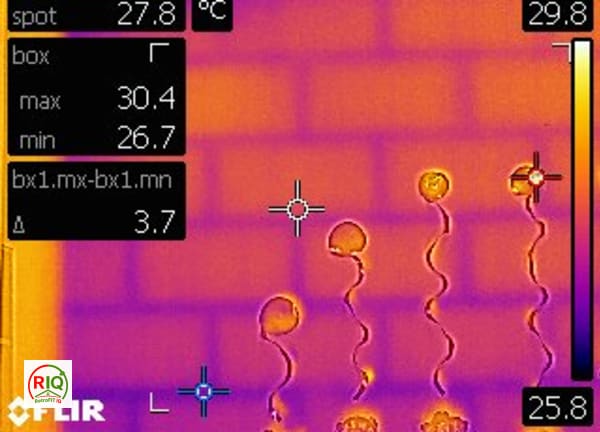
Thermal Bridging Visible Through Masonry Blockwork Wall

Thermal Bridge at Internal Corner Wall Junction

Thermal Bridge at Wall-Ceiling Junction Near Window

Airtightness Testing in a Stratford Victorian Terrace
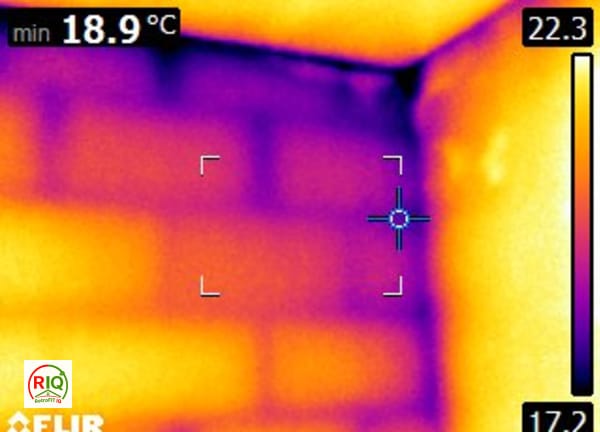
Cold wall surface vs warm ceiling
No related investigations yet.
Browse all investigationsFrequently asked questions
Why is there condensation in my loft?+
Warm, moist air from the house leaks up through the ceiling into the cold loft and condenses on the cold roof and timbers, especially where loft ventilation is poor. It is internal moisture, not usually a roof leak.
Is loft condensation the same as a roof leak?+
No. A leak tracks rainfall and a specific defect; condensation tracks cold weather and household moisture and is spread over cold surfaces. Telling them apart determines the fix.
Can bathroom extract cause loft condensation?+
Yes, if the duct discharges into the loft instead of outside. It dumps large amounts of moist air into the cold space, where it condenses.
Why does my loft insulation feel damp on top?+
Condensation forming on the cold roof above drips onto the insulation. Stopping the moist air and ventilating the loft keeps it dry.
Should I block the loft vents to keep it warm?+
No — cold-roof lofts rely on ventilation to clear moisture. Blocking the vents traps moisture and worsens condensation.
Will more loft insulation stop condensation?+
Only if it does not block eaves ventilation and is combined with air-sealing the ceiling. Insulation alone can even make the loft colder and condensation worse if ventilation is compromised.
How do you diagnose loft condensation?+
We confirm it is condensation rather than ingress, locate the air-leakage paths, assess loft ventilation, and check extract ducts, then recommend sealing and ventilation rather than roof repairs.
Stop guessing — find the real cause
Do not spend money fixing symptoms before you understand the cause. Every home behaves differently, and the only reliable way to know what is happening in yours is professional building performance diagnostics. At RetrofitIQ we verify buildings using the right combination of investigations:
- Thermal imaging
- Blower door testing
- Moisture & dew point readings
- Ventilation review
- Building physics assessment
- Passive House methodology