
Why is my loft or roof losing heat?
Because warm air rises, the loft and roof are among the biggest routes for heat to leave a home — and they are also where insulation is most often thin, gapped, compressed or bypassed by air leakage. A loft that feels warm in winter is a loft letting your heat escape. Finding out exactly how and where it is lost is the key to a warmer, cheaper home.
 Reviewed by George Sora, Certified Passive House DesignerUpdated June 2026
Quick answer & key takeaways
7 min read- Heat rises, so the loft and roof lose a disproportionate share of a home's heat.
- Thin, patchy, compressed or gappy insulation leaves large areas under-performing.
- Air leakage through the loft hatch, downlights and service penetrations carries warm air straight out.
- A warm loft in winter is a sign of heat escaping, not of good insulation.
- Biggest misconception: any loft insulation is enough. Coverage, depth and air-sealing all matter.
- Retrofit IQ's approach: thermal imaging and a blower door test reveal where the heat and air actually escape.
What this usually means
The loft and roof sit at the top of the warm space, where buoyant heated air collects and where the temperature difference to the outside is greatest. That makes the ceiling and roof line a prime route for heat loss — through conduction where insulation is thin or missing, and through air leakage where warm air physically escapes into and through the loft. Both mechanisms are usually at work, and both are fixable once located.
Loft insulation often under-performs in ways that are invisible from below. It may be too thin for modern standards, laid in a single layer with gaps at the joists, compressed by stored boxes or boarding, pulled away from the eaves, or interrupted around hatches, pipes and downlights. Each gap is a thermal weak point, and because heat finds the path of least resistance, even small uninsulated areas leak disproportionately.
Air leakage is the second half of the problem and the one most people overlook. An unsealed loft hatch, recessed downlights and the holes where pipes and cables pass through the ceiling let warm, moist air rise out of the rooms below — wasting heat and, as it cools in the cold loft, risking condensation. So a loft that is warm in winter, or one with frost melting first over certain spots on the roof, is telling you heat is escaping there.
Common causes
Insufficient insulation depth
Older lofts often have far less insulation than current standards, so the ceiling conducts heat away even where coverage looks complete.
Gaps, compression and missing areas
Single-layer insulation with gaps at joists, compressed under boarding or pulled from the eaves leaves cold patches that leak heat.
Unsealed loft hatch
A poorly fitting, uninsulated hatch is a large hole at the top of the warm space, leaking heat and air continuously.
Recessed downlights and penetrations
Downlights, pipes and cables passing through the ceiling create air-leakage paths that carry warm air into the loft.
Thermal bridging at the eaves and wall plate
Where insulation stops short at the eaves, a cold strip forms around the room perimeter and loses heat.
Signs and symptoms
A loft that feels warm in winter
Warmth in the loft means heat from below is escaping into it rather than staying in the rooms.
Snow or frost melting first over parts of the roof
Patches that clear before the rest show heat escaping through those areas of the roof.
Cold upstairs rooms and ceilings
Top-floor rooms that are hard to keep warm point to heat loss and cold ceilings above them.
Draughts around the loft hatch and downlights
Cool air near the hatch and ceiling fittings reveals air leakage into the loft.
High heating bills despite heating upstairs
Persistent loss through the roof keeps bills high even when the heating runs.
What most people check first
- The depth, coverage and condition of the loft insulation (gaps, compression, eaves).
- Whether the loft hatch is insulated and seals tightly.
- Whether there are recessed downlights or unsealed penetrations in the top-floor ceiling.
- Whether the loft feels warm in winter or shows melt patches on the roof.
What most people miss
- That a warm loft is a sign of heat loss, not of good insulation.
- That air leakage through the hatch and penetrations matters as much as insulation depth.
- That gaps, compression and eaves cold-strips undermine otherwise adequate insulation.
- That measuring shows exactly where the heat goes, so the fix is targeted.
The building physics
Heat loss through the roof is driven by two mechanisms. Conduction depends on the insulation's thermal resistance: thin or gapped insulation has a high U-value, so heat passes through readily, and because loss is proportional to area and temperature difference, the large, cold roof loses a lot. Air leakage adds convective loss: warm air rising through gaps carries heat directly outwards, and the stack effect makes the top of the building the place where that escape is strongest.
The two interact in ways that matter for moisture as well as heat. Warm, humid air leaking into a cold loft can cool below its dew point and condense on the cold roof structure, so a leaky, under-insulated loft risks both heat loss and condensation. This is why air-sealing the ceiling line — hatch, downlights, penetrations — is as important as adding insulation, and why ventilation of the loft void must be maintained so any moisture that does enter can clear.
Effective loft improvement therefore works on coverage, depth and continuity together: insulate to an adequate depth without gaps, carry it fully to the eaves without blocking ventilation, insulate and seal the hatch, address downlights and penetrations, and verify with measurement. Thermal imaging shows the cold patches and bridges; a blower door test quantifies and locates the air leakage. Together they turn 'the loft loses heat' into a precise map of where and how much.
How to stop a loft losing heat
The aim is continuous insulation to an adequate depth plus a sealed, ventilated ceiling line. Measure first so the work targets the real losses.
- 01
Map the losses
Use thermal imaging and a blower door test to find thin or gapped insulation, eaves cold-strips, the hatch and leaking penetrations.
- 02
Top up and complete the insulation
Bring insulation to an adequate depth in a cross-laid, gap-free layer, carried to the eaves without blocking ventilation, and avoid compressing it under boarding.
- 03
Seal and insulate the hatch
Fit a well-sealing, insulated loft hatch to close the large air-and-heat leak at the top of the warm space.
- 04
Air-seal the ceiling penetrations
Seal around pipes, cables and address recessed downlights so warm, moist air no longer leaks into the loft — keeping loft ventilation intact.
- 05
Treat the eaves and perimeter
Ensure insulation continuity at the wall plate and eaves to remove the cold perimeter strip, without sealing ventilation paths.
- 06
Verify the result
Re-check with thermal imaging and re-test airtightness to confirm the losses have fallen.
How to prevent it coming back
- Keep insulation gap-free, adequately deep and uncompressed when storing items in the loft.
- Maintain a sealing, insulated loft hatch.
- Seal new ceiling penetrations as services are added.
- Preserve loft ventilation so any moisture that enters can clear.
How Retrofit IQ investigates this
We map where the roof loses heat and air before recommending insulation or sealing, so the work is targeted and verified.
Do not spend money fixing symptoms before you understand the cause — investigate first, then build with confidence.
Do I need a professional investigation?
Measuring is worthwhile when upstairs rooms are cold, when the loft feels warm in winter, when bills stay high, or before topping up insulation — so the work addresses the real losses rather than just adding depth over existing gaps and leaks.
Where to go next
Relevant services
Related comparisons
From the Academy
Related case studies
Evidence from Real Projects (26)
Real project and investigation images from our own fieldwork, matched to this page — not stock photography.
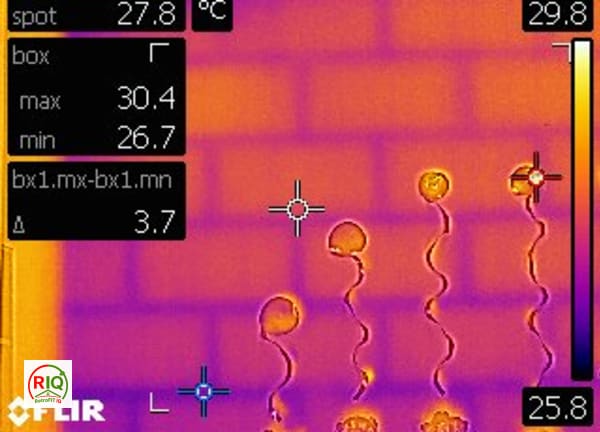
Thermal Bridging Visible Through Masonry Blockwork Wall

Sample Building Performance Investigation Report — Thermal Imaging

Thermal Bridge at Wall-Ceiling Junction Near Window

Thermal Bridge at Internal Corner Wall Junction

Acoustic Floor Upgrades: Mineral Wool Insulation Between Joists
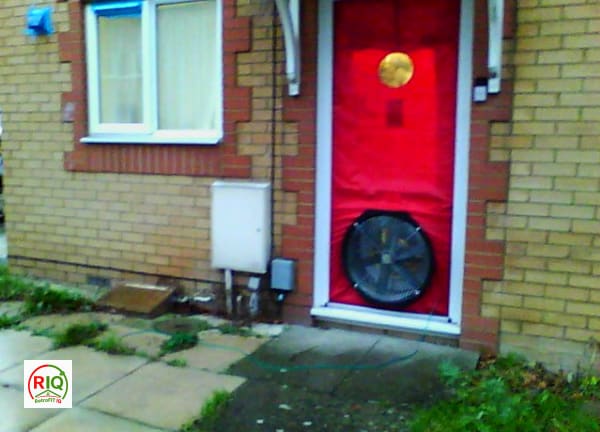
Blower Door Airtightness Test Setup
No related investigations yet.
Browse all investigationsFrequently asked questions
Why is my loft losing heat?+
Because heat rises and the roof has the biggest temperature difference to outside, so thin, gapped or compressed insulation and air leakage through the hatch, downlights and penetrations let heat escape there.
Why is my loft warm in winter?+
A warm loft means heat from the rooms below is escaping into it. A well-insulated, air-sealed loft stays cold in winter because the heat is kept in the living space.
Is my loft insulation thick enough?+
Many older lofts fall well short of current standards. Depth matters, but so do coverage, the absence of gaps and compression, and air-sealing — which is why measuring is more reliable than assuming.
Why does snow melt first over part of my roof?+
Those patches are where heat is escaping through the roof and melting the snow above. It is a visible map of where insulation and air-sealing are weakest.
Does the loft hatch really matter?+
Yes — an unsealed, uninsulated hatch is a large hole at the top of the warm space, leaking both heat and warm, moist air into the loft.
Can sealing the loft cause condensation?+
Only if loft ventilation is compromised. The aim is to seal the ceiling so warm moist air does not enter, while keeping the loft void ventilated so any moisture clears.
How do you find where my roof loses heat?+
We use thermal imaging to map thin and gapped insulation and a blower door test to locate air leakage, then recommend targeted, verified improvements.
Stop guessing — find the real cause
Do not spend money fixing symptoms before you understand the cause. Every home behaves differently, and the only reliable way to know what is happening in yours is professional building performance diagnostics. At RetrofitIQ we verify buildings using the right combination of investigations:
- Thermal imaging
- Blower door testing
- Moisture & dew point readings
- Ventilation review
- Building physics assessment
- Passive House methodology