
Should I insulate between or above the rafters?
When you are insulating a sloping roof — for a loft conversion or a room-in-roof — the choice between insulating between the rafters, above them, below them, or a combination is not just about cost and headroom; it determines how warm and how condensation-safe the roof will be. Each option has consequences for the depth of insulation you can achieve, the ceiling height you lose, the continuity of the insulation, and crucially how the roof manages moisture. Getting it wrong can leave cold bridges through the rafters or trap moisture against the timber. The right choice depends on the roof construction, the headroom available and the moisture strategy — which is best decided from the building physics, not a single rule.
 Reviewed by George Sora, Certified Passive House DesignerUpdated June 2026
Quick answer & key takeaways
8 min read- Between-rafter insulation alone leaves the rafters as cold bridges and limits depth.
- Above-rafter (warm roof) insulation is continuous and keeps the timbers warm and dry.
- Below-rafter insulation adds depth but lowers the ceiling.
- The choice affects headroom, performance and condensation risk together.
- Biggest misconception: filling between the rafters is enough. It often is not, thermally or for moisture.
- Retrofit IQ's approach: choose the build-up from the roof, the headroom and the moisture strategy.
What this usually means
A sloping roof can be insulated in three positions relative to the rafters, and they behave differently. Between the rafters places insulation in the gaps but leaves the timber rafters themselves relatively uninsulated, so they act as repeating thermal bridges — lines of heat loss and cold surface — and the rafter depth limits how much insulation you can fit. Above the rafters (a 'warm roof') lays a continuous layer of insulation over the top of the rafters, before the roof covering, which keeps the whole roof structure, including the timbers, warm and inside the insulated envelope. Below the rafters adds a layer on the room side, increasing total depth but bringing the ceiling down into the room.
These positions have different thermal and moisture consequences. Continuous insulation above the rafters gives the best performance because there is no break in the insulation and no rafter bridging, and because the timbers stay warm they stay dry — moisture is far less likely to condense on a warm rafter. Insulating only between the rafters, by contrast, both under-performs (the bridges leak heat and create cold lines that can mark or even attract condensation on the ceiling) and, if the gap and ventilation are not detailed correctly, can leave the cold side of the insulation prone to condensation. A below-rafter layer can be added to between-rafter insulation to boost depth and cover the bridges, at the cost of headroom.
So the decision is a balance struck around the specific roof. Above-rafter insulation is often the best performer and the safest for moisture, but it usually means lifting the covering, so it suits a re-roof or a new build more than a finished room. Between-rafter alone is rarely sufficient on its own and needs careful ventilation or a vapour-open strategy to avoid trapping moisture. A combination — between plus a below-rafter (or, ideally, above-rafter) layer — frequently gives the best practical compromise of depth, continuity and headroom. Because the right answer depends on the roof construction, the headroom you can spare, and how the build-up will keep moisture out of the timber, it is a building-physics decision best made with the whole roof assembly in mind rather than from a single rule of thumb.
Common causes
Rafter depth limits insulation
Between-rafter insulation is capped by the timber depth, often too little on its own.
Rafters as thermal bridges
Insulating only between leaves the timbers as repeating cold lines and heat-loss paths.
Headroom constraints
Below-rafter insulation adds depth but lowers the ceiling into the room.
Moisture against cold timber
Poorly detailed between-rafter build-ups can let condensation form against the cold rafters.
Roof access
Above-rafter insulation usually needs the covering lifted, so it suits a re-roof.
Signs and symptoms
Cold lines on the sloping ceiling
Visible cold stripes follow the rafters where only between-rafter insulation is used.
A loft room that won't warm up
Insufficient or bridged insulation leaves the room cold despite heating.
Condensation or mould on the slope
Damp on the sloping ceiling suggests a cold or poorly detailed build-up.
Low headroom after lining
A ceiling brought too low indicates the below-rafter depth was constrained.
Planning a loft conversion
A conversion is the point to choose the build-up deliberately for warmth and moisture.
What most people check first
- Whether the rafter depth allows enough between-rafter insulation alone.
- Whether the rafters will be left as thermal bridges.
- How much headroom can be given to a below-rafter layer.
- Whether the build-up keeps the timbers warm and dry or risks condensation.
What most people miss
- That between-rafter insulation alone leaves cold rafter bridges.
- That above-rafter insulation keeps the timbers warm and dry.
- That a below-rafter layer trades headroom for depth and continuity.
- That the moisture strategy must suit the chosen build-up.
The building physics
The thermal performance of an insulated roof depends on both the insulation's resistance and the continuity of the insulating layer. Insulation placed only between rafters is interrupted by the timber, which has a far lower thermal resistance, so heat short-circuits along the rafters and the effective performance falls well below the value implied by the insulation alone — and the rafter lines run cold on the room side. A continuous layer above the rafters eliminates this repeating thermal bridge, so a warm roof achieves both higher and more uniform performance for a given insulation, with no cold stripes. A below-rafter layer added to between-rafter insulation similarly covers the bridge while increasing depth, at the expense of room height.
Moisture behaviour follows from where the rafters sit relative to the insulation. In a warm roof, the timbers are on the warm side of the insulation, so their temperature stays above the dew point of the internal air and condensation against them is very unlikely — the construction is inherently robust. Where insulation is only between the rafters, the outer part of the rafter and the cold side of the build-up can fall below the dew point, so unless the assembly is either ventilated above the insulation or designed to be vapour-open and dry outward, moisture can condense within it and against the timber. The detailing of the vapour control on the warm side, any ventilation gap, and the vapour-openness of the materials therefore determines whether a between-rafter roof is safe.
Choosing the position is thus an optimisation across performance, headroom, buildability and moisture safety, specific to the roof. Above-rafter insulation is generally the best performer and the safest for the timbers but typically requires access from outside, so it aligns with a re-roof; between-rafter alone is usually insufficient and demands careful ventilation or a vapour-open strategy to avoid condensation; and a combined build-up balances depth and continuity against the headroom lost. The sound approach is to design the whole assembly — insulation position and depth, vapour control, and any ventilation — as one moisture-safe system for the actual roof, rather than defaulting to filling between the rafters. A building-physics assessment, including a condensation-risk check of the proposed build-up, is what confirms the chosen option will be both warm and dry.
How to choose where to insulate a sloping roof
Decide the build-up from the roof construction, the headroom and the moisture strategy — favouring continuous insulation that keeps the rafters warm and dry, and checking the assembly for condensation risk.
- 01
Assess the roof and rafter depth
Establish how much between-rafter insulation is possible and whether the rafters will bridge.
- 02
Decide on continuity
Add an above- or below-rafter layer to cover the rafter bridges and reach the target depth.
- 03
Prefer a warm roof where possible
If re-roofing, insulate above the rafters to keep the timbers warm and the layer continuous.
- 04
Balance headroom
Weigh the ceiling height lost to a below-rafter layer against the performance gained.
- 05
Design the moisture strategy
Specify vapour control and any ventilation so the timbers stay dry in the chosen build-up.
- 06
Check the condensation risk
Verify the proposed assembly against condensation risk before building it.
How to prevent it coming back
- Do not rely on between-rafter insulation alone.
- Keep the rafters warm with continuous insulation where possible.
- Match the vapour control and ventilation to the build-up.
- Run a condensation-risk check on the assembly first.
How Retrofit IQ investigates this
We assess the roof and design the insulation build-up as a moisture-safe system suited to the headroom and the construction.
Do not spend money fixing symptoms before you understand the cause — investigate first, then build with confidence.
Do I need a professional investigation?
Before insulating a sloping roof or converting a loft, it is worth assessing the roof and the proposed build-up. Establishing the rafter depth, the headroom and the moisture strategy, and checking the assembly for condensation risk, ensures you choose a build-up that is both warm and dry — avoiding cold rafter bridges and trapped moisture that a default between-rafter fill can cause.
Where to go next
Relevant services
From the Academy
Related case studies
Evidence from Real Projects (21)
Real project and investigation images from our own fieldwork, matched to this page — not stock photography.

Thermal Bridge at Internal Corner Wall Junction
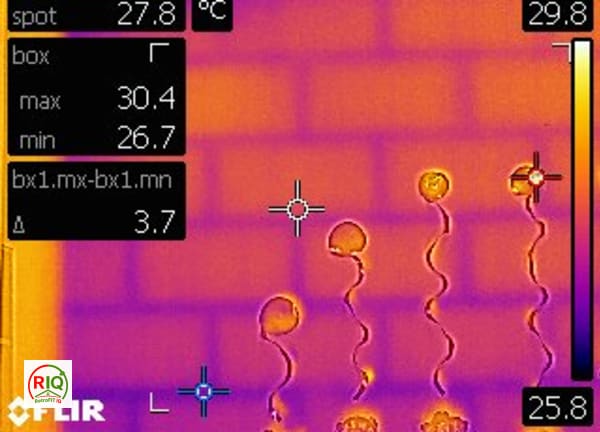
Thermal Bridging Visible Through Masonry Blockwork Wall

Thermal Bridge at Wall-Ceiling Junction Near Window

Sample Building Performance Investigation Report — Thermal Imaging
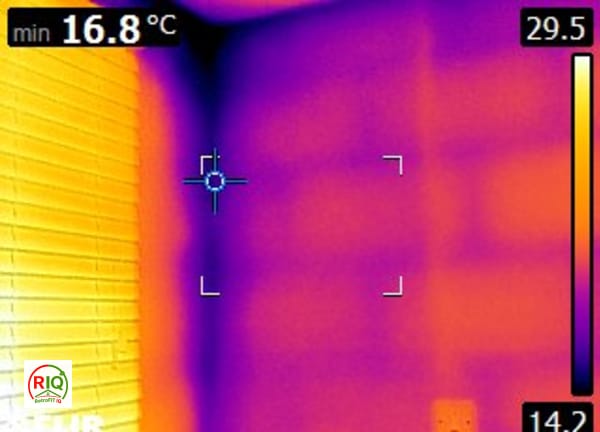
Internal wall / ceiling junction
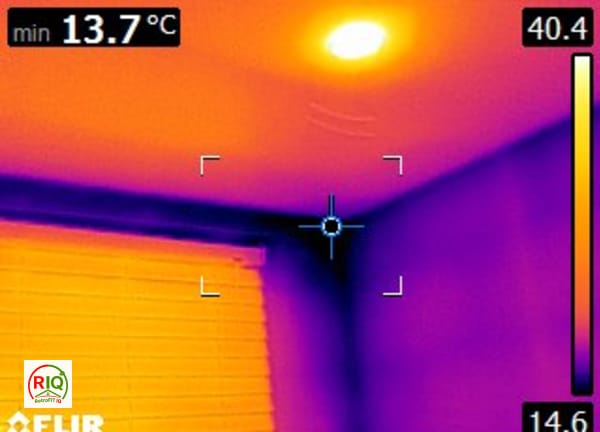
Wall / ceiling corner showing cold spot at the junction line
No related investigations yet.
Browse all investigationsFrequently asked questions
Should I insulate between or above the rafters?+
Above the rafters (a warm roof) generally performs best and is safest for moisture, because the insulation is continuous and the timbers stay warm and dry — but it usually needs the covering lifted, so it suits a re-roof. Between the rafters alone is rarely enough and leaves the rafters as cold bridges, so it is often combined with a below- or above-rafter layer. The right choice depends on the roof, the headroom and the moisture strategy.
Why isn't insulating between the rafters enough?+
Because the rafter depth limits how much insulation fits, and the timber rafters themselves act as repeating thermal bridges — cold lines that leak heat and can show on the ceiling or even attract condensation. A continuous layer above or below the rafters is usually needed to cover the bridges and reach the required depth.
What is a warm roof?+
A warm roof places a continuous layer of insulation above the rafters, before the covering, so the whole roof structure including the timbers sits within the insulated, warm envelope. It gives the best, most uniform performance and keeps the timbers dry, which is why it is the preferred build-up when the roof is being re-covered.
Will insulating below the rafters lower my ceiling?+
Yes — a below-rafter layer adds insulation depth on the room side, which brings the ceiling down. It is a useful way to boost depth and cover the rafter bridges where you cannot insulate above, but it trades headroom for performance, so the balance has to be judged for the room.
Can the wrong build-up cause condensation?+
Yes. If insulation between the rafters leaves the cold side or the timbers below the dew point, and the assembly is neither ventilated above the insulation nor designed to dry outward, moisture can condense against the rafters and risk decay. The vapour control and any ventilation must suit the chosen build-up, which is why a condensation-risk check matters.
How do you decide for my roof?+
We assess the roof construction, the rafter depth and the headroom, then design the insulation position, depth and vapour control as one moisture-safe system and check it against condensation risk — so the roof ends up both warm and dry, rather than defaulting to filling between the rafters.
Stop guessing — find the real cause
Do not spend money fixing symptoms before you understand the cause. Every home behaves differently, and the only reliable way to know what is happening in yours is professional building performance diagnostics. At RetrofitIQ we verify buildings using the right combination of investigations:
- Thermal imaging
- Blower door testing
- Moisture & dew point readings
- Ventilation review
- Building physics assessment
- Passive House methodology