
Why is my loft conversion cold in winter and hot in summer?
A loft conversion that is cold in winter and hot in summer is suffering from the same root cause in both seasons: the roof is the thinnest, most exposed surface in the house, and a room built into it sits right behind that fabric. If the roof slopes, dwarf walls and flat ceiling are not well insulated, airtight and free of thermal bridges, the room loses heat fast in winter and gains it fast in summer — and poor ventilation makes the summer heat worse. The fix is to treat the roof as a high-performance element, not an afterthought.
 Reviewed by George Sora, Certified Passive House DesignerUpdated June 2026
Quick answer & key takeaways
8 min read- A room-in-roof sits behind the thinnest, most exposed fabric in the house.
- Thin or discontinuous roof insulation loses heat in winter and gains it in summer.
- Thermal bridges and air leakage at the many roof junctions make it worse.
- Poor ventilation lets summer heat build up with no way to purge it.
- Biggest misconception: it just needs heating or cooling. It needs the fabric improving.
- Retrofit IQ's approach: insulate continuously, seal the junctions, and ventilate for summer.
What this usually means
When a loft is converted, the living space is created directly under and within the roof, so its sloping ceilings, dwarf (knee) walls, gable walls and flat top ceiling become the room's external envelope. The roof is the part of a house most exposed to the sky — losing the most heat upward in winter and receiving the most solar radiation in summer — so a room placed against it is unusually sensitive to the weather unless that envelope is built to a high standard. Many conversions, especially older ones, were insulated to a minimum, leaving the room at the mercy of the seasons.
In winter the room is cold because heat escapes quickly through under-insulated slopes and dwarf walls, and because the numerous junctions — eaves, ridge, dwarf-wall to floor, around dormers and rooflights — are prone to thermal bridging and air leakage, creating cold spots and draughts. In summer the same thin fabric lets solar heat pour in through the roof and any large or unshaded rooflights and dormer windows, so the room overheats; and because warm air collects at the top of the house with little cross-ventilation, there is no easy way to flush the heat out, particularly at night.
Both problems are therefore fabric and ventilation problems, and both are solved by treating the room-in-roof as a high-performance envelope. That means continuous, generous insulation to the slopes, dwarf walls and ceiling; careful airtightness and thermal-bridge-free detailing at all the awkward junctions; appropriate, ideally shaded glazing; and a ventilation strategy that can purge summer heat, such as openable windows positioned for cross- and stack-ventilation or mechanical ventilation. Heating and cooling appliances only mask the symptoms; getting the fabric and ventilation right makes the room comfortable in both seasons.
Common causes
Thin or discontinuous roof insulation
Minimal insulation to slopes and dwarf walls loses heat in winter and gains it in summer.
Thermal bridges at roof junctions
Eaves, ridge, dormers and dwarf-wall junctions bridge heat and create cold spots.
Air leakage through the many junctions
The complex geometry of a conversion leaks air, causing draughts and heat loss.
Large or unshaded rooflights
Roof windows and dormers admit strong solar gain, overheating the room in summer.
Poor summer ventilation
Warm air collects at the top of the house with little cross-ventilation to purge it.
Signs and symptoms
Cold despite heating in winter
A room-in-roof that will not warm up points to heat loss through thin roof fabric.
Uncomfortably hot in summer
Overheating reflects solar gain through the roof and glazing with no way to purge it.
Cold spots along the slopes and knee walls
Chilly patches indicate thermal bridging or gaps in the roof insulation.
Draughts at eaves and dormers
Felt draughts at the junctions reveal air leakage through the conversion's many joints.
Stuffy, hot air at night
Heat lingering after dark shows the room cannot flush warmth out without good ventilation.
What most people check first
- Whether the slopes, dwarf walls and ceiling are well insulated and continuous.
- Whether the junctions (eaves, ridge, dormers) are airtight and bridge-free.
- Whether rooflights and dormer glazing are large or unshaded, driving summer gain.
- Whether the room can be ventilated for cross- and night-purge cooling.
What most people miss
- That the same thin roof fabric causes both the winter cold and the summer heat.
- That the many junctions in a conversion bridge heat and leak air.
- That summer overheating needs ventilation to purge heat, not just cooling.
- That heating and cooling appliances mask the cause rather than solving it.
The building physics
The roof plane has the greatest exposure of any building element: in winter it faces the cold night sky and the largest temperature difference, and in summer it receives the most intense solar radiation, with surface temperatures on a dark roof reaching well above air temperature. A habitable room built directly against this plane is therefore subject to the strongest seasonal heat flows, so its comfort depends almost entirely on the quality of the roof insulation, airtightness and thermal-bridge detailing — far more than a room buried within the house.
Loft conversions are also geometrically complex, with many junctions — eaves, ridge, valleys, dwarf walls, dormer cheeks and rooflight surrounds — each a potential site of thermal bridging and air leakage. Bridges create local cold spots that feel chilly and risk condensation in winter, while leakage paths lose heat and admit draughts; the cumulative effect of many imperfect junctions is a room that underperforms its nominal insulation. Continuous insulation and a continuous air barrier carried carefully across every junction are what close this gap between theory and reality.
In summer, overheating is governed by the balance of heat gained by day and purged by night. A room-in-roof gains heat through the roof fabric and through rooflights and dormers, which can admit strong direct solar radiation; if night-time ventilation cannot remove that stored heat, the room ratchets warmer over a hot spell. Effective measures therefore combine reducing the gain — good roof insulation, shading and appropriately specified glazing — with enabling the loss, through openable windows arranged for cross- and stack-ventilation or mechanical ventilation. The same high-performance fabric that keeps the room warm in winter also slows summer heat gain, which is why a fabric-and-ventilation approach resolves both seasons at once.
How to make a loft conversion comfortable year-round
Treat the room-in-roof as a high-performance envelope: insulate continuously, seal and de-bridge the junctions, shade the glazing, and provide ventilation that can purge summer heat.
- 01
Upgrade the roof insulation
Insulate the slopes, dwarf walls and ceiling continuously and generously to cut winter loss and summer gain.
- 02
Seal and de-bridge the junctions
Make the eaves, ridge, dormers and dwarf-wall junctions airtight and free of thermal bridges.
- 03
Address the glazing
Shade or specify rooflights and dormer windows to limit solar gain while keeping daylight.
- 04
Enable summer ventilation
Arrange openable windows for cross- and night-purge ventilation, or provide mechanical ventilation.
- 05
Balance heating to the improved fabric
Size heating to the upgraded room rather than fighting the heat loss with more output.
- 06
Verify both seasons
Check the room stays warm in winter and does not overheat in summer after the work.
How to prevent it coming back
- Insulate room-in-roof fabric continuously and to a high standard.
- Detail every junction for airtightness and freedom from thermal bridging.
- Shade and specify rooflights to control summer solar gain.
- Provide ventilation capable of purging summer heat, especially at night.
How Retrofit IQ investigates this
We assess the room-in-roof fabric, junctions and ventilation to make it comfortable in winter and summer alike.
Do not spend money fixing symptoms before you understand the cause — investigate first, then build with confidence.
Do I need a professional investigation?
A loft conversion that is cold in winter and hot in summer is worth investigating as a fabric and ventilation problem rather than a heating or cooling one. Assessing the roof insulation, the junctions and the ventilation shows where the heat is lost and gained, so the room can be made comfortable in both seasons rather than fought with appliances.
Where to go next
Relevant services
Related comparisons
From the Academy
Related case studies
Evidence from Real Projects (25)
Real project and investigation images from our own fieldwork, matched to this page — not stock photography.
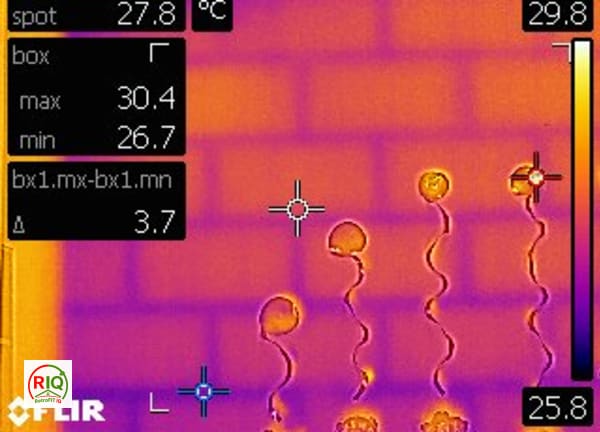
Thermal Bridging Visible Through Masonry Blockwork Wall

Sample Building Performance Investigation Report — Thermal Imaging
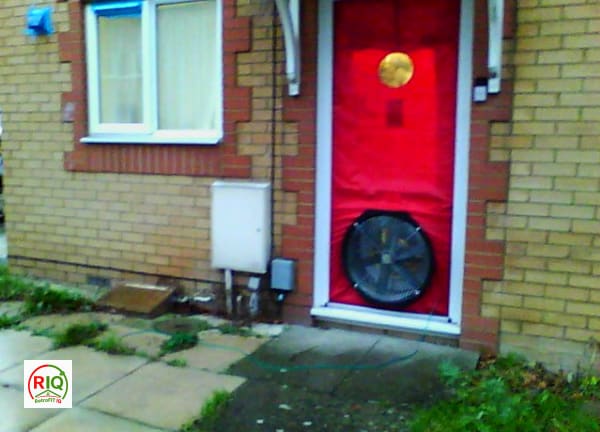
Blower Door Airtightness Test Setup

Thermal Bridge at Wall-Ceiling Junction Near Window

Thermal Bridge at Internal Corner Wall Junction
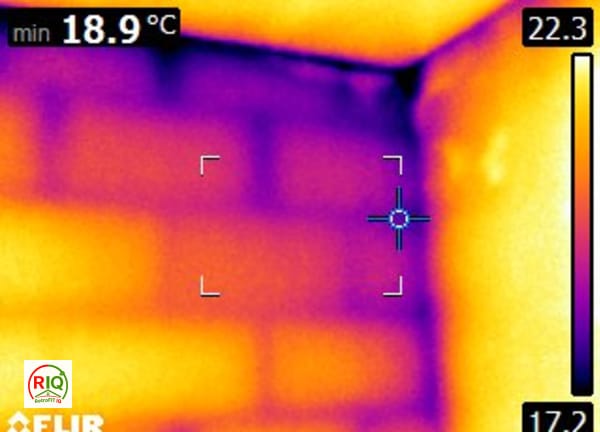
Cold wall surface vs warm ceiling
No related investigations yet.
Browse all investigationsFrequently asked questions
Why is my loft conversion cold in winter and hot in summer?+
Because the room sits behind the roof — the thinnest, most exposed surface in the house. If the slopes, dwarf walls and ceiling are poorly insulated and the junctions leak and bridge heat, the room loses heat fast in winter and gains it fast in summer, and poor ventilation traps the summer heat.
Is it the insulation or the windows?+
Usually both. Thin or discontinuous roof insulation drives the winter cold and much of the summer gain, while large or unshaded rooflights and dormers add strong solar gain in summer. A proper assessment shows the balance for your room.
Why does it overheat so badly in summer?+
The roof receives the most solar radiation of any surface, and rooflights admit direct sun, so the room gains a lot of heat. If it cannot be ventilated to purge that heat — especially at night — the room ratchets warmer through a hot spell.
Will more heating or air conditioning fix it?+
They mask the symptoms but not the cause. Heating fights the heat loss and cooling fights the heat gain, both at a running cost. Improving the roof fabric, junctions, shading and ventilation makes the room comfortable in both seasons.
Can an existing loft conversion be improved?+
Yes — the slopes, dwarf walls and ceiling can be upgraded with better insulation, the junctions sealed and de-bridged, glazing shaded, and ventilation improved. A diagnosis shows the most effective measures for your conversion.
Why are there cold spots and draughts at the eaves?+
The eaves, ridge, dormers and dwarf-wall junctions are awkward to insulate and seal, so they often have thermal bridges and air leakage that show up as cold spots and felt draughts.
How do you make a loft conversion comfortable year-round?+
We assess the roof insulation, junctions, glazing and ventilation with thermal imaging and a blower door test, then specify continuous insulation, airtightness, shading and purge ventilation so the room is warm in winter and cool in summer.
Stop guessing — find the real cause
Do not spend money fixing symptoms before you understand the cause. Every home behaves differently, and the only reliable way to know what is happening in yours is professional building performance diagnostics. At RetrofitIQ we verify buildings using the right combination of investigations:
- Thermal imaging
- Blower door testing
- Moisture & dew point readings
- Ventilation review
- Building physics assessment
- Passive House methodology