
Why is my single-storey extension so hot in summer?
Single-storey extensions — especially open-plan kitchen-diners — often overheat in summer because they combine the very features that admit and trap heat: large rooflights and glazed doors that pour solar gain in, a big flat or shallow roof fully exposed to the sun, and frequently limited ventilation with glazing on only one side. Heat gets in fast through the glass and roof and cannot easily be purged. It is a design-and-ventilation problem, fixable with shading, roof improvements and better cross- and night-ventilation rather than air conditioning.
 Reviewed by George Sora, Certified Passive House DesignerUpdated July 2026
Quick answer & key takeaways
7 min read- Large rooflights and glazed doors admit strong solar gain into the extension.
- A big flat or shallow roof in full sun adds significant heat gain.
- Single-aspect, open-plan layouts often lack cross-ventilation to purge heat.
- Shading, roof improvements and night ventilation fix it — not air conditioning.
- Biggest misconception: it just needs cooling. It needs reduced gain and better ventilation.
- Retrofit IQ's approach: reduce solar and roof gain, then enable cross- and night-purge ventilation.
What this usually means
Modern single-storey extensions are designed to be light and open, which is lovely but a recipe for summer overheating. Large rooflights and roof lanterns admit overhead sun directly, bifold or sliding glazed doors add a big vertical solar aperture, and the open-plan layout means all that gain accumulates in one connected space. Glazing overhead is particularly potent because the high summer sun strikes it strongly, so rooflights can dump a great deal of heat into the room through the middle of the day.
The roof itself adds to it. A single-storey extension typically has a large flat or shallow-pitched roof in full sun, and if that roof is poorly insulated it conducts a lot of solar heat into the room below, on top of the glazing gains. So the extension is gaining heat through both the glazed openings and the roof fabric, often more than the original house, and concentrating it in a single open volume that warms quickly and stays warm.
Removing that heat is then often difficult. Many extensions are effectively single-aspect — glazed across the garden side but solid where they join the house — so there is little opportunity for cross-ventilation to drive a cooling through-breeze, and rooflights may not open enough to purge heat at high level. The result is heat in, heat trapped. The remedy follows the same logic as any overheating: reduce the gain (external shading or solar-control glazing on rooflights and doors, good roof insulation) and improve the removal (openable rooflights for stack ventilation, cross-ventilation where possible, night purge), which together keep an extension comfortable without resorting to air conditioning.
Common causes
Large rooflights and lanterns
Overhead glazing admits strong high-summer sun directly into the room.
Big glazed doors
Bifold or sliding doors add a large vertical solar aperture facing the garden.
Poorly insulated flat roof in sun
A large flat roof in full sun conducts solar heat into the room if under-insulated.
Single-aspect open-plan layout
Glazing on one side only prevents the cross-ventilation needed to purge heat.
Rooflights that don't open enough
Fixed or barely opening rooflights cannot purge accumulated heat at high level.
Signs and symptoms
Extension much hotter than the house
The new space overheating more than the original points to its glazing and roof gains.
Heat strongest under the rooflights
Warmth concentrated below roof glazing shows overhead solar gain is a major driver.
Hot through the afternoon and evening
Heat building and lingering reflects gain accumulating with poor purge ventilation.
No through-breeze possible
Single-aspect glazing preventing cross-ventilation traps the heat.
Glare and heat from the doors
Strong sun through bifold or sliding doors adds significant solar gain.
What most people check first
- Whether large rooflights or glazed doors are driving solar gain.
- Whether the flat roof is well insulated against summer heat.
- Whether the layout allows cross-ventilation for a through-breeze.
- Whether rooflights open enough to purge heat at high level.
What most people miss
- That overhead rooflights admit very strong high-summer sun.
- That the flat roof adds conductive gain on top of the glazing.
- That single-aspect layouts prevent purge ventilation.
- That reducing gain and improving ventilation beats adding cooling.
The building physics
Single-storey extensions concentrate the classic overheating drivers. Rooflights and roof lanterns present glazing to the high summer sun at a near-optimal angle for transmission, so their solar gain per unit area is large through the middle of the day; bifold and sliding doors add a substantial vertical aperture, frequently west- or south-facing. Because the space is open-plan and small in volume relative to these apertures, the gains raise its temperature quickly. Overhead glazing is especially hard to shade and admits gain when the sun is most intense, making it the dominant term in many extension overheating cases.
The roof fabric compounds the glazing gains. A large flat or shallow roof receives high solar irradiance and reaches high surface temperatures; if its insulation is modest, the conductive gain into the room is significant and sustained, adding to the solar gain through the glass. Together, glazing and roof gains can make the extension warmer than the original house, and the heat collects in a single connected volume rather than dispersing, so it ratchets up over a hot day.
Removal is constrained by the typical geometry. Many extensions are single-aspect — glazed on the garden elevation, solid where they abut the house — which prevents the pressure-driven cross-ventilation that flushes heat out, and rooflights are often fixed or open too little to drive effective stack ventilation. The remedies therefore mirror passive cooling generally: cut the gain with external shading or solar-control glazing on rooflights and doors and with better roof insulation, and increase removal with openable rooflights for high-level stack ventilation, cross-ventilation where the layout permits, and night purge. An assessment quantifying the glazing and roof gains and the ventilation potential identifies the most effective combination, with active cooling reserved for where these are exhausted.
How to stop a single-storey extension overheating
Reduce the solar and roof gain and improve the ventilation: shade the rooflights and doors, insulate the roof, and enable cross- and high-level night ventilation.
- 01
Shade the rooflights and doors
Fit external shading or solar-control glazing to the rooflights and large glazed doors.
- 02
Insulate the roof
Improve the flat-roof insulation so it conducts less solar heat into the room.
- 03
Enable high-level purge
Provide openable rooflights so warm air can be vented out at high level.
- 04
Create cross-ventilation
Open the layout or add openings so a cooling through-breeze is possible where feasible.
- 05
Purge at night
Ventilate hard once the air cools to flush the day's accumulated heat from the open space.
- 06
Reduce internal gains
Limit cooking and appliance heat in an open-plan kitchen during the hottest hours.
How to prevent it coming back
- Shade rooflights and glazed doors externally or with solar-control glass.
- Insulate the extension roof well for summer as well as winter.
- Provide openable rooflights and cross-ventilation for purge.
- Ventilate hard at night to remove accumulated heat.
How Retrofit IQ investigates this
We identify the dominant gains — rooflights, doors or roof — and the purge potential, then specify shading, roof and ventilation measures.
Do not spend money fixing symptoms before you understand the cause — investigate first, then build with confidence.
Do I need a professional investigation?
A single-storey extension that overheats in summer is worth assessing to identify whether the rooflights, glazed doors or roof are the main gain, and whether it can be purged. The findings direct shading, roof and ventilation measures that keep the extension comfortable passively, rather than resorting to air conditioning.
Where to go next
Relevant services
Related comparisons
From the Academy
Related case studies
Related problems you may also have
Evidence from Real Projects (14)
Real project and investigation images from our own fieldwork, matched to this page — not stock photography.
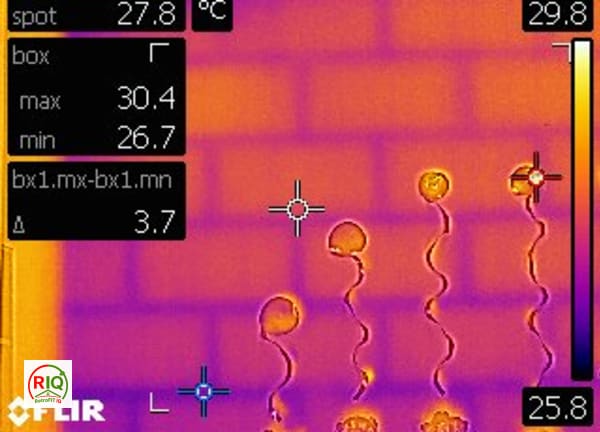
Thermal Bridging Visible Through Masonry Blockwork Wall

Sample Building Performance Investigation Report — Thermal Imaging
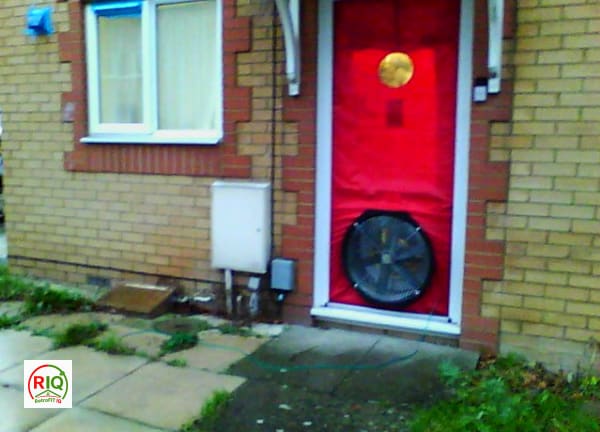
Blower Door Airtightness Test Setup
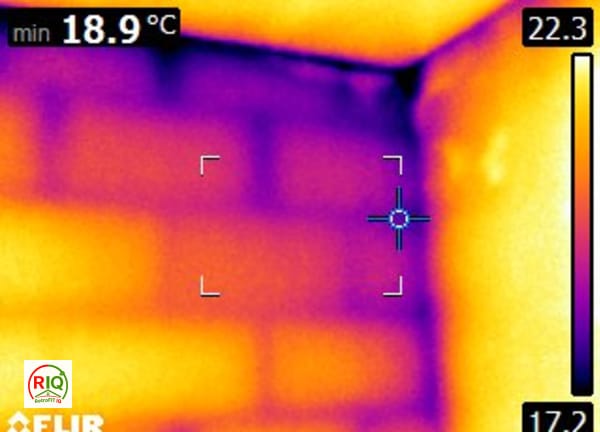
Cold wall surface vs warm ceiling

Thermal Bridge at Internal Corner Wall Junction

Thermal Bridge at Wall-Ceiling Junction Near Window
No related investigations yet.
Browse all investigationsFrequently asked questions
Why is my single-storey extension so hot in summer?+
Because it combines the features that admit and trap heat: large rooflights and glazed doors that pour in solar gain, a big flat roof in full sun, and often single-aspect layouts with limited ventilation. Heat gets in fast and cannot be purged — a design-and-ventilation issue, not a need for cooling.
Why are the rooflights such a problem?+
Overhead glazing faces the high summer sun at a strong angle, so rooflights and lanterns admit a lot of solar gain through the middle of the day, and they are hard to shade — which is why they are often the dominant cause of extension overheating.
Does the flat roof make it hotter?+
Yes — a large flat roof in full sun reaches high temperatures, and if it is poorly insulated it conducts significant solar heat into the room, adding to the glazing gains. Good roof insulation reduces this.
Why can't I cool it by opening the doors?+
Many extensions are single-aspect — glazed on the garden side but solid where they join the house — so there is little chance of a cross-ventilating through-breeze, and rooflights often don't open enough to purge heat at high level.
What's the best way to stop it overheating?+
Reduce the gain with external shading or solar-control glazing on the rooflights and doors and good roof insulation, and improve removal with openable rooflights, cross-ventilation where possible and night purge. This keeps it comfortable without air conditioning.
Do I need air conditioning?+
Rarely. For most extensions, shading, roof improvements and better ventilation are enough. Active cooling is only justified where those measures have been exhausted and overheating remains severe.
How do you tackle extension overheating?+
We log the temperatures, identify whether the rooflights, doors or roof are the main gain, assess the purge potential, and specify shading, roof insulation and ventilation in the order that keeps the extension comfortable passively.
Stop guessing — find the real cause
Do not spend money fixing symptoms before you understand the cause. Every home behaves differently, and the only reliable way to know what is happening in yours is professional building performance diagnostics. At RetrofitIQ we verify buildings using the right combination of investigations:
- Thermal imaging
- Blower door testing
- Moisture & dew point readings
- Ventilation review
- Building physics assessment
- Passive House methodology