
Is my loft insulation good enough?
Loft insulation can look complete from the hatch and still under-perform badly. Depth is only part of the story: gaps at the joists, compression under boarding, insulation pulled away from the eaves and air leakage through the ceiling all leave it working far below its potential. Judging whether yours is good enough means looking past the surface to coverage, continuity and air-sealing.
 Reviewed by George Sora, Certified Passive House DesignerUpdated June 2026
Quick answer & key takeaways
6 min read- Depth matters, but coverage, continuity and air-sealing matter just as much.
- Gaps at joists, compression under boards and eaves cold-strips quietly undermine performance.
- Air leakage through the hatch and penetrations bypasses the insulation entirely.
- A loft that looks insulated can still lose substantial heat.
- Biggest misconception: if there's insulation up there, it's fine. Quality and continuity decide.
- Retrofit IQ's approach: thermal imaging plus a blower door test reveal the real performance.
What this usually means
Whether loft insulation is 'good enough' depends on how well it actually resists heat loss in place, not on whether some insulation exists. Two lofts with the same nominal depth can perform very differently if one is laid continuously and air-sealed while the other has gaps, is compressed under boarding and lets warm air leak past it. The eye, from the hatch, cannot tell the difference — but the heat bill and a thermal camera can.
Common shortfalls are predictable. Single-layer insulation laid only between the joists leaves uninsulated timber lines and gaps; storing boxes or laying boards on top compresses it and destroys its resistance; insulation often stops short of the eaves, leaving a cold strip around every room's perimeter; and the loft hatch, downlights and pipe penetrations let warm air leak straight through. Each is a route by which 'insulated' lofts still lose heat.
So judging adequacy means asking better questions: is the insulation deep enough for today's standards; is it continuous and gap-free, including over the joists; is it uncompressed; does it reach the eaves without blocking ventilation; and is the ceiling air-sealed? Where the honest answer is uncertain, measurement settles it — and usually reveals worthwhile, cost-effective improvements.
Common causes
Inadequate depth
Insulation laid years ago is often far shallower than current recommendations, so the ceiling still loses heat.
Single-layer gaps
Insulation only between joists leaves uninsulated timber and gaps; a cross-laid second layer removes them.
Compression under boarding or storage
Compressed insulation loses much of its resistance, so boarded or storage lofts often under-perform.
Eaves cold-strips
Insulation pulled back from the eaves leaves a cold perimeter that loses heat around every upstairs room.
Air leakage through the ceiling
The hatch, downlights and penetrations let warm air bypass the insulation altogether.
Signs and symptoms
Cold upstairs rooms despite loft insulation
Top-floor rooms that stay cold suggest the insulation is under-performing through gaps, compression or leakage.
Shallow or patchy insulation at the hatch
Thin or uneven insulation visible from the hatch is a clue that depth and coverage fall short.
Boarded loft used for storage
Boarding laid straight onto insulation usually means it is compressed and under-performing.
Cold strip around upstairs ceilings
A chilly perimeter where ceiling meets wall points to an eaves cold-strip.
Draughts from the hatch and downlights
Air movement at ceiling fittings shows leakage bypassing the insulation.
What most people check first
- The depth and evenness of the insulation across the whole loft, not just at the hatch.
- Whether it is single-layer (gaps at joists) or cross-laid.
- Whether it is compressed under boards or storage.
- Whether it reaches the eaves and whether the hatch and penetrations are sealed.
What most people miss
- That nominal depth alone does not make insulation effective.
- That compression under boarding badly reduces performance.
- That eaves cold-strips and air leakage undermine otherwise adequate insulation.
- That measurement reveals shortfalls the eye cannot see.
The building physics
Insulation works by adding thermal resistance, and that resistance depends on the material's conductivity and its undisturbed thickness. Compress mineral wool under boarding and you reduce its thickness and trap less air, cutting its resistance sharply — so a boarded storage loft can perform far worse than its nominal depth implies. Gaps and uninsulated joist lines act as thermal bridges, and because heat concentrates through the lowest-resistance path, even modest gaps leak disproportionately.
Continuity is therefore as important as depth. A cross-laid second layer covers the joists and closes gaps; carrying insulation fully to the eaves removes the cold perimeter strip; and air-sealing the ceiling stops warm air bypassing the insulation through the hatch, downlights and penetrations. Air leakage is particularly insidious because no thickness of insulation resists convective loss through a hole — the air simply goes around it.
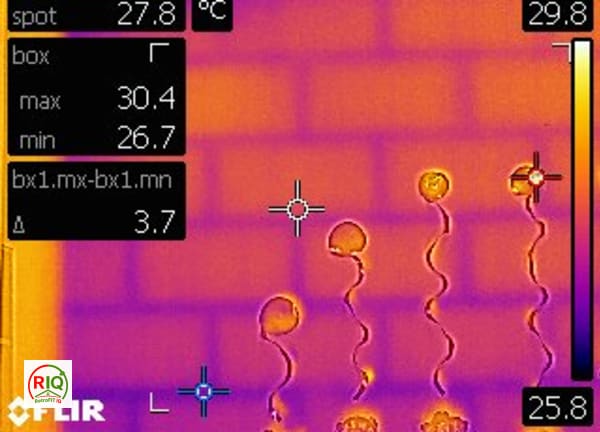
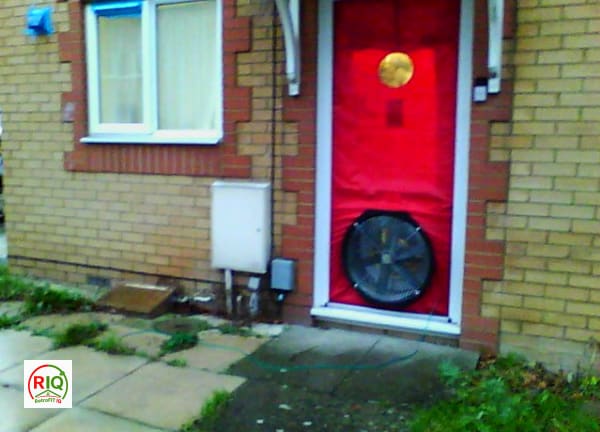
This is why measurement is the reliable judge of adequacy. Thermal imaging shows the cold patches, joist lines, eaves strips and bypasses as they actually are; a blower door test quantifies the air leakage. Together they reveal whether a loft that looks insulated is genuinely performing, and they identify the specific, cost-effective improvements — top-up, cross-laying, decompressing, eaves continuity and air-sealing — that bring it up to standard.
How to bring loft insulation up to standard
Address depth, continuity and air-sealing together. Measure first to see which of these is actually holding performance back.
- 01
Assess what's really there
Check depth, coverage, compression and eaves continuity across the loft, and use thermal imaging to find the cold spots.
- 02
Top up and cross-lay
Add a cross-laid layer to reach an adequate depth and cover the joists, removing gaps.
- 03
Avoid or correct compression
Use raised loft boarding on legs above the insulation rather than crushing it for storage.
- 04
Carry insulation to the eaves
Extend insulation to the wall plate without blocking eaves ventilation, removing the cold perimeter strip.
- 05
Air-seal the ceiling line
Seal the hatch, downlights and penetrations so warm air no longer bypasses the insulation.
- 06
Verify performance
Re-check with thermal imaging and airtightness testing to confirm the improvement.
How to prevent it coming back
- Use raised boarding rather than compressing insulation for storage.
- Keep insulation continuous to the eaves and over the joists.
- Maintain a sealed, insulated hatch and sealed penetrations.
- Re-check the loft after any work that disturbs the insulation.
How Retrofit IQ investigates this
We measure how the loft insulation actually performs, so improvements target the real shortfalls.
Do not spend money fixing symptoms before you understand the cause — investigate first, then build with confidence.
Do I need a professional investigation?
It is worth measuring before topping up insulation or boarding a loft, and whenever upstairs rooms stay cold despite insulation being present — so you invest in the improvements that actually raise performance rather than simply adding depth over hidden gaps and leaks.
Where to go next
Relevant services
Related comparisons
From the Academy
Related case studies
Evidence from Real Projects (26)
Real project and investigation images from our own fieldwork, matched to this page — not stock photography.
Thermal Bridging Visible Through Masonry Blockwork Wall

Sample Building Performance Investigation Report — Thermal Imaging

Thermal Bridge at Wall-Ceiling Junction Near Window

Thermal Bridge at Internal Corner Wall Junction

Acoustic Floor Upgrades: Mineral Wool Insulation Between Joists
Blower Door Airtightness Test Setup
No related investigations yet.
Browse all investigationsFrequently asked questions
Is my loft insulation good enough?+
Depth is only part of it. Gaps at the joists, compression under boarding, insulation pulled from the eaves and air leakage through the ceiling all reduce performance, so a loft that looks insulated can still lose a lot of heat.
How deep should loft insulation be?+
Modern recommendations are far deeper than older lofts typically have. But continuity, the absence of compression and air-sealing matter as much as depth, which is why measuring is more reliable than a number alone.
Does boarding my loft reduce insulation performance?+
If the boards are laid directly onto the insulation, yes — compression sharply reduces its resistance. Raised boarding on legs above the insulation avoids this.
Why are my upstairs rooms cold if the loft is insulated?+
Often because the insulation has gaps, is compressed, stops short of the eaves, or the ceiling leaks air. These shortfalls let heat escape despite insulation being present.
What is an eaves cold-strip?+
Where insulation is pulled back from the eaves, a cold band forms around the perimeter of upstairs rooms, losing heat. Carrying insulation to the eaves (without blocking ventilation) removes it.
Should I just add more insulation?+
Adding depth helps, but if gaps, compression and air leakage remain, the gain is limited. Measuring first ensures the improvements address the real shortfalls.
How do you check if loft insulation is good enough?+
We assess depth, coverage and compression, map cold spots with thermal imaging, and test air leakage, then recommend the specific improvements that bring it up to standard.
Stop guessing — find the real cause
Do not spend money fixing symptoms before you understand the cause. Every home behaves differently, and the only reliable way to know what is happening in yours is professional building performance diagnostics. At RetrofitIQ we verify buildings using the right combination of investigations:
- Thermal imaging
- Blower door testing
- Moisture & dew point readings
- Ventilation review
- Building physics assessment
- Passive House methodology