
Why is my loft insulation not working?
If your loft is insulated but the house still loses heat upwards, the insulation is usually being undermined rather than absent — it is gapped, compressed, too thin, or bypassed by air leakage. Loft insulation only works when it is an unbroken, full-depth layer and when air cannot flow around or through it; in practice, missed areas, boards laid straight onto it, gaps around the hatch, downlighters and service penetrations, and air leaking up from the house below all let heat escape. The result is a loft that feels insulated but performs poorly. The fix is to find the weaknesses and restore a continuous, airtight insulated layer.
 Reviewed by George Sora, Certified Passive House DesignerUpdated June 2026
Quick answer & key takeaways
5 min read- Insulation that 'doesn't work' is usually gapped, compressed or bypassed.
- Boarding straight onto insulation compresses and defeats it.
- Air leakage around hatches and downlighters bypasses the layer.
- Too-thin insulation simply isn't enough on its own.
- Biggest misconception: any insulation present means the loft is sorted. Continuity and airtightness matter.
- RetrofitIQ's approach: image the loft and restore a continuous, airtight, full-depth layer.
What this usually means
Loft insulation reduces heat loss only as a continuous, full-depth layer with still air trapped within it. Several common faults break that: gaps and missed areas at the eaves, around the hatch and between joists; compression where storage boards or stacked items squash the insulation, drastically cutting its effectiveness; insufficient depth left over from older standards; and displaced or poorly fitted material. Each leaves a path for heat to escape, so the loft underperforms even though insulation is clearly present.
Air leakage is the most underrated cause. Warm, buoyant air from the house rises and escapes through gaps around the loft hatch, recessed downlighters, pipe and cable penetrations and service voids, carrying heat straight past the insulation — and on a windy day, air can also wash through and around the insulation itself. Insulation slows conduction but does little against this air movement, so a leaky ceiling undermines even good insulation. Finding the gaps and leakage with thermal imaging, then sealing the air paths and restoring a continuous, uncompressed, full-depth layer (raising storage above it on a proper platform), is what makes loft insulation finally work.
Common causes
Gaps and missed areas
Breaks at eaves, hatch and between joists let heat through.
Compression by boarding or storage
Squashed insulation loses much of its effectiveness.
Air leakage bypass
Warm air escaping around hatches, downlighters and penetrations.
Insufficient depth
Older, thinner insulation simply isn't enough.
Signs and symptoms
Cold upstairs despite loft insulation
Heat still escaping through gaps and leakage.
Boarded loft for storage
Likely compressed insulation beneath the boards.
Draught around the loft hatch
Air leakage bypassing the insulation.
Warm loft in winter
Heat reaching the loft means it's escaping the house.
What most people check first
- Whether the insulation is continuous and full-depth.
- Whether storage boards have compressed it.
- Whether the hatch, downlighters and penetrations are sealed.
- Whether air is leaking up from the house below.
What most people miss
- That compression by boarding defeats insulation.
- That air leakage bypasses even good insulation.
- That gaps at the eaves and hatch matter a lot.
- That airtightness must accompany insulation to work.
The building physics
Insulation works by trapping still air to resist conductive heat flow, and its performance depends on being continuous and at full depth; compressing it reduces the trapped air and its resistance disproportionately, and any gap acts as a thermal bridge carrying heat around the layer. So storage boards laid straight onto the insulation, missed areas and insufficient depth all reduce the effective resistance well below what the nominal insulation suggests. Restoring continuity and full depth — and raising storage on a platform above the insulation — is therefore essential to recover the intended performance.
Convective and infiltration losses are the other half and are largely independent of the insulation's conductivity. Warm air rising from the heated house leaks through unsealed hatches, downlighters and penetrations into the cold loft, and wind can wash through poorly fitted insulation, both bypassing the conductive resistance entirely. This is why airtightness at the ceiling plane matters as much as the insulation itself: sealing the air paths stops the bypass. Thermal imaging from below reveals the cold streaks of leakage and the gaps in the insulation, so the remedy combines air-sealing the ceiling with restoring a continuous, uncompressed, full-depth insulated layer — which is what makes the loft finally perform.
How to make loft insulation work
Find the gaps, compression and air leakage, then restore a continuous, uncompressed, full-depth layer and seal the air paths so heat can no longer bypass it.
- 01
Image the loft
Use thermal imaging to find gaps and leakage from below.
- 02
Restore continuity and depth
Fill gaps and top up to full depth across the whole loft.
- 03
Decompress storage areas
Raise boards on a platform above the insulation.
- 04
Seal the air paths
Air-seal the hatch, downlighters and penetrations.
- 05
Insulate the eaves carefully
Fill to the eaves without blocking roof ventilation.
- 06
Verify the improvement
Confirm the upstairs is warmer and the loft colder.
How to prevent it coming back
- Keep insulation continuous and at full depth.
- Raise storage above the insulation, never on it.
- Air-seal the ceiling plane to stop bypass.
- Top up older, thin insulation to current depth.
How Retrofit IQ investigates this
We find why loft insulation underperforms — gaps, compression or leakage — and how to restore its performance.
Do not spend money fixing symptoms before you understand the cause — investigate first, then build with confidence.
Do I need a professional investigation?
If your loft is insulated but the upstairs is still cold, it is worth thermal imaging to find the gaps, compression and air leakage undermining it. That shows exactly where heat bypasses the insulation, so air-sealing and restoring a continuous, full-depth layer make it finally perform.
Where to go next
Relevant services
Related comparisons
From the Academy
Related case studies
Related problems you may also have
Evidence from Real Projects (19)
Real project and investigation images from our own fieldwork, matched to this page — not stock photography.

Sample Building Performance Investigation Report — Thermal Imaging
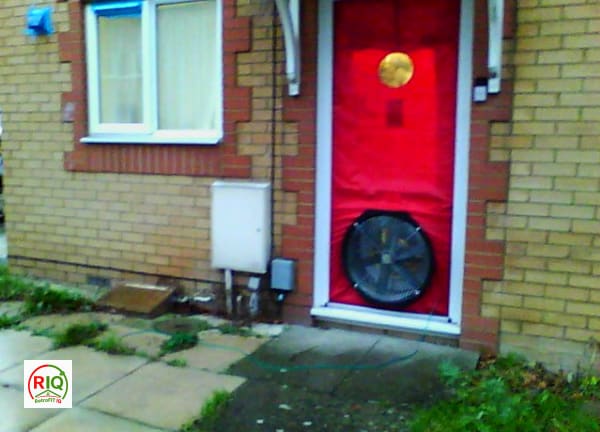
Blower Door Airtightness Test Setup
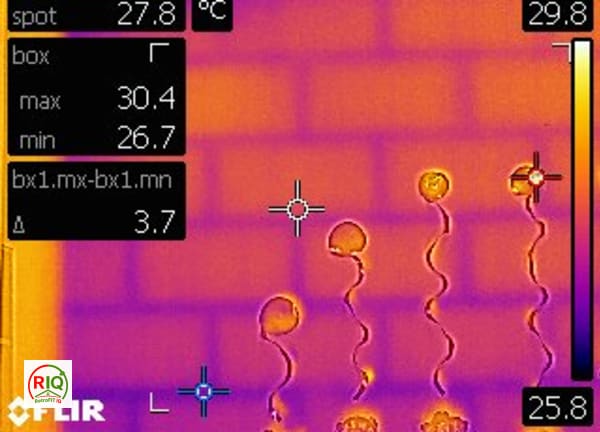
Thermal Bridging Visible Through Masonry Blockwork Wall

Thermal Bridge at Internal Corner Wall Junction

Thermal Bridge at Wall-Ceiling Junction Near Window

Ceiling / external-wall junction
No related investigations yet.
Browse all investigationsFrequently asked questions
Why is my loft insulation not working?+
Usually because it's being undermined rather than absent — gapped, compressed under storage boards, too thin, or bypassed by air leaking up around the hatch, downlighters and penetrations. Insulation only works as a continuous, full-depth layer with air sealed out, so these faults let heat escape despite insulation being present.
Does boarding my loft ruin the insulation?+
If boards are laid straight onto the insulation, yes — compression drastically cuts its effectiveness. Storage should sit on a raised platform above full-depth insulation so the insulation stays uncompressed and continues to work.
Can air leakage really bypass insulation?+
Yes, and it's often the biggest issue. Warm air rising from the house escapes through unsealed hatches, downlighters and service holes, carrying heat straight past the insulation, while wind can wash through poorly fitted material. Sealing the ceiling plane is as important as the insulation itself.
How much insulation do I need?+
Older lofts often have far less than current recommended depths, which alone leaves them under-performing. Topping up to a full, continuous depth — while keeping it uncompressed and sealing the air paths — restores the intended performance.
How do I find the weak spots?+
Thermal imaging from inside the rooms below reveals the cold streaks of air leakage and the gaps in the insulation, and a loft inspection checks depth and compression. Together they show exactly what to seal and top up.
Stop guessing — find the real cause
Do not spend money fixing symptoms before you understand the cause. Every home behaves differently, and the only reliable way to know what is happening in yours is professional building performance diagnostics. At RetrofitIQ we verify buildings using the right combination of investigations:
- Thermal imaging
- Blower door testing
- Moisture & dew point readings
- Ventilation review
- Building physics assessment
- Passive House methodology