
Should I board my loft for storage, and will it cause problems?
Boarding a loft for storage is fine and worthwhile, but only if it is done correctly — and the common mistake of laying boards straight onto the joists causes real problems. Modern loft insulation is usually deeper than the joists, so boarding directly onto them squashes the insulation, drastically reducing its performance, and can trap moisture and cause condensation. The right way is 'raised boarding', which lifts the boards above full-depth insulation on spacers, giving you storage without sacrificing warmth or risking damp.
 Reviewed by George Sora, Certified Passive House DesignerUpdated June 2026
Quick answer & key takeaways
7 min read- Boarding straight onto the joists compresses the insulation and ruins its performance.
- Squashed insulation creates a cold, condensation-prone deck under the boards.
- Raised boarding lifts the boards above full-depth insulation on spacers.
- Done correctly, you keep both the storage and the insulation's warmth.
- Biggest misconception: you can just lay boards on the joists. That undoes your insulation.
- Retrofit IQ's approach: board with a raised system that preserves insulation and ventilation.
What this usually means
Loft insulation works by trapping still air, and its performance depends on its full depth and on not being compressed. Current guidance puts insulation at around 270–300mm, but the ceiling joists in most homes are only around 100mm deep. So if you lay loft boards directly on top of the joists, the boards crush the insulation down to joist depth wherever they sit, flattening the trapped air and cutting that area's insulating value by more than half. You end up with a large, cold strip of squashed insulation right across the loft floor.
That compressed zone is not just inefficient; it can cause condensation. Where the insulation is squashed, the ceiling and the underside of the boards run colder, and because the boarded area also tends to be where the loft hatch and access are — major air-leakage points — moist air reaching that cold deck can condense, dampening the boards and the insulation beneath. People board a loft to gain dry storage and instead create a cold, potentially damp platform that quietly undermines the home's insulation and risks the very dampness they wanted to avoid.
The solution is raised (or 'stilted') loft boarding: a system of plastic or timber spacers raises a new boarded deck above the joists to a height that allows the full depth of insulation to sit uncompressed beneath it, often with additional insulation laid over the original to reach the recommended depth. The boards then provide a stable storage floor while the insulation underneath performs as intended, the deck stays warmer, and condensation risk is minimised. Combined with sealing the loft hatch and maintaining loft ventilation, raised boarding lets you have both storage and a warm, dry loft.
Common causes
Boards laid straight on the joists
Joists shallower than the insulation mean direct boarding crushes it and destroys its performance.
Compressed insulation
Squashed insulation loses most of its value, creating a cold strip across the loft floor.
Cold deck under the boards
The colder boarded area can let moist air condense, dampening boards and insulation.
Air leakage at the hatch
Unsealed loft access near the boarded area feeds moist air to the cold deck.
Blocked ventilation under boards
Boarding can obstruct loft airflow, allowing moisture to linger beneath the deck.
Signs and symptoms
Cold rooms below a boarded loft
Reduced warmth after boarding suggests the insulation has been compressed.
Damp or musty boarded area
Moisture under loft boards indicates condensation on a cold, squashed deck.
Insulation flattened under boards
Crushed insulation beneath boarding confirms it is no longer performing.
Condensation on the underside of boards
Beading under the boards shows moist air condensing on the cold deck.
Higher bills after boarding
A jump in heating cost after boarding points to lost insulation performance.
What most people check first
- Whether existing boards sit directly on the joists, compressing the insulation.
- Whether the insulation is full depth and uncompressed beneath any boarding.
- Whether the loft hatch and access are sealed against air leakage.
- Whether loft ventilation is maintained around and under the boarded area.
What most people miss
- That joists are usually shallower than the insulation, so direct boarding crushes it.
- That compressed insulation can create a cold, condensation-prone deck.
- That raised boarding preserves both storage and insulation performance.
- That sealing the hatch and keeping ventilation matter as much as the boarding method.
The building physics
Thermal resistance depends on insulation thickness and on the air within it remaining still and uncompressed. Compressing mineral-wool insulation reduces its thickness and increases its density, both of which lower its overall thermal resistance markedly — compressing 270mm down to 100mm can more than halve that area's performance. Because heat flows preferentially through the least-resistant path, a boarded strip of crushed insulation acts as a broad thermal weakness across the ceiling, disproportionately increasing total heat loss relative to its area.
The colder deck created by compression also raises condensation risk. With the boards and the insulation beneath them running cooler, any moist air that reaches the underside of the boards — readily supplied by an unsealed loft hatch and ceiling penetrations under the stack effect — can meet a surface below its dew point and condense. Trapped between boards above and squashed insulation below, with restricted ventilation, that moisture lingers, dampening the timber and insulation and potentially supporting mould, which is the opposite of the dry storage intended.
Raised boarding resolves the conflict between storage and performance. By lifting the deck on spacers to clear the full insulation depth — typically combining the original insulation with a further layer laid across the joists to reach the recommended total — the insulation remains uncompressed and continuous, so the deck above stays warmer and the condensation risk falls. Maintaining loft ventilation around the deck and sealing the hatch and penetrations completes the strategy, allowing a loft to provide a stable, dry storage floor while the home's ceiling insulation continues to perform as designed.
How to board a loft without causing problems
Use raised boarding so the full depth of insulation sits uncompressed beneath the deck, seal the loft hatch, and keep the loft ventilated — giving you storage and a warm, dry loft.
- 01
Avoid boarding straight on the joists
Do not lay boards directly on shallow joists, as this compresses and ruins the insulation.
- 02
Fit raised boarding
Use spacers or stilts to raise the deck above the full depth of insulation.
- 03
Top up the insulation
Add insulation over the original to reach the recommended depth beneath the raised boards.
- 04
Seal the loft hatch
Insulate and draught-seal the hatch so moist air cannot reach the cold deck.
- 05
Maintain ventilation
Keep eaves ventilation and airflow around the boarded area to prevent moisture lingering.
- 06
Check it stays warm and dry
Confirm the rooms below stay warm and the boarded area remains dry after the work.
How to prevent it coming back
- Always use raised boarding rather than boards on the joists.
- Keep the insulation full depth and uncompressed beneath the deck.
- Seal and insulate the loft hatch against air leakage.
- Maintain loft ventilation around and under the boarded area.
How Retrofit IQ investigates this
We check whether boarding has compromised the insulation or ventilation, and specify a raised, moisture-safe boarding solution.
Do not spend money fixing symptoms before you understand the cause — investigate first, then build with confidence.
Do I need a professional investigation?
If a loft has been boarded straight onto the joists, or has become cold or damp since boarding, it is worth checking the insulation and ventilation. Assessing the compression, air leakage and airflow shows whether raised boarding and sealing are needed to restore the loft's warmth and keep it dry.
Where to go next
Relevant services
Related comparisons
From the Academy
Related case studies
Evidence from Real Projects (24)
Real project and investigation images from our own fieldwork, matched to this page — not stock photography.
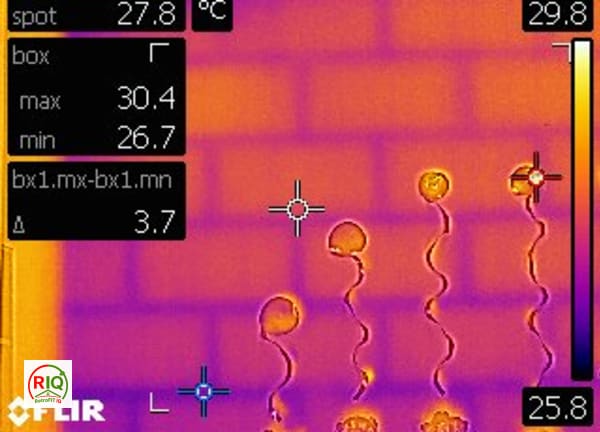
Thermal Bridging Visible Through Masonry Blockwork Wall

Sample Building Performance Investigation Report — Thermal Imaging
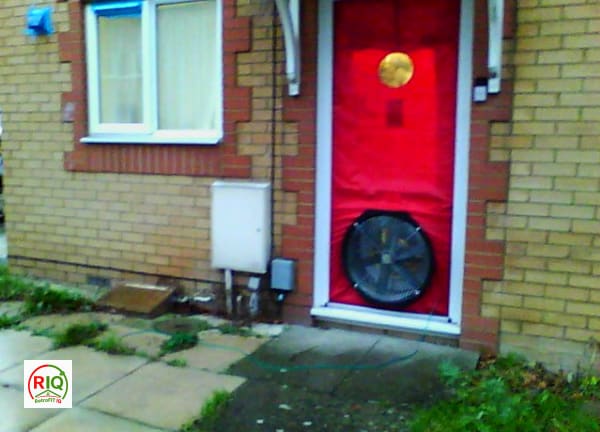
Blower Door Airtightness Test Setup

Thermal Bridge at Internal Corner Wall Junction

Airtightness Testing in a Stratford Victorian Terrace

Thermal Bridge at Wall-Ceiling Junction Near Window
No related investigations yet.
Browse all investigationsFrequently asked questions
Should I board my loft for storage?+
Yes, boarding for storage is worthwhile, but it must be done with raised boarding. Laying boards straight onto the joists compresses the insulation and can cause condensation, so the boards should be lifted above full-depth insulation on spacers.
Why is boarding straight onto the joists a problem?+
Joists are usually only around 100mm deep while insulation should be around 270–300mm, so direct boarding crushes the insulation to joist depth, cutting its performance by more than half and creating a cold, condensation-prone strip across the loft.
Can loft boarding cause condensation?+
Yes. Compressed insulation makes the boarded deck colder, and with an unsealed loft hatch nearby feeding moist air, condensation can form under the boards, dampening them and the insulation beneath — the opposite of dry storage.
What is raised loft boarding?+
It is a system of spacers or stilts that raises the boarded deck above the joists so the full depth of insulation sits uncompressed beneath it, often with extra insulation added, giving storage without sacrificing warmth or risking damp.
Will boarding my loft make my house colder?+
Only if done wrongly. Boards laid on the joists compress the insulation and can raise heating bills. Raised boarding keeps the insulation performing, so the rooms below stay as warm as before.
Do I need to seal the loft hatch too?+
Yes — the hatch is a major air-leakage point that feeds moist air to the loft. Insulating and draught-sealing it, and maintaining loft ventilation, are important parts of boarding a loft without causing damp.
How do you board a loft safely?+
We check the insulation depth and ventilation, fit raised boarding above full-depth insulation, top up the insulation as needed, seal the loft hatch, and confirm the loft stays warm and dry afterwards.
Stop guessing — find the real cause
Do not spend money fixing symptoms before you understand the cause. Every home behaves differently, and the only reliable way to know what is happening in yours is professional building performance diagnostics. At RetrofitIQ we verify buildings using the right combination of investigations:
- Thermal imaging
- Blower door testing
- Moisture & dew point readings
- Ventilation review
- Building physics assessment
- Passive House methodology