
Why is my flat roof getting condensation?
Condensation in a flat roof is usually interstitial condensation: warm, moist air from inside the home rises, reaches the cold underside of the roof deck, and condenses there — soaking the insulation and timber from within, often before any sign shows on the ceiling. It is rarely a leak from above; it is moisture from inside meeting a cold surface within the construction. The cure depends on the roof type, but it always comes down to keeping warm moist air away from the cold deck and getting the build-up right.
 Reviewed by George Sora, Certified Passive House DesignerUpdated June 2026
Quick answer & key takeaways
8 min read- Flat-roof condensation is usually interstitial — moisture condensing inside the build-up, not a leak.
- Warm, moist indoor air reaches the cold deck and condenses, wetting insulation and timber.
- The roof type — cold deck, warm deck or inverted — determines the correct fix.
- An air and vapour control layer plus the right insulation position is key.
- Biggest misconception: damp under a flat roof means it is leaking. Often it is condensing.
- Retrofit IQ's approach: diagnose the build-up and moisture path, then specify a safe roof.
What this usually means
A flat roof is a layered construction — ceiling, insulation, structural deck and waterproofing — and where the insulation sits relative to the deck decides whether it stays dry. In a traditional 'cold deck' roof, the insulation is between the joists below the deck, so the deck itself is cold; if warm, moist indoor air leaks up into that space and reaches the cold deck, it condenses on the underside, wetting the timber and insulation. Because this happens inside the build-up, it can saturate and rot the structure long before a stain appears on the ceiling.
This is interstitial condensation, and it is a moisture-and-vapour problem, not a roofing leak. The drivers are warm indoor air carrying water vapour, gaps that let that air rise into the roof, a cold surface for it to condense on, and too little ventilation or vapour control to manage it. It is often confused with a leak because the symptoms — damp patches, drips, musty smells, staining — look similar, but the water is coming from indoor air condensing within the roof rather than rain getting in from above, which is why chasing a leak on the surface gets nowhere.
The correct fix depends on the roof type and is about controlling the moisture path. A cold-deck roof needs either reliable ventilation above the insulation to carry the moisture away, or — better and more common in modern practice — converting it to a 'warm deck', where the insulation sits above the deck so the deck stays warm and never reaches the dew point, with a continuous air and vapour control layer on the warm side to stop moist air entering the build-up at all. Getting the layer order, the vapour control and the airtightness right is what keeps a flat roof dry; without that, simply re-covering it leaves the condensation untouched.
Common causes
Cold deck reaching the dew point
Insulation below the deck leaves it cold, so moist air condenses on its underside within the roof.
Warm moist air leaking up
Gaps in the ceiling let humid indoor air rise into the roof build-up where it condenses.
Missing vapour control layer
Without a continuous vapour barrier on the warm side, moisture passes freely into the construction.
Inadequate ventilation in a cold deck
Too little airflow above the insulation fails to carry away the moisture that gets in.
Insulation in the wrong position
An incorrectly layered build-up keeps the deck cold and the dew point inside the timber.
Signs and symptoms
Damp patches on a flat-roof ceiling
Staining below a flat roof often signals condensation within the build-up, not necessarily a leak.
Drips that worsen in cold weather
Moisture appearing in winter, when the deck is coldest, points to condensation rather than rain ingress.
Musty smell from the roof void
A damp, musty odour indicates moisture trapped in the insulation and timber.
Soft or rotting roof timbers
Decay in the deck or joists shows long-term interstitial condensation soaking the structure.
Damp insulation when inspected
Wet insulation within the roof confirms moisture is condensing inside the build-up.
What most people check first
- Whether the damp is condensation within the build-up or rain getting in from above.
- Whether the roof is a cold deck, warm deck or inverted construction.
- Whether warm, moist indoor air can leak up into the roof through the ceiling.
- Whether there is a vapour control layer and adequate ventilation for the roof type.
What most people miss
- That flat-roof damp is often condensation inside the build-up, not a leak.
- That the roof type dictates the correct, very different fix.
- That a vapour control layer and airtightness keep moist air out of the construction.
- That re-covering the roof does nothing if the condensation path is left in place.
The building physics
Interstitial condensation occurs when water vapour diffusing or leaking through a construction reaches a plane cold enough to be at or below its dew point. In a flat roof, the temperature falls across the build-up from warm inside to cold outside, and condensation forms wherever the local temperature meets the dew point of the air present. In a cold-deck roof, the coldest plane — the underside of the deck — sits on the room side of the waterproofing, exactly where moist indoor air can reach it, which is why cold decks are so prone to condensing.
Two principles govern the fix. First, keep the dew-point plane out of the vulnerable materials by positioning the insulation correctly: in a warm-deck roof the insulation lies above the deck, so the deck stays warm, above the dew point, and condensation cannot form on it. Second, control the vapour and air on the warm side with a continuous air and vapour control layer, so moist indoor air cannot diffuse or leak into the cold part of the build-up in the first place. Together these ensure no surface inside the roof is both cold and exposed to moist air.
Where a cold deck must be retained, the alternative is reliable cross-ventilation above the insulation, with a clear air path and adequate openings, so any moisture that enters is carried away faster than it accumulates — but this is harder to achieve dependably than a warm deck, especially on shallow or complex roofs, and is intolerant of blocked air paths. Modern best practice therefore favours the warm-deck approach with robust vapour control and airtightness. Diagnosing which roof you have, and where the moisture is entering and condensing, is essential before any work, because the wrong intervention can seal moisture in and accelerate decay.
How to stop flat-roof condensation
Diagnose the roof type and moisture path, then keep the deck warm and the moist air out — usually by converting to a warm deck with continuous vapour control and airtightness.
- 01
Confirm it is condensation
Establish that the damp is interstitial condensation rather than rainwater leaking in from above.
- 02
Identify the roof type
Determine whether it is a cold deck, warm deck or inverted roof, as this dictates the fix.
- 03
Keep the deck warm
Convert to a warm deck where possible so the deck stays above the dew point and cannot condense.
- 04
Install vapour control and airtightness
Provide a continuous air and vapour control layer on the warm side to keep moist air out of the build-up.
- 05
Ventilate a retained cold deck
If keeping a cold deck, ensure reliable cross-ventilation above the insulation to remove moisture.
- 06
Reduce indoor moisture and verify
Improve ventilation below and re-check the roof stays dry after the work.
How to prevent it coming back
- Position insulation so the deck stays warm (warm-deck construction).
- Provide continuous vapour control and airtightness on the warm side.
- Ventilate any retained cold-deck roof reliably above the insulation.
- Control indoor humidity so less moisture reaches the roof.
How Retrofit IQ investigates this
We diagnose whether the damp is condensation or a leak, identify the roof build-up, and specify a moisture-safe roof.
Do not spend money fixing symptoms before you understand the cause — investigate first, then build with confidence.
Do I need a professional investigation?
Damp under a flat roof is well worth investigating before any re-covering, because it is so often condensation within the build-up rather than a leak. Diagnosing the roof type and the moisture path ensures the work keeps the deck warm and the moist air out, rather than sealing moisture in and rotting the structure.
Where to go next
Relevant services
Related comparisons
From the Academy
Related case studies
Related problems you may also have
Evidence from Real Projects (22)
Real project and investigation images from our own fieldwork, matched to this page — not stock photography.

Sample Building Performance Investigation Report — Thermal Imaging
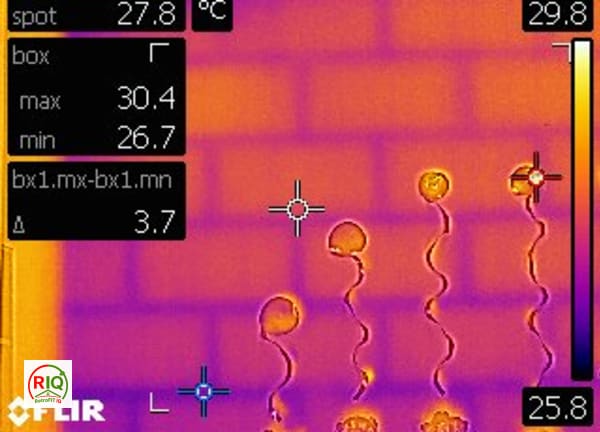
Thermal Bridging Visible Through Masonry Blockwork Wall

Thermal Bridge at Wall-Ceiling Junction Near Window

Thermal Bridge at Internal Corner Wall Junction
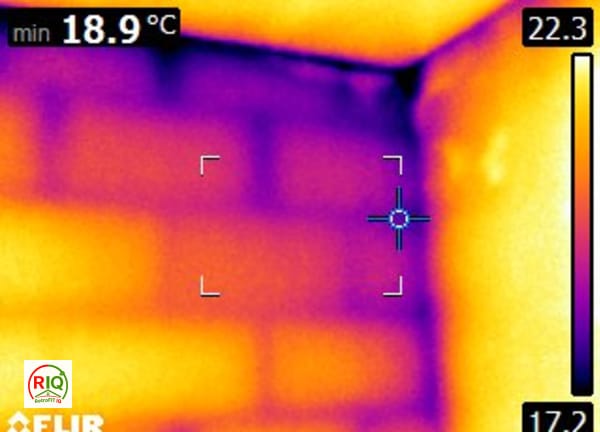
Cold wall surface vs warm ceiling

Airtightness Testing in a Stratford Victorian Terrace
No related investigations yet.
Browse all investigationsFrequently asked questions
Why is my flat roof getting condensation?+
Usually because warm, moist indoor air rises and reaches the cold roof deck, where it condenses inside the build-up, wetting the insulation and timber. It is interstitial condensation — moisture from inside meeting a cold surface — rather than a leak from above.
How do I know it's condensation and not a leak?+
Condensation tends to worsen in cold weather when the deck is coldest, produces damp insulation and musty smells within the roof, and is not tied to rainfall. A leak follows rain and enters from the waterproofing. Diagnosis confirms which it is.
What is a cold deck and why is it a problem?+
In a cold-deck roof the insulation sits below the deck, leaving the deck cold. Moist indoor air that leaks up condenses on the cold underside, soaking the structure — which is why cold decks are prone to interstitial condensation.
What is the best fix for flat-roof condensation?+
Usually converting to a warm deck — insulation above the deck so it stays warm and never reaches the dew point — with a continuous air and vapour control layer on the warm side to keep moist air out of the build-up.
Will re-covering the roof solve it?+
Not on its own. Re-covering addresses the waterproofing, but if the condensation path remains — a cold deck and moist air reaching it — the roof keeps condensing internally. The build-up and vapour control must be corrected.
Can I just add more ventilation?+
For a retained cold deck, reliable cross-ventilation above the insulation can work, but it is hard to achieve dependably on shallow or complex roofs. A warm-deck conversion with vapour control is generally more robust.
How do you diagnose a flat-roof condensation problem?+
We confirm it is condensation rather than a leak, identify the roof build-up, use thermal imaging and moisture readings, model where the dew point falls, and specify a warm-deck or ventilated solution with the right vapour control and indoor ventilation.
Stop guessing — find the real cause
Do not spend money fixing symptoms before you understand the cause. Every home behaves differently, and the only reliable way to know what is happening in yours is professional building performance diagnostics. At RetrofitIQ we verify buildings using the right combination of investigations:
- Thermal imaging
- Blower door testing
- Moisture & dew point readings
- Ventilation review
- Building physics assessment
- Passive House methodology