
Is spray foam insulation in my loft a problem?
Spray foam insulation applied to a loft or the underside of a roof can be a problem — and it is increasingly flagged by surveyors and lenders — but whether it is actually causing harm in a particular roof depends on the type of foam, how it was applied, and what it is doing to the roof's ventilation and timbers. The concerns are real: spray foam can trap moisture against the rafters, encourage condensation and rot, hide defects from inspection, and make some lenders unwilling to lend. Equally, not every installation is failing. The sensible approach is not to panic or to rip it out blindly, but to have the roof properly assessed so you know whether it is sound, at risk, or in need of removal.
 Reviewed by George Sora, Certified Passive House DesignerUpdated June 2026
Quick answer & key takeaways
9 min read- Spray foam can trap moisture against roof timbers, risking condensation and rot.
- It can hide roof defects, so a surveyor cannot inspect the timbers and covering.
- Many lenders are now cautious, which can affect mortgages and sales.
- The risk depends on the foam type, the application and the roof's ventilation.
- Biggest misconception: spray foam is always fine, or always ruinous. It needs assessing case by case.
- Retrofit IQ's approach: assess the roof, moisture and ventilation before deciding to keep or remove it.
What this usually means
Spray foam comes in two broad types, and the distinction matters. Open-cell foam is softer and more vapour-open, so moisture can pass through it; closed-cell foam is rigid and largely vapour-closed. Both are commonly sprayed directly onto the underside of the roof covering and the rafters, and that is the heart of the problem: a traditional pitched roof is designed to breathe and to be ventilated above the insulation, allowing any moisture in the timbers and the roof space to dry out. Spraying foam onto the rafters can seal that ventilation path and bond the insulation to the timber, so the roof can no longer dry the way it was built to.
When the roof cannot dry, moisture can accumulate where it does most harm. Warm, humid air from the house reaches the cold roof structure; with the ventilation blocked and the foam holding moisture against the rafters, condensation can form within the build-up and the timbers can stay damp, risking rot and decay over time. The foam also conceals the timbers and the underside of the covering, so a surveyor can no longer see whether the rafters are sound or whether the slates or tiles and their underlay are failing. This combination — hidden defects and a real risk of trapped moisture — is why spray foam is treated with such caution, and why lenders and their surveyors frequently raise it as a concern on a sale or remortgage.
That said, the right response is assessment, not assumption. Whether a given installation is actually causing damage depends on the foam type, whether any ventilation was retained, the condition of the timbers beneath, and the moisture conditions in the roof — none of which can be known from the fact that foam is present. A proper investigation establishes what is really happening: it checks the roof's ventilation and moisture, looks for signs of damp or decay in the accessible timbers, and assesses whether the installation is benign, at risk, or failing. From that, you can make an informed decision — leave a sound installation alone, improve ventilation, or remove the foam and reinstate a correctly ventilated, insulated roof — rather than reacting to the foam's reputation alone.
Common causes
Blocked roof ventilation
Foam sprayed onto the rafters seals the ventilation a pitched roof needs to dry out.
Moisture trapped against timbers
Foam can hold moisture against the rafters, keeping them damp and risking rot.
Vapour-closed closed-cell foam
Rigid closed-cell foam resists drying, so trapped moisture cannot easily escape.
Hidden roof defects
Foam conceals the timbers and covering, so failures cannot be inspected.
Poor or undocumented application
Installations without proper assessment or records raise the risk and lender concern.
Signs and symptoms
Foam on the underside of the roof
Foam bonded to rafters and covering signals the ventilation may be blocked.
Damp or staining on the timbers
Damp rafters or staining suggest trapped moisture and possible decay.
A musty loft
A damp, musty smell points to moisture not drying out of the roof space.
A mortgage or survey query
A lender or surveyor flagging the foam indicates it needs proper assessment.
No ventilation gap retained
Foam applied with no air path left is the configuration most at risk.
What most people check first
- Whether the foam is open-cell or closed-cell and how it was applied.
- Whether any roof ventilation was retained above or around the insulation.
- Whether the accessible timbers show damp, staining or decay.
- Whether a lender or surveyor has raised it for a sale or remortgage.
What most people miss
- That spray foam can block the ventilation a roof needs to dry.
- That it hides defects so the timbers and covering cannot be inspected.
- That the risk depends on the foam type and application, not just its presence.
- That assessment should come before removing it blindly.
The building physics
A traditional cold pitched roof manages moisture by ventilation: insulation is laid at ceiling level and the roof space above is ventilated, so any water vapour that reaches the cold roof is carried away before it can condense and dampen the timbers. Spraying foam onto the underside of the rafters changes the roof into an unventilated warm or hybrid construction without necessarily providing the airtightness, vapour control and drying capacity such a construction requires to be safe. If warm, moist internal air can still reach the structure but the ventilation that used to remove it is now sealed by the foam, the moisture has nowhere to go, and the dew point can fall within the build-up against the timber — the classic condition for interstitial condensation and timber decay.
The foam type governs how dangerous that is. Closed-cell foam is highly vapour-resistant, so moisture that does reach the timber cannot readily diffuse out through the foam, and the rafter can remain damp; open-cell foam is more vapour-open and allows some diffusion, but bonded directly to the rafters it still impedes the drying that ventilation provided and can transmit moisture to the timber. In both cases the bond to the structure and the loss of an air gap remove the roof's resilience — its ability to dry out faster than it wets up. Whether decay actually occurs depends on the balance of moisture supply, the temperatures, and any residual drying, which is precisely why a measured assessment of the roof's moisture and ventilation, rather than the mere presence of foam, determines the risk.
The inspection problem compounds the moisture problem. Because the foam encapsulates the rafters and the underside of the covering, the condition of the timber and the integrity of the slates, tiles and any underlay are concealed; a surveyor cannot verify the structure, and removing foam to inspect is destructive. Lenders, conscious that hidden decay and impaired drying can affect the security and that remediation is costly, therefore frequently decline or qualify lending where foam is present. A proper investigation addresses both issues: it evaluates the roof's moisture and ventilation regime and the accessible timber condition to judge whether the installation is performing safely, and it documents that assessment so an informed decision — retain, improve ventilation, or remove and reinstate a correctly designed roof — can be made and evidenced to a lender, rather than reacting to reputation.
How to deal with spray foam in your loft
Have the roof assessed before deciding anything — establish the foam type, the ventilation, and the timber condition, then keep, improve or remove on evidence rather than reputation.
- 01
Identify the foam and application
Establish whether it is open- or closed-cell and whether any ventilation was retained.
- 02
Assess the roof's moisture and ventilation
Check whether the roof can still dry and whether moisture is reaching the timbers.
- 03
Inspect the accessible timbers
Look for damp, staining and decay in the rafters where they can be seen.
- 04
Judge the risk
Decide whether the installation is benign, at risk, or failing, on the evidence.
- 05
Improve or remove as needed
Restore ventilation, or remove the foam and reinstate a correctly insulated, ventilated roof.
- 06
Document the assessment
Record the findings so they can be evidenced to a lender or buyer if needed.
How to prevent it coming back
- Have spray foam assessed rather than assuming it is fine or ruinous.
- Avoid sealing a roof's ventilation without a designed alternative.
- Keep documentation of any assessment for sales and remortgages.
- Reinstate a correctly ventilated, insulated roof if foam is removed.
How Retrofit IQ investigates this
We assess the roof's moisture, ventilation and timber condition to judge whether the spray foam is safe, at risk or failing, and document the findings.
Do not spend money fixing symptoms before you understand the cause — investigate first, then build with confidence.
Do I need a professional investigation?
If your loft has spray foam — especially if a lender or surveyor has raised it, the loft is musty, or you are selling or remortgaging — it is worth having the roof assessed. Establishing the foam type, the ventilation and the timber condition tells you whether it is sound, at risk or failing, so you can keep, improve or remove it on evidence and document the decision rather than reacting to its reputation.
Where to go next
Relevant services
From the Academy
Related case studies
Evidence from Real Projects (20)
Real project and investigation images from our own fieldwork, matched to this page — not stock photography.
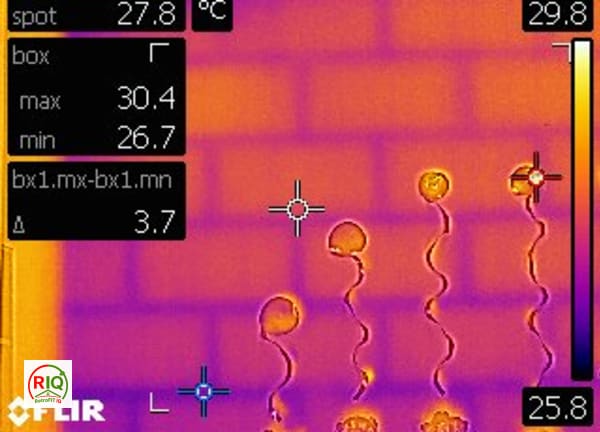
Thermal Bridging Visible Through Masonry Blockwork Wall

Thermal Bridge at Internal Corner Wall Junction

Sample Building Performance Investigation Report — Thermal Imaging

Thermal Bridge at Wall-Ceiling Junction Near Window

Airtightness Testing in a Stratford Victorian Terrace

Internal door head and reveal next to a framed picture on a warmer external wall
No related investigations yet.
Browse all investigationsFrequently asked questions
Is spray foam insulation in my loft a problem?+
It can be — spray foam sprayed onto the rafters can block the ventilation a roof needs to dry, trap moisture against the timbers and risk rot, and it hides defects from inspection, which is why lenders and surveyors often flag it. But whether it is actually causing harm depends on the foam type, the application and the roof's moisture and ventilation, so it should be assessed rather than assumed.
Why do mortgage lenders worry about spray foam?+
Because it conceals the roof timbers and covering so their condition cannot be verified, and because it can impair the roof's ability to dry, risking hidden decay and costly remediation. Many lenders therefore decline or qualify lending where foam is present unless it is properly assessed and documented.
What is the difference between open-cell and closed-cell foam?+
Open-cell foam is softer and more vapour-open, so some moisture can pass through it; closed-cell foam is rigid and largely vapour-closed, so moisture reaching the timber cannot easily dry out. Closed-cell bonded to the rafters tends to carry the higher risk, but both impede the drying that ventilation provided.
Does spray foam always cause rot?+
No. Whether decay occurs depends on the moisture supply, the temperatures and any residual drying — so some installations remain sound while others fail. That is exactly why a measured assessment of the roof's moisture, ventilation and timber condition is needed, rather than assuming from the presence of foam.
Should I remove it?+
Not blindly. An assessment first establishes whether the installation is benign, at risk or failing. Depending on the findings, the right step may be to improve ventilation, leave a sound installation alone, or remove the foam and reinstate a correctly insulated, ventilated roof — and to document the decision for lenders or buyers.
Can you assess my roof before I sell?+
Yes. We assess the foam type, the roof's moisture and ventilation, and the accessible timber condition, judge whether it is performing safely, and document the findings — which both informs your decision and provides evidence a lender or buyer can rely on.
Stop guessing — find the real cause
Do not spend money fixing symptoms before you understand the cause. Every home behaves differently, and the only reliable way to know what is happening in yours is professional building performance diagnostics. At RetrofitIQ we verify buildings using the right combination of investigations:
- Thermal imaging
- Blower door testing
- Moisture & dew point readings
- Ventilation review
- Building physics assessment
- Passive House methodology