
Can I claim against my developer for a cold or damp new build?
If a new build is persistently cold, draughty or damp, you may well have grounds to raise it with the developer or warranty provider — but a claim succeeds on evidence, not on how the home feels. The decisive question is whether the property was actually built to the design and the standards it was sold against: whether the insulation, airtightness and ventilation are genuinely as specified, or whether defects in workmanship have left the home under-performing. That is a measurable matter. A performance investigation — airtightness testing, thermal imaging and moisture and ventilation assessment — turns a subjective complaint of a cold or damp house into documented proof of where and how the build falls short, which is what a developer or warranty body will respond to.
 Reviewed by George Sora, Certified Passive House DesignerUpdated June 2026
Quick answer & key takeaways
8 min read- A claim depends on proving the home was not built as designed or to standard.
- Feeling cold or damp is not evidence; measured performance is.
- Airtightness testing, thermal imaging and moisture logging document the defects.
- Common faults are missing insulation, poor airtightness and ventilation not commissioned.
- Biggest misconception: the warranty automatically covers comfort. It covers defects you must evidence.
- Retrofit IQ's approach: measure the performance, identify the build defects and document them.
What this usually means
A new home is sold against a design and a set of regulatory and warranty standards: a specified level of insulation, a target airtightness, and a ventilation system sized and commissioned to remove moisture and supply fresh air. When the finished house is cold, draughty or damp, the usual reason is not that the design was inadequate but that the build did not match it — insulation left out, compressed or gapped; the airtightness layer punctured and not sealed; or the ventilation system installed but never properly commissioned, so it does not move the air it was meant to. These are construction defects, and they are the basis on which a claim against the developer or the warranty provider rests.
The difficulty is that comfort complaints alone rarely move a developer. 'The house is freezing' or 'we keep getting condensation' describes a symptom, and a developer can attribute symptoms to how you heat or ventilate the home. What changes the conversation is evidence that the building itself does not perform as it should: an airtightness test result worse than the design figure, thermal images showing insulation missing where it was specified, or ventilation measurements showing the system moving far less air than required. This shifts the question from how the house feels to whether it was built correctly — a matter the developer and the warranty body are obliged to take seriously, because it concerns compliance with the design and the standards, not your lifestyle.
Establishing that proof is a building-physics investigation. A blower door test measures the actual airtightness and locates the leakage paths; thermal imaging maps where insulation is missing, slumped or bridged; and moisture and ventilation assessment shows whether condensation is being driven by a failed or uncommissioned ventilation system rather than by occupancy. Documented together, these findings identify specific, attributable defects and link them to the cold or damp you are experiencing. That evidence pack is what supports a snagging claim, a warranty notification or, if necessary, a formal dispute — and just as importantly, it tells you precisely what must be put right, so any remediation actually resolves the problem rather than masking it.
Common causes
Missing or compromised insulation
Insulation left out, gapped or compressed during the build leaves cold areas and heat loss.
Poor airtightness workmanship
A punctured or unsealed airtightness layer causes draughts and heat loss beyond the design figure.
Ventilation not commissioned
An MVHR or extract system installed but never balanced moves too little air to clear moisture.
Thermal bridges at junctions
Poorly detailed junctions create cold surfaces that condense and feel cold.
Build not matching the design
The decisive defect is the finished home performing below the design and the standards it was sold against.
Signs and symptoms
Persistently cold or draughty rooms
A new home that will not warm up points to insulation or airtightness defects.
Condensation and mould early on
Damp in a new build often reflects ventilation that was not commissioned.
High heating bills from new
Running costs above expectation suggest the fabric is leaking heat beyond the design.
Cold spots and patterns on walls
Localised cold areas indicate missing insulation or thermal bridges.
Ventilation that seems to do nothing
Stuffy, humid air despite a fitted system suggests it is not balanced or working.
What most people check first
- Whether the symptoms are continuous and not explained by how you heat or ventilate.
- Whether the ventilation system was ever commissioned and is working.
- Whether cold patches and draughts suggest insulation or airtightness defects.
- What design figures and standards the home was sold against, for comparison.
What most people miss
- That a claim needs measured evidence, not a description of discomfort.
- That the warranty covers defects you must demonstrate, not comfort itself.
- That uncommissioned ventilation is a frequent, provable cause of new-build damp.
- That the evidence also tells the developer exactly what to put right.
The building physics
A new dwelling's thermal and moisture performance is determined by three measurable properties: the continuity of its insulation, its airtightness, and the effectiveness of its ventilation. Insulation only performs if it is continuous and in contact with the airtight layer; gaps, compression and bypasses let heat short-circuit the insulation and create cold surfaces. Airtightness governs the uncontrolled air exchange that carries heat out and draughts in, and is set by workmanship at junctions and penetrations far more than by the headline specification. Ventilation must be both installed and commissioned — balanced to deliver the designed flow rates — or it cannot remove the moisture a household generates. Each of these is a quantity that can be tested against the design value.
When a new build under-performs, the cause is usually a shortfall in one or more of these measured quantities relative to what was designed and certified. A blower door test that returns a worse air-permeability result than the design figure is direct evidence of an airtightness defect and, with smoke or thermal tracing, locates the leakage. Thermal imaging under a temperature difference reveals where insulation is absent or bridged as distinct cold patterns. Ventilation measurement shows whether the system achieves its commissioning flow rates; a system delivering a fraction of the design airflow explains condensation and poor air quality that occupants are wrongly told to manage by opening windows. These are objective comparisons between as-built and as-designed performance.
The investigation's role is to convert the lived symptom into this objective, attributable evidence and to connect each defect to its effect. Documenting that the airtightness fails the design figure, that insulation is missing at identifiable locations, or that the ventilation was never commissioned establishes that the home was not built as specified — the basis of a claim under the contract and the warranty. The same evidence defines the correct remediation: sealing the leakage, reinstating the insulation, or commissioning the ventilation. This is why a measured building-physics investigation is the practical route to both a successful claim and a genuinely fixed home, in contrast to comfort complaints that a developer can deflect and remediation that, undirected, often fails to address the real fault.
How to build a claim for a cold or damp new build
Replace comfort complaints with measured evidence: test the airtightness, map the insulation, and assess the ventilation, then document the defects against the design so the developer or warranty must respond.
- 01
Record the symptoms and standards
Document the cold, draughts or damp and the design figures and standards the home was sold against.
- 02
Test the airtightness
Use a blower door test to measure the actual air permeability and locate the leakage paths.
- 03
Map the insulation
Use thermal imaging to find where insulation is missing, slumped or bridged.
- 04
Assess the ventilation
Check whether the system was commissioned and is achieving its design flow rates.
- 05
Document the defects
Compile the measured evidence linking each defect to the cold or damp you experience.
- 06
Submit and direct the remedy
Use the evidence pack for the snagging or warranty claim and to specify the correct remediation.
How to prevent it coming back
- Have the airtightness, insulation and ventilation measured early, while still in warranty.
- Keep the design figures and standards the home was sold against.
- Confirm the ventilation system was actually commissioned and works.
- Use the evidence to direct remediation, not just to complain.
How Retrofit IQ investigates this
We measure how the new build performs against its design and document the defects, so you have the evidence for a claim and a clear remediation.
Do not spend money fixing symptoms before you understand the cause — investigate first, then build with confidence.
Do I need a professional investigation?
If a new build is persistently cold, draughty or damp and you intend to raise it with the developer or warranty provider, a performance investigation is worth carrying out while the home is in warranty. Measuring the airtightness, mapping the insulation and assessing the ventilation documents whether the home was built as designed — the evidence a claim requires, and the basis for putting the defects right.
Prove your new build underperforms
We measure the home against its design and certification, building the evidence pack that reframes 'lifestyle' as a covered defect.
- Blower door test vs the design figure
- Thermal imaging & ventilation measurement
- Independent evidence pack for your claim
Where to go next
Relevant services
Related comparisons
From the Academy
Related case studies
Related problems you may also have
Evidence from Real Projects (18)
Real project and investigation images from our own fieldwork, matched to this page — not stock photography.

Sample Building Performance Investigation Report — Thermal Imaging
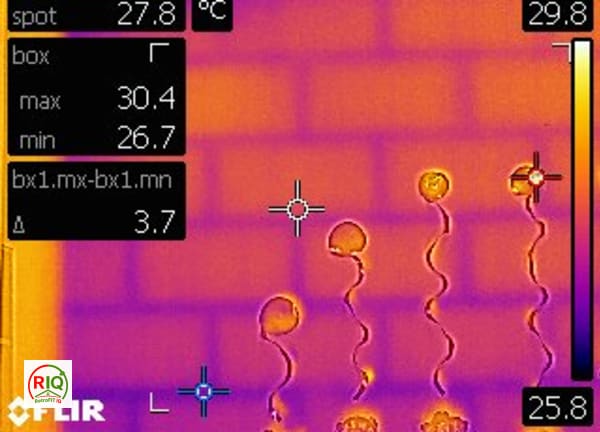
Thermal Bridging Visible Through Masonry Blockwork Wall
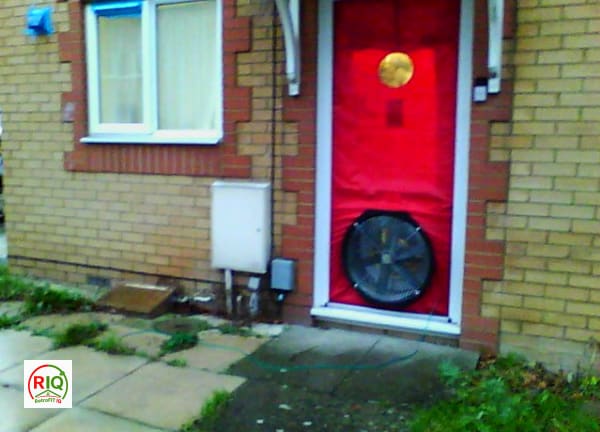
Blower Door Airtightness Test Setup

Thermal Bridge at Internal Corner Wall Junction

Thermal Bridge at Wall-Ceiling Junction Near Window

Airtightness Testing in a Stratford Victorian Terrace
No related investigations yet.
Browse all investigationsFrequently asked questions
Can I claim against my developer for a cold or damp new build?+
Potentially, yes — but the claim succeeds on evidence that the home was not built as designed, not on how cold or damp it feels. Measuring the airtightness, insulation and ventilation documents whether there are construction defects, which is what the developer or warranty provider must respond to.
Why is feeling cold or damp not enough?+
Because a developer can attribute symptoms to how you heat or ventilate the home. What changes the conversation is objective proof — an airtightness test failing the design figure, thermal images showing missing insulation, or ventilation moving too little air — that the building itself does not perform as specified.
What are the most common provable defects?+
Insulation left out, compressed or gapped; the airtightness layer punctured and unsealed; and ventilation systems installed but never commissioned, so they move far less air than required. All three are measurable and frequently behind new-build cold and damp.
Does the warranty automatically cover this?+
A warranty covers defects, but you generally have to identify and evidence them. It does not guarantee comfort in the abstract — so a measured investigation that demonstrates the home was not built to the design and standards is what activates it.
What evidence do I actually need?+
A blower door test result against the design figure, thermal imaging of the insulation defects, and ventilation measurements showing commissioning flow rates, documented together and linked to the cold or damp you experience. That pack supports a snagging or warranty claim and a formal dispute if needed.
Will the investigation also tell me how to fix it?+
Yes. The same measurements that prove the defects define the correct remediation — sealing the leakage, reinstating the insulation, or commissioning the ventilation — so the work that follows actually resolves the problem rather than masking it.
Stop guessing — find the real cause
Do not spend money fixing symptoms before you understand the cause. Every home behaves differently, and the only reliable way to know what is happening in yours is professional building performance diagnostics. At RetrofitIQ we verify buildings using the right combination of investigations:
- Thermal imaging
- Blower door testing
- Moisture & dew point readings
- Ventilation review
- Building physics assessment
- Passive House methodology