Does insulation really save money?
Insulation does save money — but only when it is put where your home actually loses heat, and in the right order. Heat loss is not spread evenly, so insulating the elements that lose the most (often the roof, then the worst walls and floors) pays back well, while spending on an element that loses little, or insulating without addressing air leakage and thermal bridges, saves far less than expected. The honest answer is that insulation is one of the best investments in a home — provided it is targeted by measurement rather than guesswork.
 Reviewed by George Sora, Certified Passive House DesignerUpdated July 2026
Quick answer & key takeaways
7 min read- Insulation saves money when it targets where the home actually loses heat.
- Heat loss is uneven, so the biggest savings come from the worst-performing elements.
- Insulating the wrong element, or ignoring air leakage, saves far less than expected.
- Measuring the heat loss first is what makes insulation pay.
- Biggest misconception: any insulation saves the same. Targeting decides the payback.
- Retrofit IQ's approach: measure where heat escapes, then insulate the priorities in order.
What this usually means
Insulation saves money by slowing the heat that escapes through the building fabric, so less energy is needed to keep the home warm. The size of the saving depends on how much heat was being lost through the element you insulate: insulating a roof that was losing a great deal of heat yields a large, fast-paying saving, while adding insulation to an element that already performs reasonably, or that loses little, yields a small one. Because heat loss is distributed unevenly around a home, where you insulate matters as much as whether you insulate.
This is why blanket assumptions mislead. Topping up loft insulation is often cheap and pays back quickly because roofs lose a lot of heat; solid-wall insulation can save substantially where the walls are the dominant loss, but is a bigger investment that must be targeted and detailed well; floor insulation pays where floors are cold and losing heat. Spending money on an element that was not a major loss, or insulating one part while leaving the biggest loss untouched, gives a disappointing return — not because insulation does not work, but because it was not put where the heat was actually going.
Insulation also only delivers its full saving when air leakage and thermal bridges are addressed alongside it. A well-insulated but draughty home still loses heat through the leaks, and thermal bridges at junctions bypass the insulation and can cause cold spots and condensation. So the most cost-effective approach is to measure where the home loses heat — by calculation, thermal imaging and a blower door test — and then insulate and seal the priorities in order. Done this way, insulation is among the best-value improvements you can make; done by guesswork, it can underwhelm. The measurement is what turns it into a reliable saving.
Common causes
Uneven heat loss
Heat escapes unevenly, so savings depend on insulating the elements that lose the most.
Insulating the wrong element
Spending on an element that loses little gives a small, slow return.
Ignoring air leakage
A well-insulated but draughty home still loses heat, undercutting the saving.
Thermal bridges left untreated
Junctions that bypass the insulation reduce its effectiveness and cause cold spots.
No measurement before spending
Insulating by guesswork rather than measured heat loss misses the biggest savings.
Signs and symptoms
High bills despite some insulation
Large bills with insulation already present suggest it was not put where the heat is lost.
Cold rooms with insulated loft
Cold rooms despite loft insulation indicate the loss is in the walls, floor or leaks.
Draughts alongside insulation
Persistent draughts show air leakage is undercutting the insulation's saving.
Cold spots at junctions
Cold patches at corners and junctions reveal thermal bridges bypassing the insulation.
Disappointing savings after insulating
Smaller-than-expected savings point to the wrong element or unaddressed leakage.
What most people check first
- Which elements lose the most heat in your specific home.
- Whether air leakage is undercutting any existing insulation.
- Whether thermal bridges are bypassing the insulation.
- Whether the insulation spend is targeted by measurement or guesswork.
What most people miss
- That savings depend on insulating where the home actually loses heat.
- That insulating the wrong element gives a poor return.
- That air leakage and thermal bridges must be addressed for full savings.
- That measuring first is what makes insulation pay.
The building physics
Fabric heat loss through an element is proportional to its area, its U-value and the temperature difference, so the energy saved by insulating is proportional to the reduction in U-value times the area times the heating degree-time. Insulating a high-U-value element with a large area — a poorly insulated roof or a cold solid wall — produces a large absolute reduction and a strong payback; improving an element that is already reasonably insulated yields diminishing returns, because the U-value reduction is smaller. This is why the distribution of heat loss across a home, not the act of insulating per se, governs the return on each measure.
Two effects erode savings if ignored. Air leakage loss is largely independent of insulation: warm air escaping through gaps carries heat regardless of how well the solid fabric is insulated, so a leaky insulated home keeps losing heat through infiltration. Thermal bridges — junctions and penetrations where the insulation is bypassed by more conductive paths — both increase heat loss locally and lower surface temperatures, risking condensation; they can significantly reduce the effective performance of an otherwise well-insulated element. Addressing leakage and bridging alongside insulation is therefore necessary to realise the full predicted saving.
The implication is that cost-effective insulation is a targeting exercise. A measured assessment — a heat-loss calculation to quantify each element's contribution, thermal imaging to locate defects and bridges, and a blower door test to quantify leakage — identifies where the heat is actually going and therefore where each pound of insulation spend yields the most saving. Sequencing then follows: tackle the largest, cheapest-to-fix losses first (often loft, then the worst walls and floors), seal the leakage, and treat the bridges. This investigation-first method is what reliably turns insulation into a sound financial return, in contrast to untargeted spending that may insulate the wrong things.
How to make insulation actually save money
Target it by measurement: find where your home loses the most heat, then insulate those priorities in order while sealing leakage and treating thermal bridges.
- 01
Measure where heat is lost
Use a heat-loss calculation, thermal imaging and a blower door test to find the biggest losses.
- 02
Insulate the priorities first
Tackle the largest, best-value losses — often the loft, then the worst walls and floors.
- 03
Seal the air leakage
Reduce draughts so the insulation's saving is not lost through infiltration.
- 04
Treat thermal bridges
Address junctions that bypass the insulation to recover its full effectiveness and avoid cold spots.
- 05
Detail the insulation well
Install continuously without gaps or compression so it performs as intended.
- 06
Verify the saving
Confirm comfort and reduced energy use after the work to check the targeting was right.
How to prevent it coming back
- Insulate where the home actually loses heat, not by assumption.
- Seal air leakage alongside insulating.
- Treat thermal bridges so insulation performs fully.
- Sequence measures from the biggest, best-value losses first.
How Retrofit IQ investigates this
We measure where the home loses heat so insulation spend targets the biggest savings, in the right order.
Do not spend money fixing symptoms before you understand the cause — investigate first, then build with confidence.
Do I need a professional investigation?
Before investing in insulation, it is worth measuring where your home actually loses heat, because that is what determines the return. A heat-loss assessment with thermal imaging and a blower door test shows which elements to insulate first and where leakage and bridges must be addressed, so the money targets the biggest savings.
Where to go next
Relevant services
Related comparisons
From the Academy
Evidence from Real Projects (26)
Real project and investigation images from our own fieldwork, matched to this page — not stock photography.

Sample Building Performance Investigation Report — Thermal Imaging
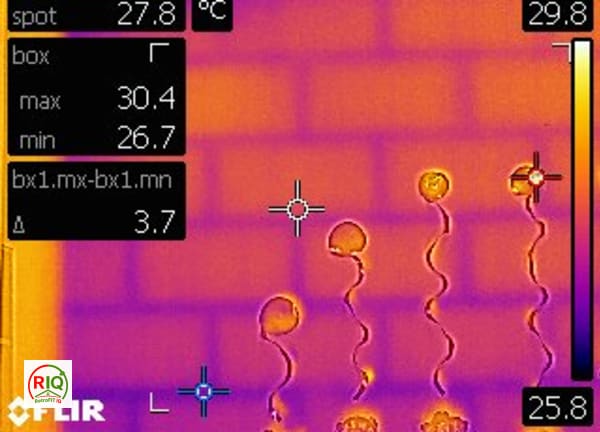
Thermal Bridging Visible Through Masonry Blockwork Wall
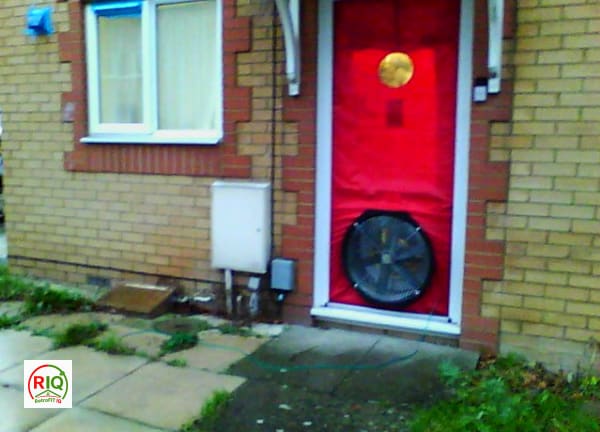
Blower Door Airtightness Test Setup

Thermal Bridge at Internal Corner Wall Junction

Thermal Bridge at Wall-Ceiling Junction Near Window

Ceiling / external-wall junction
No related investigations yet.
Browse all investigationsFrequently asked questions
Does insulation really save money?+
Yes — when it is put where your home actually loses heat and in the right order. Insulating the elements that lose the most (often the roof, then the worst walls and floors) pays back well; insulating the wrong element or ignoring air leakage saves far less. Targeting by measurement is what makes it pay.
Why didn't my insulation reduce my bills much?+
Usually because it was not put where the heat was actually being lost, or because air leakage and thermal bridges were left unaddressed. Insulation only delivers its full saving when it targets the biggest losses and the draughts and bridges are tackled too.
Which insulation gives the best return?+
It depends on your home, but topping up loft insulation is often cheap and pays back quickly because roofs lose a lot of heat. Wall and floor insulation pay where those are the dominant losses. A measured assessment shows the best-value order for your home.
Do I need to seal draughts as well?+
Yes — air leakage loss is largely independent of insulation, so a well-insulated but draughty home keeps losing heat through the gaps. Sealing leakage alongside insulating is needed to realise the full saving.
How do I know where to insulate?+
By measuring where the home loses heat — a heat-loss calculation, thermal imaging and a blower door test reveal the biggest losses, defects and leaks, so insulation spend targets the elements that will save the most.
Is insulation worth it if I have a heat pump?+
Very much — reducing heat loss lowers the flow temperature a heat pump needs, improving its efficiency and running cost, so insulation pays back through both reduced demand and a more efficient heat pump.
How do you make sure insulation pays?+
We measure where your home actually loses heat, sequence the insulation from the biggest, best-value losses, address air leakage and thermal bridges, and verify the saving, so the spend targets the largest returns.
Stop guessing — find the real cause
Do not spend money fixing symptoms before you understand the cause. Every home behaves differently, and the only reliable way to know what is happening in yours is professional building performance diagnostics. At RetrofitIQ we verify buildings using the right combination of investigations:
- Thermal imaging
- Blower door testing
- Moisture & dew point readings
- Ventilation review
- Building physics assessment
- Passive House methodology