
Why are my sash windows so draughty?
Traditional sliding sash windows are draughty largely by design: they work by two sashes sliding past each other in channels, and those moving joints, together with the original counterweight boxes, leave gaps that let air leak in and out. Decades of paint, shrinkage and wear usually make it worse. The good news is that a well-made sash window can almost always be draught-proofed and kept — you rarely need to replace it to stop the draughts.
 Reviewed by George Sora, Certified Passive House DesignerUpdated June 2026
Quick answer & key takeaways
7 min read- Sash windows are inherently draughty because the sliding sashes need gaps to move.
- The hollow counterweight boxes and worn, shrunken timber add further air-leakage paths.
- Most draughty sashes can be draught-proofed and kept, not replaced.
- Sealing the gaps cuts heat loss and draughts while preserving the original windows.
- Biggest misconception: a draughty sash means a failed window. Usually it just needs sealing.
- Retrofit IQ's approach: locate the leakage and seal it, keeping the original windows where possible.
What this usually means
A sliding sash window is a clever piece of engineering: two glazed sashes slide vertically past one another in side channels, counterbalanced by weights hidden in boxes at the sides. To slide freely, the sashes must have clearance, so there are deliberate gaps along the meeting rail where they overlap, down the sliding sides, and at the head and sill. Each of these gaps is a potential air-leakage path, which is why even a sound sash window is naturally more draughty than a fixed or tightly seated casement.
Age then makes it worse. The counterweight boxes are essentially hollow voids connected to the outside and to cold wall cavities, so they channel air; timber shrinks and warps over a century of seasons, opening the joints; putty and paint crack; and repeated painting and sanding loosen the fit. Cords fray, sashes rattle, and the meeting rail no longer closes tightly. The cumulative effect is a window that whistles and leaks far more than its design alone would, while the felt draught is often strongest at the meeting rail in the middle and around the sliding edges.
The important point is that this is almost always fixable without replacement. Sash windows can be overhauled and draught-proofed: brush or compression seals are routed discreetly into the sliding channels, the meeting rail and the head and sill; the boxes can be sealed off from the leakage paths; and the sashes re-corded and eased so they run properly and close tightly. Done well, this transforms a cold, rattling sash into a snug, smooth-running window while preserving its character — which is exactly what you want in a period or listed home, where the original windows are part of the building's value.
Common causes
Sliding clearances by design
The gaps that let the sashes slide are inherent air-leakage paths along the sides, meeting rail and sill.
Hollow counterweight boxes
The weight boxes are voids open to the outside and wall cavities, channelling cold air into the room.
Shrunken, warped timber
A century of seasonal movement opens joints and stops the sashes seating tightly.
Worn cords and loose fit
Frayed cords, rattling sashes and a poorly closing meeting rail all increase leakage.
Cracked putty and paint build-up
Failed putty lets air past the glass, while thick old paint distorts the fit.
Signs and symptoms
Draught felt at the meeting rail
Air leaking where the two sashes overlap in the middle is a classic sash-window draught.
Rattling sashes in the wind
Loose, rattling sashes show worn fit and clearances that let air leak around the sides.
Cold air down the sides
Draughts along the sliding channels and from the counterweight boxes chill the room edges.
Whistling on windy days
Audible whistling through the gaps confirms significant air leakage to seal.
Cords frayed or broken
Failed cords and sashes that will not stay put indicate an overhaul is due.
What most people check first
- Where the draught is actually felt — meeting rail, sides, head or sill.
- Whether the counterweight boxes are leaking cold air into the room.
- Whether the sashes are sound timber worth overhauling, or rotten beyond repair.
- Whether cords, putty and paint need attention as part of the work.
What most people miss
- That sash windows are draughty by design, so sealing — not replacement — is usually the answer.
- That the hollow counterweight boxes are a major, hidden leakage path.
- That a well-made sash can be draught-proofed and kept in nearly every case.
- That sealing must be balanced with adequate room ventilation.
The building physics
Air leakage through a sash window is pressure-driven flow through the clearances the design requires. Wind and stack pressure push air through the gaps along the meeting rail, the sliding stiles, and the head and sill, and through the staff and parting beads. The counterweight boxes make this worse because they are voids connected both to the outside and, often, to the wall construction, so they act as conduits that draw cold air into the room. The total leakage is the sum of all these paths, which is why a single fix rarely cures a draughty sash and a systematic seal-up is needed.
Draught-proofing addresses each path in turn. Brush (pile) seals run in routed grooves along the sliding stiles and the meeting rail allow the sashes still to move while closing the clearances; compression seals suit the head and sill; and sealing or stuffing the counterweight boxes cuts off that hidden conduit. Because the seals close the gaps without preventing operation, the window stays a working sliding sash but leaks far less, raising the inner surface temperature, cutting heat loss and removing the felt draught and whistling.
As with any airtightness improvement, ventilation must be considered alongside. Old sash windows accidentally ventilate a room through their leaks; sealing them removes that uncontrolled airflow, so if the home relies on it, controlled ventilation — trickle provision or mechanical extract where appropriate — should be ensured so that humidity does not build and condensation appear elsewhere. Within that 'seal tight, ventilate right' approach, overhauling and draught-proofing sash windows is a high-value, conservation-friendly upgrade: it keeps the historic windows, restores smooth operation, and delivers most of the comfort benefit of replacement without the cost or loss of character.
How to stop draughts in sash windows
Locate every leakage path and seal it while keeping the window working, overhauling the sashes as needed — and ensure the room is still adequately ventilated.
- 01
Locate the leakage paths
Identify draughts at the meeting rail, sliding sides, head, sill and counterweight boxes.
- 02
Draught-proof the sliding joints
Route brush seals into the stiles and meeting rail so the sashes still slide but no longer leak.
- 03
Seal the head, sill and boxes
Fit compression seals at the head and sill and close off the hollow counterweight boxes.
- 04
Overhaul the sashes
Re-cord, ease and re-putty the sashes so they run smoothly and close tightly.
- 05
Consider slim secondary glazing
Where more warmth or noise reduction is needed, add discreet secondary glazing behind the sash.
- 06
Maintain ventilation
Provide controlled ventilation so sealing the windows does not raise humidity and cause condensation.
How to prevent it coming back
- Draught-proof and overhaul sash windows rather than replacing them.
- Seal the counterweight boxes, not just the visible gaps.
- Keep cords, putty and paint maintained so the fit stays tight.
- Balance sealing with adequate room ventilation.
How Retrofit IQ investigates this
We locate every leakage path in the sash window and seal it while keeping it working, and check that ventilation stays adequate.
Do not spend money fixing symptoms before you understand the cause — investigate first, then build with confidence.
Do I need a professional investigation?
Draughty sash windows are well worth investigating, because they can nearly always be sealed and kept rather than replaced. Locating where the air actually leaks — and checking the counterweight boxes and the room's ventilation — ensures the draught-proofing is thorough and the original windows are preserved.
Where to go next
Relevant services
Related comparisons
From the Academy
Related case studies
Evidence from Real Projects (20)
Real project and investigation images from our own fieldwork, matched to this page — not stock photography.
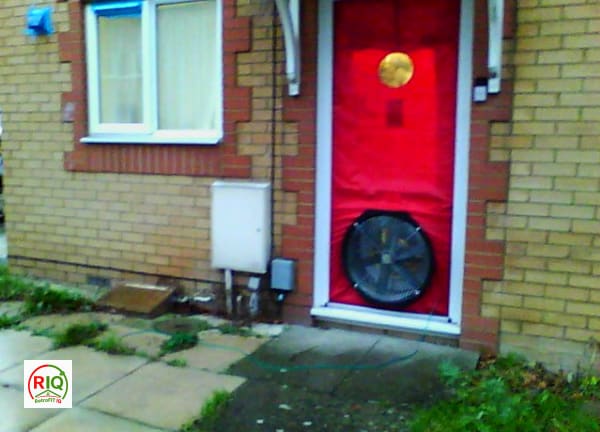
Blower Door Airtightness Test Setup

Thermal Bridging Visible Through Masonry Blockwork Wall

Sample Building Performance Investigation Report — Thermal Imaging

Thermal Bridge at Wall-Ceiling Junction Near Window

Thermal Bridge at Internal Corner Wall Junction

Ceiling / external-wall junction
No related investigations yet.
Browse all investigationsFrequently asked questions
Why are my sash windows so draughty?+
Because sliding sashes need clearances to move, the design leaves gaps along the meeting rail, sides, head and sill, and the hollow counterweight boxes channel cold air in. Age, shrinkage and worn fit make it worse, but it can almost always be sealed.
Can draughty sash windows be fixed without replacing them?+
Yes, in nearly every case. Brush and compression seals are fitted into the sliding joints, meeting rail, head and sill, the counterweight boxes are sealed, and the sashes are overhauled — keeping the original window working and snug.
Where do sash windows leak the most?+
Commonly at the meeting rail where the two sashes overlap, down the sliding sides, and through the hollow counterweight boxes, with extra leakage where cords are worn and the sashes rattle.
Will draught-proofing spoil my period windows?+
No — done properly the seals are routed in discreetly and the window keeps its appearance and operation. It is a conservation-friendly upgrade that preserves the original windows while removing the draughts.
Should I add secondary glazing as well?+
If you want more warmth or noise reduction than draught-proofing alone gives, slim secondary glazing behind the sash is an excellent complement, keeping the original window while improving comfort and quiet.
Will sealing my sash windows cause condensation?+
Only if ventilation is neglected. Old sashes accidentally ventilate the room, so when you seal them you should ensure controlled ventilation remains adequate, in line with 'seal tight, ventilate right'.
How do you stop draughts in sash windows?+
We locate every leakage path with smoke and thermal imaging, seal the sliding joints, meeting rail, head, sill and boxes while keeping the window working, overhaul the sashes, and make sure ventilation stays adequate.
Stop guessing — find the real cause
Do not spend money fixing symptoms before you understand the cause. Every home behaves differently, and the only reliable way to know what is happening in yours is professional building performance diagnostics. At RetrofitIQ we verify buildings using the right combination of investigations:
- Thermal imaging
- Blower door testing
- Moisture & dew point readings
- Ventilation review
- Building physics assessment
- Passive House methodology