
Why are my windows misted up between the panes?
Misting between the two panes of a double-glazed window is the unmistakable sign of a blown (failed) sealed unit — the airtight seal around the edge has broken down, the dry gas or air inside has been lost, and moisture is now condensing inside the cavity where you cannot wipe it away. Unlike condensation on the room-side surface, this is not a ventilation problem; it is a failed component, and the only real fix is to replace the glass unit, though usually not the whole window.
 Reviewed by George Sora, Certified Passive House DesignerUpdated June 2026
Quick answer & key takeaways
7 min read- Misting between the panes means the sealed unit has blown — its edge seal has failed.
- It is a failed component, not a condensation or ventilation problem in the room.
- The unit's insulating gas and dryness are lost, so it now performs like worse glazing.
- You normally replace just the glass unit, not the whole window or frame.
- Biggest misconception: it can be cleared or ventilated away. The cavity is sealed shut.
- Retrofit IQ's approach: confirm it is a blown unit, then advise repair within a fabric-first plan.
What this usually means
A double-glazed window is two panes of glass separated by a spacer bar and bonded with an airtight seal around the perimeter, with dry air or an insulating gas such as argon trapped in the cavity. A sachet of desiccant in the spacer keeps that cavity bone dry. When the perimeter seal fails — through age, heat cycling, poor drainage or manufacturing defect — outside air and moisture work their way into the cavity, the desiccant becomes saturated, and water vapour condenses on the inner faces of the glass as misting, streaks or a permanent cloudy film.
Because the moisture is sealed between the panes, you cannot reach it: wiping the room-side glass does nothing, and no amount of household ventilation will clear it. The misting comes and goes with temperature and sun, often worst on cold mornings or after sun warms the trapped damp, but the underlying fault is permanent and tends to worsen, sometimes leaving mineral deposits etched on the glass. This is the key difference from ordinary window condensation, which forms on the room-side surface and is a humidity-and-ventilation matter.
A blown unit also quietly costs you performance. Once the seal has gone, any insulating gas escapes and the cavity is no longer dry, so the unit's U-value worsens and the glass runs colder — which can then cause more room-side condensation around it too. So while a single misted pane is mostly a cosmetic and minor-efficiency issue, it is a genuine defect. The sensible response is to confirm it really is a blown unit and then replace the glass unit itself, which is far cheaper than a whole new window.
Common causes
Failed edge seal
Age and repeated heat cycling break down the perimeter seal, letting moist air into the sealed cavity.
Saturated desiccant
Once moisture enters, the drying agent in the spacer fills up and can no longer keep the cavity dry.
Poor drainage at the frame
Water sitting in the frame rebate around the unit accelerates seal breakdown from the outside in.
Lost insulating gas
A broken seal lets argon or the dry air escape, so the unit insulates worse and the glass runs colder.
Manufacturing or installation defect
A weak original seal or a unit knocked during fitting can blow far earlier than its expected life.
Signs and symptoms
Cloudiness you cannot wipe off
A haze or film that stays when you clean both room-side surfaces is moisture inside the sealed cavity.
Misting that changes with the weather
Fogging that appears on cold mornings or after sun, then clears, signals a blown unit reacting to temperature.
Streaks or water droplets inside the glass
Visible runs or droplets between the panes confirm the cavity is no longer sealed and dry.
Permanent mineral marks on the glass
White, etched deposits inside the cavity show long-term moisture and an advanced failure.
One pane colder than its neighbours
A blown unit that has lost its gas often feels colder, hinting the seal has gone even before heavy misting.
What most people check first
- Whether the misting is inside the sealed cavity (cannot be wiped) or on the room-side surface (can).
- Which specific units are affected, so only those are replaced.
- Whether water is sitting in the frame rebate and draining poorly.
- Whether the frames themselves are sound, so only the glass units need replacing.
What most people miss
- That misting between the panes is a failed component, not a ventilation problem.
- That it cannot be cleared, ventilated or wiped away — the cavity is sealed.
- That usually only the glass unit needs replacing, not the whole window.
- That a blown unit also loses insulating gas, so the glass runs colder and performs worse.
The building physics
A sealed double-glazed unit works by trapping a still layer of low-conductivity gas between two panes, with a desiccant-filled spacer keeping the cavity dry so the gas stays clear and non-condensing. Its insulating value depends on that cavity remaining sealed and dry. The perimeter seal is therefore the critical component: as long as it holds, the unit keeps its gas and its dryness; once it fails, the physics that made it perform are undone.
When the seal breaks, two things happen. First, the insulating gas diffuses out and is replaced by ordinary air, raising the unit's U-value and lowering the inner-pane temperature. Second, humid outside air enters and, because the desiccant soon saturates, the cavity dew point is reached whenever the glass cools — so moisture condenses inside, exactly where it cannot evaporate freely or be cleaned. The visible misting is simply dew-point condensation occurring in a space you can no longer dry out.
This is why the remedy is replacement rather than treatment. Drilling and 'defogging' a unit may clear the appearance temporarily, but it cannot restore the seal, the dry desiccant or the insulating gas, so performance stays degraded and misting tends to return. Fitting a fresh sealed unit — ideally a modern low-E, argon-filled, warm-edge spacer specification — restores both the clarity and the insulation. Because the failure is in the glass unit, not the frame, this is normally a glass-only repair, which keeps the cost modest and the work targeted.
How to deal with a misted (blown) sealed unit
Confirm it is a blown unit rather than room-side condensation, then replace the affected glass units — keeping sound frames — within a sensible, fabric-first plan.
- 01
Confirm the diagnosis
Check the misting is inside the cavity and cannot be wiped from either room-side surface.
- 02
Identify the affected units
List exactly which panes have blown so only those are replaced, not the whole window.
- 03
Check the frames and drainage
Make sure the frames are sound and water is draining away, so a new unit does not blow early too.
- 04
Replace with a modern unit
Fit a low-E, argon-filled, warm-edge sealed unit to restore clarity and improve the insulation.
- 05
Address any room-side condensation
If the room also has surface condensation, treat the humidity and ventilation separately.
- 06
Keep records for warranty
Note the failure for any window warranty claim if the units are relatively new.
How to prevent it coming back
- Keep frame drainage clear so water does not sit against the seals.
- Choose quality units with good warm-edge spacers and warranties.
- Avoid trapping units against persistent standing water at the sill.
- Replace blown units promptly before they pull the glass colder and cause room-side condensation.
How Retrofit IQ investigates this
We confirm whether the misting is a blown unit or room-side condensation, and check the windows in the context of the whole home.
Do not spend money fixing symptoms before you understand the cause — investigate first, then build with confidence.
Do I need a professional investigation?
Misting between the panes is a clear sign of a blown sealed unit and is worth confirming so you replace the right units. If several have failed, or if you are also seeing room-side condensation, it is worth a wider check that the glazing and ventilation are both performing as they should.
Where to go next
Relevant services
Related comparisons
From the Academy
Related case studies
Evidence from Real Projects (16)
Real project and investigation images from our own fieldwork, matched to this page — not stock photography.
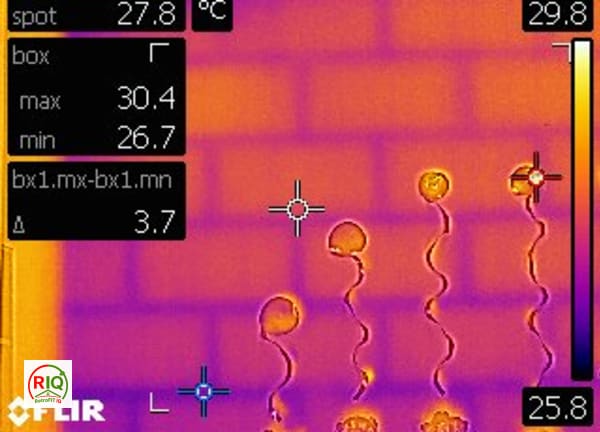
Thermal Bridging Visible Through Masonry Blockwork Wall

Sample Building Performance Investigation Report — Thermal Imaging

Thermal Bridge at Internal Corner Wall Junction

Thermal Bridge at Wall-Ceiling Junction Near Window
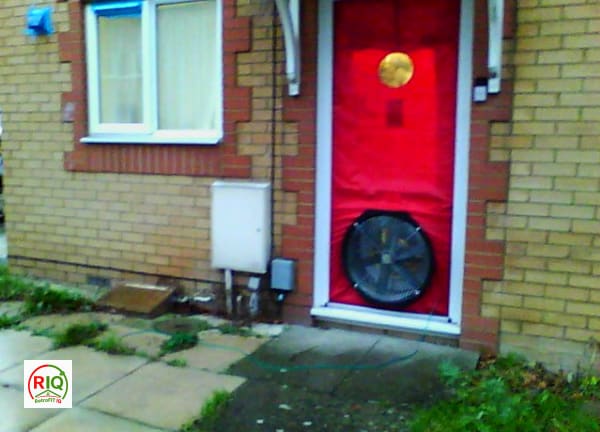
Blower Door Airtightness Test Setup

Acoustic Floor Upgrades: Mineral Wool Insulation Between Joists
No related investigations yet.
Browse all investigationsFrequently asked questions
Why are my windows misted up between the panes?+
The sealed double-glazed unit has blown — its edge seal has failed, letting moist air into the sealed cavity, where it condenses on the inner faces of the glass. It is a failed component, not a room-side condensation or ventilation problem.
Can I clear the misting myself?+
No. The moisture is inside a sealed cavity you cannot reach, so wiping the room-side glass or ventilating the room does nothing. The unit has to be replaced to restore clarity.
Do I need a whole new window?+
Usually not. The failure is in the glass unit, so normally only the sealed unit is replaced while the existing frame is kept, which is far cheaper than a complete new window.
Does a blown unit cost me money?+
A little. Once the seal fails the insulating gas escapes and the cavity is no longer dry, so the unit insulates worse and the glass runs colder — which can also trigger more room-side condensation around it.
Is 'defogging' a blown unit worth it?+
It can clear the look temporarily but cannot restore the seal, dry desiccant or insulating gas, so performance stays degraded and misting tends to return. A fresh sealed unit is the lasting fix.
Why did my unit blow so soon?+
Common reasons are a weak original seal, the unit being knocked during fitting, or water sitting in the frame rebate with poor drainage, all of which break the perimeter seal earlier than expected.
How do you confirm it is a blown unit?+
We check that the haze is inside the cavity and cannot be wiped off, look at the frames and drainage, and use thermal imaging and moisture readings to separate a sealed-unit failure from room-side condensation.
Stop guessing — find the real cause
Do not spend money fixing symptoms before you understand the cause. Every home behaves differently, and the only reliable way to know what is happening in yours is professional building performance diagnostics. At RetrofitIQ we verify buildings using the right combination of investigations:
- Thermal imaging
- Blower door testing
- Moisture & dew point readings
- Ventilation review
- Building physics assessment
- Passive House methodology