
Why is my north-facing room always cold?
A north-facing room feels colder because it receives little or no direct sunlight, so it misses the free solar warmth that south- and west-facing rooms enjoy through the day — and it is often the most weather-exposed side of the house too. But while the lack of sun explains why it starts colder and warms up more slowly, a room that is persistently and uncomfortably cold is usually telling you something about its fabric: cold external walls, heat loss through windows, air leakage, or under-heating. The orientation sets the room at a disadvantage, but it is the building's insulation, airtightness and heating that decide whether it is merely cooler or genuinely cold.
 Reviewed by George Sora, Certified Passive House DesignerUpdated June 2026
Quick answer & key takeaways
8 min read- A north-facing room gets little or no direct solar gain, so it starts colder.
- It often faces the prevailing wind and rain, increasing exposure and heat loss.
- Persistent cold, though, usually reflects the fabric — cold walls, windows and air leakage.
- Orientation explains the disadvantage; insulation and airtightness decide the comfort.
- Biggest misconception: nothing can be done about a north-facing room. The fabric is fixable.
- Retrofit IQ's approach: find why the room loses heat and warms slowly, then fix the fabric.
What this usually means
Orientation genuinely matters for how warm a room feels. South- and west-facing rooms receive direct sunlight through windows during the day, and that solar gain warms the room and its surfaces for free, often noticeably. A north-facing room receives little or no direct sun, so it loses that free heat input: it starts the day colder, warms up more slowly, and its surfaces — especially the external walls and windows — stay cooler. On its own, this means a north-facing room will tend to be a little cooler and to need its heating a bit more than a sunny room, which is normal and expected rather than a fault.
The difference between 'a bit cooler' and 'always cold and uncomfortable', however, almost always comes down to the fabric. Without solar gain to mask it, any weakness in the room's insulation and airtightness shows up more starkly: cold, poorly insulated external walls leave the surfaces chilly and draw warmth out of the room; single or draughty windows lose heat and create cold downdraughts; air leakage around the windows, floor and junctions lets cold air in; and the room may simply be under-heated relative to its heat loss. North-facing rooms also tend to be on the most weather-exposed elevation, facing the prevailing wind and rain, which increases the heat loss and can leave the walls damper and therefore colder still.
This is why the right response is not to accept the room as a lost cause but to find what is making it lose heat. The orientation cannot be changed, but the fabric can: improving the insulation of the cold external walls, upgrading or draught-proofing the windows, sealing the air leakage, and ensuring the heating matches the room's heat loss all address the persistent cold directly. An assessment that distinguishes the unavoidable effect of orientation from the fixable fabric losses — which surfaces are cold, where the air leaks, how fast the room loses heat — is what allows a north-facing room to be made genuinely comfortable rather than merely heated harder against a leaky, cold-surfaced fabric.
Common causes
No direct solar gain
A north aspect receives little sun, so the room misses the free daytime warmth sunny rooms get.
Cold, poorly insulated walls
Uninsulated external walls leave the surfaces cold and draw heat out of the room.
Heat loss through windows
Single or draughty windows lose heat and create cold downdraughts.
Air leakage
Cold air leaking in around windows, floors and junctions chills the room.
Weather exposure
Facing the prevailing wind and rain raises heat loss and can dampen the walls.
Signs and symptoms
Room cold even on sunny days
No improvement when the sun is out confirms the lack of solar gain and fabric loss.
Cold external walls
Walls cold to the touch indicate poor insulation drawing heat from the room.
Slow to warm up
A room that takes a long time to heat is losing heat as fast as it is supplied.
Draughts and cold near windows
Cold air and downdraughts at the windows reveal leakage and cold glazing.
Damp or mould on the cold wall
Condensation and mould on the cold external wall show persistently low surface temperatures.
What most people check first
- Whether the room stays cold even when other rooms catch the sun.
- Whether the external walls and windows are cold to the touch.
- Whether there are draughts around the windows, floor and junctions.
- Whether the heating matches the room's heat loss.
What most people miss
- That orientation explains the disadvantage but the fabric decides the comfort.
- That a north-facing room's losses are fixable even though the aspect is not.
- That weather exposure adds to the heat loss and damp risk.
- That cold walls and mould signal a fabric problem, not just a sunless room.
The building physics
The thermal balance of a room is the difference between its heat gains and its heat losses. Solar gain through glazing is a significant free gain during daylight for rooms with a southerly or westerly aspect, raising both the air and surface temperatures; a north-facing room receives diffuse rather than direct radiation, so this gain is small and the room relies almost entirely on its heating to offset its losses. This alone makes a north room start colder and respond more slowly, but it does not by itself make a room persistently cold — it removes the gain that would otherwise have masked the room's losses.
Those losses are set by the fabric. Heat flows out through the external walls and windows in proportion to their area, their U-values and the temperature difference, and is carried out by air leakage through gaps in the envelope. A north-facing room is typically on an exposed elevation, where higher wind speeds increase both the convective heat loss and the air infiltration, and driving rain can wet the external wall, raising its conductivity and lowering its surface temperature further. Poorly insulated walls and single or leaky glazing therefore lose heat strongly and present cold internal surfaces, which both chill the room and, by falling near the dew point, invite condensation and mould — the signature of a cold, under-insulated north wall.
Because the orientation is fixed but the fabric is not, the room is made comfortable by reducing its losses rather than only adding heat. Insulating the cold external walls raises their surface temperature and cuts the conductive loss; upgrading or draught-proofing the windows reduces glazing loss and downdraughts; sealing the air-leakage paths cuts infiltration, which is disproportionately important on an exposed elevation; and sizing the heating to the room's actual heat loss ensures it can hold temperature. An assessment that measures the heat loss, maps the cold surfaces with thermal imaging and locates the leakage separates the unavoidable effect of a sunless aspect from the fixable fabric losses, directing the work to what will actually make the room warm rather than simply running the heating harder against a leaky, cold-surfaced fabric.
How to warm up a cold north-facing room
Accept the lost solar gain but fix the fabric: insulate the cold walls, upgrade or draught-proof the windows, seal the air leakage, and match the heating to the room's heat loss.
- 01
Assess the heat loss
Establish how fast the room loses heat and through which surfaces, separating aspect from fabric.
- 02
Insulate the cold walls
Improve the external wall insulation to warm the surfaces and cut the conductive loss.
- 03
Upgrade or draught-proof the windows
Reduce glazing heat loss and cold downdraughts with better glazing or draught-proofing.
- 04
Seal the air leakage
Close the gaps around windows, floors and junctions, important on an exposed elevation.
- 05
Match the heating to the loss
Ensure the heating output and controls suit the room's heat loss so it can hold temperature.
- 06
Address any damp on the wall
Warming the cold external wall also removes the condensation and mould it attracts.
How to prevent it coming back
- Insulate and seal the exposed north elevation well.
- Keep windows draught-proofed and adequately glazed.
- Ensure the heating matches the room's heat loss.
- Warm cold surfaces to prevent condensation and mould.
How Retrofit IQ investigates this
We separate the effect of the north aspect from the fixable fabric losses, so the room can be made comfortable rather than just heated harder.
Do not spend money fixing symptoms before you understand the cause — investigate first, then build with confidence.
Do I need a professional investigation?
If a north-facing room is always cold, slow to warm, or has cold walls and mould, it is worth investigating the fabric rather than accepting the aspect. Measuring the heat loss, mapping the cold surfaces and locating the air leakage separates the unavoidable lack of sun from the fixable losses, so insulation, glazing, sealing and heating can be targeted to make the room genuinely comfortable.
Where to go next
Relevant services
Related comparisons
From the Academy
Related case studies
Evidence from Real Projects (25)
Real project and investigation images from our own fieldwork, matched to this page — not stock photography.
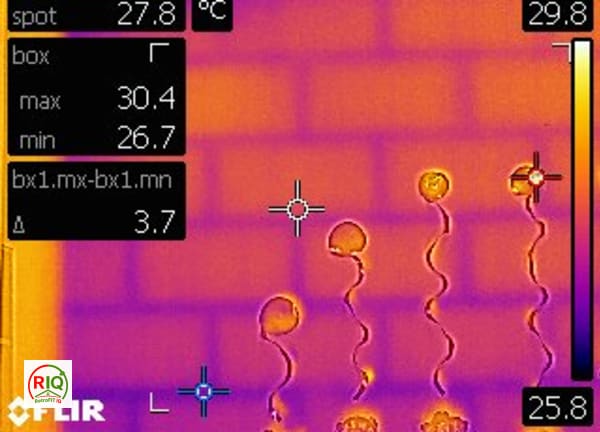
Thermal Bridging Visible Through Masonry Blockwork Wall

Acoustic Floor Upgrades: Mineral Wool Insulation Between Joists

Thermal Bridge at Internal Corner Wall Junction

Sample Building Performance Investigation Report — Thermal Imaging

Thermal Bridge at Wall-Ceiling Junction Near Window

Airtightness Testing in a Stratford Victorian Terrace
No related investigations yet.
Browse all investigationsFrequently asked questions
Why is my north-facing room always cold?+
Partly because a north aspect gets little or no direct sun, so the room misses the free solar warmth sunny rooms get and warms up more slowly. But persistent, uncomfortable cold usually reflects the fabric — cold uninsulated walls, heat loss through windows, and air leakage — on what is often the most weather-exposed side of the house. The aspect sets the disadvantage; the fabric decides the comfort.
Can I do anything about a north-facing room, or am I stuck with it?+
You can do a lot. The orientation cannot be changed, but the fabric can: insulating the cold walls, upgrading or draught-proofing the windows, sealing the air leakage, and matching the heating to the room's heat loss all address the cold directly. A north room can be made genuinely comfortable.
Why is the room cold even when it's sunny outside?+
Because a north-facing room receives little direct sunlight even on a sunny day, so it gets almost none of the solar gain that warms south- and west-facing rooms. With that free heat absent, any weakness in the insulation and airtightness shows up as persistent cold.
Why do I get mould on the north-facing wall?+
Because a cold, poorly insulated external wall — made colder by the lack of sun and the weather exposure — has surfaces near the dew point, so condensation and mould form on it. Warming the wall with insulation raises the surface temperature and removes the condensation as well as the cold.
Does facing the weather make it worse?+
Yes. North-facing rooms are often on the elevation facing the prevailing wind and rain, which increases convective heat loss and air infiltration and can wet the wall, lowering its surface temperature further. That is why sealing the leakage and insulating the wall matter especially on this side.
How do you work out what will warm it?+
We measure the room's heat loss, map the cold surfaces with thermal imaging, and locate the air leakage — which separates the unavoidable effect of the aspect from the fixable fabric losses, so we can target insulation, glazing, sealing and heating at what will actually make the room warm.
Stop guessing — find the real cause
Do not spend money fixing symptoms before you understand the cause. Every home behaves differently, and the only reliable way to know what is happening in yours is professional building performance diagnostics. At RetrofitIQ we verify buildings using the right combination of investigations:
- Thermal imaging
- Blower door testing
- Moisture & dew point readings
- Ventilation review
- Building physics assessment
- Passive House methodology