
Why is there mould on my clothes and belongings?
Mould appearing on clothes, in wardrobes, on shoes and on stored belongings means the air around them is humid and the surfaces are cold and still — usually in a wardrobe against a cold external wall, or in an unheated, poorly ventilated room. The items are not the problem; they are sitting in exactly the conditions mould needs. The fix is to lower the humidity, warm the cold surface and let air move around the belongings.
 Reviewed by George Sora, Certified Passive House DesignerUpdated June 2026
Quick answer & key takeaways
6 min read- Mould on belongings means humid air plus cold, still surfaces around them.
- Wardrobes against cold external walls are a classic location.
- Poor air movement behind and inside storage lets moisture linger.
- Items themselves are not the cause — the surrounding conditions are.
- Biggest misconception: the clothes are 'dirty'. It is a humidity and cold-surface problem.
- Retrofit IQ's approach: measure humidity and surface temperature, then warm, ventilate and allow airflow.
What this usually means
Mould needs a humid microclimate and a surface that stays damp. Inside a wardrobe or against a cold external wall, both conditions can be met: the air is humid because the room is, and the surface is cold because it backs onto an uninsulated external wall, while the enclosed, still space behind clothes or stored items means no air movement to dry it. Belongings packed against that cold surface trap a layer of humid, stagnant air, and mould colonises the items and the wall behind them.
This is why mould on belongings so often appears in a specific spot — the back of a wardrobe on an external wall, a corner used for storage, an unheated box room. Those are the coldest, stillest, most humid places. Leather, fabric and paper are organic and hold moisture readily, so they show mould quickly, but the items are simply the visible result of the surrounding conditions, not the source.
The remedy works on the microclimate, not the items. Lowering the room's humidity through ventilation, warming the cold surface so it no longer condenses, and allowing air to move around and behind storage — by pulling furniture slightly off cold walls and not over-packing — removes the conditions mould needs. Without these changes, cleaning the items only delays the return, because the cold, humid, still pocket remains.
Common causes
High room humidity
Humid room air provides the moisture that condenses in cold, still storage spaces.
Cold external wall behind storage
A wardrobe or shelving against an uninsulated external wall creates a cold surface that condenses.
Still, enclosed air
Packed wardrobes and storage stop air moving, so the humid pocket cannot dry.
Unheated, poorly ventilated rooms
Cold box rooms and spare rooms used for storage are prime locations for mould on belongings.
Items pressed against the cold surface
Belongings touching a cold wall sit in the condensation zone and absorb the moisture.
Signs and symptoms
Mould on clothes and fabrics
Mould on stored clothing reflects humid, still air around cold surfaces.
Mould on shoes, leather and bags
Organic materials show mould quickly in a damp, enclosed microclimate.
Mould on the wardrobe back or wall behind
Mould on the surface behind storage confirms a cold external wall condensing.
A musty smell in cupboards and drawers
A musty odour in enclosed storage indicates trapped humidity.
Worse in unheated, packed rooms
Mould concentrated in cold, crowded storage spaces points to still, humid conditions.
What most people check first
- Whether the storage is against a cold external wall.
- Whether the room runs humid and is poorly ventilated.
- Whether the wardrobe or storage is over-packed with no air movement.
- Whether the affected room is unheated or rarely used.
What most people miss
- That the belongings are the symptom, not the cause.
- That a cold external wall behind storage is a common driver.
- That still, enclosed air lets the humid pocket stay damp.
- That warming the surface, ventilating and allowing airflow is the cure.
The building physics
Mould growth on stored items is governed by the local relative humidity at the surface, which can be far higher than the room average in a cold, enclosed pocket. Air against a cold external wall is chilled, and chilling air raises its relative humidity toward saturation even without adding moisture; trap that air behind packed clothing where it cannot move, and the surface stays close to saturation long enough for mould. The items, being organic and moisture-retentive, then provide an ideal substrate.
Three factors set up the pocket: room humidity, surface temperature and air movement. A humid room supplies the moisture; a cold external wall lowers the surface temperature and raises local humidity; and still, enclosed storage removes the air movement that would otherwise dry the surface. Where all three coincide — a packed wardrobe on an uninsulated external wall in a cool room — the microclimate reliably supports mould, which is why it recurs in the same spot.
Correcting it means changing the microclimate. Reducing room humidity with ventilation lowers the moisture available; warming the cold surface, by insulating the external wall, raises its temperature and local dew-point margin; and allowing air to circulate — pulling storage off cold walls, not over-packing, and ventilating cupboards — keeps the surface dry. Measuring the room humidity and the surface temperature behind the storage shows which factor dominates, so the fix targets the real driver rather than repeatedly cleaning the items.
How to stop mould on clothes and belongings
Change the microclimate: lower the humidity, warm the cold surface and let air move around the storage. Clean the items only once the conditions are corrected.
- 01
Measure humidity and surface temperature
Establish how humid the room is and how cold the surface behind the storage runs.
- 02
Reduce room humidity
Provide ventilation so the room's relative humidity falls and storage spaces stay drier.
- 03
Warm the cold surface
Insulate the cold external wall behind the wardrobe or storage so it no longer condenses.
- 04
Allow air movement
Pull storage slightly off cold walls, avoid over-packing, and ventilate cupboards so the humid pocket can dry.
- 05
Protect vulnerable items
Keep organic items off cold surfaces and ensure they are dry before storing.
- 06
Clean affected items last
Clean or launder mouldy belongings once the conditions are corrected so the mould does not return.
How to prevent it coming back
- Keep storage slightly away from cold external walls.
- Avoid over-packing wardrobes and cupboards so air can move.
- Ventilate the room and cupboards to keep humidity down.
- Warm cold external walls where storage sits against them.
How Retrofit IQ investigates this
We measure the humidity and the cold surfaces behind storage to remove the conditions mould needs.
Do not spend money fixing symptoms before you understand the cause — investigate first, then build with confidence.
Do I need a professional investigation?
If mould keeps appearing on clothes, in wardrobes or on stored belongings, it is worth measuring the room humidity and the surface temperature behind the storage — so the cold surface can be warmed and the room ventilated, rather than the items repeatedly cleaned while the damp pocket remains.
Where to go next
Relevant services
Related comparisons
From the Academy
Evidence from Real Projects (19)
Real project and investigation images from our own fieldwork, matched to this page — not stock photography.
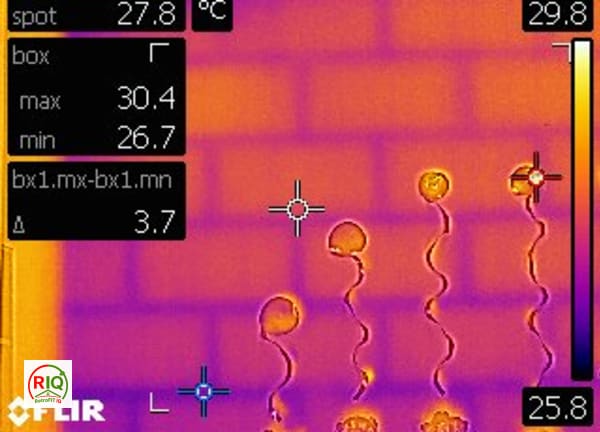
Thermal Bridging Visible Through Masonry Blockwork Wall

Sample Building Performance Investigation Report — Thermal Imaging

Thermal Bridge at Internal Corner Wall Junction

Thermal Bridge at Wall-Ceiling Junction Near Window

Bathroom external wall

Airtightness Testing in a Stratford Victorian Terrace
No related investigations yet.
Browse all investigationsFrequently asked questions
Why is there mould on my clothes and belongings?+
Because they are sitting in a humid, cold and still microclimate — typically a packed wardrobe against a cold external wall — where the local humidity stays high enough for mould. The items are the symptom, not the cause.
Why is there mould in my wardrobe?+
Usually because the wardrobe backs onto a cold external wall and is packed so air cannot move, so humid air against the cold surface condenses and feeds mould on the wall and the contents.
Are my clothes causing the mould?+
No — the surrounding conditions are. Clothes and leather are organic and show mould quickly, but the driver is humid air on a cold, still surface, which has to be changed to stop it.
How do I stop mould on stored items?+
Lower the room humidity with ventilation, warm the cold external wall behind the storage, and let air move around it by not over-packing and pulling furniture slightly off cold walls.
Why does it keep coming back after I clean it?+
Because cleaning the items does not change the cold, humid, still pocket they sit in. Until the surface is warmed and the air dried and moving, the mould returns.
Should I use a dehumidifier in the wardrobe?+
It can help locally, but it treats the symptom. The lasting fix is to reduce room humidity with ventilation, warm the cold surface and allow airflow around the storage.
How do you diagnose mould on belongings?+
We log the room humidity, map the cold surface behind the storage with thermal imaging, confirm the dew-point conditions and assess ventilation, then recommend warming the surface and improving airflow.
Stop guessing — find the real cause
Do not spend money fixing symptoms before you understand the cause. Every home behaves differently, and the only reliable way to know what is happening in yours is professional building performance diagnostics. At RetrofitIQ we verify buildings using the right combination of investigations:
- Thermal imaging
- Blower door testing
- Moisture & dew point readings
- Ventilation review
- Building physics assessment
- Passive House methodology