
Is it worth getting cavity wall insulation?
Cavity wall insulation can be one of the most cost-effective ways to cut heat loss and bills — but only in a wall that is genuinely suitable, properly assessed and correctly installed. In the right house it works well and pays back quickly; in the wrong one, or done badly, it can bridge the cavity and let damp cross to the inside, causing problems that are expensive to put right. Whether it is worth it for your home therefore depends on the wall construction, the exposure to wind-driven rain, and the condition of the cavity — none of which can be assumed from the fact that you have cavity walls. The sensible step is to establish suitability before installing, not after.
 Reviewed by George Sora, Certified Passive House DesignerUpdated June 2026
Quick answer & key takeaways
8 min read- In a suitable wall, cavity insulation cuts heat loss and bills cost-effectively.
- It is only suitable for some walls — construction, exposure and cavity condition all matter.
- Done in an unsuitable wall, it can bridge the cavity and let damp cross to the inside.
- Exposure to wind-driven rain is a key factor in whether it is safe.
- Biggest misconception: all cavity walls should be filled. Suitability must be assessed first.
- Retrofit IQ's approach: assess the wall and exposure before deciding, so it is worth it and safe.
What this usually means
A cavity wall has two leaves of masonry with a gap between them, and that gap was originally there partly to stop rain crossing from the wet outer leaf to the dry inner one. Filling the cavity with insulation reduces the heat lost through the wall, which can be a large share of a home's total loss, so in a suitable wall it improves warmth and lowers bills for a relatively modest cost — frequently one of the better-value fabric improvements available. This is why it is widely promoted, and why for many standard houses in sheltered or moderate locations it is genuinely worth doing.
But the same fill that blocks heat can also provide a path for water if the wall is not suitable. If the cavity is narrow, irregular, full of mortar debris, or the wall is highly exposed to driving rain, the insulation can bridge the gap and let moisture track across to the inner leaf, causing damp patches and mould on the inside that were not there before. Walls in exposed coastal or hilltop locations, walls already showing signs of penetrating damp, and cavities in poor condition are the situations where filling carries real risk. This is the source of the well-publicised cases where cavity wall insulation has had to be removed and the damage repaired — almost always because suitability was not properly assessed first.
So the honest answer to 'is it worth it?' is: usually yes in a suitable wall, and potentially harmful in an unsuitable one — which makes assessment the deciding step. A proper evaluation checks the cavity's width and condition (often with a borescope), the wall construction, and crucially the exposure to wind-driven rain for the location, and looks for any existing damp. From that, you know whether filling will be a sound, cost-effective improvement or a risk to avoid, and which insulation type is appropriate. Getting that assessment before committing is what turns cavity wall insulation from a gamble into a confident decision — and avoids being the homeowner who has to pay to extract it later.
Common causes
High heat loss through unfilled walls
An empty cavity loses heat readily, so filling a suitable wall cuts loss and bills.
Exposure to wind-driven rain
Highly exposed walls risk water bridging the fill to the inner leaf.
Narrow or debris-filled cavity
An irregular or blocked cavity makes a clean, safe fill difficult.
Existing penetrating damp
A wall already letting water in should not be filled until that is resolved.
Poor installation
Incomplete or bridged fill leaves cold spots and damp paths.
Signs and symptoms
Cold external walls and high bills
Cold walls losing heat suggest filling a suitable cavity could help.
Damp appearing after a fill
New damp patches after insulation indicate bridging in an unsuitable wall.
Exposed, weather-beaten elevation
A wall facing prevailing wind and rain needs careful suitability assessment.
Existing penetrating damp
Damp already present means the wall should not be filled yet.
Patchy warmth across the wall
Cold patches can show incomplete or bridged existing insulation.
What most people check first
- Whether the cavity is wide, clean and in good condition.
- Whether the wall is highly exposed to wind-driven rain.
- Whether there is any existing penetrating damp.
- Whether the wall construction is suitable for filling.
What most people miss
- That not all cavity walls are suitable for filling.
- That exposure to driving rain is a key suitability factor.
- That an unsuitable fill can let damp cross to the inside.
- That assessment should come before installation, not after.
The building physics
An unfilled cavity wall loses heat by conduction through the two masonry leaves and by convection within the air gap, so introducing insulation that suppresses the convection and adds thermal resistance markedly reduces the wall's U-value. Because external walls typically account for a substantial fraction of a dwelling's fabric heat loss, this reduction translates into meaningful savings in a suitable wall, with a comparatively short payback — the basis of cavity insulation's strong cost-effectiveness when the wall is appropriate. The benefit is real and well established for standard cavities in moderate exposure.
The risk arises because the cavity also performs a moisture-management function. The gap interrupts the capillary and liquid-water path from the rain-wetted outer leaf to the inner leaf; filling it with a material that can transmit water — or installing it where mortar snots, debris or an irregular cavity create bridges — reintroduces that path, so under driving rain water can reach the inner leaf and appear as internal damp. Exposure is therefore decisive: the wind-driven rain load varies strongly with location and elevation, and a fill that is entirely safe in a sheltered setting can fail in an exposed one. Existing penetrating damp or a defective outer leaf compounds the risk, because the wall is already admitting water.
Suitability is thus a building-physics judgement made before installation, not a default. Assessment establishes the cavity width and condition, commonly with a borescope inspection; the wall construction and the integrity of the outer leaf; the exposure category for wind-driven rain; and the presence of any existing damp. From these, the wall is classified as suitable, conditionally suitable with remedial work, or unsuitable, and the appropriate insulant and method selected. This pre-assessment is what distinguishes a cost-effective, durable improvement from the failures that require costly extraction and repair — and it is why the question is less 'is cavity insulation worth it in general?' than 'is it worth it, and safe, in this particular wall?', which only an assessment can answer.
How to decide whether cavity wall insulation is worth it
Assess the wall's suitability before installing — cavity condition, construction, exposure and any existing damp — so the insulation is a cost-effective improvement rather than a damp risk.
- 01
Inspect the cavity
Check the cavity width and condition, often with a borescope, for a clean, fillable gap.
- 02
Assess the exposure
Establish the wind-driven rain exposure for the location and elevation.
- 03
Check for existing damp
Rule out penetrating damp or a defective outer leaf before filling.
- 04
Confirm suitability
Classify the wall as suitable, conditionally suitable or unsuitable for filling.
- 05
Choose the right insulant and installer
Match the insulation type and method to the wall, with a competent installer.
- 06
Verify after installation
Confirm a complete, unbridged fill with no new cold spots or damp.
How to prevent it coming back
- Always assess suitability before filling a cavity.
- Avoid filling highly exposed walls without expert assessment.
- Resolve existing penetrating damp before insulating.
- Verify a complete, unbridged fill afterwards.
How Retrofit IQ investigates this
We assess whether your cavity wall is suitable for filling, so the insulation is worth it and safe rather than a damp risk.
Do not spend money fixing symptoms before you understand the cause — investigate first, then build with confidence.
Do I need a professional investigation?
Before getting cavity wall insulation — or if damp has appeared after a fill — it is worth assessing the wall properly. Checking the cavity condition, the construction, the exposure to wind-driven rain and any existing damp establishes whether filling will be a cost-effective improvement or a risk, so you avoid the expensive outcome of insulation that has to be extracted and the damage repaired.
Where to go next
Relevant services
From the Academy
Related case studies
Evidence from Real Projects (24)
Real project and investigation images from our own fieldwork, matched to this page — not stock photography.

Thermal Bridge at Internal Corner Wall Junction
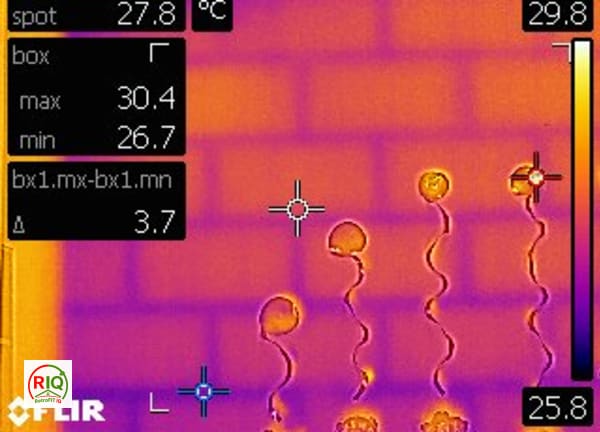
Thermal Bridging Visible Through Masonry Blockwork Wall

Thermal Bridge at Wall-Ceiling Junction Near Window

Sample Building Performance Investigation Report — Thermal Imaging

Acoustic Floor Upgrades: Mineral Wool Insulation Between Joists

Airtightness Testing in a Stratford Victorian Terrace
No related investigations yet.
Browse all investigationsFrequently asked questions
Is it worth getting cavity wall insulation?+
In a suitable wall, usually yes — it is one of the more cost-effective ways to cut heat loss and bills, with a relatively short payback. But it is only suitable for some walls; in an unsuitable or highly exposed one, or done badly, it can bridge the cavity and let damp cross to the inside, so suitability should be assessed before installing.
How do I know if my wall is suitable?+
An assessment checks the cavity width and condition (often with a borescope), the wall construction and outer leaf, the exposure to wind-driven rain for your location, and any existing damp. From that the wall is classified as suitable, conditionally suitable or unsuitable — which is the deciding step before filling.
Can cavity wall insulation cause damp?+
It can, if the wall is unsuitable — a narrow or debris-filled cavity, a highly exposed elevation, or existing penetrating damp can let the fill bridge the gap so water reaches the inner leaf and appears as internal damp. This is the cause of the cases where insulation has had to be removed, and it is avoided by assessing suitability first.
Does exposure to rain really matter?+
Yes — the wind-driven rain load varies strongly with location and elevation, and a fill that is safe in a sheltered setting can fail on an exposed coastal or hilltop wall. Exposure is one of the most important factors in whether filling is safe.
What if I already have cavity wall insulation and now have damp?+
That suggests the fill may be bridging the cavity in an unsuitable wall. It is worth investigating — assessing the cavity, the exposure and the damp — to confirm the cause and whether the insulation needs extracting and the wall repairing, rather than just treating the internal damp.
How do you assess whether it's worth it for my home?+
We inspect the cavity, assess the exposure, rule out existing damp, and check for any bridged or incomplete fill with thermal imaging — then classify suitability and, where it is suitable, specify the right insulant and method, so the insulation is both cost-effective and safe.
Stop guessing — find the real cause
Do not spend money fixing symptoms before you understand the cause. Every home behaves differently, and the only reliable way to know what is happening in yours is professional building performance diagnostics. At RetrofitIQ we verify buildings using the right combination of investigations:
- Thermal imaging
- Blower door testing
- Moisture & dew point readings
- Ventilation review
- Building physics assessment
- Passive House methodology