
Should I get external or internal wall insulation?
For a solid-wall home — one with no cavity to fill — the way to cut the large heat loss through the walls is either external wall insulation (a layer added to the outside) or internal wall insulation (a layer added to the inside), and the two suit different houses. External insulation generally performs better and avoids the moisture risks of internal, but changes the appearance and is more expensive; internal is cheaper and keeps the outside unchanged, but reduces room size and, done without care, can cause condensation within the wall. Choosing well depends on the building, the appearance constraints, the budget and — crucially — getting the moisture detailing right. It is a decision best made on the building physics, not on cost alone.
 Reviewed by George Sora, Certified Passive House DesignerUpdated June 2026
Quick answer & key takeaways
8 min read- Solid walls have no cavity, so insulation goes on the outside or the inside.
- External insulation usually performs best and keeps the wall warm and dry.
- Internal insulation is cheaper and unobtrusive but reduces room size and risks condensation.
- Both need correct moisture detailing to avoid trapping damp in the wall.
- Biggest misconception: pick the cheapest. The right choice depends on the building and moisture.
- Retrofit IQ's approach: choose and detail the system from the building physics, not cost alone.
What this usually means
A solid wall loses a lot of heat because there is no cavity and the masonry conducts warmth straight out, so insulating it is one of the biggest improvements available — but it has to be added on one face or the other. External wall insulation wraps the outside of the building in an insulating layer with a weatherproof finish. Because the insulation sits outside the masonry, the wall stays warm and on the dry side of the insulation, which both performs well and keeps the structure healthy; it also covers the existing thermal bridges and does not eat into the rooms. Its drawbacks are cost, the change to the building's appearance (which can be an issue in conservation areas or on attractive brickwork), and the detailing needed at the roof, windows and ground.
Internal wall insulation adds the layer to the inside face of the external walls instead. It is usually cheaper, can be done room by room, and leaves the outside of the building untouched — often the only option where the appearance must be preserved or external access is impossible. But it has two significant consequences. First, it reduces the size of the rooms and requires reworking skirtings, sockets and window reveals. Second, and more importantly, it changes the moisture behaviour of the wall: by keeping the masonry on the cold side of the insulation, it can allow the wall to run colder and damper, and if the vapour control and materials are wrong, moisture can condense within the build-up (interstitial condensation) and damage the wall and the insulation. Internal insulation done without proper moisture design is a known cause of hidden damp.
So the choice is genuinely building-specific. External insulation is often the better technical option where appearance and budget allow, because it is robust against moisture and covers the thermal bridges; internal is the right answer where the exterior must be kept, but it demands careful, breathable or correctly vapour-controlled detailing — and attention to the junctions and reveals where thermal bridges and condensation concentrate. Cost, appearance, room space, the wall's existing condition and exposure, and the moisture strategy all feed into the decision. Because getting the moisture detailing wrong (especially with internal insulation) can cause expensive damage, the sound approach is to assess the wall and design the system — including a condensation-risk check — rather than choosing on price and hoping it works.
Common causes
High heat loss through solid walls
With no cavity, solid walls lose heat strongly, so insulating them gives a big improvement.
External insulation keeps the wall warm
Insulating outside keeps the masonry warm and dry and covers thermal bridges.
Internal insulation reduces room size
Adding the layer inside takes space and reworks reveals, skirtings and sockets.
Moisture risk with internal insulation
Keeping the wall on the cold side can cause interstitial condensation if detailed wrongly.
Appearance and access constraints
Conservation, attractive brickwork or access often dictate which option is feasible.
Signs and symptoms
Cold solid walls and high bills
Cold, uninsulated solid walls losing heat indicate the value of insulating them.
Attractive or protected exterior
Brickwork or conservation status that must be kept points toward internal insulation.
Limited room to lose inside
Small rooms make the space taken by internal insulation a real consideration.
Existing damp on the walls
Damp must be resolved and the moisture strategy designed before insulating.
Cold reveals and junctions
Thermal bridges at reveals and junctions need addressing whichever system is chosen.
What most people check first
- Whether the exterior appearance can be changed or must be kept.
- Whether room space can be given to internal insulation.
- Whether the wall has existing damp or exposure issues.
- Whether the moisture detailing and thermal bridges have been designed.
What most people miss
- That external insulation avoids the moisture risks of internal.
- That internal insulation needs careful vapour or breathable detailing.
- That the junctions and reveals must be designed to avoid cold bridges.
- That the choice should follow the building physics, not just cost.
The building physics
Insulating a solid wall sharply reduces its U-value, but the position of the insulation determines the temperature and moisture regime of the masonry. With external insulation, the masonry sits on the warm side of the insulation, so its temperature is raised and held above the dew point of the internal air; the wall stays warm and dry, thermal bridges at junctions are largely covered by the continuous external layer, and the risk of interstitial condensation is low. This is why external insulation is generally the more robust technical solution as well as the better performer, where appearance and budget permit.
With internal insulation, the masonry is left on the cold side of the new insulation, so it runs colder than before and its capacity to dry inward is reduced. Warm, moist internal air that reaches the cold masonry — through imperfect vapour control or at junctions — can condense within the build-up, and the colder wall dries more slowly, so moisture can accumulate and damage the fabric and insulation over time. The design must therefore manage vapour deliberately: either a robust vapour-control layer to keep moist air out of the build-up, or a vapour-open, capillary-active system that allows the assembly to dry safely. Thermal bridges become critical too, because the insulation usually cannot be carried across floors, party walls and reveals, leaving cold lines that both lose heat and concentrate condensation.
Selecting and detailing the system is consequently a hygrothermal design task specific to the wall, its exposure and its construction. The choice weighs performance, moisture robustness, appearance, room space, cost and buildability; external insulation is favoured technically where it is permissible, internal where the exterior must be preserved, with the moisture strategy and junction detailing designed accordingly and verified by a condensation-risk analysis of the proposed build-up. Because internal insulation installed without this design is a recognised cause of hidden interstitial condensation and decay, the value lies in assessing the wall and designing the assembly — not in defaulting to the cheaper option and discovering the moisture consequences later.
How to choose between external and internal wall insulation
Weigh performance, appearance, room space and cost — but design the moisture strategy and junctions for the specific wall, and check the build-up for condensation risk before committing.
- 01
Assess the wall and exposure
Establish the construction, condition and exposure to inform which system suits.
- 02
Weigh appearance and space
Decide whether the exterior can change and whether room space can be given internally.
- 03
Prefer external where feasible
Choose external insulation where appearance and budget allow, for performance and moisture robustness.
- 04
Design internal moisture control
If internal, specify robust vapour control or a vapour-open system to keep the build-up safe.
- 05
Detail the thermal bridges
Design the reveals, floors and party-wall junctions to limit cold bridging and condensation.
- 06
Check the condensation risk
Verify the proposed build-up against condensation risk before installing.
How to prevent it coming back
- Favour external insulation where appearance and budget allow.
- Never install internal insulation without a moisture strategy.
- Design the junctions and reveals to avoid cold bridges.
- Run a condensation-risk check on the chosen build-up.
How Retrofit IQ investigates this
We assess the wall and design the insulation system — external or internal — as a moisture-safe assembly suited to the building.
Do not spend money fixing symptoms before you understand the cause — investigate first, then build with confidence.
Do I need a professional investigation?
Before insulating solid walls, it is worth assessing the wall and designing the system — external or internal — for the specific building. Establishing the construction, exposure, appearance and space constraints, and designing the moisture strategy and junctions with a condensation-risk check, ensures the insulation performs and the wall stays dry, avoiding the hidden damp that internal insulation can cause when detailed wrongly.
Find where your heat — and money — escapes
High bills mean excessive heat loss. We measure exactly where it goes so you spend on the largest, cheapest savings first.
- Thermal imaging of the whole envelope
- Blower door test for air leakage
- Prioritised, costed savings plan
Where to go next
Relevant services
From the Academy
Related case studies
Evidence from Real Projects (26)
Real project and investigation images from our own fieldwork, matched to this page — not stock photography.
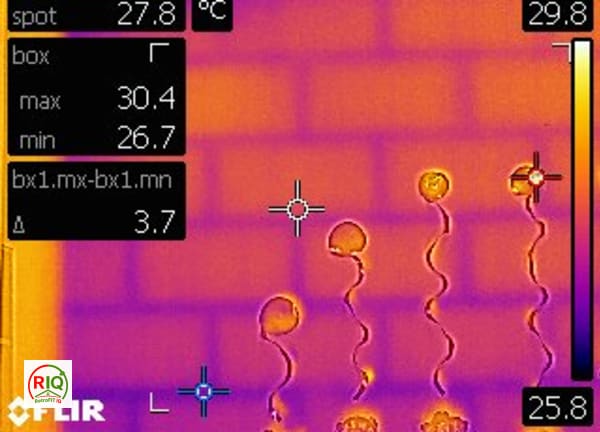
Thermal Bridging Visible Through Masonry Blockwork Wall

Thermal Bridge at Internal Corner Wall Junction

Sample Building Performance Investigation Report — Thermal Imaging

Thermal Bridge at Wall-Ceiling Junction Near Window

Acoustic Floor Upgrades: Mineral Wool Insulation Between Joists

Airtightness Testing in a Stratford Victorian Terrace
No related investigations yet.
Browse all investigationsFrequently asked questions
Should I get external or internal wall insulation?+
It depends on the building. External insulation usually performs best and keeps the wall warm and dry, but it changes the appearance and costs more; internal is cheaper and keeps the outside unchanged, but reduces room size and can cause condensation in the wall if detailed wrongly. The right choice follows the building physics — appearance, space, budget and the moisture strategy — not cost alone.
Which performs better, external or internal?+
External generally performs better, because the insulation is continuous and keeps the masonry warm and on the dry side, covering the thermal bridges. Internal insulation leaves the wall colder and is harder to carry across junctions, so cold bridges and moisture risks need careful design.
Can internal wall insulation cause damp?+
Yes, if the moisture is not designed for. Keeping the masonry on the cold side of the insulation can let moisture condense within the build-up (interstitial condensation) and slow the wall's drying, damaging the fabric. A robust vapour-control or vapour-open strategy and a condensation-risk check are essential.
When is internal insulation the right choice?+
Where the exterior must be preserved — conservation areas, attractive brickwork — or external access is impossible, internal insulation is often the only option. It can work well, but it must be detailed for moisture and thermal bridging, and you accept some loss of room space.
Do I lose much room space with internal insulation?+
Some — the insulation layer takes thickness off each insulated wall and requires reworking skirtings, sockets and window reveals. In small rooms this is a real consideration, and it is one of the reasons external insulation is preferred where it is feasible.
How do you decide and design it for my home?+
We assess the wall construction, condition and exposure, map the thermal bridges, and weigh appearance, space and budget — then specify external or internal insulation with the moisture strategy and junction detailing, verified by a condensation-risk analysis, so it performs and stays dry.
Stop guessing — find the real cause
Do not spend money fixing symptoms before you understand the cause. Every home behaves differently, and the only reliable way to know what is happening in yours is professional building performance diagnostics. At RetrofitIQ we verify buildings using the right combination of investigations:
- Thermal imaging
- Blower door testing
- Moisture & dew point readings
- Ventilation review
- Building physics assessment
- Passive House methodology