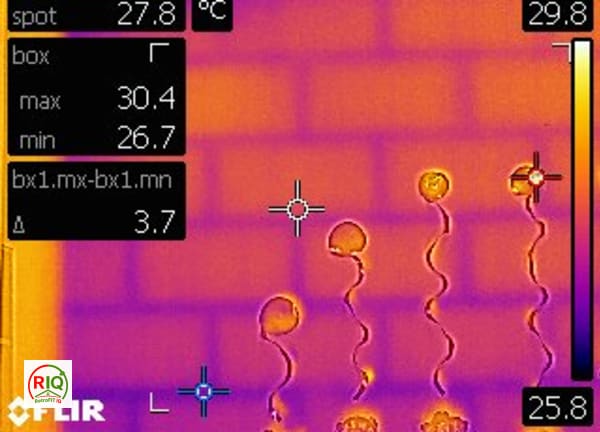

External wall insulation (EWI) is applied to the outer face of the wall, then finished with render or a cladding. By moving the insulation to the outside, it keeps the entire original wall warm and within the heated envelope — which has profound benefits for thermal performance, thermal bridging and, crucially, moisture safety.
Why external is usually lower-risk
The single biggest advantage of EWI over internal insulation is moisture. With insulation on the outside, the original masonry stays warm and on the warm side of the insulation, so it doesn't get cold enough for condensation to form within it, and it stays dry. EWI also wraps the structure in a continuous blanket, so it controls the thermal bridges (corners, junctions, embedded floors) far better than internal insulation, which is interrupted at every internal wall and floor.
The build-up
| Layer | Function |
|---|---|
| Finish (render or brick-slip / cladding) | Weather protection and appearance |
| Reinforced basecoat + mesh | Crack resistance and impact strength |
| Insulation board (mineral wool, EPS, wood-fibre) | The thermal layer, mechanically fixed/bonded |
| Adhesive / levelling | Bonds insulation to the existing wall |
| Existing wall | Stays warm and dry within the envelope |
Insulant choice matters: mineral wool and wood-fibre are vapour-open ('breathable') and well-suited to traditional walls that need to dry outward; EPS is cheaper and common but more vapour-closed. The right choice depends on the wall's moisture behaviour and exposure — a decision best informed by hygrothermal assessment, especially on older solid walls.
Detailing — where EWI succeeds or fails
EWI's performance lives in its junctions. Get these wrong and you reintroduce the thermal bridges and water-ingress paths it was meant to remove:
- The roofline / eaves — the insulation must connect to the roof insulation, or a cold bridge (and a cold attic-floor junction) remains.
- Window and door reveals — reveals and cills must be insulated and the windows ideally moved into or overlapped by the insulation plane, or every opening becomes a thermal bridge.
- The base / ground level — insulation must extend down to (or below) the floor level with a proper base detail and a stop bead, avoiding a cold strip and water ingress at the bottom.
- Penetrations and fixings — pipes, brackets, soil stacks and rainwater goods all need detailing to maintain continuity and weather-tightness.
- Maintaining the drainage / weathering — render systems must shed water and allow any moisture behind to escape; a vapour-trapping outer finish on a damp wall causes problems.
When EWI isn't possible
EWI changes the external appearance and projects beyond the original wall face, so it isn't always an option: listed buildings and conservation areas may prohibit it; boundary lines and pavements can leave no room; attractive or historic façades (brick, stone, decorative detail) may be unacceptable to cover; and terraced/semi situations create junction challenges with neighbours. Where EWI is ruled out, internal wall insulation is the fallback — a higher-risk approach covered in the internal-vs-external and IWI articles in this guide.