
Why is my cavity wall insulation causing damp?
Damp appearing after cavity wall insulation usually means the fill is doing the one thing the cavity was designed to prevent: bridging the gap so water can cross from the wet outer leaf to the dry inner one. This happens when the wall was not suitable for filling in the first place — too exposed to driving rain, a narrow or debris-filled cavity, or an outer leaf already letting water in — or when the insulation was installed badly, leaving slumped or bridged material. The result is damp patches and mould on internal walls that were dry before. It is a building-physics failure, and the fix is to diagnose what is bridging the water and, often, to extract the insulation and put the wall right.
 Reviewed by George Sora, Certified Passive House DesignerUpdated June 2026
Quick answer & key takeaways
8 min read- The cavity normally stops water crossing from the wet outer leaf to the dry inner one.
- Insulation can bridge that gap, letting water reach the inside as damp.
- It happens in unsuitable, exposed or poor-condition walls, or with bad installation.
- The damp typically appears after the fill and worsens with driving rain.
- Biggest misconception: the insulation just needs drying out. The water path must be removed.
- Retrofit IQ's approach: diagnose the bridging, then extract or remedy and repair the wall.
What this usually means
The gap in a cavity wall is partly a moisture break: rain that soaks the outer leaf cannot easily cross the air gap to the inner leaf, so the inside stays dry. Cavity wall insulation fills that gap, and in a suitable wall the material is designed and installed so it does not transmit water — the wall stays dry and simply loses less heat. When damp appears after a fill, it almost always means that moisture break has been compromised: the insulation, or debris and mortar caught in it, now provides a path across the cavity, so water tracking through the wet outer leaf reaches the inner leaf and shows as damp inside.
Several situations cause this. The wall may never have been suitable — highly exposed to wind-driven rain, with a narrow or irregular cavity, or with an outer leaf already cracked, with failed pointing or defective render that lets water in. The installation may have been poor — incomplete fill that slumps and leaves gaps and cold spots, or material packed so it bridges the cavity. Or pre-existing defects, such as a leaking gutter or a faulty sill, may be loading the wall with water that the fill then carries inward. In each case the damp tracks the weather, appearing or worsening during and after driving rain, and is often patchy, reflecting where the bridging occurs.
Because the cause is a water path, the remedy is not to dry the wall or treat the inside, which only hides the problem until the next rain. The wall has to be diagnosed: confirming that the insulation is bridging the cavity (rather than the damp being condensation or another source), identifying any outer-leaf or rainwater-goods defects, and assessing the cavity's condition. Frequently the right answer is to extract the insulation, repair the defects and dry the wall, and then either leave the wall uninsulated or re-insulate only if and when it can be made suitable. An investigation establishes what is actually happening so the money goes to removing the water path, not to repeatedly redecorating over returning damp.
Common causes
Insulation bridging the cavity
Fill or trapped debris provides a path for water across the gap to the inner leaf.
Wall too exposed to driving rain
High wind-driven rain loads overwhelm the wall once the moisture break is gone.
Defective outer leaf
Cracked render, failed pointing or a poor outer leaf lets water into the fill.
Poor or slumped installation
Incomplete or packed fill leaves gaps, cold spots and bridges.
Pre-existing leaks
Leaking gutters or faulty sills load the wall with water the fill carries inward.
Signs and symptoms
Damp appearing after the fill
Internal damp that began after insulation strongly suggests bridging.
Damp worse after driving rain
Patches tracking wind-driven rain point to water crossing the cavity.
Patchy damp and mould
Localised internal damp reflects where the fill bridges or has slumped.
Cold spots on the wall
Cold patches indicate slumped or incomplete insulation.
Defects on the outer leaf
Cracked render or failed pointing outside reveals a water entry route.
What most people check first
- Whether the damp began after the insulation was installed.
- Whether it worsens with wind-driven rain.
- Whether the outer leaf or rainwater goods are defective.
- Whether the wall was ever suitable for filling.
What most people miss
- That the damp is a water path, not just wet insulation.
- That treating the inside does not stop the water crossing.
- That exposure and outer-leaf defects are common causes.
- That extraction and repair are often the real fix.
The building physics
The cavity in a masonry wall functions as a capillary and liquid-water break: rain penetrating the outer leaf wets that leaf, but the air gap prevents continuous water transport to the inner leaf, which therefore stays dry. Filling the cavity removes the air gap and substitutes a material that must itself resist water transmission and be installed without bridges; where the insulant can wick or transmit water, or where mortar snots, debris and slumping create solid bridges across the gap, a continuous moisture path is re-established and water driven into the outer leaf reaches the inner leaf, emerging as internal damp. The dependence on rainfall and the patchiness of the damp are the signatures of this bridging mechanism.
Exposure governs the load on that mechanism. Wind-driven rain deposits far more water on exposed coastal and elevated walls than on sheltered ones, so a fill that would remain dry in moderate exposure can be overwhelmed where the rain load is high — which is why exposure is a primary suitability criterion. Pre-existing defects compound the problem: a cracked or poorly pointed outer leaf, defective render, or leaking rainwater goods deliver additional water into the fill, and a narrow or irregular cavity makes a clean, unbridged installation difficult. The same fill can therefore be benign in one wall and a damp source in another, depending on exposure, outer-leaf integrity and cavity condition.
Diagnosis must separate this bridging damp from the alternatives and identify the water path before remediation. Thermal imaging and moisture mapping reveal whether the damp pattern, slumping and cold spots are consistent with bridged fill; external inspection finds outer-leaf and rainwater defects; and the weather correlation distinguishes penetrating bridging damp from condensation, which depends on surface temperature and humidity rather than rain. Where bridging is confirmed, the durable remedy removes the water path — typically extracting the insulation, repairing the outer-leaf and rainwater defects, and drying the wall — after which the wall is left uninsulated or only re-insulated if it can be made genuinely suitable. Internal treatments and drying alone do not address the cross-cavity transport and so fail, which is why an investigation that locates the bridging is the route to a lasting fix.
How to deal with damp from cavity wall insulation
Diagnose the water path rather than treating the inside: confirm the fill is bridging, find the outer-leaf and rainwater defects, then extract or remedy and repair so the water can no longer cross.
- 01
Confirm the cause
Establish that the damp is bridged-fill penetrating damp, not condensation or another source.
- 02
Inspect the outer leaf and goods
Find any cracked render, failed pointing, leaking gutters or faulty sills loading the wall.
- 03
Assess the fill and cavity
Check for slumping, bridging and the cavity condition with thermal imaging and inspection.
- 04
Extract where bridging is confirmed
Remove the insulation that is bridging the cavity so the moisture break is restored.
- 05
Repair defects and dry the wall
Fix the outer-leaf and rainwater defects and allow the wall to dry before redecorating.
- 06
Re-insulate only if suitable
Leave the wall uninsulated or re-insulate only once it can be made genuinely suitable.
How to prevent it coming back
- Assess suitability before ever filling a cavity.
- Repair outer-leaf and rainwater defects before insulating.
- Treat the water path, not the internal symptom.
- Re-insulate only when the wall can be made suitable.
How Retrofit IQ investigates this
We diagnose whether the cavity fill is bridging water across the wall, and specify extraction and repair to remove the water path.
Do not spend money fixing symptoms before you understand the cause — investigate first, then build with confidence.
Do I need a professional investigation?
If damp has appeared since your cavity wall was insulated, or it worsens with driving rain, it is worth investigating the wall. Confirming whether the fill is bridging the cavity, finding any outer-leaf or rainwater defects, and assessing the cavity establishes the water path — so extraction and repair can remove it, rather than redecorating over damp that returns with every spell of rain.
Where to go next
Relevant services
Related comparisons
From the Academy
Related case studies
Evidence from Real Projects (23)
Real project and investigation images from our own fieldwork, matched to this page — not stock photography.
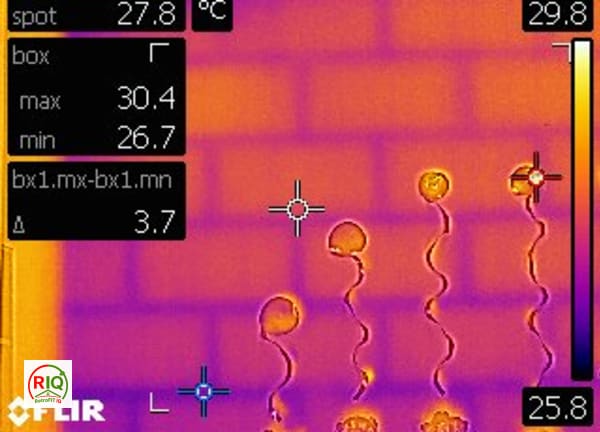
Thermal Bridging Visible Through Masonry Blockwork Wall

Thermal Bridge at Internal Corner Wall Junction

Sample Building Performance Investigation Report — Thermal Imaging

Thermal Bridge at Wall-Ceiling Junction Near Window

Airtightness Testing in a Stratford Victorian Terrace

Acoustic Floor Upgrades: Mineral Wool Insulation Between Joists
No related investigations yet.
Browse all investigationsFrequently asked questions
Why is my cavity wall insulation causing damp?+
Because the fill is bridging the cavity — the gap that normally stops water crossing from the wet outer leaf to the dry inner one. This happens in unsuitable or highly exposed walls, with a defective outer leaf, or with poor installation that slumps or bridges, so rain reaches the inside as damp. The fix is to remove the water path, not to treat the inside.
Why did the damp only start after the insulation?+
Because before the fill, the air gap kept water from crossing the cavity. Once the gap is bridged by the insulation or by trapped debris, water driven into the outer leaf can track across to the inner leaf and appear as internal damp — which is why the damp dates from the installation.
Can the insulation just be dried out?+
No. Drying the wall or treating the inside only hides the problem until the next rain, because the bridging water path is still there. The durable remedy is to remove the path — usually by extracting the bridging insulation, repairing the outer-leaf and rainwater defects, and drying the wall.
Why does it get worse when it rains?+
Because it is penetrating damp driven by wind-driven rain. Rain soaks the outer leaf, and the bridged fill carries that water across to the inside, so the damp appears or worsens during and after driving rain — the signature that distinguishes it from condensation.
Will I have to remove the insulation?+
Often, yes, where the fill is confirmed to be bridging the cavity in an unsuitable wall. Extraction, repair of the defects and drying the wall removes the cause; the wall is then left uninsulated or re-insulated only if it can be made genuinely suitable. An investigation confirms whether extraction is needed.
How do you find out what's happening in my wall?+
We confirm it is bridged-fill penetrating damp rather than condensation, inspect the outer leaf and rainwater goods for defects, and assess the fill and cavity with thermal imaging and a borescope — then specify extraction, repair and whether re-insulation is appropriate, so the water path is removed for good.
Stop guessing — find the real cause
Do not spend money fixing symptoms before you understand the cause. Every home behaves differently, and the only reliable way to know what is happening in yours is professional building performance diagnostics. At RetrofitIQ we verify buildings using the right combination of investigations:
- Thermal imaging
- Blower door testing
- Moisture & dew point readings
- Ventilation review
- Building physics assessment
- Passive House methodology