
Why is there damp coming through my wall?
Damp appearing on the inside of a wall — a patch that darkens, feels wet, or blisters the plaster and paint — is most often penetrating damp: water finding its way through the external wall from outside, usually because of a defect that lets rain in. It is a different problem from condensation, which forms on cold surfaces from indoor humidity, and from rising damp, which comes up from the ground; and because the cause is an external fault, the cure is to find and fix that fault, not to treat the inside surface. The damp patch is a clue to where water is getting in. Tracing it to the actual defect is what allows a lasting repair rather than a cosmetic cover-up that returns with the next rain.
 Reviewed by George Sora, Certified Passive House DesignerUpdated June 2026
Quick answer & key takeaways
9 min read- Damp coming through a wall is usually penetrating damp from an external defect.
- It is distinct from condensation (cold surfaces) and rising damp (from the ground).
- It typically worsens after or during rain and tracks the source above the patch.
- Common defects are failed pointing, render, flashings, guttering and sills.
- Biggest misconception: treat the inside surface. The external source must be found and fixed.
- Retrofit IQ's approach: trace the water to the defect, fix it, and let the wall dry.
What this usually means
Penetrating damp is the passage of rainwater through the external wall to the inside, and it happens where the wall's defence against water has failed somewhere above or around the damp patch. Water does not always enter directly behind the visible mark — it can run down inside the structure from a defect higher up, such as a leaking gutter, a cracked render panel, failed pointing, a defective sill, or a gap around a window — and emerge where it meets a path to the inside surface. This is why penetrating damp is essentially a detective problem: the internal patch tells you where the water is coming out, and the task is to follow the water back to where it is getting in.
It behaves differently from the other forms of damp, which is how it is identified. Penetrating damp usually correlates with weather — it appears or worsens during and after heavy or driving rain, and dries back in prolonged dry spells — and it is often higher up a wall or unrelated to ground level, unlike rising damp which is confined to the base of the wall. It is also distinct from condensation, which forms on the coldest surfaces from indoor humidity regardless of rain and concentrates in corners and behind furniture. Solid-wall and older properties are more prone to penetrating damp because they have no cavity to interrupt the water's path, and exposed elevations facing the prevailing wind and rain are the most affected.
Because the cause is an external defect, treating the inside achieves nothing lasting: replastering, sealing or painting over a penetrating-damp patch simply hides it until the next rain pushes water through again. The durable fix is to locate the specific defect letting water in — which may take inspection of the external fabric, the rainwater goods and the junctions, sometimes under wet conditions to see the water moving — repair it, and then allow the wall to dry out before making good inside. An investigation confirms it is penetrating damp rather than condensation or rising damp, finds the actual entry point rather than assuming, and ensures the repair addresses the source, so the patch does not return.
Common causes
Failed pointing or render
Cracked or missing mortar and render let rain soak into and through the wall.
Defective flashings and junctions
Failed flashings at roofs, abutments and parapets channel water into the wall.
Leaking or blocked guttering
Overflowing or leaking rainwater goods saturate the wall below them.
Faulty sills and window junctions
Defective sills and gaps around windows let driving rain track inside.
Exposed solid walls
Solid-wall and exposed elevations have no cavity to stop water crossing to the inside.
Signs and symptoms
Damp worse after rain
A patch that appears or grows with rainfall points clearly to penetrating damp.
Patch higher up the wall
Damp away from the floor distinguishes penetrating damp from rising damp.
Blistering plaster or paint
Bubbling and staining where water emerges indicate water tracking through the wall.
Worst on the weather elevation
Damp on the wall facing prevailing wind and rain reflects driving-rain penetration.
A defect visible outside
Cracked render, failed pointing or leaking gutters above the patch reveal the likely source.
What most people check first
- Whether the damp worsens with rain, indicating penetrating damp.
- Whether the patch is away from the floor, ruling out rising damp.
- Whether an external defect is visible above or around the patch.
- Whether the affected elevation faces the prevailing wind and rain.
What most people miss
- That the water often enters higher up than the visible patch.
- That treating the inside surface does not stop the source.
- That penetrating damp tracks the weather, unlike condensation.
- That the actual defect must be found, not assumed.
The building physics
Penetrating damp is driven by liquid water under the action of rain and wind. Driving rain deposits water on the external face of a wall, and where the wall's water-shedding defences — render, pointing, flashings, sills, rainwater goods — are intact, that water runs off or is held in the outer fabric and dries back. Where a defect breaches those defences, water enters the structure and, under capillary and gravitational action, travels through and down the masonry until it reaches a path to the inner surface, where it evaporates and leaves the visible damp. Because the water can travel laterally and downward within the wall, the internal patch marks the exit, not necessarily the entry, which is why tracing is required rather than treating the patch's location.
The mechanism gives penetrating damp a distinct signature that separates it from the other forms. Its correlation with rainfall events, its tendency to occur away from ground level and on the most weather-exposed elevations, and its association with an identifiable external defect distinguish it from rising damp — capillary movement of ground water limited to the base of the wall with characteristic salts — and from condensation, which is governed by surface temperature and indoor humidity and occurs independently of rain. A handheld damp meter cannot make this distinction reliably, so diagnosis depends on the pattern of evidence: the timing relative to weather, the location, the external fabric inspection, and moisture measurement through the wall's depth where needed.
Solid and older walls are more vulnerable because they lack the cavity that, in modern construction, interrupts the water's path to the inner leaf; in a solid wall the masonry is a continuous bridge, so any breach can deliver water to the inside, and exposure to driving rain raises the load. The remedy follows from the physics: locate and repair the specific external defect so water can no longer enter, then allow the wetted fabric to dry — internal treatments such as waterproof renders or sealing the inside surface do not stop water entering and can trap it, worsening the fabric. An investigation that confirms penetrating damp, finds the actual entry point, and specifies the external repair is therefore what produces a lasting fix, in contrast to the recurring failure of treating the symptom on the inside.
How to stop damp coming through a wall
Confirm it is penetrating damp, trace the water back to the external defect letting it in, repair that defect, and allow the wall to dry before making good inside.
- 01
Confirm the cause
Establish it is penetrating damp rather than condensation or rising damp, from the pattern and the weather correlation.
- 02
Trace the water to its entry
Inspect the external fabric, junctions and rainwater goods above the patch to find where water gets in.
- 03
Repair the external defect
Fix the failed pointing, render, flashing, gutter or sill responsible for the ingress.
- 04
Let the wall dry out
Allow the wetted fabric to dry before redecorating, rather than sealing moisture in.
- 05
Avoid trapping moisture
Do not apply waterproof internal coatings that stop the wall drying and can worsen it.
- 06
Make good inside
Repair the internal finish once the source is fixed and the wall has dried.
How to prevent it coming back
- Maintain pointing, render, flashings, sills and guttering on exposed walls.
- Keep rainwater goods clear so they do not saturate the wall.
- Fix the external source rather than sealing the inside.
- Let the fabric dry rather than trapping moisture behind coatings.
How Retrofit IQ investigates this
We confirm penetrating damp, trace the water to the external defect, and specify the repair so the wall can dry and stay dry.
Do not spend money fixing symptoms before you understand the cause — investigate first, then build with confidence.
Do I need a professional investigation?
If damp keeps coming through a wall, worsens with rain, or returns after the inside has been treated, it is worth investigating the external source. Confirming it is penetrating damp and tracing the water to the actual defect — which may enter higher than the visible patch — ensures the repair stops the ingress at source, so the wall can dry and the damp does not return with the next rain.
Where to go next
Relevant services
Related comparisons
From the Academy
Related case studies
Evidence from Real Projects (15)
Real project and investigation images from our own fieldwork, matched to this page — not stock photography.

Sample Building Performance Investigation Report — Thermal Imaging
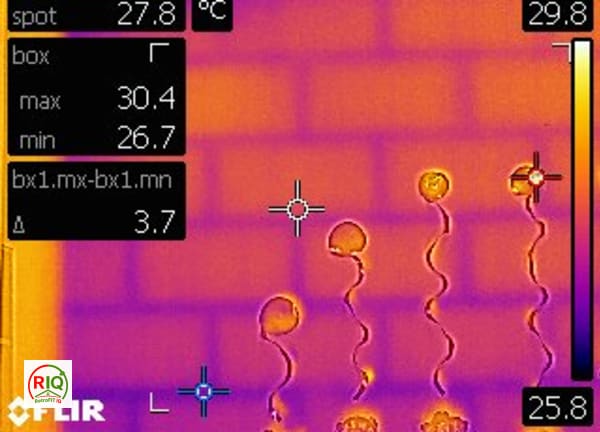
Thermal Bridging Visible Through Masonry Blockwork Wall

Thermal Bridge at Internal Corner Wall Junction

Thermal Bridge at Wall-Ceiling Junction Near Window

Airtightness Testing in a Stratford Victorian Terrace

Bathroom external wall
No related investigations yet.
Browse all investigationsFrequently asked questions
Why is there damp coming through my wall?+
It is usually penetrating damp — rainwater finding its way through the external wall because of a defect such as failed pointing, render, flashings, guttering or a faulty sill. The water often enters higher up and tracks through the wall to where the patch appears, so the cure is to find and fix the external defect, not to treat the inside surface.
How is it different from rising damp or condensation?+
Penetrating damp worsens with rain and is often away from the floor; rising damp comes up from the ground and is confined to the base of the wall with characteristic salts; condensation forms on cold surfaces from indoor humidity, regardless of rain. Distinguishing them is essential because the remedies are completely different.
Why does the damp come back after I've replastered?+
Because replastering or painting only hides the symptom. If the external defect letting water in has not been fixed, the next rain pushes water through again, and it reappears. The lasting fix is to stop the water entering at source and let the wall dry.
Why might the water enter higher than the damp patch?+
Because water that gets in through a defect can run down and across inside the masonry before reaching a path to the inner surface, so the internal patch marks where it comes out, not where it gets in. That is why the source has to be traced rather than assumed from the patch's location.
Should I seal the inside of the wall?+
No — waterproof internal coatings do not stop water entering and can trap moisture in the wall, worsening the fabric. The wall needs to be able to dry out once the external source is repaired, so internal sealing is the wrong approach for penetrating damp.
How do you find where the water is getting in?+
We confirm it is penetrating damp from the pattern and weather correlation, inspect the external fabric, junctions and rainwater goods above the patch — sometimes in wet conditions to see the water moving — and profile the wall's moisture, then specify the external repair so the ingress stops and the wall can dry.
Stop guessing — find the real cause
Do not spend money fixing symptoms before you understand the cause. Every home behaves differently, and the only reliable way to know what is happening in yours is professional building performance diagnostics. At RetrofitIQ we verify buildings using the right combination of investigations:
- Thermal imaging
- Blower door testing
- Moisture & dew point readings
- Ventilation review
- Building physics assessment
- Passive House methodology