
How do I find the cause of damp?
Finding the cause of damp is a diagnostic process, not a guess. Because condensation, penetrating and rising damp look alike but need opposite cures, the goal is to read the clues your home is giving you and, where it matters, to measure rather than assume. This guide explains the systematic approach a building physicist uses — and how you can begin it yourself.
 Reviewed by George Sora, Certified Passive House DesignerUpdated June 2026
Quick answer & key takeaways
8 min read- Damp has three possible mechanisms, so the first task is to work out which one you have.
- The two most powerful clues are when the damp appears (winter versus after rain) and where it sits.
- A handheld moisture meter shows that a surface is wet, but not why — it cannot diagnose the cause alone.
- Condensation is confirmed by comparing surface temperature with the room's dew point.
- Penetrating damp is traced to an external defect; rising damp is confirmed by salts and a height limit.
- Biggest misconception: that one reading or one symptom proves the cause. Diagnosis needs the whole picture.
- Retrofit IQ's approach: combine thermal imaging, dew-point analysis, data logging and fabric inspection to pinpoint the cause.
What this usually means
To find the cause of damp, you are really trying to answer one question: how is moisture reaching this surface? There are only three answers — it condensed from the indoor air, it came in through the fabric from outside, or it rose from the ground — and each leaves a different fingerprint. Diagnosis is the disciplined process of gathering those fingerprints and ruling mechanisms in or out until one explanation fits all the evidence.
The reason this matters is that the cures do not overlap. Warmer surfaces and ventilation cure condensation; repairing a defect cures penetrating damp; and only genuine rising damp justifies a damp-proof course. Spend on the wrong remedy and the damp returns, because the actual mechanism was never addressed. So the value of finding the cause is not academic — it is the difference between fixing the problem once and paying repeatedly for work that cannot succeed.
Some of the diagnosis you can do yourself by observation, and some needs instruments. Reading the timing and location, checking the external fabric and noting your own moisture habits will often point strongly to one mechanism. Confirming it — particularly separating condensation from ingress, or proving genuine rising damp — needs measurement: surface temperatures against the dew point, moisture profiling, salts analysis and a proper external inspection. Knowing where observation ends and measurement begins is itself part of the skill.
Common causes
Condensation (check first)
If the damp is worse in winter, on cold surfaces and in poorly ventilated rooms, condensation is the leading candidate and the easiest to confirm with dew-point readings.
Penetrating damp
If a localised patch worsens after rain and there is an external defect above or near it, ingress is likely and should be traced to the fault.
Rising damp
If there is a low, roughly horizontal tide mark with a salty bloom, test for genuine rising damp before assuming it.
Plumbing or appliance leaks
A persistent local damp area near pipes, a bathroom or a kitchen may be a hidden leak rather than any of the three classic damp types.
Combined causes
More than one mechanism can act at once; a thorough diagnosis tests for all of them rather than stopping at the first plausible answer.
Signs and symptoms
Timing that follows the seasons
Damp that worsens in cold weather and improves in summer points to condensation; damp that follows rainfall points to ingress.
A clear spatial pattern
Cold corners and reveals suggest condensation; a mid-wall patch suggests penetrating damp; a low band suggests rising damp.
Moisture meter readings that vary by depth
Surface-only dampness suggests condensation; moisture that increases with depth suggests water coming from within or behind the wall.
External defects lining up with internal damp
A blocked gutter, cracked render or raised ground level directly outside an internal damp patch is a strong ingress clue.
Salts on the plaster
A crystalline bloom low on the wall is associated with rising damp and warrants a salts analysis to confirm.
What most people check first
- When the damp is worst — note whether it tracks winter cold or rainfall.
- Exactly where it sits — height on the wall, proximity to windows, corners and external features.
- The external fabric directly outside the damp — gutters, downpipes, render, pointing and ground level.
- Your own moisture sources and ventilation — indoor drying, cooking, showering and how the home is aired.
What most people miss
- That a moisture meter shows wetness but not its cause, so a high reading alone proves nothing about the mechanism.
- That condensation must be confirmed against the dew point, not assumed from a damp feel.
- That more than one cause can be present, so finding one does not mean the diagnosis is complete.
- That the most reliable single clue — the timing of the damp — is often overlooked.
The building physics
A sound diagnosis works by elimination, using the fact that each mechanism is governed by a different physical law with a measurable signature. Condensation is a function of air temperature, humidity and surface temperature: if the surface is below the room's dew point, condensation will form there, and if it is above, it cannot. Measuring all three quantities therefore tests the condensation hypothesis directly rather than inferring it from appearance.
Penetrating damp is a function of liquid water transport driven by rainfall and pressure. Its signature is correlation with the weather and a traceable path from an external defect, so logging when the damp appears and inspecting the fabric above it tests this hypothesis. Rising damp is a function of capillary rise, limited in height and accompanied by ground salts; its signature is the height limit plus a positive salts test. Because the signatures differ, the mechanisms can be separated with instruments — which is precisely what a proper investigation does.
This is also why single readings mislead. A moisture meter pressed to a wall confirms that the surface is wet, but a wet surface is consistent with all three mechanisms and with a plumbing leak. Depth profiling, surface-temperature and dew-point comparison, rainfall correlation, salts analysis and external inspection each add a piece of evidence; only together do they converge on a single, defensible cause. Diagnosis is therefore about assembling a consistent picture, not about trusting one instrument or one symptom.
A step-by-step way to find the cause
You can carry the first stages out yourself; the later stages benefit from instruments. The aim is to narrow three possibilities down to one before any money is spent on a cure.
- 01
Record the timing
Keep a simple note of when the damp is worst. A winter-and-cold pattern points to condensation; a follows-the-rain pattern points to penetrating damp.
- 02
Map the location
Note the height and position of every damp area. Cold corners and reveals, a mid-wall patch, or a low band each point to a different mechanism.
- 03
Inspect the outside
Check the external fabric directly above and around each internal patch for gutters, downpipes, cracked render, failed pointing and raised ground level.
- 04
Review your moisture and ventilation
Account for indoor drying, cooking and showering, and how the home is ventilated, since these drive condensation.
- 05
Measure to confirm
Where the cause is still unclear or money is at stake, measure surface temperature against the dew point, profile the moisture, screen for salts and use thermal imaging to confirm the mechanism.
How to prevent it coming back
- Catch damp early by noting changes in timing and location before they become entrenched.
- Keep a healthy indoor humidity through used ventilation, reducing the most common cause.
- Maintain the external fabric so ingress never gets started.
- Re-measure after any remedial work to confirm the cause, not just the stain, has gone.
How Retrofit IQ investigates this
We use a combination of instruments to identify the cause precisely, because no single reading or symptom is conclusive on its own.
Do not spend money fixing symptoms before you understand the cause — investigate first, then build with confidence.
Do I need a professional investigation?
Bring in a professional when the cause is ambiguous, when the damp returns after treatment, when more than one mechanism may be involved, or when you are being asked to pay for significant remedial work. The cost of measuring is small against the cost of treating the wrong cause and having to do it again.
An investigation is also valuable when buying or renovating, because confirming the mechanism changes the scope and price of the work and protects you from inheriting a misdiagnosed problem.
Where to go next
Relevant services
Related comparisons
From the Academy
- Moisture measurement methods — meters, loggers and their limitations.
- Why most damp treatments fail — and what actually works.
- Thermal imaging for condensation and damp — cold surfaces and dew point.
- Dew point explained — the temperature where condensation begins.
- Moisture transport mechanisms — the five ways water moves through buildings.
Related case studies
Related problems you may also have
Evidence from Real Projects (9)
Real project and investigation images from our own fieldwork, matched to this page — not stock photography.
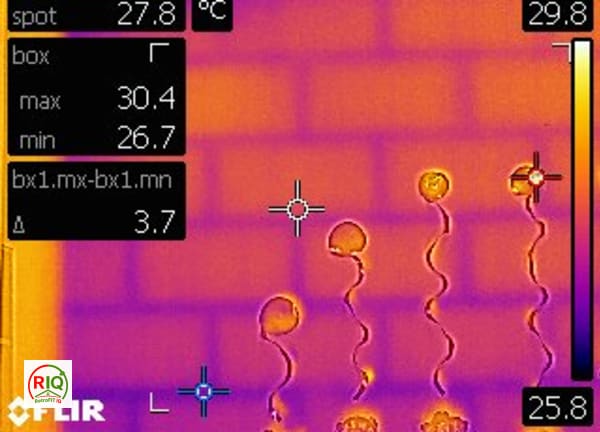
Thermal Bridging Visible Through Masonry Blockwork Wall

Sample Building Performance Investigation Report — Thermal Imaging

Thermal Bridge at Internal Corner Wall Junction

Thermal Bridge at Wall-Ceiling Junction Near Window

Airtightness Testing in a Stratford Victorian Terrace
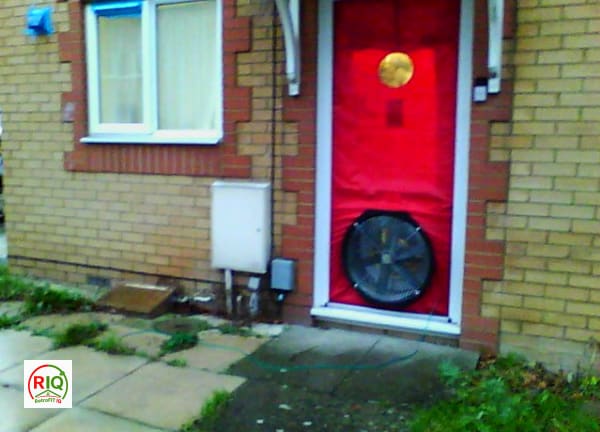
Blower Door Airtightness Test Setup
No related investigations yet.
Browse all investigationsFrequently asked questions
How do I find the cause of damp myself?+
Start by recording when the damp is worst and exactly where it sits, then inspect the external fabric directly outside it and review your indoor moisture and ventilation. These clues usually point to one mechanism; measurement confirms it.
Does a moisture meter tell me the cause of damp?+
No. A moisture meter shows that a surface is wet, but not why. The same high reading can come from condensation, penetrating damp, rising damp or a leak, so it cannot diagnose the cause alone.
How can I confirm it is condensation?+
Compare the surface temperature with the room's dew point. If the surface is colder than the dew point in the conditions where the damp appears, condensation is forming there.
How do I know if it is penetrating damp?+
Look for a localised patch that worsens during and after rain, with an external defect — gutter, downpipe, render or pointing — above or near it that water can track through.
Could it be a hidden plumbing leak?+
Yes. A persistent local damp area near pipes, a bathroom or a kitchen may be a leak rather than classic damp, which is why a thorough diagnosis tests for this too.
Why does my damp keep coming back after treatment?+
Almost always because the treatment addressed the wrong mechanism. If condensation is treated as rising damp, for example, the real cause is never touched and the damp returns.
What does a professional damp investigation involve?+
Thermal imaging, surface-temperature and dew-point analysis, data logging, moisture profiling, salts screening and an external fabric inspection — combined to pinpoint a single, defensible cause.
Stop guessing — find the real cause
Do not spend money fixing symptoms before you understand the cause. Every home behaves differently, and the only reliable way to know what is happening in yours is professional building performance diagnostics. At RetrofitIQ we verify buildings using the right combination of investigations:
- Thermal imaging
- Blower door testing
- Moisture & dew point readings
- Ventilation review
- Building physics assessment
- Passive House methodology