
Why is there damp at the bottom of my walls?
Damp at the bottom of a wall is one of the most misdiagnosed problems in housing, because several very different causes produce the same low-level damp band — true rising damp, penetrating damp, a bridged damp-proof course, high external ground levels, a plumbing leak, or even condensation on a cold low surface. They look alike but need completely different remedies, so the single most important step is to identify which one you have before any treatment, rather than assuming 'rising damp' and applying an injected chemical course that may do nothing.
 Reviewed by George Sora, Certified Passive House DesignerUpdated June 2026
Quick answer & key takeaways
8 min read- Low-level wall damp has several causes that look alike but need different fixes.
- It is far more often penetrating, bridging or ground-level related than true rising damp.
- A bridged DPC or high external ground level is a common, fixable cause.
- Diagnosis with moisture and salt analysis must come before any treatment.
- Biggest misconception: damp low on a wall is automatically rising damp needing a chemical DPC.
- Retrofit IQ's approach: measure and identify the cause, then match the remedy to it.
What this usually means
When damp appears as a band low down on a wall, often with a tide mark, staining or perished plaster near the skirting, it is tempting to call it rising damp and inject a chemical damp-proof course. But genuine rising damp — ground moisture drawn up through a wall by capillary action where the DPC is absent or failed — is far less common than the industry once claimed, and several other causes produce an identical-looking low-level damp band. Treating the wrong cause is why so many 'damp-proofing' treatments fail and the damp returns.
The realistic alternatives are often more likely. The DPC may be bridged — by a raised external path, render carried down over it, a flower bed or debris piled against the wall, or internal plaster spanning it — letting moisture cross a perfectly good barrier. External ground levels may sit above the internal floor, so water tracks straight through the wall. There may be penetrating damp from a defective gully, downpipe or splashback at the base of the wall; a plumbing or heating leak below the floor; or simply condensation forming on a cold low surface behind furniture. Each leaves damp at the bottom of the wall, but for a different reason.
Because the cause dictates the cure, diagnosis must come first. Lowering a bridging ground level, clearing debris, or removing render over the DPC can solve a problem that no injected course would; a leak needs the pipe fixed; penetrating damp needs the external defect repaired; condensation needs ventilation and surface warming. Moisture profiling, salt analysis (rising damp carries characteristic ground salts), dew-point readings and external inspection distinguish these reliably. Identifying which mechanism is at work — rather than assuming rising damp — is what allows the damp to be fixed properly and not merely re-plastered over.
Common causes
Bridged damp-proof course
Render, plaster, debris or a raised path bridging the DPC lets moisture cross a sound barrier.
High external ground levels
Ground or paving above the internal floor allows water to track through the wall low down.
Penetrating damp at the base
A leaking gully, downpipe or splashback drives moisture into the lower wall from outside.
Plumbing or heating leak
A leak below the floor or in nearby pipework wets the bottom of the wall, mimicking rising damp.
Genuine rising damp
Where the DPC is absent or failed, ground moisture can rise by capillary action — but this is less common than assumed.
Signs and symptoms
A tide mark low on the wall
A horizontal stain near the skirting is the classic sign — but it has several possible causes.
Perished or salt-stained plaster
Crumbling, salt-blown plaster low down can indicate rising or penetrating moisture carrying salts.
Damp worse after rain
Low-level damp that worsens with rainfall points to penetrating damp or ground-level bridging, not rising damp.
External ground above the floor
Paths, soil or paving higher than the internal floor strongly suggest a bridging cause.
A localised wet patch
Damp concentrated at one spot often indicates a leak rather than uniform rising damp.
What most people check first
- Whether external ground levels sit above the internal floor.
- Whether render, debris or a path is bridging the DPC.
- Whether the damp worsens after rain (penetrating) or is localised (a leak).
- Whether it could be condensation on a cold low surface.
What most people miss
- That low-level damp is far more often bridging, penetrating or a leak than true rising damp.
- That a bridged DPC or high ground level lets moisture cross a sound barrier.
- That an injected chemical DPC does nothing if rising damp is not the cause.
- That salt and moisture analysis can distinguish the mechanisms reliably.
The building physics
Moisture can reach the base of a wall by several distinct transport mechanisms, and they leave similar visible damp but behave differently. True rising damp is capillary rise of ground water through porous masonry above the level of a missing or failed DPC, typically limited in height and carrying ground salts (nitrates and chlorides) that accumulate at the evaporation zone. Penetrating damp is liquid water driven horizontally through the wall by a defect or by ground contact. Bridging is moisture by-passing an intact DPC via a solid path. A leak is a point source. Each produces a low-level damp pattern, so the visible symptom alone cannot identify the cause.
Distinguishing them is a measurement task. A vertical moisture profile through the wall thickness and up its height shows whether moisture decreases with height (consistent with rising damp) or is tied to an external defect or level; salt analysis confirms whether ground salts characteristic of rising damp are present at the band; and dew-point and surface-temperature readings separate condensation from liquid moisture. External inspection locates bridging paths, high ground, and rainwater defects. Together these resolve which mechanism is operating, which surface inspection and a hand-held conductance meter alone cannot do reliably.
The remedy must match the mechanism, which is why diagnosis is decisive. Bridging and high ground levels are corrected by removing the bridge or lowering the ground — often a complete cure requiring no DPC work at all. Penetrating damp needs the external defect repaired; a leak needs the pipe fixed and the wall dried. Genuine rising damp, where confirmed, may justify a new physical or chemical DPC and replastering, but only once the far commoner alternatives are excluded. The investigation-first principle is especially important here because the default assumption — rising damp treated with an injected course — is frequently wrong, which is the main reason damp 'treatments' so often fail to last.
How to deal with damp at the bottom of a wall
Identify the mechanism first with moisture and salt analysis and an external inspection, then match the remedy — often correcting ground levels or a defect rather than injecting a DPC.
- 01
Diagnose the mechanism
Use moisture profiling, salt analysis and dew-point readings to identify rising, penetrating, bridging, leak or condensation.
- 02
Inspect externally
Check ground levels, paths, render over the DPC, gullies and downpipes for bridging and penetrating causes.
- 03
Correct ground levels and bridges
Lower high ground, clear debris and remove render or plaster bridging the DPC where these are the cause.
- 04
Repair leaks and external defects
Fix plumbing leaks and rainwater defects that are driving moisture into the wall base.
- 05
Only treat rising damp if confirmed
Install a new DPC and replaster only where genuine rising damp is positively identified.
- 06
Allow the wall to dry and verify
Let the wall dry once the source is removed and confirm the damp does not return.
How to prevent it coming back
- Keep external ground levels below the internal floor and the DPC.
- Avoid render, paths or debris bridging the damp-proof course.
- Maintain gullies, downpipes and external drainage at the wall base.
- Diagnose before treating, rather than assuming rising damp.
How Retrofit IQ investigates this
We identify which moisture mechanism is causing the low-level damp before any treatment, then match the remedy.
Do not spend money fixing symptoms before you understand the cause — investigate first, then build with confidence.
Do I need a professional investigation?
Damp at the bottom of a wall is exactly the case where investigation before treatment pays off, because the visible band has several possible causes and rising damp is the least likely of them. Moisture and salt analysis with an external inspection identifies the real mechanism, so the right, often simpler, remedy is applied rather than an injected DPC that may not be needed.
Where to go next
Relevant services
Related comparisons
From the Academy
Related case studies
Related problems you may also have
Evidence from Real Projects (17)
Real project and investigation images from our own fieldwork, matched to this page — not stock photography.

Thermal Bridge at Wall-Ceiling Junction Near Window
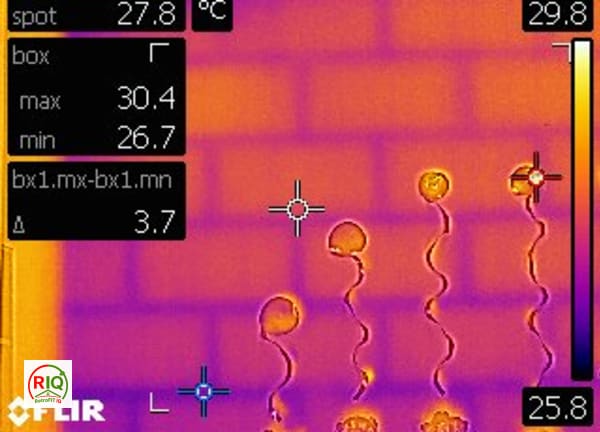
Thermal Bridging Visible Through Masonry Blockwork Wall

Thermal Bridge at Internal Corner Wall Junction

Sample Building Performance Investigation Report — Thermal Imaging

Airtightness Testing in a Stratford Victorian Terrace

Acoustic Floor Upgrades: Mineral Wool Insulation Between Joists
No related investigations yet.
Browse all investigationsFrequently asked questions
Why is there damp at the bottom of my walls?+
Low-level wall damp has several possible causes that look alike — a bridged damp-proof course, high external ground levels, penetrating damp, a plumbing leak, condensation, or genuine rising damp. Rising damp is the least common, so the cause must be diagnosed before any treatment.
Is damp at the skirting always rising damp?+
No — that is the commonest misdiagnosis. A tide mark low on the wall is far more often caused by a bridged DPC, high ground levels, penetrating damp or a leak. Assuming rising damp and injecting a chemical course is why many treatments fail.
What is a bridged damp-proof course?+
It is where moisture by-passes an otherwise sound DPC via a solid path — render carried down over it, a raised path or flower bed, debris against the wall, or internal plaster spanning it. Removing the bridge often cures the damp with no DPC work.
How do I know if it's really rising damp?+
Genuine rising damp typically reduces in intensity with height and carries ground salts (nitrates, chlorides) at the band. Moisture profiling and salt analysis confirm it, distinguishing it from penetrating, bridging or condensation, which a surface meter alone cannot.
Do I need a chemical damp-proof course?+
Only if genuine rising damp is positively confirmed and the commoner causes excluded. Often the real fix is lowering ground levels, removing a bridge or repairing a defect — none of which an injected DPC addresses.
Why does my low-level damp get worse after rain?+
Damp that worsens with rainfall points to penetrating damp or ground-level bridging — water tracking through the wall from outside — rather than rising damp, which is driven by ground moisture and less tied to rain.
How do you diagnose damp at the base of a wall?+
We profile the wall's moisture, test for ground salts, take dew-point and surface readings, and inspect externally for high ground, bridges and rainwater defects, then match the remedy to the confirmed cause.
Stop guessing — find the real cause
Do not spend money fixing symptoms before you understand the cause. Every home behaves differently, and the only reliable way to know what is happening in yours is professional building performance diagnostics. At RetrofitIQ we verify buildings using the right combination of investigations:
- Thermal imaging
- Blower door testing
- Moisture & dew point readings
- Ventilation review
- Building physics assessment
- Passive House methodology