
Is rising damp real, and do I need a damp-proof course?
Rising damp is real — ground moisture can rise through masonry by capillary action where there is no working damp-proof course — but it is far less common than the volume of 'rising damp' diagnoses and injected damp-proof courses suggests. A great many homes treated for rising damp actually had penetrating damp, a bridged DPC, high ground levels, a leak or condensation, none of which an injected course addresses. So the honest answer is: rising damp exists, but you should only treat it once it has genuinely been confirmed.
 Reviewed by George Sora, Certified Passive House DesignerUpdated June 2026
Quick answer & key takeaways
8 min read- Rising damp is genuine but much rarer than it is diagnosed.
- Most 'rising damp' is actually penetrating, bridging, a leak or condensation.
- An injected chemical DPC does nothing for those other causes.
- A DPC is only justified once rising damp is positively confirmed.
- Biggest misconception: low-level damp equals rising damp equals chemical injection.
- Retrofit IQ's approach: diagnose with salt and moisture analysis before any DPC.
What this usually means
Rising damp is a real physical process: where a wall is in contact with damp ground and has no effective damp-proof course, water can be drawn upward through the connected pores of the masonry by capillary action, to a height where evaporation balances the rise — typically up to about a metre. It carries dissolved ground salts that accumulate at the top of the damp zone, and it is genuinely found in some older buildings with no DPC, a failed DPC, or a DPC that has been bypassed. So it is not a myth; the myth is how often it is the actual cause.
The problem is that the same low-level damp can be produced by several far commoner causes — penetrating damp, a bridged DPC, ground levels above the internal floor, plumbing leaks and condensation — and the damp-proofing industry has historically diagnosed 'rising damp' from a quick survey with a hand-held conductance meter, then sold an injected chemical DPC and replastering. Conductance meters, however, respond to salts and surface moisture and cannot prove capillary rise, so this approach over-diagnoses rising damp dramatically, and the injected course frequently treats a problem that was never there while the true cause continues.
This is why the question should be turned around: not 'how do I treat my rising damp?' but 'is this actually rising damp, or one of the more likely alternatives?' Confirming it requires proper diagnosis — a moisture profile through the wall, salt analysis for the ground salts characteristic of rising damp, dew-point readings to exclude condensation, and an external inspection for bridging and penetrating causes. Only where that evidence genuinely points to capillary rise is a new damp-proof course (physical or chemical) and salt-resistant replastering the right remedy. In the many cases where it does not, the real fix is usually cheaper and an injected DPC would have been wasted.
Common causes
Misdiagnosis from a surface meter
Conductance meters respond to salts and surface moisture and cannot prove capillary rise, leading to over-diagnosis.
Penetrating damp mistaken for rising
Water entering through the wall from outside produces low-level damp wrongly called rising damp.
Bridged DPC or high ground
Moisture by-passing a sound DPC, or ground above the floor, mimics rising damp.
Leaks and condensation
Plumbing leaks and condensation on cold low surfaces are frequently misread as rising damp.
Genuine absent or failed DPC
Where there truly is no working DPC, capillary rise of ground moisture can occur — the real, rarer case.
Signs and symptoms
A tide mark up to about a metre
Genuine rising damp typically reaches a limited height with salts at the top of the band.
Salt deposits at the damp margin
Ground salts concentrating at the top of the damp zone are consistent with capillary rise.
Damp unrelated to rainfall
Rising damp is driven by ground moisture, so it is less tied to rain than penetrating damp.
An old building with no DPC
Properties genuinely lacking a working DPC are where rising damp is plausible.
Damp that returns after a chemical DPC
Damp persisting after injection strongly suggests the cause was never rising damp.
What most people check first
- Whether the diagnosis was made with proper analysis or just a surface meter.
- Whether penetrating damp, bridging, high ground or a leak could explain it.
- Whether ground salts characteristic of rising damp are actually present.
- Whether the property genuinely lacks a working damp-proof course.
What most people miss
- That rising damp is real but far rarer than it is diagnosed.
- That a conductance meter cannot prove rising damp.
- That an injected DPC does nothing for the commoner alternative causes.
- That confirming the cause first usually reveals a cheaper, different fix.
The building physics
Capillary rise in masonry follows the same physics as a liquid climbing a narrow tube: water rises through the connected pore network until the upward capillary pressure is balanced by gravity and by evaporation from the wall faces, giving a characteristic limited height and a salt band at the top where the water evaporates and deposits dissolved ground salts. Genuine rising damp therefore has a recognisable signature — moisture decreasing with height, hygroscopic ground salts (nitrates and chlorides) concentrated at the margin, and a source in damp ground at the base of a wall lacking an effective DPC.
The diagnostic difficulty is that hand-held conductance ('damp') meters measure electrical conductance, which is raised by surface moisture and, crucially, by salts, so they read 'damp' on walls that carry hygroscopic salts or surface condensation regardless of whether capillary rise is occurring. Relying on such a meter, as much of the damp-proofing trade has, systematically over-diagnoses rising damp. Reliable confirmation needs a moisture profile through the wall thickness and height, gravimetric or calcium-carbide measurement, and salt analysis, combined with excluding penetrating damp, bridging, leaks and condensation by inspection and dew-point readings.
Because the alternative causes are both commoner and addressed by entirely different remedies, the consequence of misdiagnosis is significant: an injected chemical DPC and replaster is applied while the real source — a high path, a bridged DPC, a leaking gully, condensation — continues, so the damp returns and the money is wasted. Where rising damp is genuinely confirmed, a new physical or chemical DPC with salt-resistant replastering is appropriate. The investigation-first principle is therefore central to damp: establish, by evidence rather than a meter reading, that capillary rise is actually occurring before installing a DPC, and in most cases a more accurate, cheaper remedy emerges.
How to know if you really need a damp-proof course
Insist on a proper diagnosis before any DPC. Confirm capillary rise with moisture and salt analysis and exclude the commoner causes, then install a DPC only if rising damp is genuinely proven.
- 01
Get a proper diagnosis
Use moisture profiling and salt analysis rather than a surface meter to test for genuine capillary rise.
- 02
Exclude the common alternatives
Rule out penetrating damp, bridging, high ground, leaks and condensation by inspection and dew-point readings.
- 03
Confirm ground salts and a missing DPC
Check for the ground salts and the absent or failed DPC that genuine rising damp requires.
- 04
Fix any other cause found
If the cause is bridging, a leak or condensation, address that — an injected DPC would not help.
- 05
Install a DPC only if confirmed
Where rising damp is genuinely proven, fit a physical or chemical DPC with salt-resistant replastering.
- 06
Verify the result
Allow the wall to dry and confirm the damp does not return, whichever remedy was correct.
How to prevent it coming back
- Diagnose with proper analysis before agreeing to any DPC.
- Be wary of a 'rising damp' verdict based only on a surface meter.
- Address bridging, ground levels and leaks, which are commoner causes.
- Treat rising damp only where it is positively confirmed.
How Retrofit IQ investigates this
We establish by evidence whether rising damp is genuinely occurring before any DPC, and identify the real cause where it is not.
Do not spend money fixing symptoms before you understand the cause — investigate first, then build with confidence.
Do I need a professional investigation?
Before paying for an injected damp-proof course, it is always worth an independent diagnosis, because rising damp is over-diagnosed and the commoner causes need different, often cheaper fixes. Confirming whether capillary rise is genuinely occurring — with salt and moisture analysis, not just a meter — ensures a DPC is installed only where it is actually needed.
Diagnose the damp before you treat it
Most damp is mis-diagnosed and mis-treated. An independent moisture investigation finds the true cause — and usually a far cheaper fix than the one being sold.
- Moisture mapping & dew-point readings
- Distinguishes condensation, leaks & penetrating damp
- Independent report — no treatment to sell
Where to go next
Relevant services
Related comparisons
From the Academy
Related case studies
Related problems you may also have
Evidence from Real Projects (10)
Real project and investigation images from our own fieldwork, matched to this page — not stock photography.
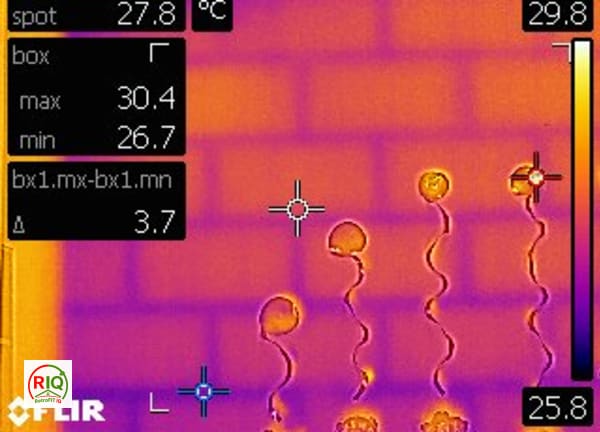
Thermal Bridging Visible Through Masonry Blockwork Wall

Sample Building Performance Investigation Report — Thermal Imaging

Thermal Bridge at Internal Corner Wall Junction

Thermal Bridge at Wall-Ceiling Junction Near Window
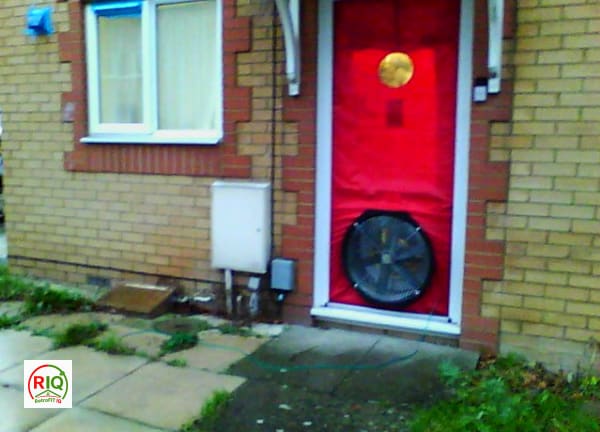
Blower Door Airtightness Test Setup

Airtightness Testing in a Stratford Victorian Terrace
No related investigations yet.
Browse all investigationsFrequently asked questions
Is rising damp real?+
Yes — ground moisture can rise through masonry by capillary action where there is no working damp-proof course. But it is far rarer than it is diagnosed: most homes treated for rising damp actually had penetrating damp, a bridged DPC, high ground, a leak or condensation.
Do I need a damp-proof course?+
Only if rising damp is genuinely confirmed by proper diagnosis. An injected DPC does nothing for the commoner causes, so you should establish by salt and moisture analysis that capillary rise is actually occurring before installing one.
Why is rising damp over-diagnosed?+
Because it has often been diagnosed from a quick survey with a hand-held conductance meter, which responds to salts and surface moisture and cannot prove capillary rise. This leads to selling injected DPCs for damp that was never rising damp.
Can a damp meter prove rising damp?+
No. A conductance meter reads 'damp' on walls carrying hygroscopic salts or surface condensation whether or not water is rising. Confirming rising damp needs moisture profiling through the wall and salt analysis, plus excluding the other causes.
Why did my damp come back after a chemical DPC?+
Almost certainly because rising damp was not the real cause. If the damp persists after injection, the true source — bridging, a leak, penetrating damp or condensation — was never addressed, which is the classic sign of misdiagnosis.
Is damp-proofing a scam?+
Genuine rising damp does sometimes need a DPC, so it is not inherently a scam, but the over-diagnosis of rising damp from surface meters has led to many unnecessary injected courses. The protection is an independent, evidence-based diagnosis before any treatment.
How do you confirm whether it's really rising damp?+
We profile the wall's moisture, test for the ground salts characteristic of capillary rise, take dew-point readings to exclude condensation, and inspect externally for bridging and leaks — recommending a DPC only where rising damp is genuinely proven.
Stop guessing — find the real cause
Do not spend money fixing symptoms before you understand the cause. Every home behaves differently, and the only reliable way to know what is happening in yours is professional building performance diagnostics. At RetrofitIQ we verify buildings using the right combination of investigations:
- Thermal imaging
- Blower door testing
- Moisture & dew point readings
- Ventilation review
- Building physics assessment
- Passive House methodology