
Do I need a damp survey or a building investigation?
If you have damp, you will be offered a 'damp survey' — but these vary enormously, and many are really sales visits for a particular treatment. A building performance investigation is a different exercise: it measures the physics to identify the true cause before anyone recommends a remedy. Knowing which you need can be the difference between solving the problem and paying for work that cannot succeed.
 Reviewed by George Sora, Certified Passive House DesignerUpdated June 2026
Quick answer & key takeaways
7 min read- A 'damp survey' often comes from a contractor whose business is selling a specific treatment.
- A building performance investigation is independent and measures the cause before recommending anything.
- Free damp surveys frequently default to diagnosing rising damp and recommending a damp-proof course.
- If your damp keeps returning, the issue is usually a misdiagnosis, not a failed treatment.
- An investigation separates condensation, penetrating and rising damp with instruments, not assumption.
- Biggest misconception: any 'survey' will find the cause. Many are designed to justify a product.
- Retrofit IQ's approach: diagnose first, independently, and recommend the remedy that matches the real mechanism.
What this usually means
The phrase 'damp survey' covers two very different things. At one end is a visit from a damp-proofing contractor, often free, carried out by someone whose company makes its money installing a particular treatment — typically a chemical damp-proof course and replastering. At the other end is an independent, instrumented assessment of the building's moisture behaviour, carried out by someone with no product to sell, whose job is to identify the cause. The two can reach opposite conclusions about the same wall.
This matters because the most common cause of damp — condensation — is not solved by the most commonly sold remedy. A contractor incentivised to install damp-proof courses has every reason to read a damp patch as rising damp, even though genuine rising damp is comparatively rare. The result is a recurring pattern across the country: homeowners pay for damp-proofing and replastering, the damp returns within a season or two, and the actual cause — cold surfaces and poor ventilation — is still there.
A building performance investigation breaks that cycle by separating diagnosis from sales. It measures surface temperatures against the dew point, logs humidity, profiles moisture, screens for ground salts and inspects the external fabric, then tells you which mechanism is genuinely present. Only after that does it recommend a remedy — and because the recommendation follows the evidence rather than a product range, it is far more likely to fix the problem the first time.
Common causes
Recurring damp after previous treatment
When damp returns after damp-proofing or replastering, the original diagnosis was usually wrong, and an independent investigation is needed to find the true cause.
Conflicting contractor opinions
Different damp companies offering different treatments for the same wall is a clear signal to get an independent, measured diagnosis.
A quote with no measurement
Being quoted for a damp-proof course without anyone measuring humidity, surface temperature or salts is a reason to seek a proper investigation first.
Buying or renovating a property
Visible damp in a property you are buying or refurbishing warrants an independent investigation, because the cause changes both cost and scope.
Health concerns from mould
Where damp and mould are affecting air quality, an investigation that addresses the cause protects health better than repeated cleaning or cosmetic treatment.
Signs and symptoms
A free survey that arrives at rising damp
A no-cost survey that concludes you need a damp-proof course, with little measurement, is a sign you are being sold a product rather than diagnosed.
Damp that returns after treatment
Recurrence is the clearest evidence that the cause was misdiagnosed and a measured investigation is needed.
No instruments used during the visit
A genuine diagnosis uses thermal imaging, dew-point and moisture measurement; a visit relying on a single handheld meter and a sales form is not an investigation.
The same patch, different verdicts
Multiple contractors disagreeing about the same damp area shows that assumption, not measurement, is driving the conclusions.
What most people check first
- Who is offering the survey and whether they sell the treatment they recommend.
- Whether the survey includes measurement — humidity, surface temperature, dew point and salts — or just a visual and a quote.
- Whether previous treatments have failed, indicating misdiagnosis.
- Whether you need an independent opinion before committing to expensive remedial work.
What most people miss
- That a 'damp survey' and an independent building investigation are not the same service.
- That a contractor who sells a treatment has an incentive to diagnose the condition that treatment cures.
- That recurring damp almost always means the diagnosis, not the workmanship, was wrong.
- That measuring the cause first usually costs far less than treating the wrong cause repeatedly.
The building physics
The case for an investigation over a sales-led survey rests on the same building physics that governs damp itself. Because condensation, penetrating and rising damp obey different laws and leave different signatures, the only way to be confident of the cause is to measure those signatures — surface temperature against the dew point for condensation, rainfall correlation and a traceable defect for penetrating damp, and a capillary height limit with ground salts for rising damp. A visual inspection alone, especially one shaped by what a contractor sells, cannot reliably separate them.
An instrumented investigation also reveals the things assumption misses: thermal bridges that drive condensation, ventilation shortfalls that keep humidity high, and combined mechanisms acting together. These are exactly the findings that change the remedy from an expensive, ineffective damp-proof course to a targeted, durable fix — better surface temperatures and ventilation for condensation, a fabric repair for ingress, or genuine damp-proofing only where it is truly warranted.
Independence is part of the method, not a marketing point. When the person diagnosing the problem has no product to sell, the diagnosis is free to follow the evidence wherever it leads. That is why an investigation-led approach so often identifies condensation where a treatment-led survey found rising damp — and why it tends to solve the problem once, rather than starting a cycle of repeated remedial work.
Choosing the right route for your situation
The decision turns on what you actually need: a product, or an answer. For recurring or ambiguous damp, an independent investigation is almost always the better first step.
- 01
Decide whether you need diagnosis or a quote
If you already know the cause and need a repair, a specialist contractor is fine. If the cause is unclear or the damp recurs, you need diagnosis first.
- 02
Prefer measured, independent assessment
Choose an assessment that uses thermal imaging, dew-point and moisture measurement and salts screening, carried out by someone who does not sell the remedy.
- 03
Get the cause confirmed before any treatment
Insist on knowing which mechanism is present and the evidence for it before committing to a damp-proof course, replastering or waterproofing.
- 04
Match the remedy to the mechanism
Use ventilation and warmer surfaces for condensation, fabric repair for penetrating damp, and damp-proofing only for confirmed rising damp.
- 05
Verify after the work
Re-measure to confirm the cause has been addressed, so you are not relying on appearance alone.
How to prevent it coming back
- Treat any quote that skips measurement with caution, especially a free one defaulting to rising damp.
- Get an independent diagnosis before committing to expensive treatment.
- Keep records of timing, location and any previous treatments to inform the investigation.
- Address condensation drivers — cold surfaces and humidity — to prevent the most common form of damp.
How Retrofit IQ investigates this
Our investigation is independent and measurement-led: we identify the true cause first and recommend the remedy that matches it, with no product to sell.
Do not spend money fixing symptoms before you understand the cause — investigate first, then build with confidence.
Do I need a professional investigation?
Choose a building performance investigation rather than a contractor's damp survey whenever the damp has returned after previous work, when contractors disagree, when you are being quoted for a damp-proof course without measurement, or when health and air quality are a concern. In all of these cases, an independent measured diagnosis is the step most likely to end the problem rather than prolong it.
If you are buying or renovating, an investigation gives you an unbiased picture of the cause, the cost and the scope before you commit — protecting you from inheriting a misdiagnosis that becomes your problem to pay for.
Diagnose the damp before you treat it
Most damp is mis-diagnosed and mis-treated. An independent moisture investigation finds the true cause — and usually a far cheaper fix than the one being sold.
- Moisture mapping & dew-point readings
- Distinguishes condensation, leaks & penetrating damp
- Independent report — no treatment to sell
Where to go next
Relevant services
Related comparisons
From the Academy
Related case studies
Evidence from Real Projects (10)
Real project and investigation images from our own fieldwork, matched to this page — not stock photography.
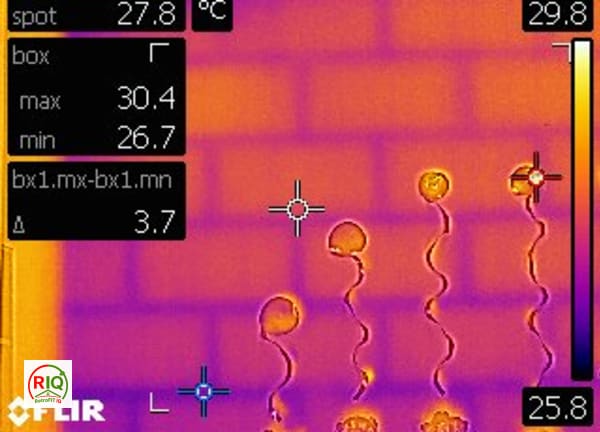
Thermal Bridging Visible Through Masonry Blockwork Wall

Sample Building Performance Investigation Report — Thermal Imaging

Thermal Bridge at Internal Corner Wall Junction

Thermal Bridge at Wall-Ceiling Junction Near Window

Airtightness Testing in a Stratford Victorian Terrace
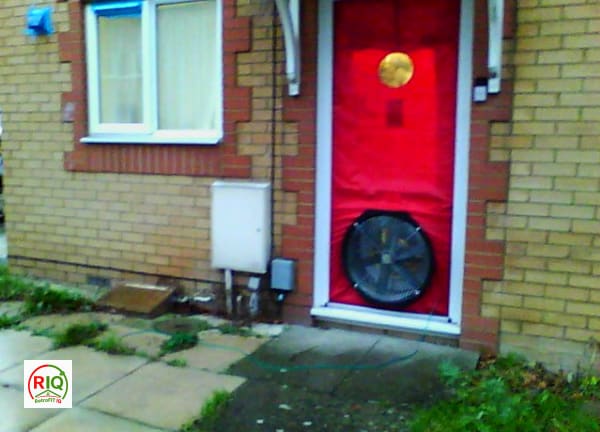
Blower Door Airtightness Test Setup
No related investigations yet.
Browse all investigationsFrequently asked questions
Is a free damp survey worth having?+
Be cautious. Many free damp surveys are sales visits from contractors who install a specific treatment, and they frequently default to diagnosing rising damp. An independent, measured investigation is more likely to find the true cause.
What is the difference between a damp survey and a building investigation?+
A damp survey is often a contractor assessing for a treatment they sell. A building performance investigation is an independent, instrumented diagnosis of the cause, carried out before any remedy is recommended.
Why did my damp come back after a damp-proof course?+
Almost always because the damp was condensation, not rising damp. A damp-proof course does nothing for condensation, so the real cause — cold surfaces and humidity — remained.
Do I need an investigation if my damp is obvious?+
If the cause is genuinely clear, such as a visible leak, a targeted repair may be enough. If the damp recurs or the cause is uncertain, an independent investigation is the safer first step.
How much can a wrong diagnosis cost me?+
A misdiagnosis typically means paying for an ineffective treatment, then paying again for the correct fix once the damp returns. Measuring the cause first usually costs far less than that cycle.
Is your assessment independent?+
Yes. We measure the cause and recommend the remedy that matches it, with no treatment product to sell, so the diagnosis follows the evidence.
What should a proper damp investigation include?+
Surface temperature and dew-point analysis, humidity logging, thermal imaging, moisture profiling, salts screening and an external fabric inspection — combined to confirm a single cause before any remedy.
Stop guessing — find the real cause
Do not spend money fixing symptoms before you understand the cause. Every home behaves differently, and the only reliable way to know what is happening in yours is professional building performance diagnostics. At RetrofitIQ we verify buildings using the right combination of investigations:
- Thermal imaging
- Blower door testing
- Moisture & dew point readings
- Ventilation review
- Building physics assessment
- Passive House methodology