
Should I be worried about damp when buying a house?
Damp in a house you are buying is worth understanding rather than panicking over — what matters is what is causing it and what it will cost to fix, not the word 'damp' itself. Much of the damp found in homes is condensation, which is manageable and relatively inexpensive to resolve; some is penetrating or rising damp from a defect, which ranges from a simple repair to a significant job; and occasionally it signals a more serious underlying problem. A mortgage valuation and a standard homebuyer survey often flag damp without diagnosing it, which can either scare buyers off a sound house or hide a costlier issue. Getting the cause properly assessed before you commit lets you decide, negotiate or budget with confidence.
 Reviewed by George Sora, Certified Passive House DesignerUpdated June 2026
Quick answer & key takeaways
8 min read- What matters is the cause and cost of the damp, not the label 'damp'.
- Much household damp is condensation — manageable and relatively cheap to fix.
- Penetrating and rising damp range from a small repair to a significant job.
- Standard surveys often flag damp without diagnosing it, which can mislead either way.
- Biggest misconception: damp means walk away. The diagnosis decides whether to worry.
- Retrofit IQ's approach: diagnose the cause and cost before you buy, so you decide on facts.
What this usually means
When a survey or viewing turns up damp, the instinct is either to panic and walk away or to dismiss it — and both can be mistakes, because 'damp' covers very different problems with very different implications. The most common cause of damp and mould in homes is condensation: humid indoor air meeting cold surfaces, which is a function of insulation, heating and ventilation rather than a structural fault, and is usually manageable and not expensive to resolve. Penetrating damp — water getting in through a defect such as failed pointing, render, flashings or guttering — can be a modest repair or a larger one, depending on the defect. Genuine rising damp is less common than often assumed and, where real, needs the damp-proof course addressing. The right level of concern depends entirely on which of these it is.
The difficulty is that the surveys most buyers rely on rarely diagnose it. A mortgage valuation is for the lender and a standard homebuyer survey assesses visible condition, so they tend to note 'damp' or recommend 'a specialist damp report' without establishing the cause — and a free 'specialist' report often comes from a contractor who sells damp-proofing, whose incentive is to find rising damp and quote for injections. The result is that buyers are frequently either frightened off a perfectly sound house by an undiagnosed damp note, or reassured by a cheap chemical treatment that does not address the real cause. The word on the survey tells you damp is present; it does not tell you whether to worry.
So the sensible step, particularly with an older or solid-wall home, is to have the damp independently diagnosed before you commit. An assessment that measures the moisture, temperature and ventilation and distinguishes condensation from penetrating and rising damp tells you what is actually causing it, how serious it is, and what it will realistically cost to put right. That turns 'there's damp' into a clear, costed picture: a manageable condensation issue you can resolve, a defect to repair and perhaps negotiate on, or — occasionally — a reason to think harder about the purchase. Either way you buy with your eyes open, rather than overpaying for a house with a hidden problem or losing a good one over a fixable, misunderstood patch of damp.
Common causes
Condensation
The commonest cause — humid air on cold surfaces — and usually manageable and inexpensive.
Penetrating damp
Water entering through an external defect, ranging from a small repair to a larger job.
Rising damp
Less common than assumed; where genuine it needs the damp-proof course addressing.
Undiagnosed survey note
A 'damp' note without a cause can scare buyers off or hide a costlier issue.
Biased specialist reports
Free reports from damp-proofing firms tend toward selling treatments.
Signs and symptoms
Damp noted on the survey
A homebuyer survey flagging damp warrants an independent diagnosis, not panic.
Fresh paint or new plaster in patches
Localised redecoration can hide a recurring damp problem.
Musty smell or mould
A damp smell or mould suggests moisture worth diagnosing before buying.
Tide marks or staining
Marks low on walls or after rain hint at the type of damp present.
An older or solid-wall home
Traditional construction makes the cause and cost of damp the key unknown.
What most people check first
- Whether the damp is condensation, penetrating or rising — the cause drives the cost.
- Whether the survey actually diagnosed it or just flagged it.
- Whether any 'specialist report' is independent or tied to selling treatment.
- What the realistic cost to resolve it would be.
What most people miss
- That most household damp is condensation, not structural.
- That a 'damp' note is not a diagnosis.
- That free damp reports can be biased toward selling damp-proofing.
- That an independent diagnosis lets you negotiate or decide confidently.
The building physics
Assessing damp risk in a purchase is about identifying the mechanism and quantifying its consequences, because the three forms differ greatly in cause and cost. Condensation is governed by surface temperatures, indoor humidity and ventilation; it is the most common cause of household damp and mould and is typically resolved by warming surfaces and improving ventilation — measures that are manageable and proportionate. Penetrating damp results from a breach in the external envelope and its cost scales with the defect, from re-pointing or clearing a gutter to larger render or roof repairs. Rising damp is capillary movement of ground water in the absence of an effective damp-proof course; genuinely present it requires specific remediation, but it is over-diagnosed because the conductance meters used in quick surveys respond to salts and surface moisture and cannot prove capillary rise.
The standard transactional surveys are not structured to make these distinctions. A valuation safeguards the lender's security and a homebuyer survey reports visible condition; neither logs the environmental data, maps surfaces thermally or profiles moisture through the fabric, so they identify the presence of damp but not its mechanism. The common referral to a 'specialist damp report' frequently routes the buyer to a firm whose business is selling injected damp-proof courses, creating an incentive to diagnose rising damp and quote treatment — which both inflates cost and, where the real cause is condensation, fails to fix it. The information a buyer needs — cause, severity and realistic cost — is therefore usually absent from the documents they receive.
An independent building-physics diagnosis supplies that information by measurement and reasoning: temperature and humidity logging to establish condensation risk, thermal imaging to locate cold surfaces and bridges, comparative and deep moisture measurement to distinguish surface from in-depth wetting, and external inspection for penetrating-damp defects and genuine rising-damp indicators. Interpreted together, these identify the mechanism and the proportionate remedy and its cost, converting an ambiguous 'damp' note into a costed decision. Because the assessment is independent of any treatment sale and is most decisive precisely where the standard surveys are weakest — older and solid-wall homes — it is what allows a buyer to avoid overpaying for a hidden problem or abandoning a sound house over a fixable, misunderstood patch of damp.
How to handle damp when buying a house
Don't react to the word 'damp' — have the cause independently diagnosed and costed before you commit, so you can resolve it, negotiate on it, or, rarely, walk away on facts.
- 01
Don't panic at a damp note
Treat a survey's damp flag as a prompt to diagnose, not a reason to walk away.
- 02
Get an independent diagnosis
Have the cause assessed by someone not selling a treatment, before you commit.
- 03
Identify the mechanism
Establish whether it is condensation, penetrating or rising damp, with measurement.
- 04
Cost the remedy
Get a realistic cost for the proportionate fix matched to the cause.
- 05
Negotiate or budget
Use the costed diagnosis to adjust your offer or plan the works.
- 06
Decide with confidence
Proceed, renegotiate or step back knowing what the damp actually is.
How to prevent it coming back
- Diagnose damp independently before committing to a purchase.
- Treat a survey's 'damp' note as a prompt, not a verdict.
- Be wary of free reports tied to selling damp-proofing.
- Use the costed diagnosis to negotiate or budget.
How Retrofit IQ investigates this
We diagnose the cause and cost of the damp independently before you buy, so the decision is made on facts rather than a survey's undiagnosed note.
Do not spend money fixing symptoms before you understand the cause — investigate first, then build with confidence.
Do I need a professional investigation?
If a house you are buying has damp, or the survey flags it, it is worth getting it independently diagnosed before you commit — especially in an older or solid-wall home. Establishing whether it is manageable condensation, a penetrating-damp repair, or genuine rising damp, and what it will cost, lets you proceed, negotiate or step back on facts rather than overpaying for a hidden problem or losing a sound house over a misunderstood patch.
Diagnose the damp before you treat it
Most damp is mis-diagnosed and mis-treated. An independent moisture investigation finds the true cause — and usually a far cheaper fix than the one being sold.
- Moisture mapping & dew-point readings
- Distinguishes condensation, leaks & penetrating damp
- Independent report — no treatment to sell
Where to go next
Relevant services
Related comparisons
From the Academy
Related case studies
Related problems you may also have
Evidence from Real Projects (11)
Real project and investigation images from our own fieldwork, matched to this page — not stock photography.
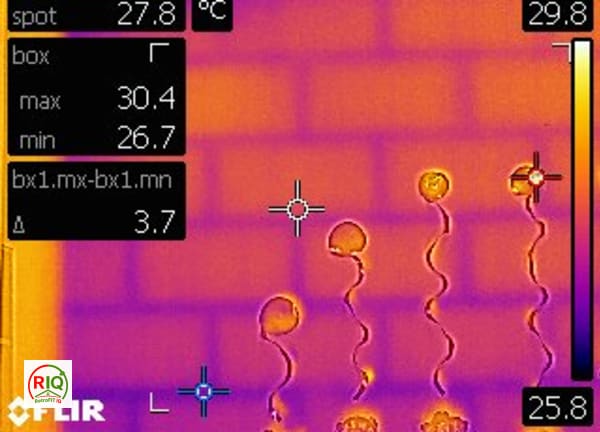
Thermal Bridging Visible Through Masonry Blockwork Wall

Sample Building Performance Investigation Report — Thermal Imaging

Thermal Bridge at Internal Corner Wall Junction

Thermal Bridge at Wall-Ceiling Junction Near Window

Airtightness Testing in a Stratford Victorian Terrace

Bathroom
No related investigations yet.
Browse all investigationsFrequently asked questions
Should I be worried about damp when buying a house?+
Not automatically — what matters is the cause and cost, not the word 'damp'. Much household damp is condensation, which is manageable and relatively cheap to fix; penetrating and rising damp vary from a small repair to a significant job. Having the cause independently diagnosed before you commit tells you whether to worry, negotiate or proceed.
Does damp mean I should walk away?+
Rarely on its own. Many sound houses have manageable condensation that is wrongly treated as a dealbreaker, while a cheap chemical treatment can mask a costlier issue. The decision should follow a proper diagnosis of the cause and cost, not the presence of damp itself.
Why didn't my homebuyer survey diagnose the damp?+
Because a mortgage valuation is for the lender and a homebuyer survey assesses visible condition — neither logs the environmental data or profiles moisture to identify the mechanism. They flag that damp is present but typically refer you on, often to a firm that sells damp-proofing, rather than diagnosing the cause.
Are free damp reports reliable?+
Treat them with caution. A free 'specialist' report often comes from a contractor whose business is selling injected damp-proof courses, so the incentive can be to diagnose rising damp and quote for treatment — which both inflates cost and, where the real cause is condensation, does not fix it. An independent assessment avoids that conflict.
How much does damp cost to fix?+
It depends entirely on the cause: condensation is usually resolved relatively inexpensively by warming surfaces and ventilating; penetrating damp ranges from re-pointing or clearing a gutter to larger repairs; genuine rising damp needs the damp-proof course addressing. A diagnosis gives you a realistic, costed picture to budget or negotiate with.
What should I do before I buy?+
Have the damp independently diagnosed and costed — particularly in an older or solid-wall home. We measure the moisture, temperature and ventilation, distinguish the type of damp, inspect the fabric, and report the cause, severity and likely cost, so you can proceed, renegotiate or step back on facts.
Stop guessing — find the real cause
Do not spend money fixing symptoms before you understand the cause. Every home behaves differently, and the only reliable way to know what is happening in yours is professional building performance diagnostics. At RetrofitIQ we verify buildings using the right combination of investigations:
- Thermal imaging
- Blower door testing
- Moisture & dew point readings
- Ventilation review
- Building physics assessment
- Passive House methodology