
Why is my garage or outbuilding damp?
Garages and outbuildings are commonly damp because they combine cold, uninsulated surfaces, often a bare or unsealed floor on the ground, and little or no ventilation or heating — the perfect conditions for condensation and ground moisture. Unlike a heated, ventilated home, a garage stays cold, so moist air readily condenses on its cold walls, floor and the underside of the roof, and any moisture rising from the ground or entering through the structure has no easy way to dry out. The result is a damp, sometimes musty space that can rust tools, spoil stored items and grow mould. Keeping it dry means understanding which source dominates — condensation, ground moisture or ingress — and addressing it.
 Reviewed by George Sora, Certified Passive House DesignerUpdated June 2026
Quick answer & key takeaways
8 min read- Garages and outbuildings are cold and unventilated, so condensation forms readily.
- A bare floor on the ground lets moisture rise into the space.
- Poor ventilation means moisture cannot dry out.
- The damp can rust tools, spoil stored items and grow mould.
- Biggest misconception: just heat it. Ventilation and ground moisture usually matter more.
- Retrofit IQ's approach: identify whether condensation, ground moisture or ingress dominates, then fix it.
What this usually means
A garage or outbuilding is, in moisture terms, the opposite of a home: it is usually unheated, so its surfaces stay cold; uninsulated, so those surfaces are as cold as the outdoors; and unventilated, so any moisture that gets in tends to stay. When relatively warm, moist air — from outside on a mild damp day, from a wet car, or from the ground — meets the cold concrete floor, the cold walls and the cold underside of a metal or single-skin roof, it condenses, leaving the surfaces wet. This is why a garage can stream with water or feel clammy even with no leak: it is condensation on cold surfaces in a space with no ventilation to clear it.
Ground moisture is the other major source. Many garages and outbuildings have a concrete floor laid directly on the ground without a damp-proof membrane, or solid walls without a damp-proof course, so moisture from the ground rises into the floor and walls and evaporates into the space, keeping it humid. Combined with the lack of ventilation, this moisture has nowhere to go. Penetrating damp — rain getting in through a leaking roof, failed render, gaps around doors, or an exposed wall — can add to it, particularly in older or poorly maintained outbuildings. So the damp in a garage is usually a mix of condensation on cold surfaces, moisture rising from the ground, and sometimes ingress, with one tending to dominate.
Keeping the space dry depends on which source dominates, which is worth establishing rather than guessing. Where condensation is the main problem, the answer is ventilation — providing airflow to carry the moist air out — and, where the space is used, some insulation and gentle heating to keep surfaces above the dew point; simply heating an unventilated, uninsulated garage can even make condensation worse by raising the air's moisture-carrying capacity then letting it condense on the still-cold surfaces. Where ground moisture dominates, addressing the floor (a sealed or membrane-backed finish) and the walls helps. Where there is ingress, the leak or defect must be fixed. An assessment that identifies the dominant source ensures the right measure — usually ventilation first — rather than an ineffective or counterproductive one.
Common causes
Condensation on cold surfaces
Moist air meeting the cold floor, walls and roof condenses in an unheated, uninsulated space.
Ground moisture
A floor or walls without a damp-proof barrier let moisture rise from the ground.
No ventilation
Without airflow, moisture cannot dry out and humidity builds.
Penetrating damp
A leaking roof, failed render or gaps around doors let rain in.
Moisture brought in
A wet car, damp items or washing add moisture to an unventilated space.
Signs and symptoms
Wet floor and walls
Surfaces streaming or damp indicate condensation on cold surfaces.
Musty, humid air
A damp, stale smell points to trapped moisture and poor ventilation.
Rusting tools and metal
Corrosion on stored metal reflects persistently high humidity.
Damp rising up the walls or floor
Moisture low on the walls or across the floor suggests ground moisture.
Wet after rain
Damp tracking rainfall indicates penetrating ingress through the structure.
What most people check first
- Whether the damp is condensation on cold surfaces, ground moisture or ingress.
- Whether there is any ventilation to clear moist air.
- Whether the floor and walls have a damp-proof barrier.
- Whether there is a leak or defect letting rain in.
What most people miss
- That heating an unventilated garage can worsen condensation.
- That ventilation is usually the first and most important measure.
- That a floor on the ground without a membrane lets moisture rise.
- That the dominant source should be identified before acting.
The building physics
An unheated, uninsulated outbuilding tracks the external temperature closely, so its internal surfaces are cold whenever the outdoor air is cold, and condensation occurs whenever air with a given moisture content contacts a surface below its dew point. Because the space has little thermal mass buffering and no heating to lift surface temperatures, mild, humid air — common in spring and autumn — readily condenses on the cold concrete and the cold roof, and the absence of ventilation prevents the humid air being replaced with drier air, so the moisture persists. This is surface condensation in an extreme form, driven by cold surfaces and stagnant humid air rather than by any leak.
Ground moisture adds a continuous vapour source where the construction lacks a barrier. A slab cast directly on the ground without a damp-proof membrane, or walls without a damp-proof course, allow capillary moisture to migrate from the ground into the floor and walls and evaporate into the air, raising the internal humidity and keeping surfaces damp; with no ventilation to remove that vapour, the space stays humid. Penetrating damp through a defective roof, render or door gaps introduces liquid water that compounds the load. The relative contribution of condensation, ground moisture and ingress varies with the construction, the exposure and the use, so the dominant mechanism must be identified to target the remedy.
The remedies follow the mechanism, and ventilation is usually primary. Providing airflow removes humid air and is the most effective and least counterproductive measure for condensation; insulation and gentle heating help only if the space is to be used and surfaces can be kept above the dew point — heating an unventilated, uninsulated space can paradoxically worsen condensation by raising the air's absolute humidity while the surfaces remain cold. Ground moisture is addressed by a sealed or membrane-backed floor finish and wall treatment, and ingress by repairing the defect. An assessment that logs the humidity, maps the cold and wet surfaces and checks the floor and ventilation establishes which source dominates, so the space is kept dry by the right measure — ventilation first in most cases — rather than by heating alone, which often disappoints or backfires.
How to keep a garage or outbuilding dry
Identify whether condensation, ground moisture or ingress dominates, then ventilate first, address the floor and walls for ground moisture, and fix any ingress — adding insulation and heat only where the space is used.
- 01
Identify the dominant source
Establish whether the damp is condensation, ground moisture or ingress.
- 02
Provide ventilation
Add airflow to carry moist air out — usually the first and most important step.
- 03
Address ground moisture
Use a sealed or membrane-backed floor finish and treat the walls where moisture rises.
- 04
Fix any ingress
Repair a leaking roof, failed render or gaps around doors letting rain in.
- 05
Insulate and heat if used
Where the space is used, add insulation and gentle heat to keep surfaces above the dew point.
- 06
Keep moisture sources out
Avoid storing wet items or drying washing in an unventilated space.
How to prevent it coming back
- Ventilate the space to clear moist air.
- Avoid heating an unventilated, uninsulated garage on its own.
- Seal or membrane the floor against ground moisture.
- Keep wet cars, items and washing out where possible.
How Retrofit IQ investigates this
We identify whether condensation, ground moisture or ingress is driving the damp, so the right measure keeps the space dry.
Do not spend money fixing symptoms before you understand the cause — investigate first, then build with confidence.
Do I need a professional investigation?
If a garage or outbuilding is persistently damp, musty or rusting your stored items, it is worth identifying which source dominates before acting. Establishing whether it is condensation on cold surfaces, ground moisture or ingress ensures the right measure — usually ventilation first — rather than heating an unventilated space, which can make condensation worse.
Where to go next
Relevant services
Related comparisons
From the Academy
Related case studies
Related problems you may also have
Evidence from Real Projects (16)
Real project and investigation images from our own fieldwork, matched to this page — not stock photography.
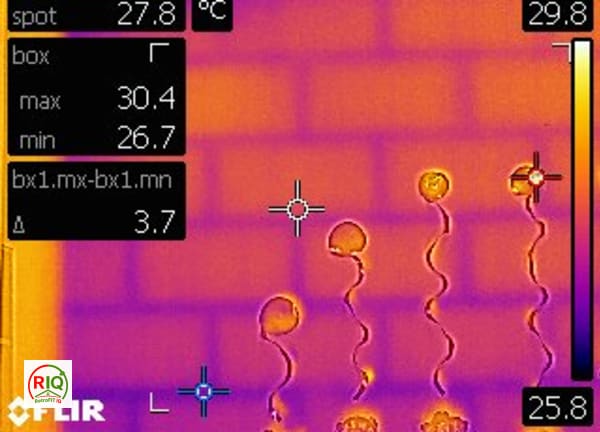
Thermal Bridging Visible Through Masonry Blockwork Wall

Sample Building Performance Investigation Report — Thermal Imaging

Thermal Bridge at Internal Corner Wall Junction

Thermal Bridge at Wall-Ceiling Junction Near Window

Airtightness Testing in a Stratford Victorian Terrace

Acoustic Floor Upgrades: Mineral Wool Insulation Between Joists
No related investigations yet.
Browse all investigationsFrequently asked questions
Why is my garage or outbuilding damp?+
Usually because it is cold, uninsulated and unventilated, so moist air condenses on the cold floor, walls and roof; because the floor or walls have no damp-proof barrier, letting ground moisture rise; and sometimes because rain gets in through a defect. With no ventilation, the moisture cannot dry out, so the space stays damp and musty.
Will heating my garage stop the damp?+
Not on its own, and it can make condensation worse. Heating an unventilated, uninsulated space raises the air's moisture-carrying capacity but leaves the surfaces cold, so the moisture still condenses on them. Ventilation is usually the more effective first step; heating helps only with insulation and where surfaces can be kept above the dew point.
Why is the floor always wet?+
Either condensation forming on the cold concrete when moist air meets it, or ground moisture rising through a slab laid without a damp-proof membrane — or both. Identifying which dominates determines whether ventilation or a sealed floor finish is the right remedy.
Is it condensation or a leak?+
Condensation forms on cold surfaces from humid air and is worst in mild, damp weather regardless of rain; penetrating ingress tracks rainfall and comes through a roof, render or door gap. Distinguishing them matters, because ventilation addresses condensation while a leak must be repaired.
How do I stop my tools rusting in the garage?+
By reducing the humidity — primarily through ventilation to clear moist air, addressing any ground moisture with a sealed floor, and keeping wet items out. Persistent corrosion reflects high humidity, so lowering it keeps stored metal dry.
How do you work out the cause?+
We log the humidity, map the cold and wet surfaces, check the floor and walls for a damp-proof barrier and rising moisture, and assess the ventilation and any ingress — which identifies whether condensation, ground moisture or a leak dominates, so the space is kept dry by the right measure.
Stop guessing — find the real cause
Do not spend money fixing symptoms before you understand the cause. Every home behaves differently, and the only reliable way to know what is happening in yours is professional building performance diagnostics. At RetrofitIQ we verify buildings using the right combination of investigations:
- Thermal imaging
- Blower door testing
- Moisture & dew point readings
- Ventilation review
- Building physics assessment
- Passive House methodology